- Feedbacks and Queries -

BOOKS On ISLAM
Summary of books and Table of Contents
The aim is to provide an easy reference to the future readers to get the information quickly and from multiple sources. The page is under continuous update and may look incomplete at times. Most of the books referred here are in public domain and out of copyright. Since the PDF copies have been OCRed, texts are still not 100% accurate and some words might be misspelt. The folder names and file names are reference to the future [online] repository which shall be shared with visitors in due course of time.
Sections on this page: Books on Islam | Books on American Region | Books on Women and Witchcraft | Books on Assyria and Babylonia | Battles of the World | Books on Africa | Books on Sexuality | Books on Roman History | Books on Christianity [*] The Lawes Resolutions of Women's Rights: or, The Lawes Provision for Women
The book list, size and number of pages are summarized here. You may explore it here or search/find using keywords which book is stored under which folder. If you want these 6230 books (and additional 500 e-books downloaded from Project Gutenberg website) on a micro SD-card having memory size of 128 GB, please write to me at - I will send by speed-post this to your address after a payment of INR 2,000/- across anywhere only in India. These books are categorized into 100 folders as shown below.

The Sacred Books of the East Series - IN 50 VOLUMES --- [1, 15]THE UPANISADS: in 2 vols. : F. Max Muller, [2, 14]The sacred LAWS OF THE ARYAS: in 2 vols. : Georg Buehler, [3, 16, 27, 28, 39, 40]THE SACRED BOOKS OF CHINA: in 6 vols. : James Legge, [4, 23, 31]THE ZEND-AVESTA: in 3 vols. : James Darmesteter and L. H. Mills, [5, 18, 24, 37, 47]PAHLAVI TEXTS : in 5 vols. : E. W. West, [б, 9]THE QUR’AN: in 2 vols. : E. H. Palmer, [7]THE INSTITUTES OF VISNU: Julius Jolly, [8]THE BHAGAVADGITA with the Sanatsujatiya and the Anugita : Kashinath Trimbak Telang, [10]THE DHAMMAPADA: F. Max Muller : SUTTA-NIPATA : V. Fausboll [11]BUDDHIST SUTTAS: T. W. Rhys Davids, [12, 26, 41, 43, 44]THE SATAPATHA-BRAHMANA: in 5 vols. : Julius Eggeling, [13, 17, 20]VINAYA texts: in 3 vols. : T. W. Rhys Davids and Heimann Oldenberg, [19]THE FO-SHO-HING-TSAN-KING: Samuel Beal, [21] THE SADDHARMA-PUNPARIKA or The Lotus of the True Law : H. Kern, [22, 45]JAINA SUTRAS : in a vols. : Hermann Jacobi, [23] MANU: Georg Buhler, [29, 30]THE GRIHYA-SUTRAS: in 2 vols. : Hermann Oldenberg and F. Max Mliiler, [32, 46]VEDIC HYMNS: in 2 vols. : F. Max Muller and H. Oldenberg, [33]THE MINOR LAW-BOOKS: JuHus Jolly, [34 , 38]THE VEDANTA-SUTRAS: in 3 vols. : with Sankaracarya's Commentary : G. Thibaut, [35, 36]THE QUESTIONS OF KING MILINDA: in 2 vols. : T. W. Rhys Davids, [42]HYMNS OF THE ATHARVA-VEDA: M. Bloomfield, [48]THE VEDANTA-SUTRAS with Ramgnuja’s Sribhasya: G. Thibaut, [49]BUDDHIST MAHAYANA TEXTS: B. B. Cowell, F. Max Mailer and J. Takakusu, [50]INDEX: M. Winternitz
Books on India which are out of Copyrights
[001] Watters, T. (1904) On Yuan Chwang’s Travels in India, 629–645 ad, London: Royal Asiatic Society. [002] Basham, A.L. (1954) The Wonder that was India, London: Sidgwick & Jackson. [003] Basham, A.L. (1964) Studies in Indian History and Culture, Calcutta: Sambodhi. [[04] Basham, A.L. (ed.) (1975) A Cultural History of India, Oxford: Clarendon Press. [004] Basham, A.L. (1983) ‘The Mandasor Inscription of the Silk-Weavers’, pp. 101–3, in B. Smith (ed.), Essays in Gupta Culture, Delhi: Motilal Banarsidass. [005] Beal, S., trans. (1884) Si-Yu-Ki: Buddhist Records of the Western World, 2 vols, London: Trubner. [006] Date, G.T. (1929) The Art of War in Ancient India, Oxford: Oxford University Press [007] Dunbar, G. (1943) A History of India from the Earliest Times to the Present Day, London: Nicholson & Watson. [007] Keith, A.B. (1928) A History of Sanskrit Literature, Oxford: Oxford University Press.
English Language in 1548: If one compares the style in 1548 with that in 2023, there is only semantic similarities. Does it apply to Greek and Latin in 100 CE and Greek in twenty first century? Have they gone similar change? If not why?

| Folder Name | Book File Name | Title of the Book | Author(s) of the Book | Edition | Language(s) | Number of pages |
| FN | 66_The-Day-of-Crescent.pdf | THE DAY OF THE CRESCENT - GLIMPSES OF OLD TURKEY | G. E. HUBBARD | - | English | 285 |
| Table of Contents | ||||||
| Chapter-00: INTRODUCTION | A literary "find." The old travel-books and their authors. The Turkish Peril. How the Grand Turke addressed the Princes of Christendom. The taint of Byzantium. Turkish militarism. The fate of an empire. | |||||
| Chapter-01: A LITTLE CONDENSED HISTORY | The period of the book. Last of the Crusades. "The scourge of God." Selim the Grim. Suleyman the Magnificent. An example of chivalry. Conquests and reforms. A dramatic death scene. The story of Count Christopher. A series of royal degenerates. Murad the Fourth. A family of great Vizirs. The second siege of Vienna. Decapitation of an ostrich. A terrible record. The end of an era. | |||||
| Chapter-02: THE OLD SERAGLIO AND THE ADVENTURES OF AN ORGAN-BUILDER | A city of fair fame. Sandys describes the seraglio. A perilous pleasaunce. A Sultan's pay-roll. The palace pages. A drastic curriculum. Master Thomas Dallam. A gift to the Sultan. The wonderful organ. The dress rehearsal. Seeing round the palace. Sultanas at play. Chased by black moors. Safely home. | |||||
| Chapter-03: THE SULTAN'S ARMIES | Origin of the Janissaries. A ceremony of initiation. Life in the ranks. The regimental cauldron. The Janissary's charter. From body-guard to regicide. Spahis and piades. A prototype of the Red Knight. Artillery. A remarkable gun-team. The corps of "Mad-caps." The Tartar auxiliaries. Licensed freebooters. | |||||
| Chapter-04: A PALACE AUDIENCE | A stir in the bailaggio. The crossing of the Golden Horn. Through old Stamboul. Entering the Seraglio. The two courtyards. The Janissaries' dinner-call. Admittance to the divan. A cabinet meeting. Business of state. A gargantuan feast The Sultan on his throne. A dazzling spectacle. A diplomatic reconciliation. | |||||
| Chapter-05: AN EMBASSY TO THE GRAND TURKE (1) | Truce between Turkey and the Empire. The new ambassador. Journey to Constantinople. Dr Quackquelben's misadventure. Bulgarian costumes. The Sultan's zoo. The credulous hyena. Suleyman at Amadia. A Persian banquet. An unpropitious reception. Portrait of Suleyman. Homeward bound. An agonizing sight The price of a nose. A brief respite. | |||||
| Chapter-06: AN EMBASSY TO THE GRAND TURKE (2) | "A bushel of troubles." Pertinacity in adversity. An invaluable recipe. Gloomy quarters. The embassy menagerie. The pig and the door-keeper. Affection in a crane. Gentle horses. Morale of the Turkish army. A damaging comparison. The symbolic melon. Outwitting a chaoush. A military march-past. A row with the Janissaries. | |||||
| Chapter-07: AN EMBASSY TO THE GRAND TURKE (3) | The relics of a fleet The fate of the prisoners. A work of humanity. A puritanic monarch. The Pestilence. Escape to Prinkipo. A fisherman's paradise. The fat Franciscan. Story of the Hoji's sleeve. The end in sight. A surly farewell. Amenities of the road. Henry and the hatchet. A satisfactory ending. | |||||
| Chapter-08: TWO MARTIAL ADVENTURES (1) | The book-shelves of the "Green Dragon." A philosophic globetrotter. By caravan to Turkey. Serajevo. Falling in with the army. Company for the Devil. A short way with miscreants. A grisly tower. Luxurious "bashaws." Wives and Catimites. The pasha's offer. A bloody revenge. A reluctant parting. | |||||
| Chapter-09: TWO MARTIAL ADVENTURES (2) | War between the Poles and Turks. The armies meet. The opening attack. Running the blockade. A mediaeval trench raid. The Turks' "big push." Holding the breach. Behemoth bound. A petulant Sultan. Reception of the messengers. An elephant as a peace-offering. | |||||
| Chapter-10: A PERSIAN INTERLUDE | The history of " Long Hassan." Il Magnifico Barbaro starts on his mission. Cyprian politics. Across Asia Minor. Ambushed by Kurds. Arrival at Tabriz. The garden-palace. An exciting tournament. The envoys from India. A punitive expedition. Fete champetre. A monstrous cake. The return to Venice. | |||||
| Chapter-11: THE SULTAN'S NAVY | A Pera "chestnut." Origin of the Turkish navy. The Barbary corsairs. Barbarossa. An apprenticeship in piracy. Doriaenters the stage. Well-matched opponents. Barbarossa and Suleyman. The great Capudan Pasha. Battle of Prevesa. The church-bells of Nice. Mat rai's ul bahr. Captains Courageous. Indian adventures. Account of a cyclone. Ceding the trident. The victims of Jerba. The last fight of "The three halfemoones." The feat of John Foxe, Gunner. | |||||
| Chapter-12: A DRAGOMAN'S DIARY | The election of a bailo. A magnificent send-off. Overland to Stamboul. Conflicting astrologies. Sports on the At Maidan. Speeding the pilgrims. Preparations for war. Scenes at the camp. The Sultan's secret. An ill-omened start. The court at Belgrade. Premature rejoicings. The saving of Vienna. The Sultan's home-coming. The return of the Embassy. | |||||
| Chapter-13: A BELATED CRUSADE | How Crete fell to Venice. The Turkish invasion. Candia besieged. The crusaders leave Toulon. An escapade in Sardinia. The landing at Candia. A discreditable episode. Manning the walls. The great sortie. A hopeless struggle. Calling the roll. A cosmopolitan garrison. Successive misfortunes. A survivor's quarantaine. | |||||
| Chapter-14: A BUNDLE OF GLEANINGS | An adventurous Don. The circumcision of a Prince. Pyrotechnical marvels. Presents at a wedding. The cats' table d'hote. "Fruits on a Dunghill." A lesson in modesty. Grelot's adventure. The imam's lamps. Sketches of dervishes. A colony of sorceresses. Mohammed's fowls. A Pasha in a powdering-tub | |||||
| Chapter-15: A PRISONER IN THE GALLEYS, etc. (1) | Christian prisoners in Turkey. The mission to Constantinople. The mission is interned. Spying on the Turks. A shameless betrayal. The arrest of the mission. Threatened with "gauching." Refusal to apostate. The arsenal prison. Mass under difficulties. The eating of "Marko." Condemned to the galleys. Life of a galley-slave. Hunger and torture. Locked in the Black Tower. The agha of the Tower. A living purgatory. A heartless joke. | |||||
| Chapter-16: A PRISONER IN THE GALLEYS, etc. (2) | A ray of hope. Disillusionment follows. The new Grand Vizir. A petition and its answer. Summoned to the divan. A friend in need. Freedom from fetters. The adieux at the Tower. Marching with the army. Promises of liberty. A serious hitch. Escape from the army. Encounter with Tartars. Saved by a thunderstorm. Crossing the lines. A target for cannon-balls. Safe among friends. Arrival at Prague. A great-hearted Englishman. Faith in captivity. Exeunt omnes. | |||||
Review:
BYZANTIUM AND THE ARABS IN THE SIXTH CENTURY by IRFAN SHAHID - Volume I - Part 1: Political and Military History
INTRODUCTION: The Sources, The Sixth Century: A Synoptic View - PART ONE: POLITICAL AND MILITARY HISTORY I. The Reign of Anastasius -The Foedus of 502 -The Persian War, 502-506 -Byzantium and the Lakhmids: Mungir -Byzantium and Kinda Procopius -Appendices -Wahb ibn-Munabbih: Kitab al-Tijan, Mungir's Invasion of Palestine, An "Indian" Elephant in GazaII. The Reign of Justin I: The Ghassanids -The Withdrawal of the Ghassanids -The Conference of Ramla -Byzantine-Lakhmid Relations -Jabala, the Ghassanid Federate King -Procopius on the Reign of Justin I. Appendices -Latin Limes, Syriac Limifon -The Pella Inscription. III The Reign of Justinian: Introduction A. The First Persian War (527-532) -The Return of the Ghassanids -The Expedition against Mungir, Winter 528 -Thanniiris, the Battle of the Ditch, Summer 528 -Mungir's Invasion of Syria Prima, March 529 -The Samaritan Revolt of 529 -The Basileia of Arethas, 529 -The Two Basileiai: Ghassanid and Byzantine -The Usays Inscription -Abu Karib -The Battle of Daras, 530 -The Battle of Callinicum, 531 -The Embassy of Julian -Byzantium and Kinda -Byzantium and Ma'add (the Maddinoi) -Saracen Pockets in the Three Palestines -Malalas on the Federate Arabs -Appendices: Justinian in Oriens -Phoenicia Libanensis: The Two Dukes -Zacharia of Mytilene on Timostratus and Jabala -Ma'add
B. Rubin on the Battle of Callinicum: The Inter-War Period (532-539) I.The Vandal War, 533-534 II. Choricius of Gaza III. The Saracen Invasion of Euphratensis, 536 IV. Novel 102 on Arabia V. Edict 4 on Phoenicia Libanensis VI. Novel 103 on Palestine Byzantine-Ghassanid Relations in 536.C. The Second Persian War (540-545) I. The Strata Dispute II. The Campaigns of the War and the Prodosia Theme III. The Assyrian Campaign of 541 IV. The Campaign of 542 V. Procopius and Mungir VI. Appendix: An Arabic Ekphrasisof the Battle of Antioch, A.D . 540
D. The War of the Federates (546-561) I. Introduction II. The First Phase, 545/46-550/51 III. The Second Phase, 550/51-555/56 IV. Inter-Phylarchal Strife in Oriens: The Vita Euthymii V. The Third Phase, 556/57-561 VI. Concluding Remarks VII. Appendix: B. Rubin on the Lakhmid-Ghassanid War E. The Last Years of the Reign (561-565) I. The Peace of 561 II. Arethas in Constantinople, 563 III. The Byzantine Titles of Arethas IV. Procopius and the Arabs
IV. The Reign of Justin II: I. Introduction II. The Lakhmids III. The Ghassanids IV. The House of Ayyub V. Justin H's Daughter, 'Arabia VI. The Expedition against Khaybar, 567(?) VII. The Harran Inscription VIII. Menander and the Arabs IX. The Death of Arethas, 569 X. The Accession of Mungir, 569 XI. The Lakhmid-Ghassanid Conflict, 569-570 XII. The Souring of Ghassanid-Byzantine Relations XIII. The Withdrawal of the Ghassanids, 572-575 XIV. The Persian Conquest of South Arabia, 570 XV. The Co-Rulership of Tiberius, 574-578 XVI. The Ghassanid Return to the Byzantine Fold XVII. Mungir in Constantinople, 575. Appendices: The Ghassanid Capture of Hira, 575 -On the Name of Justin's Daughter, ArabiaV. The Reign of Tiberius: I. Sophia and Maurice II. The Persian Front, 578-580 III. The Ghassanid Crown: Constantinople in 580 IV. The Campaign of Ctesiphon, 580/81: The Antecedents V. The Course of the Campaign VI. Some Problems of the Campaign VII. Mungir's Last Victory over the Lakhmids, 581 VIII. Mungir's Generalship: An Evaluation IX. Prodosia X. The Fall of Mungir XI. The Ghassanid Revolt: Nu'man XII. The Byzantine Response to the Ghassanid Revolt XIII. An Ayyiibid Ambassador in Constantinople: 'Adi ibn-Zayd XIV. The Ghassanid Matrimony XIV. Greek Federate Epigraphy XV. The Patriciate of Mungir. Appendices: I. The Two Federate Crowns II. Noldeke on the Titles and Ranks of Mungir III. Flavius Seos, Epitropos IV. J. G. Wetzstein and R. Brunnow on al-Burj V. R. Mouterde on Nu'man VI. The στσατηλασια of Nu'man
VI. The Reign of Maurice - I. Maurice and Nu'man II. Laesa Maiestas:The Trial of the Two Ghassanids III. Amid Alien Com: Mungir in Sicily IV. The "Dissolution" of the Ghassanid Phylarchate: John of Ephesus V. The Arab Foederatiduring the Reign of Maurice VI. The Restoration of the Ghassanids VII. The Strategikon VIII. John of Ephesus on the Ghassanids: An Evaluation IX. Two Greek Historians: Evagrius and Theophylact X. John Moschus: Pratum Spirituale XI. Pope Gregory and Mung.ir: July A.D. 600 XII. The Controversial Reign of Maurice. Appendices: I. Maurice, the Arabs, and Arabissos II. On the Stirrup III. The Ghassanids in Recent ScholarshipVII: The Reign of Phocas - I. The Return of Mung.ir from Exile, 602 II. The Persian War III. The Ghassanids and Phocas IV. Appendix:Ibn Hamdis on Sicily VIII: The Reign of Heraclius I. The First Decade II. The Second Decade III. The Third Decade IV. Saracen Pockets in Palaestina Prima V. Appendix:The Saracens in the Acta of St. Anastasius. Lists and Stemmata. Maps. Index.
BYZANTIUM AND THE ARABS IN THE SIXTH CENTURY by IRFAN SHAHID - Volume I - Part 2 ECCLESIASTICAL HISTORY
INTRODUCTION - IX: The Reign of Anastasius I. Within the Empire II. Outside the Limes III. Appendix: "The Camp of Anasartha": A Cautionary Note. X: The Reign of Justin I - I. Within the Empire II. Outside the Limes III. Appendix:The Four Hundred Virgins XI: The Reign of Justinian. Introduction A-The First Phase (527-536) I. Introduction II. Early Ghassanid-Imperial Contacts: Justinian and Theodora III. The Ghassanid Episcopate IV. The Monophysite Confessions of Faith B-The Second Phase (536-553): I. Introduction II. Arethas and Ephraim III. Arethas and the Consecrations of 542/43: Jacob and Theodore IV. The Trio: Arethas, Jacob, and Theodore V. The Last Decade, 543-553 VI. Appendix: Sergius, Bishop of Hirta. C: The Third Phase (553-565) I. Introduction II. The Fifties III. The Sixties IV. The Letter of Arethas to Jacob Baradaeus V. Bishop Theodore and Patriarch PaulXII: The Reign of Justin II -A. The First Phase (565-569) I. Introduction II. Constantinople and the Monophysites III. The Patriarchate of Paul: Inter-Monophysite Dissension IV. The Ghassanids and Tritheism V· The Subscriptions of the Archimandrites of Arabia VI. The Monastery and the Church of the Arabs VII. Antiochus of Arabia VIII. Abu Karib and Theodore: Codex Syriacus DLXXXV, Theology, British Museum IX. Theodore, the Arab Bishop of the Limitrophe: ca. 540-570 B. The Second Phase (569-578) I. Introduction: The Accession of Mungir, 569 II. Mungir: gloriosus, Christophilos, patricius III. The Apostasy of Patriarch Paul, 5 71- 575 IV. The Ghassanid Episcopate V. The Schism within the Patriarchate of Antioch: Paulites versus Jacobites, 575-578 VI. Appendix:The Episcopate of the Golan
XIII: The Reign of Tiberius I. Introduction II. The Bienniumof 578-580 III. The Conference of Constantinople: 2 March 580 IV. The Sequel to the Conference V. The Bienniumof 580/81: The Anticlimax. XIV: The Reign of Maurice I. Introduction II. The Chalcedonian Attempt to Convert the Ghassanids III. The Role of the Ghassanids in Inter-Monophysite IV. Controversies : Damian of Alexandria and Peter of Callinicum V. Pope Gregory and the Provincia Arabia: The Ghassanid VI ProfileXV: The Reign of Phocas I. The Return of Mungir from Sicily II. Ghassanid Monophysitism during the Reign. XVI: The Reign of Heraclius I. Introduction II. The Arab Foederatiin a Heraclian Victory Bulletin III. The Translation of the Relics of St. Anastasius the Persian IV. The Ghassanid Defeat in Oriens, Easter Sunday, 634. XVII: The Arab Foederatiand the Christian Saints I. The Arabs and St. Sergius II. Two Arab Saints: Cosmas and Damian III. St. Simeon the Younger and St. Julian. XVIII: Arab Christianity in Sinai I. The Peninsula II. The Twin Cities: Pharan and Raithou III. The Pastoralists of Sinai: The Saracens IV. Procopius and Eutychius on Mount Sinai V. The Ghassanid Profile VI. Theodore of Pharan VII. The Image VIII. The Sinai Peninsula and Archaeology.
EPILOGUE: The Arab and the German Foederati: Monophysitism and Arianism I. Introduction II. Theodoric and Clovis III. Jabala IV. Conclusion.| Folder Name | Book File Name | Title of the Book | Author(s) of the Book | Edition | Language(s) | Number of pages |
| FN | 61_Dawn-Over-Samarkand.pdf | DAWN OVER SAMARKAND | JOSHUA KUNITZ | Third | English | 345 |
| Table of Contents | ||||||
| Chapter-01: OLD AND NEW — IMPRESSIONS | I THE EMIR - Flght of Emir —Spiritual Ruler —Temporal Ruler II MILLIONS OF DAYS - Noble Bokhara - Peoples and Conquerors —The White Czar III CONTRASTS - Water and Blood —In the Shadow of the Ark —Unreasonable Human Herd | |||||
| Chapter-02: STRUGGLE FOR POWER | IV GATHERING OF THE STORM --- Bold Spirits —Emir's Futile Incantations —United in Revolution V FIRST THUNDERBOLT --- Emir Ponders —Parting of Ways —In the Shadow of Empires VI A COLOSSUS PROSTRATE --- Not All Lenins —Speculating on Difficulties —Barking Jackals —The Basmachi -Perfidious Albion — Vulture’s Feast VII ANOTHER VICTORIOUS PAGE --- Britain's Outraged Dignity —The Emir is Disconsolate —Under the Walls of Bokhara -Epilogue and Prologue VIII RECEDING VERSUS EMERGENT --- Revolution in a Quandary - The Thief and the Unique Rose —Moslems of the World Unite —Here a Moslem Saint is Buried —A Ticket to Heaven —Consolidating Forces —Bolshevik Technique —Showing way to Millons —A Wrong Made | |||||
| Chapter-03: COMPLETING THE BOURGEOIS REVOLUTION | IX WHERE COTTON IS KING --- White Gold —White Plague -For Cotton, For Socialism. X LAND AND WATER --- Art and Propaganda —Poor Beys —Poor Mullahs —The Intelligensta Too! -Like a Dream Come True Xl TOWARD SOCIALISM --- Fear of the Unknown —Dizziness from Success —Fascination of Tractors —MTS and Co-optratives —Planming made Possible | |||||
| Chapter-04: BUILDING SOCIALISM IN TADJIKISTAN | XII A BOLSHEVIK IN STALINABAD --- Structures and -Superstructures —National in Form, Socialist in Content —In Happy Exile —Ibrahim Bek Again! —A Bolshevik Legend. XIII DUSHAMBE VERSUS STALINABAD --- Donkeys: Camels —Mullahs: Merchants —No Mosques, No Churches, No Synagogues —Stalinabad Press: Self-Criticism —For Sanitation! For Education XIV. A SHEAF OF TRAVEL NOTES XV NEW WOMEN IN OLD ASIA --- Gray or Dark-Blue Coffins —Green Frogs and Free Women —Tact and Revolution —Husbands and Schools —A Transition Generation. XVI THE END OF THE BASMACHI --- A Touch of the Exotic —Two Documents —A Memorable Night | |||||
| Chapter-05: SOVIET ASIA—1934 | XVII A FANTASY BASED ON FACT --- Poignant Thoughts Bitter Thoughts —A Soviet Rhapsody —We Have Been Victorious. XVHI SOVIET ASIA SINGS --- Songs of Sorrow and Revolt —Songs of Freedom —Songs about Lenin —New Contents: New Forms | |||||
| Chapter-06: POSTSCRIPT | XIX UNITY THRU SELF-DETERMINATION --- Growth of Nations under Soviet Centralism —The Stalin Constitution —Unity of Nationalities Guarantees Victory. MOSLEMS AS FIGHTING PATRIOTS --- Call to the Faithful —Tears of Hatred —An Uzbek Major General —Mothers and Sisters Come Forward —Song of the Soviet Land | |||||
Review: Humanity is plagued by four evils — fleas, bedbugs, mullahs, and the Emir’s officials. —Tadjik proverb. The opening of the book is like this: "The Bokhara Emirate was overthrown in September, 1920. The Emir, abandoning his hundred wives, but taking along his letter of credit on the English bank (fifty-four million gold rubles), fled from his capital, followed by a host of officials, mullahs, merchants, and several of his comeliest bachi (young boys). The news spread like wildfire: The Djadids (bourgeois progressives) have seized power in Bokhara; they are being helped by the Bolsheviks."
More quotes: "Fearful that secular modern education, that science would undermine the established feudal order, the Emir and his mullahs fiercely opposed every tendency in that direction, Education was religious education. Culture was traditional culture. The sole function of the few elementary schools, conducted by mullahs or students from the religious acadenues, was to give the squatting pupil a smattering of religious dogma, a fair knowledge of Mohammedan ritual and practice, and a familiarity with a few Moslem prayers."The Genealogical History of the Tartars, Translated from the Tartar Manuscript Written in the Mughal Language by Abu al-Ghazi Bahadur, Khan of Khowarazm CONTAINING The ANTIQUITIES of the Moguls and Tatars from Adam, according to the Account of the Mohamme dan Tatars. A curious Description of all the Tribes into which the Turkish Nation is divided: The Life of Zingiz Khan the Great, and of his Successors in the four Parts of his Empire. Together With a complete History of the Uzbek Khans of Khowarazm, and in a good measure of the Khans of Great Bukharia, from the first Conquest of those Countries under Shah Bakht Sultan in 1494. to the Death of Abu'l Ghazi Bahader Khan, the Author, in 1663.
Abu al-Ghazi Bahadur (or Ebulgazi Bahadir Han, 1603-63) was the ruler of the Khanate of Khiva (present-day Uzbekistan) and a prominent historian of the Turkic peoples who wrote in the Old Turkic (Chagatai) language. The son of ʻArab Muhammad Khan, Abu al-Ghazi was caught up in a dynastic struggle with his brothers following the death of their father and forced to flee to the Safavid court in Isfahan (in present-day Iran), where he lived from 1629 to 1639. He eventually ascended to the throne of the Khanate of Khiva in 1644 or 1645, which he ruled until his death. He was the author of two works that are important sources for Central Asian history, Shajare-i Tarākime or Secere-i Terakime (The genealogical tree of the Turkmen), completed in 1659, and Shajare-i Turk (The genealogical tree of the Turks), which he left incomplete and which his son, Abu al-Muzaffar Anusha Muhammad Bahadur, completed in 1665.| Folder Name | Book File Name | Title of the Book | Author(s) of the Book | Edition | Language(s) | Number of pages |
| FN | 61_Arab-before-Mohammad.pdf | ARABIA BEFORE MUHAMMAD | DE LACY O’LEARY, D.D. | --- | English | 242 |
| Table of Contents | ||||||
| Chapter-01:ARABIA AND THE ARABS | (a) Area of Arab occupation (b) The Peninsula of Arabia (c) The Semitic Race (d) The Arab Community (e) Percolation of Culture into Arabia | |||||
| Chapter-02: EGYPTIAN PENETRATION OF ARABIA | (a) Nautical Enterprise of the Egyptians (b) The Land Route by Sinai (c) Egyptian Use of Incense | |||||
| Chapter-03: MESOPOTAMIAN PENETRATION oF ARABIA | (a) Early contact between Egypt and Mesopotamia (b)Magan and Me-lukh- Icha (c)The Assyrian conquest of Arabia. (d)Taima, Additional note to Ch. III: Hawilah and the gold supply | |||||
| Chapter-04: THE ROUTE TO INDIA | (a)The Sea Route to India (b) The Land Route to India (c)Alexander (d)The division of Alexander's Empire (e)The Ptolemies and the Red Sea (f)The Red Sea under Roman rule (g)Hippalus (h)The Nabataeans | |||||
| Chapter-05: THE KINGDOM OF SOUTH ARABIA | (a)Saba (b)Minaea (c)Qatabania and Yemen (d)Hadramaut (e)The Himyarites (f)Land Routes through Arabia | |||||
| Chapter-06: ARABIC TRADE IN THE DAYS OF JUSTINIAN | (a)The Age of Justinian (b)The Silk Trade (c)The Abyssinians and the Red Sea (d)The Plague | |||||
| Chapter-07: CHRISTIANITY AND THE ARABS | (a)The Greek element in Christianity (b)The Syriac Church (c)The Nestorian Church (d)The Monophysite Church (e) Christian Penetration of Arabia | |||||
| Chapter-08: THE ARAB AND THE BORDER SETTLEMENTS | (a)Conditions favouring the formation of border states (b)The Arabs of Hira (c)The Arabs of the Syrian frontier | |||||
| Chapter-09: JEWISH PENETRATION OF ARABIA | (a)Hellenistic elements in Judaism (b)Jews and Idumaeans (c)Jewish colonies in Arabia | |||||
| Chapter-10: MECCA AS A COMMERCIAL CENTRE | (a)The Hijaz Trade Route (b)The city of Mecca (c)The trading caravans | |||||
| Chapter-11: EVIDENCE FROM PRE-ISLAMIC RELIGION | (a)Evidence from social conditions (b)Possible evidence from Religion (c)Arabian Deities (d)The Pilgrimage (e)Infanticide | |||||
| Chapter-12: BEGINNING OF THE PROPHET's MINISTRY | (a)Political State of West Asia at the beginning of the Prophet’s ministry (b)Sources for the life of the Prophet | |||||
Review:
| Folder Name | Book File Name | Title of the Book | Author(s) of the Book | Edition | Language(s) | Number of pages |
| FN | 61_Ancient-History-Arabia.pdf | HISTORY OF ARABIA | ANDREW CRICHTON | Vol-1 | English | 414 |
| Table of Contents | ||||||
| Chapter-01: INTRODUCTORY VIEW OF ARABIAN HISTORY | Arabia —Peculiarities in its History and Manners —Interesting Aspect of the Country —Its Connexion with many Scenes and Events in Holy Writ —Distinguished as the Birthplace of Mohammed —Rapid and extensive Conquests of the Saracens —Instabihty and Downfall of their Empire —Their singular Passion for Learning —Munificent Endowment of Schools —Causes why their History has been little studied in Europe — Ignorance of their Language and Literature —Religious Prejudices against their Character —Efforts of Scholar's and Literary' Associations to illustrate Arabian History —Valuable Discoveries of recent Travellers —Unexplored Tracts in the Central Deserts —Prospects of further Discoveries —Increased Facilities for Modem Research —Reflections on the Preceding Survey | |||||
| Chapter-02: DESCRIPTION OF ARABIA | Name —Boundaries —General Features —Ancient Geographical Divisions —Arabia Petraa —Deserta —Felix —Modem Divisions —Hejaz— Tehama —Yemen —Hadramant -Oman -Lahsa or El-Hassa —Nejed —Peniosula of Sinai —Ancient Bed of the Jordan —Mounts Sinai and Horeb —View from their Top —Various Opinions as to their Identity —Climate of Arabia —Heat —Rains —Rivers —Winds —The Simoom —Arabian Seas —Persian Gull —Red Sea —Coral Banks —Passage of the Israelites —Dangerous Navigation —Steam Communication with India | |||||
| Chapter-03: PRIMITIVE INHABITANTS OF ARABIA | Obscurity of Arabian Antiquities -Want of written Records —Aborginal Tribes —The old extinct Arabs —The pure Arabs —The mixed or naturalized Arabs —Their Attention to their Genealogies —Birth and Expulsion of Ishmael —Building of the Kaaba or Temple at Mecca —Death of Ishmael —Genealogy of Mohammed -The Koreish -Reflections on the National Descent of the Arabs | |||||
| Chapter-04: ANCIENT KINGS OF ARABIA | Subdivision of Arabian History -Want of Written Records -Defective Information of the Greeks and Romans —Confused Chronology of the Arabs -The Kings of Yemen, or Dynasty of the Hamyarites -The Flood of El Arem, and Destruction of Mareb -Exploits of Abucarb -Revolution under Dunowas -Persecution of the Christians -Invasion and Conquest of Yemen by the Abyssinians -Expedmon of Abraha -War of the Elephant -Persians seize the Government of Yemen -The Kingdom of Hira or Irak -Kingdom of Gassan -The Nabathaean or Ishmaelite Arabs -Their Wars with the Jews and Romans -Expedition of Aelius Gallus -Perpetual Independence of the Arabs -Reflections on Gibbon's Skepticisin Scent Discovery of Petra -Description of its Magnificent Ruins | |||||
| Chapter-05: CHARACTER, MANNERS, AND CUSTOMS OF THE ANCIENT ARABS | Two Classes of Arabs-The Bedouins or Pastoral Tribes - Their Mode of Life -Their Love of Freedom -The Agricultural and Mercantile Classes -Commerce of the Ancient Arabs -Their early Intercourse with India -Wealth and Luxury of the Sabaeans -Exaggerated Accounts of the Greeks and Romans -Neither Gold nor Silver Mines in Aabia -Principal Articles of Trade - Frankincense - Myrrh - coffee -Vines- Sugar- Chief Marts on the coast- Caravans- Propensity of the Arabs for Robbery and War -Their Quarrels and Revenge -Their sacrecl Months -Their Hosptality -Fire-signals -Liberality of Hatim Tai- Fondness of the Bedouins for Eloquence and Poetry — The Moallakat, or Seven Poems of the Kaaba -Origin and Copiousness of the Araic Language -Learning and Morals of the Ancient Arabs —Their Division of Time —Their Superstitions —Charms — Sortilege —Divination by Arrows —Worship of the Stars and Planets —Popular Idols and Images —Planting of Christianity in Arabia —Labours of Origen —Bishops' Sees —Schisms and Heresies in the Arabian and Eastern Churches | |||||
| Chapter-06: LIFE OF MOHAMMED | Contradictory Views of Mohammed's Life and Character —His Birth and Education —Visits Syria as a Merchant —Marries Kadiiah —Affects an austere and retired Life —Proposes to reform Rehgion —Assumes the Title and Office of the Apostle of God —His first Converts —Announces publicly his prophetic Mission —His unfavourable Reception —His Proselytes increase —Miracle of spliting the Moon —The famous Night Journey to Heaven —His Secret League with the Medunian Converts —The Koreish resolve to put him to Death —His Escape and Flight to Medina —Proclaims a Holy War against the Infidels — Battle of Bedr —Defeat of the Moslems at Ohud —Quairrel with the Jews —Siege of Medina —Expedition to Mecca, and Truce with the Koreish — Siege and Capitulation of Khaibar —Attempt to poison the Prophet —Mohammed sends Letters and Ambassadors to Foreign Courts —Respect shown him by his Followers —Battle of Muta —Capture of Mecca by the Moslems —Demolition of Idols and Images -Battle of Honain —Surrender of Taif —Expedition to Tabuc —Increased Power and Success of Mohammed —His valedictory Pilgrimage to Mecca —His Sickness and Death —His personal Appearance —His private Character and Habits —His Wives and Concubines —His supposed Ignorance of Letters —Concluding Reflections | |||||
| Chapter-07: THE KORAN | The Koran —Its reputed Origin —Held in great Veneration by the Moslems —Its literary Merits —European Translations, "Du Ryer's, Maracci's, Sale's, Savary's —Sources whence its Doctrines were borrowed —Its leading Articles of Faith —Angels and Jin or Genii —Examination of the Dead by Munkir and Nakir —Intermediate Stale of the Soul —The Resurrection —Signs that precede it —Ceremonies of the Final Judgment —The Judicial Balance —The Bridge Al Sirat —Torments of the Wicked —Luxuries and Enjoyments of the Happy State —Women not excluded from the Mohammedan Paradise —Pre-destination — Prayer —The Mohammadan Sabbath —Ablutions —Circumcision —Alms —Fasting —Festivals —Prohibitions as to Food, Intoxicating Liquors, and Games of Chance —Civil and Criminal Code of the Moslems —Laws respecting Marriage —Theft —Courts and Officers of Justice —Traditions- Mohammedan Sects —The Sormees and Sheahs —Their Hatred of each other | |||||
| Chapter-08: CONQUESTS OF THE SARACENS | Disputes in choosing a Successor to Mohammed —Abu Beker elected Caliph —Ali refuses Submission —Turbulent State of the Empire —Invasion of Syria —Success of the Saracens - Capture of Bosra —Siege of Damascus —Battle of Aiznadin —Surrender of Damascus —Death of Abu Beker —Accession of Gmar —Pursuit and Plunder of the Damascene Exiles —Action at the Fair of Abyla—Battle of Yermouk —Siege and Capitulation of Jerusalem —Journey of the Caliph to that Capital —Surrender of Aleppo —The Castle besieged and taken by Stratagem —Reduction of Antioch —Flight of Heraclius — Subjugation of Syria and Palestine —Disgrace and Death of Khaled —Invasion of Persia —Battle of Cadesia —Occupation of Madayn -Immense Booty —Battle of Nahavund —Defeat and Death of Yezdijird —Final Conquest of Persia | |||||
| Chapter-09: WARS OF THE CALIPHS | Invasion of Egypt— Reduction of Farmah or Pelusium —Siege and Capitulation of Memphis —Surrender of Alexandria -Burning of the Library —Conquest and Description of Egypt- Assassination of Omar —Accession of Othman —Capture of Cyprus, Ancyra, and Rhodes —Invasion of Africa —Defeat of the Prefect Gregory —Murder of Othman —Accession of Ali — Political Disturbances —Battle of Seffein — Moawiyah, Founder of the Ommiadan Dynasty, usurps the Caliphate —Ali assassinated — Abdication of Hassan —Death of Moawiyah —Fate of Imam Hossein at Kerbela —The Ommiades or Caliphs of Damascus —Their Character —Expelled by the Family of Abbas, who seize the Throne | |||||
| Chapter-10: CONQUEST OF AFRICA AND SPAIN | Renewal of the War in Africa —Victories of Akbah —Founding of Cairoan —Revolt of the Africans —Reduction of Carthage —Defeat of the Saracens by the Moors —Success of Musa —Expulsion of the Greeks and final Subjugation of Africa —Invasion of Spain by Tarik —Defeat of the Goths —Rapid Conquests of the Moslems —Surrender of Cordova, Seville, and Toledo —Reduction of the Country as far as the Bay of Biscay —Recovery of Seville —Descent into Langnedoc —Preparations of the Saracens to subdue Europe —Recall and Disgrace of Musa —Arabian Settlers in Spain —Progress of the Saracens in France —Defeat of Eudes —Victory by Charles Martel at Tours —Expulsion of the Saracens from France —Success of the Moslems in the East —Sieges of Constantinople —Repulse of the Arabs —Their Conquests beyond the Oxus —Surrender of Samarcand —Invasion of India —Extent of the Mohammedan Empire | |||||
Review:
| Folder Name | Book File Name | Title of the Book | Author(s) of the Book | Edition | Language(s) | Number of pages |
| FN | 49_Slavery-Earliest-Periods.pdf | AN HISTORICAL SKETCH Of SLAVERY, From THE EARLIEST PERIODS | THOMAS R. R. COBB, OF GEORGIA | 1858 | English | 296 |
| Table of Contents | ||||||
| Chapter-01: | Slavery as ancient as authentic history —Slavery in Patriarchal times, Slavery among the Jews —Two different classes —Status of the Hebrew servant —Of the Heathen slave —Negro slaves —Value of slaves —Public and private slaves —Manumission —Slavery in the time of our Saviour —Jewish disregard of the law of release | |||||
| Chapter-02: | Slavery in Egypt —Evidence of its early existence —Negro slaves—Sources of Egyptian slavery —Prejudice of color —Eunuchs —Rigorous treatment —Transition to castes —System of castes —Present condition of laboring classes —Negro and other slaves in Egypt at the present day | |||||
| Chapter-03: | Slavery in India —Castes —Sources of slavery —Unlimited power of the master — Manumission - Mohammedan slavery —Rules regulating it —Emancipation —Effect of British rule as to slavery —Negro slaves —Slave -trade with Africa on Eastern coast —Treatment of slaves —Eunuchs —Abolition of slavery —Its effects | |||||
| Chapter-04: | Slavery in the East —In Assyria —Among the Medes and Persians —Unlimited power of master —Revolts —Customs —In other countries —In China —Early existence in China —Sources of slavery —Hereditary slavery —Treatment of slaves —Enfranchisement —Effect of Grecian and Roman conquest —Of Mussulman rule —Negro slaves — Slave-trade —Japanese slavery —Classes distinguished by hair-pins | |||||
| Chapter-05: | Slavery in Greece —Apparent paradox —Larly existence — Frequent reference in its literature —Ante-Hellenic period —Transferred to their gods —Mercury —God of the slave —Sources of slavery —Enslavement of debtors —Relief law of Solon —Enslavement of the Heathen —Slave-stealing expeditions —The swineherd Eumzus— Piracy — Hereditary slavery —Effect of concubinage —Metics —In expiation of crime —Agrestic and domestic slaves —Origin of each —The Helots —Their treatment — The Penestze of Thessaly —The Klarote of Crete —Public and domestic slaves —Slave-markets —Negro slaves— Value of slaves —‘White’ slaves not favorites —Eunuchs —Number of slaves— Profitableness— Fugitives— Branding — Treaties as to fugitives —Insurance against escapes —Condition of slaves —Familiarity with master —Fidelity —Feasts and holidays —Affection of masters —Protection of the law —Places of refuge —Homicide —Marriage relation —Appearance in court, as a suitor, as a witness — Peculium— Sale —Labor of slaves —Laws more rigid than customs —Punishment of slaves —Manumission —Effect thereof | |||||
| Chapter-06: | Slavery in Rome —Very partial in early days —The elements of slavery —Paternal power —Exposure of children —Sale for debt —Difference between these and ordinary slaves —Children of debtor —Its final abrogation —Sale for crime —Conquest —Slave-dealers —Piracy —Taxation — Voluntary slavery —Source of revenue —Slave-marts— Customs incident to the sales —Terms of sale —Frauds of slave-traders —Characteristics of different nations —Slavedealing considered degrading —Negro slaves —Their early introduction —Originally all personal slaves —Public and private slaves —The difference in their condition —Treatment of convict-slaves —Rustic and city slaves —Distinctions from occupations —Number of slaves —Large number of domestics —Their names —The dotalis, or confidential slave —Preference for negroes —The literary slaves — Gladiators— Insurrections — Prices of slaves— Legal status— Disabilities —Master’s power and rights —Constitution of Antonine —Cruel treatment —General treatment —Discussions of moralists —Union with master in feasts —Peculium —Their riches —Places of refuge —Fugitives— Feasts and holidays —Intimate relation between master and slave —Instances of cruelty —Punishments of slaves —Protection of master’s life —Manumission —Condition of freedmen —Duty to patron —Libertini, Liberti, and Ingenui —Effect of manumission as to citizenship— Dedititii —Instances of freedmen acquiring distinction —Extinction of slavery in Rome —Its causes —Effect of Christianity —Discussion of slavery by Roman moralists —Later opinions, | |||||
| Chapter-07: | Slavery in Europe in middle ages —Universal prevalence —Difficulty of distinguishing between freemen and slaves —Causes and sources of slavery —Not the result of Roman conquest —Extended sometimes to entire districts —Aerefficit servilem statum —Wales infected —Names of slaves in different states —Slavery in Germany —Mild in its character originally —Familiar intercourse —Custom of burning slaves on funeral pyre —More rigorous subsequently — Fugitives —Extent of master’s power —Distinction in dress and ornaments —Gaming a source of slavery —Punishments of slaves —Different from those of freemen —Not allowed as witnesses —Marriage relation —Excluded from offices —Punishment of fugitives, and those aiding them —Delivery of fugitives —Manumission —Effect thereof —Amelioration of condition of German slaves —Causes assigned —Effect of Crusades —Of Christianity —Teachings of fathers —Practice of the Church —Condition of German peasantry at the present day —Slavery in Gaul—Extent of feudal system —Of frequent conquests —Condition of slaves —Opinion of Gibbon —Of Michelet —Condition of Rustic serf —Treatment by masters —Sales —Mainmorte —Origin of —Slaves of religious houses —Disposition of the children of slaves —Right of relibation —Torture —Insurrections —The Bajaudan conspiracy —The Jacquerte —Names of slaves —Slave-trade —Enfranchisement of serfs —Continuation of feudal system —Slavery in Sicily —Italy and Venice —In Poland —In Russia —Condition of Russian slaves —Emancipation— Effects —Slavery in Turkey —Present condition of the serfs of Europe —Compared with slavery —Opinion of Michaelis | |||||
| Chapter-08: | Slavery in Great Britain —But little known of the social system of ancient Britons —Slavery after Roman invasion —Effect of Saxon conquest —Sources of slavery —Condition of slave —Power of master over life —Sale —Excluded from the Courts as suitor or witness —Branding and yoking —Brazen collars —Holidays allowed them — Working on Sabbath —Harboring fugitives —Prices of slaves —Slave-trade at Bristol —Peculium —Punishments of slaves —Manumission —Effect of manumission —Amelioration of slavery, and transition to villanage —Base villanage only modified slavery —Condition of villain — Transition to privileged villanage —Relics of this at present day—Statutes to compel laborers to work —Slavery in Scotland —Colliers and salters —Slavery in Ireland —Their voluntary relinquishment of it —Present condition of laboring classes in Britain —The problem of misery | |||||
| Chapter-09: | Negro slavery and slave-trade—Harly existence of negro slavery —Its cruelties in their native land —Commencement of slave-trade in A. D. 1899 —Certainly in A.D. 1442 —Early horrors of the traffic —Success of early expeditions —Missionary pretext —Impetus to trade from discovery of America —Religious zeal the avowed object of each —lInstructions to Columbus —Enslavement of Indians —Their sufferings and extinction— Recommendation of Las Casas —Negroes introduced in America in A. D. 1501 —First patent granted to individuals by Charles V —Decrease in Indian population of Hispaniola —Demand for negroes —Their superiority as slaves —Cardinal Ximenes and the trade —Early revolt of negroes —English participation in the trade —Introduction of negroes into England —Sir John Hawkins —Partnership with Queen Elizabeth —Cruelty toward negroes —Chartered companies —Royal African Company —The King a partner —Its history —Negroes declared 'merchandise' —Participation of France —Assientoes —The Spanish King and British Queen partners —Contents of the Treaty —Provisions for transportation —Sanitary regulations —War of A.D. 1789 —Acts of Parliament regulating and encouraging the trade —Negro slaves in England —The Portuguese and Dutch participation in the trade —Bounties—Introduction of negro slaves in Virginia (A. D. 1620) —Introduction of cotton-plant (A. D. 1621) —Participation of New England —Rules regulating the trade —Massachusetts laws —Slavery in Connecticut —In Rhode Island —In New Amsterdam —In New Netherlands —Bounty offered in New Jersey —Slavery in Pennsylvania —In Delaware—In North Carolina —In South Carolina —Georgia —Settled as a free colony —History of introduction of slavery —Character of negroes introduced into America —Impression as to the effect of baptism —Removal of this idea —Estimated number imported —Protest of the Colonies —Conduct of Britain —Action of Congress of 1776 —Constitutional restriction to A. D. 1808 —Action of Georgia in 1798 —Number of negroes exported from Africa —Effect of the trade on Africa —Character of tribes exported — "The horrors of the middle passage" —Sanitary provisions of British Parliament —Predominance of males among the slaves —Prices —Profits —Condition of negroes imported —Their nature rebellious —Cruel treatment in West Indies —Wars of the Maroons —Treatment by the American colonists —Comparison with the West India planters —Results in the increase of the slave population in the Colonies —Introduction of negroes in Spain, England, and France —Number in England in 1775 —Trade on eastern coast of Africa— Its origin and present state | |||||
| Chapter-10: | The abolition of the slave-trade —Protests of literary men against the trade —Of the Quakers —Of the American Colonies— Opposition of Britain— Action of United States —The struggle in Great Britain —Final abolition in AD 1807 —Suggestion as to real cause —Action of French government —Of Spain —Quintuple treaty of 1841 —Treaty with Netherlands and Brazil —Declared piracy by United States and Britain —Ilicit trade —Its character and effects —Its markets | |||||
| Chapter-11: | Abolition of slavery in some of the United States —Originated in America —War of Revolution fought on a principle —The Declaration of Independence —The result of the struggle for political liberty —Feeling of leading men —In Virginia —Ordinance of 1787 —Small number of slaves in North and East —Abolition in Vermont —Massachusetts —New Hampshire —Rhode Island —Connecticut —Pennsylvania —New York —New Jersey —Difficulty of emancipation in the South —Result of agitation | |||||
| Chapter-12: | Abolition in Hayti —Free negroes —The cry of the French Revolution, "Liberty and Equality" —Three parties in Hayti—Dissensions among them —Prejudice against mulattoes —Decree of 8th March, 1790 —Prejudice of color —Insurrection of 24th Aug. 1791 —Decree of 15th May, 1791 —War between whites and mulattoes —Treaty — Cruel treatment of the armed slaves Fickle policy of National Assembly —Results —Renewed civil war —Decree of 4th April, 1792 —Commissioners —Offer to deliver the island to the English —Renewal of hostilities —Voluntary exile of the whites —War between France and Spain —Slaves enrolled in Spanish army —Liberty proclaimed to all slaves who would join the army of the Republic —Six towns delivered to the English —Effect of yellow fever —Decree of 4th Feb. 1794, abolishing slavery —Agricultural regulations —Toussaint —His history —Rigaud —Their dissension —Prejudice of mulattoes against the blacks —Commencement of war between blacks and mulattoes —Triumph of the blacks —Confirmation of Toussaint by Consuls —Central Assembly —The Constitution —Provisions to enforce labor —Idleness punished with death —Peace of Amiens —Efforts of Napoleon to reconquer Hayti —Mission of Le Clere —Firmness of Toussaint —Strategy of Le Clerc —Death of Toussaint —Civil war —Death of Le Clerc —Rochambeau —His fatal policy —Success of Dessalines —Declaration of independence —Massacre of the whites—Dessalines declared emperor —His assassination —Civil war between the mulattoes and blacks —Petion and Christophe —Their variant courses, and the results —President Boyer —Revolt of Spanish colony —Conquest by Boyer — independence of Hayti acknowledged —The terms | |||||
| Chapter-13: | Abolition of slavery by Great Britain —Larly efforts of Clarkson and others —Compromise measures —Liberation of "Crown slaves" —Insurrection among the slaves —Gradual Emancipation Act of 1883 —Apprentice system —Compensation to masters —Failure of apprentice system —Causes alleged—Complete abolition — Difference between slavery in West Indies and in United States —Abolition by Sweden and Denmark —Their ameliorating system —Abolition in French West Indies —The history of the struggle —Report of Duc de Broglie —The law of 18th July, 1843 —Its provisions —The law of 19th July, 1845 —Their failure —Alleged causes —Subsequent agitation —Summary and unjust action of the Republic of 1848 —Final abolition in French West Indies | |||||
| Chapter-14: | The effects of abolition —Tendency of the negro to return to barbarism —Sad effects in St. Domingo —The reasons assigned: by emancipationists —The anticipated results from a peaceable and gradual emancipation —Effects in British colonies —Investigations by Committees of Parliament —Importation of Coolies and negro apprentices— Sad results to the negro, physically, intellectually, and morally —The end not yet seen —Guiana — Southern Africa and Mauritius —Effects of emancipation in other Kuropean colonies | |||||
| Chapter-15: | Effects of abolition in United States—Substantially the same to the negro as in other countries —Effect on the State different —Reasons therefor —The physical, intellectual, and moral condition of the freed negroes —Their civil and political status —Comparison with slaves of the South, as to crime, mortality, and disease | |||||
| Chapter-16: | Slavery in South America —Colored races in Brazil —No prejudice of color there —Character of slaves and free negroes —Colored races in New Granada —Emancipation Acts —Effects disastrous —Slaves of Chili and Peru —Numbers small, and well treated —In La Plata —Manumission during the Revolution | |||||
| Chapter-17: | Slavery in the United States —First Abolition Society in 1787 —Fanaticism —Contests in the National Assembly —The present state of the question —The peaceable and quiet conduct of the slaves in the United States —No Maroons, and but one insurrection —Manumissions frequent —Checks on domestic manumission —Prohibitions of non-slaveholding States to the ingress of free negroes —Liberia the only asylum of the free negro —Mild treatment of slaves —Their rapid increase —Their longevity —Their intellectual improvement —Their moral development —Slavery a missionary agent —Slavery viewed as a political institution —Its benefits and evils as such —Viewed as a social relation —Its benefits and evils as such —The future destiny of the slaves of America | |||||
| Chapter-18: | African colonization —Sierra Leone an admitted failure —Inauguration of the scheme in America —Cordial co-operation of the philanthropists of the entire Union —Liberia the child of philanthropy and religion —Its history prior to its independence —The material aid from the British and French Governments —From America —Its present condition —Census of 1845 —Statistics extracted from it and the reports of the American Colonization Society —The physical, intellectual, and moral condition of the Liberians —The success of the scheme problematical —Doubts expressed | |||||
| Appendix-Ch-1: | What is slavery; and its foundation in the natural law | |||||
| Appendix-Ch-2: | Negro slavery viewed in the light of Divine Revelation | |||||
Review:
| Folder Name | Book File Name | Title of the Book | Author(s) of the Book | Edition | Language(s) | Number of pages |
| FN | 61_Arabia-Cradle-of-Islam.pdf | Arabia: Cradle of Islam | Rev. S. M. Zwemer, F.R.G.S. | --- | English | 303 |
| Table of Contents | ||||||
| Chapter-01: THE NEGLECTED PENINSULA | Arabia the centre of Moslem world —Its boundaries —The coast —Physical characteristics —Clmate —Water-supply —Geology —The Wadys —Mountains—Deserts | |||||
| Chapter-02: THE GEOGRAPHICAL DIVISIONS OF ARABIA | Natural divisions —Provinces —Political geography —Important flora and fauna —Population | |||||
| Chapter-03: THE HOLY LAND OF ARABIA — MECCA | Its boundness —Sacredness —European travellers —Jiddah —Its bombardment —The pilgrimage —Mecca —Its location —Watersupply —Governor —The Kaaba —The Black Stone —Zemzem —Duty of pilgrimage —The pilgrims —The day of sacrifice —The certificate —Character of Meccans —Temporary marriages —Superstitions —Mishkash —Schools of Mecca —Course of study | |||||
| Chapter-04: THE HOLY LAND OF ARABIA — MEDINA | Taif —Heathen idols —The road to Medina —Sanctity of Medina —The prophet’s mosque —Was Mohammed buried there? — The five tombs —Prayer for Fatima —Living on the pilgrims —Character of people — Vanbo —Importance of Mecca to Islam | |||||
| Chapter-05: ADEN AND AN INLAND JOURNEY | The gateways to Arabia Felix - Aden —Its ancient history —Fortifications —Tanks —Divisions —Population —Journey inland —Wahat —The vegetation of Yemen —A Turkish customhouse —The storm in the wady —Taiz —The story of the books | |||||
| Chapter-06: YEMEN: THE SWITZERLAND OF ARABIA | The Jews of Yemen —From Taiz to Ibb and Yerim —Beauty of scenery — Climate —Ali’s footprint —Damar —Sana —Commerce and manufactures —Roda —From Sana to the coast —The terrace of Yemen - Sukel Khamis —Menakha —Bajil —Hodeidah | |||||
| Chapter-07: THE UNEXPLORED REGION OF HADRAMAUT | Von Wrede’s travels —Halévy —Mr. and Mrs. Bent’s journeys —Makalla —Incense-trade —The castles and palaces —Shibam —Shehr and its ruler —Hadramaut and the Indian archipelago | |||||
| Chapter-08: MUSCAT AND THE COASTLANDS OF OMAN | Boundaries — Population — Government Muscat Heat —The forts —The town —The gardens —Trade —The coast of Oman -The pirate-coast —The Batma —Sib, Barka, Sohar —From Muscat to Ras-el-Had —Sur—Caiter’s exploiation —The Mahrah and Gharah tribes —Frankincense | |||||
| Chapter-09: THE LAND OF THE CAMEL | “The mother of the camel’! —Importance of the camel to Arabia — radition as to creation —Species —The diomedaiy —An Illustration of design —Products of the camel —Characteristics —The interior of Oman —Chief authorities —Fertility —Caravan routes —Peter Zwemer’s journey —Jebel Achdar | |||||
| Chapter-10: THE PEARL ISLANDS OF THE GULF | Ancient history of Bahrem —Origin of name —Population —Menamah —The fresh-water springs —The pearl-fisheries —Superstitions about pearls —Value and export —Method of diving —Boats —Apparatus —Dangers to the divers —Mother-of pearl —Other manufactures —Ruins at Ali —The climate —Political history —English protection | |||||
| Chapter-11: THE EASTERN THRESHOLD OF ARABIA | The province of Hassa —Katar —The Route Inland —Ojeir —Journey to Hofhoof —The two curses of agriculture —The capital of Hassa —Plan of the town —Its manufactures —Curious coinage —The government of Hassa —Katif —Its unhealthfulness | |||||
| Chapter-12: THE RIVER-COUNTRY AND THE DATE-PALM | The cradle of the race —Boundaries of Mesopotamia —The Tigris-Euphrates —Meadow lands —The palms —Their beauty — Fruitfulness — Usefulness - Varieties of dates —Value —Other pioducts —Population —Provinces and districts —The government | |||||
| Chapter-13: THE CITIES AND VILLAGES OF TURKISH-ARABIA | Kuweit —Fao—Aboo Hassib —Busrah —The niver navigation —A journey —Kurna —Ezra’s tomb —Amara —The tomb of the barber —The arch of Ctesiphon —Bagdad, past and present —Population —Trade—Kelleks | |||||
| Chapter-14: A Journey Down THE EUPHRATES | Journey to Hillah —The route —Kerbela —Down the Euphrates —Diwaniyeh —The soldier-guard —Amphibious Arabs —Samawa —Ya Ali, Ya Hassan —Nasariya —Ur —The end of our journey —The future of Mesopotamia | |||||
| Chapter-15: THE INTERIOR — KNOWN AND UNKNOWN | What it includes —Its four divisions —(1)“The empty quarter” —Ignorance of this part of Arabia —(2)Nejran —The Dauasir valley and other wadys —Halevy’s travels —Aflaj —The Roman expedition to Neyran —(3)Nejd— Its proper lmits —The zephyrs of Neyd —Soil —Vegetation —Animals —The ostrich — The horse—The chief authorities on this part of Arabia —The population of Nejd —The character of government —Intercourse with Mesopotamia —Chief cities —Hail —Riad —(4)Jebel Shammar —The Bedouin-tribes —Division —Character and customs —Robbery —Unversal poverty | |||||
| Chapter-16:“THE TIME OF IGNORANCE” | Why so-called —The golden age of literature —The influence of Christianity and Judaism —Tribal conslitution of society —Commerce —Incense —Foreign invasions —Political commotion —The condition of women —Female infanticide —The veil —Rights of women —Marriage choice —Polygamy and Polyandry —Two kinds of marriage —Did Islam elevate woman? —Writing in “the days of ignorance" —Poetry —Mohammed’s opinion of poets —The religions —Sabeanism —The Pantheon at Mecca —Jinn —Totemism —Tattooing —Names of idols —Allah—Decay of idolatry —The Hanifs | |||||
| Chapter-17: ISLAM IN ITS CRADLE —THE MOSLEM’S GOD | Different views —Carlyle —Hugh Broughton —Borrowed elements of Islam —The God of Islam —Palgrave’s portrait —Attributes of God —What God is not —Analysis of Islam —Borrowed elements of Islam | |||||
| Chapter-18: THE PROPHET AND HIS Book | The prophet of Islam —Birth of Mohammed —His environment —Factors that helped to make the man —Political, religious and family factor —Khadyah —Mohammed’s appearance, mind and character —His transgression of law —His sensuality —His murders —Expeditions —Mohammed, as he became through tradition —His glories, favor and power as an intercessor —How Moslems regard the Koran —Its character according to Dr. Post, Goethe and Noldeke —Its names —Contents —Origin —Recension —Its beauties —Its defects —Its omissions | |||||
| Chapter-19: THE WAHABI RULERS AND REFORMERS | The story of past century —The Wahabis —Character of teaching -The preacher and the sword —Taking of Mecca and Medina —Kerbela —Mohammed Ali —The Hejaz campaign —Ghalye —Turkish cruelty —English expedition —Peace —The Wahab dynasty —Abdullah bin Rashid —Rise of Nejd kingdom -Character of rule —Hail conquers Riad | |||||
| Chapter-20: THE RULERS OF OMAN | Oman rulers —Seyid Said —Feysul bin Tarka —The rebels take Muscat —Arab warfare —European diplomacy | |||||
| Chapter-21: THE Story OF THE TURKS IN ARABIA | Hejaz —The Sherifs of Mecca —Othman Pasha —Threats to assassinate him —Turkish troops in Asir —Losses —The conquest of Yemen —Turkish rule —Rebellions —The rebellion of 1892 —Bagdad, Busrah and Hassa —Taxes —The Turks and Bedouins —The army —Character of rule | |||||
| Chapter-22: British INFLUENCE IN ARABIA | British possessions —Aden—Socotra —Perim —Konin Muna islands —Bahiein —Her naval supremacy —In the Gulf —German testimony —Survey of coasts —Telegraph and posts —Slavetrade —Commerce —British India S. N. Co —Gulf trade —The rupee —Tiade of Aden —Overland railway —Treaties with tribes —The Trucial League —England in Oman —Aden —Makalla —Method of protection —British consuls and agents | |||||
| Chapter-23: PRESENT POLITICS IN ARABIA | Hejaz —Future of Yemen —France in Oman —Russia in the Gulf —The Tigris-Euphrates Valley —The greater kingdom —God’s providence in history | |||||
| Chapter-24: THE ARABIC LANGUAGE | Wide extent —Its character —Renan’s opinion —The Semitic family —Their original home —The two theorles —Table of the group —The influence of the Koran on the Arabic language —Koran Arabic not pure —Origin of alphabet —Cufic —Caligraphy as an art —Difficulty and beauty of Arabic speech —Its purity —Literature —Difficulty of pronunciation —Of its grammar —Keith Falconer’s testimony | |||||
| Chapter-25: THE LITERATURE OF THE ARABS | Division of arts literature —The seven poems —The Koran —Al Harm —Its beauty and variety —Arabic poetry in general —Influence of Arabic and other languages —English influence on the Arabic —The Arabic Bible and a Christian literature | |||||
| Chapter-26:The ARAB | Origin of tribes —Two theories —Yememite and Maadite —The caravan routes —Bedouins and townsmen —Clark’s classification —Genealogies —Tribal names —Character of Arabs —Influence of neighbors —Their physique —Then aristocracy —Intolerance —Speech —Oaths —Robbery —Privilege of sanctuary —Generosity —Blood-revenge —Childhood —Fueside talk —Marriage among Bedouins —Position of women —Four witnesses —Doughty— Burckhaidt— Lady Ann Blunt— Hurgronje— Woman despised—The kinds of dwelling—Tents and houses —Dress —The staple foods —Coffee, tobacco and locusts | |||||
| Chapter-27: ARABIAN ARTS AND SCIENCES | Music of the Arabs— War chants -Instruments of music —Songs —Kaseedahs in Yemen —Mecca chants —Science of Athar and Wasm —Tracking camels —Tribal marks —Medical knowledge of the Arabs — Diseases — Remedies — A presciiption — The Koran’s panacea -A Mecca M. D —Amulets —Superstitions | |||||
| Chapter-28: THE STAR-WORSHIPPERS OF MESOPOTAMIA | Where they live -Their peculiar religion —Their language —Literature —A prayei-meeting of the Star Worshippers —Strange ceremonies —The dogmas —Gnostic ideas —Priesthood —Baptisms —Babylonian origin | |||||
| Chapter-29: EARLY CHRISTIANITY IN ARABIA | Pentecost —Paul’s journey —The Arabs and the Romans —Christian tribes of the North —-Mavia—Naaman’s edict —Christianity in Yemen —Character of Oriental Christianity —The Collytidians — Theophilus - Nejian converts — Martyrs —Abraha, king of Yemen —Marching to Mecca —The defeat —End of early Christianity —The record of the rocks | |||||
| Chapter-30: THE DAWN OF MODERN ARABIAN MISSIONS | Raymond Lull —Henry Martyn —Why the Moslem world was neglected —Claudius Buchanan’s sermon —The Syrian missions — Doctor Van Dyck —His Bible translation —Henry Martyn, the ploneer —His Arabian assistant —Visit to Muscat— His Arabic version —Anthony N Groves —Dr. John Wilson of Bombay —The Bible Society —Opening of doors —Mayjor-General Haig’s jounneys —Arabia open —Dr. and Mrs. Haipur and the C.M S. —A call to prayer —Bagdad occupied —The present work —Missionary Journeys to the Jews —William Lethaby at Kerak —The North Africa mission among the nomads —Samuel Van Tassel —The Christian Missionary Alliance —Mackay’s appeal from Uganda —The response | |||||
| Chapter-31: ION KEITH FALCONER AND THE ADEN MISSION | Keith Falconer’s character —Education —At Cambridge —Mission work —His “eccentitcity” —Leipzig and Assiut —How he came to go to Arabia —His first visit —Plans for the interior —His second voyage to Aden —Dwelling —Illness —Death —The influence of his life —The mission at Sheikh Othman. | |||||
| Chapter-32: BisHop FRENCH THE VETERAN MISSIONARY TO MUSCAT | "The most distinguished of all C. M. S missionaries" —Responds to Mackay’s appeal —His character —His letters from Muscat —His plans for the interior —Death —The grave. | |||||
| Chapter-33: THE AMERICAN ARABIAN MISSION | Its origin —The student band —The first plan —Laid before the church —Organization —The Missionary Hymn —James Cantine —Syria —Cairo —Aden —Kamil —Journeys of exploration to the Gulf and Sana —Busrah —Dr C E, Riggs —Death of Kamil —Opposition from government —Home administration - Bahrein occupied —Lanes of work —Muscat —Journey through Yemen —The mission transferred to the Reformed Church — Troubles at Muscat and Busrah —Dr. Worrall —Journeys in Oman —Scuipture-sales —First-fruits —Reinforcements. | |||||
| Chapter-34: In MEMORIAM | Peter John Zwemer —George E. Stone. | |||||
| Chapter-35: PROBLEMS OF THE ARABIAN FIELD | The general problem of missions to Moslems —The Arabian problem —What part of Arabia is accesstble —Turkish Arabia —Its accessibility —Limitations —The accessibility of independent Arabia —Climate —Moslem fanaticism —English influence —IJihtteracy-The Bedouins —The present missionary force —Its utter inadequacy —Methods of work —Medical missions —Schools —Work for women —Colportage —Preaching —Controversy —What should be its character —The attitude of the Moslem mind —Fate of converts —Thoughtless and thoughtful Moslems —The Bible as dynamite —The right men for the work. | |||||
| Chapter-36: THE OUTLOOK For MISSIONS TO MOSLEMS | Two views of work for Moslems —Christian fatalism —Results in Moslem lands —India —Persia —Constantinople —Sumatra and Java —Other signs of progress —The significance of persecution —Character of converts —Promise of God for victory over Islam —Christ or Mohammed —Missionary promises of the Old Testament —The Rock of Jesus’ Sonship —Special promises for Arabia —Hagar and Ishmael —The prayer of Abraham —The sign of the covenant with Ishmael —The third revelation of God’s love —The sons of Ishmael —Kedar and Nebaioth— The promises —Seba and Sheba —The spritual boundaries of Arabia —Da Costa’s poem —Faith like Abraham —O that Ishmael might live before thee. APPENDIX I—CHRONOLOGICAL TABLE II—TRIBES of NORTH ARABIA III—AN ARABIAN BIBLIOGRAPHY | |||||
Review:
| Folder Name | Book File Name | Title of the Book | Author(s) of the Book | Edition | Language(s) | Number of pages |
| 66_Laws-Islamic-Cult | 66_Khutbat-e-Muharram-Hin.pdf | खुतवाते मुहर्रम | मुफ़्ती जलालुद्दीन अहमद अमजदि | First | Hindi | 306 |
| Table of Contents | ||||||
| Chapter-01: | मर्तबे शहादत | |||||
| Chapter-02: | विसाल रसूले अकरम | |||||
| Chapter-03: | हज़रत अबू बकर सिद्दीक़ | |||||
| Chapter-04: | हज़रत उमड़ फारूख | |||||
| Chapter-05: | हज़रत उस्माने गनी | |||||
| Chapter-06: | हज़रत अली मुर्तज़ा | |||||
| Chapter-07: | फज़ाइल अहले बैत | |||||
| Chapter-08: | मनाक़िबे अहले बैत | |||||
| Chapter-09: | हज़रत फातिमा | |||||
| Chapter-10: | करबला का खुनी मंजर | |||||
Review:Some chapters have been omitted and not presented here. यह पुस्तक मनुष्यों का सटीक विवरण और श्रेणी देती है: मुसलमान और काफिर। यह बहुत स्पष्ट रूप से बताता है कि धर्मत्यागियों को जीने का कोई अधिकार नहीं है। और यह आगे मुसलमानों के भीतर पदानुक्रम देता है। पुस्तक सादे हिंदी/उर्दू में लिखी गई है और अनुवाद त्रुटि और गलत व्याख्याओं पर संदेह करने की कोई जगह नहीं है।This book gives accurate description and category of humans: Muslims and Kafir. It tells very clearly that the apostates has no right to live and goes on to give the hierarchy within muslims. The book is written in plain hindi/urdu and there is no space to doubt the translation error and misinterpretions.
| Folder Name | Book File Name | Title of the Book | Author(s) of the Book | Edition | Language(s) | Number of pages |
| FN | 62_Islam-and-Christianity.pdf | ISLAM AND CHRISTIANITY | MUHAMMAD AMIR ALAM | --- | English | 270 |
| Table of Contents | ||||||
| Chapter-01: | The Doctrine of Original Sin of Man | |||||
| Chapter-02: | The Doctrine of Vicarious Atonement | |||||
| Chapter-03: | The Doctrine of Sonship of Jesus Christ | |||||
| Chapter-04: | The God-head —The Doctrine of Trinity | |||||
| Chapter-05: | The Exclusiveness of Christianity Compared to the Universality of Islam | |||||
| Chapter-06: | Conclusion | |||||
Review:
| Folder Name | Book File Name | Title of the Book | Author(s) of the Book | Edition | Language(s) | Number of pages |
| FN | 90_Africa-Christianity-Trade.pdf | TRADE POLITICS AND CHRISTIANITY IN AFRICA AND THE EAST | A. J. MACDONALD, M.A. | 1916 | English | 316 |
| Table of Contents | ||||||
| Chapter-01: | TRADE AND THE NATIVE RACES | |||||
| Chapter-02: | AFRICA: LABOUR PROBLEMS | |||||
| Chapter-03: | EAST INDIAN LABOUR IN SOUTH AFRICA | |||||
| Chapter-04: | LABOUR IN AFRICA — THE WIDER ISSUES | |||||
| Chapter-05: | CHRISTIANITY AND AFRICAN LABOUR QUESTIONS | |||||
| Chapter-06: | AFRICA: THE LIQUOR QUESTION | |||||
| Chapter-07: | AFRICA: THE LIQUOR QUESTION (continued) | |||||
| Chapter-08: | AFRICA: CHRISTIANITY AND PROHIBITION | |||||
| Chapter-09: | INDIA: THE LIQUOR TRADE | |||||
| Chapter-10: | THE LIQUOR TRAFFIC IN CEYLON | |||||
| Chapter-11: | INDIA: SELF-GOVERNMENT | |||||
| Chapter-12: | INDIA: EDUCATION AND CHRISTIANITY | |||||
| Chapter-13: | CHINA: A POLITICAL PROBLEM | |||||
| Chapter-14: | CHINA: EDUCATION AND CHRISTIANITY | |||||
| Chapter-15: | CHINA: OPIUM AND MORPHIA TRAFFIC | |||||
| Chapter-16: | INTER-RACIAL MARRIAGE | |||||
| Chapter-17: | THE PROBLEM OF RELIGIONS | |||||
Review: Whatever be the intent of the author, like almost all the Christian writers - this author also relied on showing supremacy of Christian faith over rest of the faiths. There are phrases used such as "...heathen bowing down to wood and stone, have sought to release the pagan from the cruel customs of his vitiated religion...", "... degenerated to Indian level...", "...semi-savages of Indian jungles..", "The five millions of indigenous Indian Christians are very much more potent, politically and culturally, than the 70,000,000 of Muhammadarns and the 200,000,000 of Hindus."
| Folder Name | Book File Name | Title of the Book | Author(s) of the Book | Edition | Language(s) | Number of pages |
| FN | 90_Colonization-of-Africa.pdf | A HISTORY OF THE COLONIZATION OF AFRICA BY ALIEN RACES | SIR HARRY H. JOHNSTON, K.C.B. | 1899 | English | 343 |
| Table of Contents | ||||||
| Chapter-01: MEDITERRANEAN, MALAY, AND MUHAMMADAN INVADERS | The origin of African man —Distribution of native races three thousand years ago —Bantu invasion of South Africa —The Phoenicians— Carthage —Hanno’s voyage —Greeks in Cyrenaica and Egypt —Persians in Egypt —Rome replaces Carthage —Malay invasions of Madagascar — Vandals in North Africa —Byzantine Greeks —Muhammadan invasions of North Africa in the seventh century —Berber dynasties which arose therefrom —Renewed Arab invasions —The Almoravide dynasty from the Niger —succeeded by the Almohades —Counter attacks of Portugal and Spain —Moorish conquests in Nigeria —Turkish intervention in North Africa —Arab settlements on Zanzibar coast | |||||
| Chapter-02: THE PORTUGUESE IN AFRICA | Origin of the State of Portugal —Prince Henry the Navigator —Portuguese explorations of West African coast —Rounding of Cape of Good Hope —East African conquests —Portuguese in Abyssinia —in the Congo Kingdom —in Angola —Paulo Diaz —The benefits the Portuguese conferred on Africa —Their struggles with the Dutch —Progress of their rule in West Africa —in East Africa —Monomotapa —Dr Lacerda e Almeida —Livingstone’s journeys —Present state of Mocambique— Delagoa Bay —Beira —Mouzinho de Albuquerque —Mogambique ComPany | |||||
| Chapter-03: SPANISH AFRICA | Spain's North African establishments in the 16th century —The Moorish Pirates —Gradual loss of Spanish possessions in Algeria and Tunis— Canary Islands — Fernando Po and Corisco | |||||
| Chapter-04: THE DUTCH IN AFRICA | Dutch traders on the West Coast —Dutch settle at the Cape of Good Hope —St Helena —Mauritius —The Netherland East India Co. —Huguenot colonists —Governor Tulbagh —extensions of Dutch influence —First hostile British expedition under Commodore Johnstone —First Dutch war with the Kaffirs —First British occupation of the Cape of Good Hope —Interregnum of Dutch rule —British finally annex Cape Colony —Their rulers come into conflict with the sentiments of the Dutch colonists (Boers) —The Boer Treks —Origin of Transvaal and Orange Free State republics —Annexation and revolt of Transvaal —Sir Charles Warren’s expedition —Johannesburg, the Outlanders, and Jameson’s raid —Possible future of Dutch states | |||||
| Chapter-05: THE SLAVE TRADE | Negro predisposition for slavery —Slave trade in the Roman world, in Muhammadan countries and India —Great development consequent on the exploitation of America —English slave traders —English Anti-Slavery movement —Author’s own experiences of slave trade —Steps taken by various European countries to abolish Slave Trade —By Great Britain in particular —Rev. S, W. Koelle —Zanzibar slave trade —Ethics of slavery —A word of warning to the Negro | |||||
| Chapter-06: THE BRITISH IN AFRICA, I | (West Coast, Morocco, North-Central.) on, The English in West Africa —The Gambia —Sierra Leone -Gold Coast -Lagos —Niger Delta —Mr E. H. Hewett —Nigeria —Sir G. Taubman Goldie —Great Britain and Tripoli —and Morocco | |||||
| Chapter-07: THE FRENCH IN WEST AND NORTH AFRICA | The Dieppe adventurers —Jannequin de Rochefort and the Senegal —Brije and the foundation of the colony of Senegal —Campagnon —Progress of French rule over Senegambia —Advance to the Niger -*Samori and Ahmadu —Timbuktu —Binger and the Ivory Coast —Samori —Timbuktu definitely occupied —Busa and the Anglo -French Convention -France and Egypt —Algiers —Development of Algeria —Tunis —The Sahara —The Gaboon —French Congo —The Shari and Ubangi —French designs on Nileland —The convention with Abyssinia —Obok and Somaliland | |||||
| Chapter-08: CHRISTIAN MISSIONS | Their work the antithesis to the slave trade —Portuguese missions to Congoland, to the Zambezi, to Abyssinia —First Protestant missions— —Church Missionary Society —Dr. Krapf —Wesleyans, Methodists, Society for Propagation of the Gospel —Roman Catholic missions to Algeria, Congoland, the Nile —Cardinal Lavigerie ~The ‘White Fathers’ —The Jesuits on the Zambezi —in Madagascar —The London Missionary Society —Swiss and German Protestant Missions —French Evangelical Missions —Presbyterian (Scotch) Missions —Norwegian and American Missions —Linguistic work of latter —Universities’ Mission —Plymouth Brethren —Baptists —North African Mission— Zambezi Industrial Mission —Abyssinian Christianity | |||||
| Chapter-09: THE BRITISH IN AFRICA: II | (South and South - Central.) Great Britain’s seizure of the Cape of Good Hope —Permanent establishment there —Abolition of slavery —Dutch grievances —Kaffir Wars — Lord Glenelg and intervention of Downing Street —Boer Treks— ponsible government in Cape Colony —Kaffir delusions as to expected resurrection of their forefathers and expulsion of English— St Helena, Ascension and Tristan d’Acunha —Discovery of diamonds in Grikwaland —History of Natal —Coolie labour and Indian immigration —Delagoa Bay arbitration - Damaraland —Origin of German entrance into South African sphere —Walfish Bay —Bechuanaland —Zambezia —Nyasaland —British Central Africa —African Transcontinental Telegraph —South African federation —The Transvaal —Sir Bartle Frere —Zululand and the Zulu War —Boer revolt —Rhodes and Rhodesia —Matabele Wars and Dr. Jameson —Mauritius | |||||
| Chapter-10: GREAT EXPLORERS | Old-time travellers — Herodotus — Strabo —Pliny— Ptolemy —The Arab geographers —The Portuguese explorers —Andrew Battel —British on the Gambia —French on the Senegal —James Bruce and the Blue Nile —Timbuktu —Mungo Park and the Niger —South African explorations —Portugal and Dr Lacerda —Captain Owen —Tuckey and the Congo —Major Laing —René Caillé —British Government expeditions in Tripoli, —Bomu, Lake Chad, and Sokoto —Lander and the Niger mouth —Barth and the Western Sudan —the Jewish explorer Mordokhai —Krapf, Rebmann, and the Snow Mountains —Livingstone —Burton and Speke, Speke and Grant —Samuel Baker —Livingstone and Kirk —French explorers in North-West Africa —Livingstone and Central Africa —Cameron —Rohlfs —Nachtigal —Alexandrine Tinné —Paul du Chaillu —Winwood Reade —Stanley and the Congo —Portuguese explorers —Schweinfiirth and the Welle —Nile explorers —Nyasaland explorations —Dr. Felkin—Joseph Thomson —George Grenfell —Emin Pasha —Recent explorers and explorations | |||||
| Chapter-11: BELGIAN AFRICA | Comité d’Etudes du Haut Congo —Mr H. M. Stanley founds. the Congo Free State —its subsequent history —Long struggle with the Arabs —Lieut. Dhanis —Rumoured atrocities —Katanga —Extension to the White Nile —Murder of Mr Stokes —Railway to Stanley Pool —Future of Congo Free State | |||||
| Chapter-12: THE BRITISH IN AFRICA - III | (Egypt and Hastern Africa.) England wrests Egypt from the French —Rise of Muhammad Ali —Suez Canal —Arabi’s rebellion —Tel-el-Kebir —Mahdi’s revolt —Gordon’s death —Lord Cromer —Lord Kitchener and the reconquest of the Sudan —Fashoda —Aden and Somaliland —Zanzibar —Sir John Kirk —Kilimanjaro —British East African Company —Colonel Lugard and Uganda —Sir Gerald Portal —Roddy Owen —Zanzibar administration —Dissolution of British East Africa Company | |||||
| Chapter-13:THE ITALIANS IN AFRICA | Italian commercial intercourse with North Africa during Crusades and Renaissance —Italy in Tunis and Tripoli —Assab Bay—Abyssinia —Eritrea —Italian reverse at Adua —Italy in Somaliland | |||||
| Chapter-14: GERMAN AFRICA | The Brandenburg traders and the West Coast —German aspirations after colonies in the “40’s and ‘60’s” —German missionaries in South -West Africa —Herr Luderitz —Angra Pequena —British indecision —German South-West Africa Protectorate founded —Germany in the Cameroons —in East Africa —Anglo-German partition of the Sultan of Zanzibar’s dominions —prospects of German rule in Africa —German South-West Africa —Togoland | |||||
| Chapter-15: THE FRENCH IN MADAGASCAR | First rumours of the existence of Madagascar —Confusion with Zanzibar and the Comoro Islands —Portuguese discovery —French Company of the East founded to colonize the Island —Fort Dauphin —Pronis, the immoral governor —Vacher de Rochelle, King-Consort of a Malagasy Queen —French East India Company founded. Ile de Bourbon colonized —The Madagascar, Pirates —French found settlement of St Marie de Madagascar—Send scientific expeditions to Madagascar which first make known its peculiar fauna —Benyowski, the Polish adventurer —The Malagasy —The Hovas —English capture Mauritius and Bourbon and turn the French out of Madagascar —French regain Bourbon and re-occupy St Marie de Madagascar —First missionaries of the London Missionary Society arrive in Madagascar (1818) —Rise of Radama and the Hova power —French repulse in 1829 —The shipwrecked sailor; Laborde —Queen Ranavalona and persecutions of the Christians —The Sakalavas —Prince Rakoto and Lambert’s frustrated coup d’état —Accession of Rakoto (Radama II) —Deposition and death —French concession repudiated and indemnity paid— The Laborde succession —Quarrel with France in 1883 —The Shaw incident— General Willoughby — England recognizes French protectorate over Madagascar —final invasion, conquest and annexation of the Island by the French | |||||
| Chapter-16: CONCLUSION | Three classes into which Africa falls from colonization standpoint — Healthy Africa —Yellow Africa —Black Africa —Prognostications as to future race movements —Predominant European races in the future— The seven great languages of New Africa —Paganism will disappear— Muhammadan zeal will eventually decay —The Negro will become identified in national interests with his diverse European rulers, and will not unite to form a universal Negro nation with the cry of "Africa for the Africans". Appendix I. Notable events and dates in the history of African colonization | |||||
Review: White and non-white Christians can equally claim that this book is written by a Christian and is a favour to the people of Africa! This is what Jesusism taught to their forefathers who believed in genocides and loot of precious items from all over the world. However honest a Christian writer may be, he will always demean the natives of the regions they colonized with (inhumane) practices that were in custom in those days. They forget that the Human Sacrifices are the fundamental pillars of their own religion.
As the name of the chapter suggests, it is an account of how the Europeans looted rich Africa terming the locals savage, illiterate, beast and all sort of words. I always wonder why those Christian bigots had to travel such a distance and stay among those savage people. The reason is that their Jesus facilitated or provided nothing in Europe that they can boast of and hence they have to steal riches from all of the the world to feed the resting place of Jesus [the Churches]. These are the same churches where in twenty first century Fathers sexually harass Sisters.
The slave traders were following the slavery thought in their filthy scriptures and genocidal impotent God who wants could not succeed in creating his kingdom after his first virgin birth and wants to come again to punish those who do not believe in Him by burning eternally into hell. It certainly would be very cold in heaven and need the heat from hell to keep these monsters of heaven warm!
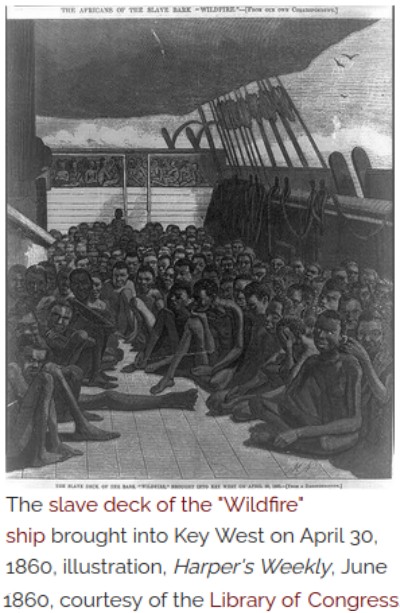
| Folder Name | Book File Name | Title of the Book | Author(s) of the Book | Edition | Language(s) | Number of pages |
| FN | 99_Evidences-of-Religion.pdf | EVIDENCES OF RELIGION | LOUIS JOUIN, PRIEST OF THE SOCIETY OF JESUS | 1877 | English | 412 |
| Table of Contents | ||||||
| Introduction: | 1. Difficulty of refuting the Attacks of modern Unbelievers against Religion. —2. They deny the first Principles of Reason, in order to deny the Existence of Religion. —3. Proof of the Existence of God, taken from the common Consent of Mankind. —4. The Idea of the Divinity is not the Result of Ignorance or Fear. —5. Proof of the Existence of God from contingent Being. —6. The Cause of the Universe is intelligent. —7. The Universe cannot be the Result of Chance. —8. It is not unscientific to seek the Cause of the Universe beyond the physical Order. —9. Matter is not selfexisting. —10. Absurdity of an infinite Number. —11. The Principle of Causality is objectively real. —12. God is not the "Unknowable." —13. Absurdity of Pantheism. —14. Pantheism does not establish the Unity of Science. — 15. Creation is both possible and a Fact. — 16. How God contains all Perfections. —17. Principal Attributes of God. —18. Life is not the Result of mechanical Forces. —19. The Principle of Life is distinct from the Organism of the Body. —20. Simplicity of the Soul of Man. —21. Its Spirituality. —22. Difference between the Soul of Man and the Soul of the Brute. —23. The Freedom of the Will. —24. Why this Introduction was needed. | |||||
| Part-01: | ON THE NECESSITY AND EXISTENCE OF REVEALED RELIGION | |||||
| Chapter-01: On the Necessity of Worshipping God | 1. In what Religion consists. —2. What Worship is. —3. Necessity of internal Worship. —4. Necessity of external Worship. —5. God does not need our Worship, but on our Part it is necessary. —6. Not Religion, but the Abuse of Religion, has caused many Evils. —7. Religion does not unfit Man for the Duties of this Life | |||||
| Chapter-02: The Supernatural | 1. Great Aversion of modern Unbelievers to the Supernatural. —2. Definition of the Natural and the Supernatural. —3. The natural State of Man. —4. The supernatural State. —5. Necessity of embracing revealed Religion, if given by God. | |||||
| Chapter-03: The Possibility of Revealed Religion | 1. The Possibility of Revelation cannot be denied save by Atheists. —2. Proof of this Possibility. —3. Definition of Mysteries Natural and Supernatural. —4. Possibility of the Revelation of supernatural Mysteries. —5. Mysteries are not altogether unintelligible. —6. The Difficulties raised against Mysteries are not insoluble. —7. Their Revelation is not useless. | |||||
| Chapter-04: Means of Knowing True Revelation — Miracles | Immediate and mediate Revelation. —2. Definition of Miracles. —3. Possibility of Miracles. —4. The Constancy of the Order of Nature does not exclude the Possibility of Miracles. —5. Physical Certainty is not opposed to moral Certainty. —6. The Illiterate may be competent Witnesses to a miraculous Fact. —7. All the Laws of Nature need not be known, in order to judge whether a Fact is miraculous. —8. Miracles are a certain Proof of Revelation. —9. Necessity of a Criterion to distinguish true Miracles from false Ones. —10. The Criterion to be used for this Purpose. — 11. Mesmerism. — 12. Spiritism not opposed to Miracles. — 13. Its Phenomena not new Inventions. — 14. The Explanation given of these Phenomena is not unscientific. | |||||
| Chapter-05: On Prophecies | 1. Definition of Prophecy. —2. Possibility of Prophecy, and its validity as a proof of revealed Truth —3. Pagan Oracles are no valid Objection against Prophecy. | |||||
| Chapter-06: Necessity of Revelation | 1. Distinction between physical and moral Necessity. —2. The moral Necessity proved from the Fact that all Nations deprived of Revelation fell into Idolatry. —3. Paganism was Demon-worship. —4. Paganism a School of Vice. —5. The same Effects manifested where revealed Religion is discarded. —6. The Perfectibility of Man insufficient to do away with Revelation. — 7. Man did not progress from total Ignorance to higher Knowledge. —8. Idol-worship not the primitive Religion of Mankind. —9. Pagan Philosophers never reached a sufficient Knowledge of Truth. —10. Even had they attained its full Knowledge, still Revelation is necessary. —11 . An external Rule necessary to keep down Man's Passions. —12. Without Revelation Sinners not sure of Pardon. —13. Revelation necessary for social Worship. —14. Would Revelation have been necessary, had Man been created in a purely natural State. — 15. The primitive Revelation lost through Man's Fault | |||||
| Chapter-07: On the Existence of Revelation | 1. The Existence of Revelation proved from its Necessity. —2. From the common Consent of Mankind. —3. From the national Traditions of Antiquity. — 4. From the Rite of Sacrifice. —5. How this Rite originated | |||||
| Chapter-08: On Mahometanism | 1.—There is no Need of passing in Review all religious Beliefs. —2. Idolatry evidently absurd. —3. Mahomet's Want of Credentials, and his Contradictions. —4. The Koran full of Fables. Immorality of the false Prophet. —5. Ignorance of Mahomet. —6. Recommends only external Observances. —7.Baneful Effects of Islamism. —8. Its rapid Spreading no Proof in its Favor. | |||||
| Chapter-09: On the Jewish Religion. The Genuineness of the Pentateuch. | 1. Genuineness of the Pentateuch proved from the Jewish Traditions. —2. The Pentateuch existed before the Schism of the Ten Tribes. —3. It is anterior to the Time of the Judges. —4. Its Author contemporaneous with the Exodus. —5. His Legislation bears the Impress of the Desert. —6. He is perfectly acquainted with Egypt. —7. The objection against the genuineness of the Pentateuch has no Weight. —8. Solution of Objections. Facts not in accordance with the Existence of the Mosaic Law. —9. The Author did not live after the Conquest of Palestine | |||||
| Chapter-10: Authenticity of the Pentateuch | 1. Its Authenticity rejected by Infidels, on Account of the Miracles contained in it. —2. The Pentateuch underwent no Change. —3. That Moses is a trustworthy Author is proved from his Style. —4. He could not be an Impostor. —5. The Miracles related by him are intimately connected with the History of the Jews. —6. The Jews were convinced of their Reality. —7. The Jews could not have been deceived by Moses. —8. They considered themselves bound by the Law of Moses, even after his Death. —9. The Worship of the Jews a standing Memorial of those Miracles. —10. The Sabbatic Year a constant Miracle. — 11. Mention made of Mosaic Miracles by pagan Authors. | |||||
| Chapter-11: Pr1ncipal Events Related in Genesis | 1. Moses a competent Witness of the Events related in Genesis. —2. The Words Elohim and Jehovah do not point to two different Authors. —3. The six Days of Creation do not furnish a valid Objection against Genesis. —4. Objections taken from ancient Chronologies and geological Facts. —5. Age of the human Race according to Genesis. —6. Chaldean Chronology. —7. Egyptian Chronology. —8. Egyptian Monuments no Argument for the great Antiquity of the human Race. —9. Chinese Chronology.— 10. Prehistoric Times. —11. Quaternary Formations of comparatively recent Date. — 12.Stone Ages no Proof of the high Antiquity of Man. —13.Fossil Remains of Man found together with extinct Species of Animals. —14. Peat Formations and Lake Dwellings. —15. The State of Civilization of ancient Nations no Proof of the Antiquity of the human Race. — 16. Traditions regarding the Deluge. —17. Unity of the human Race. — 18. Tower of Babel. | |||||
| Chapter-12: The Jewish Religion, as to its Ceremonial, was to be Perfected by a New Revelation | 1. The Jewish Religion, in its Ceremonial, typical of the Messiah. —2. Promise of a Messiah. —3. The Messiah believed in by the Jews. —4. Expected by the Generality of Mankind. —5. The Messiah was to give a new Law. —6.To establish a new Sacrifice and a new Priesthood. — 7. The Religion established by the Messiah a Perfection of the Mosaic One | |||||
| Chapter-13: The Messiah Promised to the Jews is Already Come | 1. The Advent of the Messiah proved from the Prophecy of Jacob. —2. Of Daniel. —3. Authenticity of Daniel's Prophecy. —4. Proof from the Prophecies of Aggeus and Malachias | |||||
| Chapter-14: Jesus Christ is the Messiah Promised to the Jews | 1. Christ alone realized what was foretold by the Prophets. —2. All the Prophecies are fulfilled in Him. —3. Dispersion of the Jews after His Death. | |||||
| Chapter-15: The Genuineness and Authenticity of the Gospels | 1. Genuineness of the Gospels proved by the Testimony of the Writers of the first Centuries of the Church.— 2. They could not have been Forgeries. —3 They were acknowledged by the Heretics of the earliest Ages. —4. The Jews admitted their Genuineness. — 5. So did pagan Writers. —6. The Gospels have undergone no Change. —7. Authenticity of the Gospels. —8. Christ's Miracles admitted by the Talmud. —9. Also by pagan Writers. —10. Testimony of Josephus. —11. Genealogy of St. Matthew. —12. Assertions of modern Critics of the Rationalistic School. | |||||
| Chapter-16: The Resurrect1on of Christ Attests His Divine Mission | I1. Christ foretold His Death and Resurrection. —2. His Death was real. —3. Christ rose from the Dead: how His Enemies account for this Fact. —4. The Apostles were not deceived. —5. Did not deceive. —6. Could not deceive, even had they wished. —7. Testimony of the Apostles confirmed by the Behavior of the Jewish Authorities. —8. They confirmed their Testimony with their Blood. —9. Why the Jews refused to believe. —10. Apparent Contradiction between St. Mark and St. John. —11. Spread of the Gospel throughout the whole World | |||||
| Part-II: | ON THE CHURCH ESTABLISHED BY CHRIST | |||||
| Chapter-01: Divinity of Christ | I. Importance of the Dogma of the Divinity of Christ. —2. Exposition of the Dogma. —3. Divinity of Christ supposed by the Economy of the Christian Religion. —4. Traditions of pagan Nations. — 5. Prophecies of the Old Testament proving the Divinity of the Messiah. —6. Assertions of Rationalists. —7. Divinity of Christ not invented either by St. Paul or by St. John. —8. Testimony from St. Matthew, St. Luke, and St. John. —9. From St, Paul. — 10. Traditions of the first Ages of the Church before the Heresy of Arius. —11. Solution of some Difficulties | |||||
| Chapter-02: Figures by Which the Church is Expressed in the New Testament | 1. The Church is a Kingdom. —2. A City. —3. A House. —4. A Temple. —5. Meaning of these Figures. —6. The Church is a Body. —7. What this Figure implies. —8. The Church a Sheepfold. — 9. A Bride. —10. Parables referring to the Church | |||||
| Chapter-03: Institution of the Church as Related in the Gospels | The Calling of the Apostles and their Election. —2.Promises made to St. Peter alone. —3. To all the Apostles. —4. Fulfilment of these Promises. —5. The Mission of the Holy Ghost. —6. Presence of the Holy Ghost in the Church as a Body, and in the individual Members. —7. Corollaries: the Church is one. —8. The sole Teacher of Truth. —9. She is indefectible and infallible in her Teaching. —10. Catholic. — 11. Holy. — 12. Apostolic. | |||||
| Chapter-04: Unity of the Church | 1. Christ willed the Church to be one. —2. She is one in Faith. —3. This Unity is indispensable. —4. The Apostles insisted on it. —5. The Church always asserted it. —6. Unity of Charity without Unity of Faith insufficient. —7. Absurdity of Unity in fundamental Articles only. —8. It cannot be determined. —9. Unity in Sacraments. — 10. In Government. — 11.Unity of Government required by Unity of Faith. | |||||
| Chapter-05:Catholicity of the Church | 1. Foretold in the Old Testament and willed by Christ. —2. The End Christ had in View requires it. —3. It is simultaneous. —4. How ft is simultaneous | |||||
| Chapter-06: Sanctity of the Church | 1. In what consists the Holiness of the Church? —2. The Unworthiness of some of her Members no Obstacle to her Holiness. — 3. This Holiness must be made visible. —4. Proved by the Gift of Miracles. | |||||
| Chapter-06: Apostolicity of the Church | 1. The Church apostolic. —2. Material Succession alone not sufficient. —3. Apostolicity required by all ancient Writers. —4. No extraordinary Mission to teach new Dogmas, or reform old Ones. —5. No Break in the Apostolic Succession to be feared. —6. The four Properties of the Church based on Unity. —7. The Church can never fail. —8. No dogmatical Reform needed in the Church. —9. The Promises made to the Church not conditional. —10. Reform of individual Members may at times be required | |||||
| Chapter-07: The Roman Catholic Church Alone has the Properties of Christ's Church. | 1. Unity of the Roman Catholic Church. —2. She has always held the same Doctrines. —3: The Catholic Church could not vary in her Doctrines. —4. Definitions of Doctrine argue no Change. —5. Catholicity of the Roman Catholic Church. —6.Her Sanctity: she makes her Children holy. —7. Converts pagan Nations. — 8. Fosters Virginity. 9. Produces Saints. — 10. Whose Sanctity is confirmed by Miracles. — 11. Her Stability. — 12. Sects constantly lose Ground. —13. Calumnies against the Church refuted. — 14. Apostolicity of the Church. — 15. Antipopes no Break in the Apostolic Succession. — 16. Nor is the great Schism of the West a Break. —17. Neither the Greek Schismatics — 18. Nor Protestants can claim to be the Church of Christ. | |||||
| Chapter-08: The Roman Catholic Church Alone has the Properties of Christ's Church | 1. Unity of the Roman Catholic Church. —2. She has always held the same Doctrines. —3:The Catholic Church could not vary in her Doctrines. —4. Definitions of Doctrine argue no Change. —5. Catholicity of the Roman Catholic Church. — 6.Her Sanctity: she makes her Children holy. —7. Converts pagan Nations. — 8. Fosters Virginity. —9. Produces Saints. — 10. Whose Sanctity is confirmed by Miracles. — 11. Her Stability. — 12. Sects constantly lose Ground. —13. Calumnies against the Church refuted. — 14. Apostolicity of the Church. — 15. Antipopes no Break in the Apostolic Succession. — 16. Nor is the great Schism of the West a Break. —17. Neither the Greek Schismatics — 18. Nor Protestants can claim to be the Church of Christ. | |||||
| Chapter-09: Teaching Authority of the Church | 1. The Church must have an Authority. —2. Different from that of civil Society. —3. Not confided to the Faithful. —4. An external Teacher required in the Church. —5. The teaching Body must be infallible, because it must be authoritative. —6. Without infallible Teaching no Faith possible. —7. Christ willed the Church to be infallible. —8. The Church always claimed Infallibility. —9. Infallibility not opposed to Science. —10. Galileo. — 11. The Church not opposed to Civilization. —12. The Church may be known even to the Unlettered. —13. How Children and the Ignorant come under the Teaching of the Church. — 14. Infallibility does not give rise to civil Intolerance. —15. The Inquisition | |||||
| Chapter-10: The Bible not Sufficient to Constitute the Infallible Teaching of the Church | 1. The Authority of the Church necessary to know that we have the whole Bible. —2. Its Inspiration can be proved only by the Church. —3. Vain attempts of Protestants to prove its Inspiration. —4. The Authority of the Church required for the Understanding of the Bible. —5. And for knowing whether the vernacular Copy is conformable to the Original. — 6. The first Christians had no Bible. — 7. With the Bible alone, Christ would have poorly provided for his Church. —8. Objections from Scripture. | |||||
| Chapter-11: Primacy of St. Peter | I. The Church must have a supreme visible Authority. —2. Independent of the civil Power. —3. The Government of the Church not aristocratic. —4. The Church a Monarchy. —5. The supreme Power vested in St. Peter and his Successors. —6. Primacy promised to St. Peter by Christ. —7. The Church built on St. Peter. —8. The Keys of Heaven promised to him. —9. Fulfilment of the promise. — 10. St. Peter exercised this Primacy. | |||||
| Chapter-12: The Successor of St. Peter in the Primacy | 1. St. Peter's Privilege permanent in the Church. —2. The Bishop of Rome the Successor of St. Peter. —3. Proved by History. —4. False Decretals. —5. St. Peter was Bishop of Rome, and died there. | |||||
| Chapter-13:Infallibil1ty of the Pope as Head of the Church. | 1. All must agree in Faith with the Pope. —2. What is meant by Infallibility of the Pope. —3. Proofs. The Foundation of the Church. —4. The Centre of Unity. —5. This Doctrine held by the Church. —6. Gallicanism false. — 7. The Pope's Dogmatical Decrees cannot be reformed by the Church. —8.Unity of Faith demands this Infallibility. —9. Objections: St. Cyprian. — 10. Liberius. —11. Honorius. — 12. Councils examined the Decisions of the Popes. — 13. Bad Popes. —14. Usefulness of General Councils. — 15. The Decrees of the Vatican Council did not change the Relations between Church and State. | |||||
| Chapter-14:Relations of Church and State | 1. The Church superior to the State. —2. The normal Condition of a State requires Union between Church and State. —3. No Encroachment to be feared on the Part of the Church. —4.The Deposing Power of the Popes. —5. The State cannot impose any Religion. —6. When the State has, by a social Act, embraced the true Religion, it has a Right and is bound to protect and defend the Unity of Religion. —.7. Toleration, and its Limits. —8. The Laws of Marriagejjot to be interfered with by the State. —9. The State cannot educate Children. —10. Has no Right to impose a Tax for the Support of mere secular Schools. — 11. Liberalism. — 12. So-called Catholic Liberalism. — 13. Absurdity of this Theory. — 14. Its Fundamental Error. | |||||
Review: This book is a classical example of the core philosophy of Revealed Religions: that is to "Make Claims", demean idolators, suppress alternate thoughts as heresy and "Infalliability of Its (Religious) Constituents". The book is a glaring example to show that the Christian God is neither omnipotent, nor omniscient and relies heavily on human beings leading to the conclusion that it is fake, a mythology based on complete heresy. The author has liberally designated many topics as 'absurd' again underlining the (hollow) Abrahamic supremacy.
| Folder Name | Book File Name | Title of the Book | Author(s) of the Book | Edition | Language(s) | Number of pages |
| FN | 98_Eschatology-Doctrine.pdf | ESCHATOLOGY* | SAMUEL LEE | 1859 | English | 277 |
| Table of Contents | ||||||
| Chapter-01: | THE COMING OE THE SON OF MANThe Kingdom, Son of Man, The Coming, Scripture Argument Dan. 7 : 9-14, Matt. 10: 23, Matt. 10:16, Matt. 16:27-28, Matt. 19:27-29, Matt. 13: 24-30, 36-43, Matt. 13:47-50, Luke 18: 1-8, Subordinate Texts - Matt. 21: 28-32, Matt. 21: 33-45, Matt. 22:1-14, Matt. xxiv, Matt. xxv, Matt. 26:63, 64 | |||||
| Chapter-02: THE COMING OF THE LORD | The Apostles "in error", Opinion of Dr. Watts, Opinion of Olshausen, Opinion of Conybeare Opinion of Thomas Arnold, Opinion of Barnes, Opinion of Edwards, Opinion of Locke, Opinion of Hudson, Opinion of Tholuck and German Commentators, Destruction of Jerusalem— James 5:7-8, Coming of the Lord— what? Scripture Argument, Texts that refer to the close of the present life. 1. Considered as a state of suffering, trial, or probation 2. With the Judgment as an associate event 3. And heaven as then having its commencement 4. And hell as then having its commencement Objections 2 Thess. 1: 6-10, Thess.2:1-9, 2 Peter 3: 3-9, 10-17, Locality of Heaven | |||||
| Chapter-03: THE JUDGMENT | Matt. 16: 27-28, John 5: 22-23, 27, Matt. xxv, Acts 10: 42-43, Matt. 17:31, John 12: 31, Rev. 22: 12, 1 Pet. 4:5, 2 Pet. 2:3, Matt. 12:36, 2-Pet 2:4, 9, Jude v. 6, 2 Tim. 4: 1-2, Matt. 11: 20-24, Matt. 12: 41-42 | |||||
| Chapter-04: THE RESURRECTION | Old Testament, Later Jews, New Testament --- Matt. 22: 23-32, Acts 23: 6, 24: 15, Phil. 3: 20-21, John 5: 21-29, John 11: 23-26, 2-Cor. 5:1-4, John 6: 39-40, 1 Cor. 6: 14, John3:2, Matt. 27: 50-53, Resurrection of Christ -- Acts 26: 23, Colos. 1: 18, 1 Cor. xv, 1 Thess. 4: 13-18 | |||||
| Chapter-05: PROPHECY RESTORED | Rev. xx-xxii | |||||
| Chapter-06: CONCLUSION | Summary, Orthodoxy Ethical Import | |||||
Review:
| Folder Name | Book File Name | Title of the Book | Author(s) of the Book | Edition | Language(s) | Number of pages |
| FN | 98_Eschatology-Symposium.pdf | A SYMPOSIUM ON ESCHATOLOGY | SOCIETY OF BIBLICAL LITERATURE AND EXEGESIS | MDCCCCXXIII | English | 210 |
| Table of Contents | ||||||
| Chapter-01: | Viewpoints in the Discussion of Isaiah’s Hopes for the Future. K. Fullerton | |||||
| Chapter-02: | The Origin of Jewish Eschatology. N. Schmidt | |||||
| Chapter-03: | Some Observations on the Attitude of the Synagogue toward the Apocalyptic Eschatol ogical Writings. L. Ginzberg | |||||
| Chapter-04: | The Place of Apocalyptical Conceptions in the Mind of Jesus. E. F. Scott | |||||
| Chapter-05: | The "Son of Man" in the Usage of Jesus. B. W.Bacon | |||||
| Chapter-06: | The Place of Apocalyptical Conceptions in the Thought of Paul. F. C. Porter | |||||
Review: Excerpts: Isaiah was the first prophet whom we know of to cherish the idea of a Davidic Messiah. Before the prophets, and in spite of them, polytheism flourished in Israel; and there were native myths as well as foreign. Myths are what men say about the gods. What are the stories told about Yahwe himself but myths? Concerning the so-called “schools of the prophets” we know next to nothing. If the stories of Elijah and Elisha come from these “sons of the prophets”, they reveal little that can be traced to a foreign origin, but have many mythical as well as legendary features. In respect of man’s condition after death the adoption of the Persian doctrine of a resurrection seems to have been prepared, not only by the belief that Yahwe had taken certain heroes directly up to heaven and brought others back from Sheol by empowering his prophets to raise them from the dead, but also by peculiar moral considerations.
| Folder Name | Book File Name | Title of the Book | Author(s) of the Book | Edition | Language(s) | Number of pages |
| FN | 98_Mysteries-of-Mithra.pdf | The Mysteries of Mithra | FRANZ CUMONT* | 1903 | English | 256 |
| Table of Contents | ||||||
| Chapter-01: | THE ORIGINS OF MITHRAISM | |||||
| Chapter-02: | THE DISSEMINATION OF MITHRAISM IN THE ROMAN EMPIRE | |||||
| Chapter-03: | MITHRA AND THE IMPERIAL POWER OF ROME | |||||
| Chapter-04: | THE DOCTRINE OF THE MITHRAIC MYSTERIES | |||||
| Chapter-05: | THE MITHRAIC LITURGY, CLERGY AND DEVOTEES | |||||
| Chapter-06: | MITHRAISM AND THE RELIGIONS OF THE EMPIRE | |||||
| Chapter-07: | MITHRAIC ART | |||||
Review:
| Folder Name | Book File Name | Title of the Book | Author(s) of the Book | Edition | Language(s) | Number of pages |
| FN | 98_Eschatology-New-Views.pdf | New Eschatology* | J. G. BKOUGHTON PEGG | 1872 | English | 86 |
Review: Jesus was a disputed Messia of Jews and there can no religion in his name but only Judaism. We should not have seen a fallible and weak mortal exalted as Head over the church of God; we should not have heard of a morsel of bread being changed into the Lord's body; we should not have seen the Divine Nature divided among three separate and distinct Persons.
The fact itself is too plain even to require proof. Thus we read that the sun rises, moves, and sets; which is certainly true in appearance, but not in reality. "He that eateth my flesh and drinketh my blood, dwelleth in me and I in him"; "for my flesh is meat indeed, and my blood is drink indeed." But when the Creator is likened to the sun, the language is no longer figurative but correspondent. It is not the comparison of earthly things with earthly, but of spiritual things with natural. And as the breath of God is the infinitude of his love and wisdom, every portion of the sacred Volume must be filled with it. Not only every book in general, but every verse and every sentence; —for if we can find a single sentence which does not contain within itself the infinite wisdom of God, such sentence must either form no part of the Scripture, or the assertion of Paul must be untrue. The prophecies themselves in their literal and obvious meaning, refer to the rise and decline of earthly states, and to the mutation of earthly empires. When the literal sense of a passage is opposed to fact and reason, such literal sense is to be rejected.
A good book to counter Abrahamic faith, their myths and heresy specially the description of destruction of the universe. A People's History of the World written by Chris Harman is another book which gives [chapter European feudalism] great explanation of dark ages in Europe despite Christianity and how fragile and split the society was. "RELIGIONLESS MORALITY By OTTO PFLEIDERER" published in THE AMERICAN JOURNAL OF THEOLOGY Volume III APRIL, 1899 Number describes a rational view of religion and morality.MANUAL of ANCIENT AND MODERN HISTORY COMPRISING [I]. ANCIENT HISTORY, CONTAININQ THE POLITICAL HISTORY, GEOGRAPHICAL POSITION, AND SOCIAL STATE OF THE PRINCIPAL NATIONS OF ANTIQUITY, CAREFULLY REVISED FROM THE ANCIENT WRITERS, [II]. MODERN HISTORY, OONTAINING THE RISE AND PROGRESS OF THE PRINCIPAL EUROPEAN NATIONS, THEIR POLITICAL HISTORY, AND THE CHANGES IN THEIR SOCIAL CONDITION, WITH A HISTORY OF THE COLONIES FOUNDED BY EUROPEANS --- BY W. C. TAYLOR, LL.D., M.R.A.S.
| FN | 98_Manual-Ancient-History.pdf | >MANUAL of ANCIENT AND MODERN HISTORY | W. C. TAYLOR | Sixth | English | 904 |
| Table of Contents: Ancient History | ||||||
| Chapter-01: Egypt | I. Geographical Outline II. Political and Social Condition of the Egyptians III. History of Egypt from the earliest Period to the Accession of Psammttichus IV. History of Egypt from the Reign of Psammetichus to its subjugation by Cambyses V. Egyptian Manufactures and Commerce | |||||
| Chapter-02: The Ethiopians | I. Geographical Outline and Natural History II. History of the Ethiopians III. Arts, Commerce, and Manufactures of Meroe | |||||
| Chapter-03: Babylonia and Assyria | I. Geographical Outline and Natural History II. Political and Social Condition of the Assyrians and Babylonians III. History of the Assyrians and Babylonians IV. Description of Nineveh and Babylon V. Commerce and Manufactures of the Babylonians | |||||
| Chapter-04: Western Asia | I. Asia Minor. —Geographical Outline II. Ancient History of Asia Minor III. Syria. —Geographical Outline IV. Social and Political Condition of the Syrians and Phoenicians V. History of the Syrians and Phoenicians VI. Phoenician Colonies ard Foreign Possessions V. Phoenician Manufactures and Commerce | |||||
| Chapter-05: Palestine | I. Geographical Outline II. History of Palestine III. The Conquest of Canaan by Joshua IV. History of Israel under the Judges V. History of the United Kingdom of Israel VI. The Revolt of the Ten Tribes. —The Kingdom of Israel VII. The Kingdom of Judah | |||||
| Chapter-06: The Empire of the Medes and Persians | I. Geographical Outline II. Sources and Extent of our Knowledge respecting the Ancient Persians III. Social and Political Condition of Ancient Persia IV. History of the Medes and Persians under the Kaianian Dynasty V. History of the Persians under theHystaspid Dynasty | |||||
| Chapter-07: Phoenician Colonies in Northern Africa | I. Geographical Outline of Northern Africa II. Social and Political Condition of Carthage III. History of Carthage from the Foundation of the City to the Commencement of the Syracusan Wars IV. History of Carthage during the Sicilian Wars V. From the Commencement of the Roman Wars to the Destruction of Carthage VI. Navigation, Trade, and Commerce of Carthage | |||||
| Chapter-08: The Foundation of the Grecian States | I. Geographical Outline of Hellas II. Geographical Outline of the Peloponnesus III. The Grecian Islands in the iEgean and Mediterranean Sea IV. The Ionian Islands V. The Social and Political Condition of Greece VI. Traditional History of Greece from the earliest Ages to the Commencement of the Trojan War VII. From the Trojan War to the Colonization of Asia Minor. | |||||
| Chapter-09: History of the Grecian States and Colonies before the Persian War | I. Topography of Sparta II. Legislation of Lycurgus, and the Messenian Wars III. Topography of Athens IV. History of Athens to the Beginning of Ihe Persian War V. Historical Notices of the Minor States of Greece previous to the Persian War VI. History of the principal Grecian Islands VII. History of the Greek Colonies in Asia Minor VIII. History of the fr-eek Colonies on the Euxine Sea, Coast of Thrace, Macedon | |||||
| Chapter-10: History of Greece from the Persian Wars to the Accession of Mexander the Great | I. The First Persian War II. The Second Persian War III. The First Peloponnesian War IV. The Second Peloponnesian War V. Tyrannical Rule of Sparta. —Third Peloponnesian War VI. The Second Sacred War. —Destruction of Grecian Freedom | |||||
| Chapter-11: The Macedonian Kingdom and Empire | I. Geographical Outline of Macedon II. History of the Macedonian Monarchy III. Dissolution of the Macedonian Empire | |||||
| Chapter-12: History of the States that arose from the Dismemberment of the Macedonian Empire | I. History of Macedon and Greece from the Battle of Ipsus to the Roman Conquest II. History of the Kingdom of Syria under the Seleucidse III. History of Egypt under the Ptolemies IV. History of the Minor Kingdoms in Western Asia V. History of Bactria and Parthia VI. History of Idumea, and its Capital Petra VII. History of the Jews from their Return out of the Babylonish Captivity to the Destruction of Jerusalem by Titus | |||||
| Chapter-13: History of Jncient Italy | I. Geographical Outline II. Historical Notices of the early Inhabitants of Italy III. The Greek Colonies in Italy | |||||
| Chapter-14: History of Sicily | I. Geograpliical Outline II. Historical Notices of the early Inhabitants of Sicily III. The History of Syracuse | |||||
| Chapter-15: History of the Roman Republic | I. Traditions respecting the Origin of the Romans II. From the Foundation of Rome to the Abolition of Royalty III. From the Establishment of the Roman Republic to the Burning of the City by the Gauls IV. From the Rebuilding of the City to the First Punic War V. From the Commencement of the Punic Wars to the Beginning of the Civil Dissensions under the Gracchi VI. From tlie Beginning of the Civil Dissensions under the Gracchi to the Downfall of the Republic VII. The Establishment of the Roman Empire | |||||
| Chapter-16: Geographical and Political Condition of the Roman Empire | I. European Countries. —Spain II. Transalpine Gaul III. Britain IV. Northern Provinces of the Empire V. Asiatic and African Provinces VI. The Principal Nations on the Frontiers of the Empire VII. Topography of the City of Rome | |||||
| Chapter-17: History of the Roman Empire | I. The Reigns of the Family of the Coesars II. From the Extinction of the Julian to that of the first Flavian Family III. From the Extinction of the first Flavian Family to the last of the Antonines IV. Foreign Commerce of the Romans in the Age of the Antonines V. From the Extinction of the Antonines to the Establishment of Military Despotism VI. From the Murder of Alexander Severus to the Captivity of Valerian and the Usurpation of the Thirty Tyrants VII. From the Captivity of Valerian to the Resignation of Diocksian VII. From the Resignation of Dioclesian to the Death of Constantine the Great IX. From the Death of Constantine to the Reunion of the Empire under Theodosius the Great 30) X. Overthrow of the Western Empire | |||||
| Chapter-18: India | Early History | |||||
| Table of Contents: Modern History | ||||||
| Chapter-01: Consequences of the Fall of the Western Empire | I. The Gothic Kingdom of Italy II. The Reign of Justinian III. The Establishment of the Civil Law IV. History of the Silk Trade. —Introduction of the Silkworm into Europe V. The Monarchy of the Franks, under the Merovingian Dynasty VI. The Lombard Monarchy VII. The Anglo-Saxons | |||||
| Chapter-02: The Rise and Establishment of the Saracenic Power | I. Political and Social Condition of the East at the Coming of Mohammed. II. State of Arabia at the Coming of Mohammed III. The Preaching of Mohammed IV. Early Progress of the Saracens | |||||
| Chapter-03: Restoration of the Western Empire | I. The Life of Charlemagne II. Decline and Fall of the Carlovingian Dynasty III. The Foundation of the Germanic Empire IV. State of the East from the Establishment to the Overthrow of the Khaliphate | |||||
| Chapter-04: Growth of the Papal Power | I. The Origin of the Papacy II. The early Development of the Political System of the Papacy III. The Struggle for Supremacy between the Popes and Emperors IV. Revival of the Papal Power V. Pontificate of Gregory VII VI. The War of Investitures VII. The Crusades VIII. The Crusade against the Albigenses IX. Consequences of the Crusades X. Formation and Constitutional History of the Spanish Monarchy XI. Survey of the Constitution of Aragon XII. State of Western Europe at the Commencement of the Fourteenth Century XIIL Pontificate of Boniface VIII XIV. State of England and the Northern Kingdoms at the Commencement of the Fourteenth Century XV. Revolutions in the East in Consequence of the Mongolian Invasion | |||||
| Chapter-05: The Revival of Literature —The Progress of Civilization and Invention | I. Decline of the Papal Power. —The Great Schism of the West II. First Revival of Literature, and Inventions in Science III. Progress of Commerce IV. Revolutions of Germany, France, and Spain V. The State of England and the Northern Kingdoms in the Fourteenth and Fifteenth Centuries VI. Rise and Progress of the Ottoman Empire | |||||
| Chapter-06: The Reformation, and Commencement of the Stales- System in Europe | I. Progress of Maritime Discovery II. Origin of the Reformation III. History of the Negotiations and Wars respecting Italy IV. The History of Burgundy under the Princes of the House of Valois V. The History of Burgundy (continued) VI. The History of Burgundy (concluded) VII. The Age of Charles V -VIII. The Age of Elizabeth IX. The Age of Gustavus Adolphus X. Administration of the Cardinals Richelieu and Mazarine XI. Formation of the States-System in the Northern Kingdoms of Europe XII. Progress of the Turkish Power in Europe | |||||
| Chapter-07: The Augustan Ages of England and France | I. State of the Continental Kingdoms after the Peace of Westphalia II. History of England under the Commonwealth III. History of England, from the Restoration to the Revolution; and Rise of the Power of Louis XIV -IV. General History of Europe, from the League of Augsburg to the Formation of the Grand Alliance V. The War of the Spanisii Succession VI. Peter the Great of Russia. —Charles XII of Sweden | |||||
| Chapter-08: Growth of the Mercantile and Colonial System | I. Establishment of the Hanoverian Succession in England II. The Colonial Struggle between France and Great Britain III. The Seven Years' War | |||||
| Chapter-09: The Age of Revolutions | I. Change in the Relations of the Catholic Powers to the Holy See. —Dismemberment of Poland II. History of England, from the Peace of Paris to the Commencement of the American War III. The American War IV. The British Empire in India V. History of Europe, from the End of the American War to the Commencement of the French Revolution VI. The French Revolution | |||||
| Chapter-10: The French Empire | I. Renewal of the War between Endand and France II. Progress of Napoleon's Power III. The French Invasion of Spain IV. The Russian War V. History of Europe, from the Dethronement of Napoleon to the Conclusion of the Treaty of Vienna | |||||
| Chapter-11: History of the Peace | I. State of Europe at the Close of the War II. History of Europe during the Reign of George IV -III. History of Europe during the Reign of William IV | |||||
| Chapter-12: History of Colonization | I. The Establishment of the Spaniards in Mexico II. The Establishment of the Spaniards in Peru III. The Portuguese Colonies in South America IV. The English in America V. Colonization of the West Indies VI. The Portuguese in India VII. The Spaniards in the East Indies VIII. The Dutch in the East Indies EX. The Danes in the East Indies X. The French in the East Indies XI. The English in India | |||||
| Chapter-13: | History of China | |||||
| Chapter-14 | History of the Jews | |||||
| Chapter-15 History of the United States | I. Colonial History II. Revolutionary History III. Constitutional History | |||||
Review:
| Folder Name | Book File Name | Title of the Book | Author(s) of the Book | Edition | Language(s) | Number of pages |
| FN | 40_The-New-Puritan.pdf | THE NEW PURITAN* | JAMES S. PIKE | Second | English | 244 |
Review: The book is about a civilized person [John Pike who has eight kids] among settlers in America. The book talks about lack of civil rights combined with civil and ecclesiastical tyranny. "To resist the civil and ecclesiastical powers in any of their temporal proceedings was rash and dangerous enough." Page-22: Watson says, in his “Annals of Philadelphia,” page 228: "Six hundred persons were executed in France, in 1609, for the alleged crime of witchcraft. In 1634 Grandiere, a priest of Loudon, in France, was burned for bewitching a whole convent of nuns. In 1654 twenty women were executed in Bretagne for witches."
The books talks about Quaker Method of teaching, new law against the Quakers, The Oath of a Free-Man needed to become a citizen in colonial England.
An inquiry into the character and authorship of the Fourth Gospel: by Drummond, James, 1835-1918
Book 1:General character of the fourth Gospel -- Contents and plan of the gospel -- Comparison of the gospel with the synoptics -- The purpose with which the gospel was written -- How far is the gospel historical? -- Book 2: Authorship -- External evidence -- General state of belief in the later part of the second century -- Justin Martyr -- The gospel and the first epistle of John -- The epistle of polycarp -- Papias and the presbyter John -- The shepherd of Hermas; The epistles of Barnabas and of Ignatius; and John XXI 24 -- The Clementine Homilies -- The Valentinians -- Marcion -- Basilides -- Naasenni, Perpatæ, Alogi, and Docetæ -- Results of the external evidence -- External evidence -- Internal evidence in favour of the traditional view -- The author an Aramaic-speaking Jew -- The writer's knowledge of the topography of Palestine -- Alleged signs that the writer was an eye-witness -- Concluding arguments and observations -- Objections to the traditional view -- Passages about the eye-witness -- Alleged signs that the work is by a disciple of the apostle -- Alleged anti-Judaic character of the gospel and Greek philosophical training of the author -- Could the portrait of Jesus have been drawn by a personal friend? -- The unhistorical character of the book -- Ignorance of Palestine and Jewish usages -- The objection from the authorship of the apocalypse -- The Paschal controversyAuthors of the 4 Gospels Symbolized as Animals
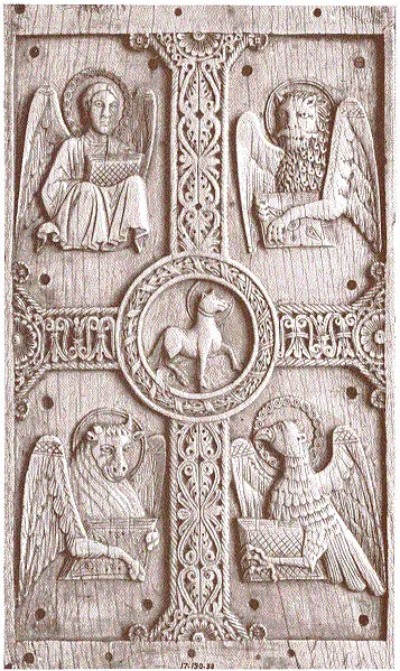
| Folder Name | Book File Name | Title of the Book | Author(s) of the Book | Edition | Language(s) | Number of pages |
| FN | 40_The-Life-of-Christ.pdf | THE LIFE OF CHRIST | FREDERIC W. FARRAR, D.D., F.R.S. | 1887 | English | 510 |
| Table of Contents | ||||||
| Chapter-01:The Nativity | The Fields of the Shepherds. —An Eastern Khan. —The Cave of Bethlehem. —The Enrolment. —Joseph and Mary. —"No room for them in the inn.", —The Manger and the Palace. —The Nativity. —Adoration of the Shepherds. —Fancy and Reality. —Contrast of the Gospels and the Apocrypha | |||||
| Chapter-02: THE PRESENTATION IN THE TEMPLE | Four Circumstances of the Infancy. —Order of Events. —The Circumcision. —The name Jesus. —The Presentation in the Temple. —Simeon. —Anna | |||||
| Chapter-03:The Visit of the Magi | Importance of the Epiphany. —Herod the Grea -"Magi” —Traditions —Causes of their Journey. —General Expectation of the World. —The Star in the East. —Astronomical Conjectures of Kepler. —Evanescent Stars. —Gifts of the Magi | |||||
| Chapter-04: The Flight into Egypt, and Massacre of the Innocents | Departure of the Magi. —Legends of the Flight into Egypt. —Massacre of the Innocents. —Its Historical Credibility. —Character of Herod the Great. —Silence of Josephus. —Death and Burial of Herod the Great. —The Spell of the Herodian Dominion broken. —Accession of Archelaus. -Settlement of Joseph and Mary in Galilee | |||||
| Chapter-05: THE Boyhood of JESUS | Geography of Palestine. —Galilee. —Nazareth. —Reticence of the Evangelists. —Truthfulness of the Gospels contrasted with Apocryphal Legends. —Life of Galilean Peasants. —Imagination and Fact. —"He shall be called a Nazarene" | |||||
| Chapter-06: JESUS IN THE TEMPLE | Jesus Twelve Years Old. —Journey from Nazareth to Jerusalem. —Scenes by the Way. —Numbers of Passover Pilgrims. —Jesus missing from the Caravan. —The Search. —Rabbis in the Temple. —"Hearing them and asking them questions." —"Why did ye seek Me?" —"They understood not." —Submissiveness | |||||
| Chapter-07: The Home at Nazareth | "The Carpenter." —Dignity of Poverty. —Dignity of Toil. —The Common Lot. —Wisdom better than Knowledge. —Originality. —The Language spoken by Jesus. —The Books of God. —Jesus in his Home. —Work and Example of those Years. —Peacefulness. —"The brethren of the Lord." —Solitude. —The Hill-top at Nazareth. —Plain of Esdraelon. —Centrality of Palestine | |||||
| Chapter-08: THE Baptism of JOHN | Characteristics of the Age. —Darkness deepest before Dawn. —Asceticism. —John the Baptist. —His Character. —His Teaching. —His Audience. —Scene of his Teaching. —His Message. —Bearing of John in the Presence of Jesus. Why Jesus was baptised. -Recognition as the Messiah | |||||
| Chapter-09: The Temptation | Quarantania. With the wild beasts. —"Forty days." -The Moment of Exhaustion. —Reality of the Temptation. —"Tempted like as we are." —Fasting. —Lapides Judaici. —The First Temptation. —Subtlety of it. —"Not by bread alone." —The Suggested Doubt. —The Order of the Temptations. —The Temple Pinnacle. —The Tempter’s Quotation. —The Splendid Offer. —The Roman Emperor. —The Victory | |||||
| Chapter-10: The First Apostles | St. John’s Gospel. —"The Lamb of God." —Andrew and John. —Simon. —Appearance and Personal Ascendancy of Jesus. —Philip. —Nathanael. —"Come and see." —"Under the fig-tree." —"Angels ascending and descending" | |||||
| Chapter-11: The First Miracle | "On the third day." —An Eastern Bridal. —"They have no wine."? —The Answer to the Virgin. —The Miracle. —Characteristics of this and other Miracles. | |||||
| Chapter-12: THE SCENE OF THE MINISTRY | Contrast between the Sea of Galilee and the Jordan Valley. —Beauty of Gennesareth. —Character of the Scenery. —Its Present Desolation and Past Populousness. —Prophecy of Isaiah. —Centrality. —Christ’s Teaching there. —Site of Capernaum | |||||
| Chapter-13: JESUS AT THE PASSOVER | Visit to Jerusalem. —Purification of the Temple. —State of the Court of the Gentiles. —Crowd of Traders. —Indignation of Jesus. —Why they did not dare to resist. —Question of the Rulers. —"Destroy this temple." —Impression made by the Words. —Their deep Significance. —Extent to which they were understood | |||||
| Chapter-14: NICODEMUS | Talmudic Allusions to Nicodemus. —His Character. —Indirectness of his Questions. —Discourse of Jesus. —His Disciples baptise. Continued Baptism of John. —Ainon, near Salim. —Complaint of John’s Disciples. Noble and sad Reply | |||||
| Chapter-15: THE Woman OF SAMARIA | Retirement of Jesus to Galilee. —Sychar. —Noontide at the Well. —The Scene. Conversation with the Woman. —Jerusalem and Gerizim. —Revelation of Messiahship. —Return of Disciples. —The Fields White unto Harvest. —Believing Samaritans | |||||
| Chapter-16: REJECTED BY THE NAZARENES | Sequence of Events. —A perfect "Harmony" impossible. —A Prophet in his own Country. —A Jewish Synagogue. —Nature of the Service. —Sermon of Jesus. —Change of Feeling in the Audience. —Their Fury. —Escape of Jesus. —Finally leaves Nazareth | |||||
| Chapter-17: THE BEGINNING OF THE GALILAEAN MINISTRY | The Courtier’s Entreaty. —His Faith. —Sequence of Events. —St. John and the Synoptists. —Jesus stays at Capernaum. —His First Sabbath there. — Preaches in the Synagogue. —The’ Demoniac. —Peter’s Mother-in-law. —The Evening. —Eagerness of the Multitude —His Privacy invaded. —Preaches from the Boat. —Call of Peter, James, and John. —"Depart from Me." —Publicans. —The Publican Apostle | |||||
| Chapter-18: The TWELVE, AND THE SERMON ON THE Mount | A Night of Prayer. —Selection of the Twelve. —Conjectures respecting them. James and John. —Peter. —Kurn Hattin. —Contrast with Moses on Sinai. —Beatitudes. —Sketch of the Sermon on the Mount. —"Not as the Scribes.” —Authority. —Christ and other Masters. —Perfection. —Beauty and Simplicity | |||||
| Chapter-19: FURTHER MIRACLES | A Man full of Leprosy. — Violation of the Letter —Why was Publicity forbidden? —Deputation of Batlanim. —Message of the Centurion. -Pressure of the Ministry. —The Interfering Kinsmen | |||||
| Chapter-20: JESUS AT NAIN | Nain. —A Funeral. -The Widow’s Son raised. —Message from John the Baptist. —Overclouding of his Faith. —How accounted for. —Machaerus. —God’s Trial of His Servants. -Answer of Jesus. —Splendid Eulogy of John. —"The least in the kingdom of heaven" | |||||
| Chapter-21: THE SINNER AND THE PHARISEE | Simon the Pharisee. —Jewish Customs at Meals. —The Weeping Woman. —Simon’s Disgust. —Answer of Jesus. —Parable of the Debtors. —Cold Courtesy of Simon. —Pardoning of Sins. —Was it Mary of Magdala? | |||||
| Chapter-22: JESUS AS HE LIVED IN GALILEE | Scene in Galilee. —Jesus and His Followers. —His Aspect. —A Life of Poverty —Of Toil —Of Health —Of Sorrow —and yet of Holy Joy | |||||
| Chapter-23: A Great Day IN THE LIFE oF JESUS | Order of Events. —Teaching from the Boat. —Parables. —Parable of the Sower.—Other Parables. —Effect Produced. —Urgent Desire for Rest. —The Eastern Shore. —The Three Aspirants. —The Storm. —"What manner of Man is this?" —Miracles. —Gergesa. —The Naked Demoniac from the Tombs. —"Thy Name." —Loss of the Swine. —Alarm of the Gadarenes. —Their Request. —Request of the Demoniac | |||||
| Chapter-24: The Day of Matthew’s FEAST | Return to Capernaum. —The Paralytic let through the Roof. —"Thy sins be forgiven thee." —Feast in Matthew’s House. —Scorn of the Pharisees. —Question about Fasting. —The New Wine and the Old. | |||||
| Chapter-25: The Day of Matthew’s FEAST (Contined) | Jairus. -The Woman with the Issue. —The Touch of Faith. —Message to Jairus. —The Hired Mourners. —Raising of Jairus’s Daughter. —The Blind Men. —They disobey Christ's Injunction | |||||
| Chapter-26: A Visit To JERUSALEM | Phases of the Ministry. —Mission of the Twelve. —Their Instructions. —A Feast of the Jews. —Arrangement of St. John. —Days of Jewish Feasts. —Nature of the Purim Feast. —Reason for Christ’s Presence | |||||
| Chapter-27: THE Miracle at Bethesda | Pool of Bethesda. —Healing of the Impotent Man. —Jealous Questioning. —Sabbath-breaking. —The Man’s Meanness. —Anger of the Rulers. —Answer of Jesus. —Dangerous Results | |||||
| Chapter-28: The Murder of JOHN THE BAPTIST | Return to Galilee. —Herod Antipas. —Herodias. —Consequences of the Adulterous Marriage. —Credulity and Unbelief. —The Banquet. -Salome. —Her Request. —Murder of the Baptist. —Herod’s Remorse. —He inquires about Jesus. —Ultimate Fate of Herod. | |||||
| Chapter-29: THE FEEDING OF THE FIVE THOUSAND, AND WALKING ON THE SEA | Bethsaida Julias. —Hungry Multitude. —Miracle of the Loaves. —Excitement of the Multitude. —Dismissal of the Disciples. —Jesus alone on the Mountain. —The Disciples alone in the Storm. —"It is I" —Peter’s Boldness and Failure. —Nature of the Miracle. | |||||
| Chapter-30: THE Discourse AT CAPERNAUM | Astonished Query of the Multitude. —Reproof of Jesus. —They ask for a Sign. —His Answer. —The Bread of Life. —Their Dull Materialism. —Their Displeasure. —Abandonment of Jesus. —Sad Question to the Disciples. —Answer of Peter. —Warning to Judas | |||||
| Chapter-31: GATHERING OPPOSITION | Gathering Clouds. —1. "Thy sins be forgiven thee." 2. "A gluttonous man and a winebibber." 3. "Thy disciples fast not." 4. "With publicans and sinners." —"Mercy, not sacrifice." —The Prodigal Son. —Religionism and Religion. —5. Charges of violating the Sabbath. —Jewish Traditions. —Abhoth and Toldoth. —i. In the Cornfields. —Analogy of David’s Conduct. —No Sabbatism in the Temple. —Incident in the Codex Bezae. —ii. The Stonemason with the Withered Hand. —Good or Evil on the Sabbath? —The Objectors Foiled. —Unwashen Hands. —Jewish Ablutions. —"Your tradition." —The Oral Law. —Hagadoth and Halachoth. —"That which cometh from within." —Evil Thoughts | |||||
| Chapter-32: DEEPENING OPPOSITION | Agitations of the Life of Jesus. —Prayer at Dawn. —The Lord’s Prayer. —Parable of the Importunate Friend. —Lights and Shadows of the Life of Jesus. —The Blind and Dumb Demoniac. —Exorcism. —Slander of the Scribes. —Beelzebub —Answer of Jesus. —Warning against Light Words. —Who are truly blessed? —"Master, we would see a sign." —Sign of the Prophet Jonah. —Interference of His Kinsmen | |||||
| Chapter-33: The Day of Conflict | Alone with Pharisees at the Midday Meal. —Unwashen Hands. —Reproof of Jesus. —The Lawyers included in the Reproof. —Spurious Civility. —Open Rupture. —Danger of Jesus. —He goes out to the Multitude. —Denunciation of Hypocrisy. —Foolish Appeal. —The Parable of the Rich Fool. —Peter’s Question. —Jesus troubled in Spirit | |||||
| Chapter-34: AMONG THE HEATHEN | The Regions of Tyre and Sidon. —The Syro-phenician Woman. —Her Petition apparently rejected. —Her Exalted Faith. —Her Faith rewarded. —Heathen Lands. —Return to Decapolis. —Deaf and Dumb Man. —"Ephphatha!" —Reception by the Multitudes. —Feeding of the Four Thousand | |||||
| Chapter-35: THE GREAT CONFESSION | Reception of Jesus on His return to Galilee. —An ill-omened Conjunction. —Demand of a Sign. —Reproof and Refusal. —Sadness of Jesus. —He sails away. —The Prophetic Woe. —Leaven of the Pharisees and of Herod. —Literal Misinterpretation of the Apostles —Healing of a Blind Man at Bethsaida Julias. —On the road to Ceesarea Philippi. —The Momentous Questions. —"Thou art the Christ, the Son of the Living God." —The Rock. —Foundation of the Church. —Misinterpretations. —Warnings about His Death. —Rash Presumption of Peter. —"Get thee behind Me, Satan." —The Worth of the Human Soul. "The Son of Man coming in His Kingdom". | |||||
| Chapter-36: THE TRANSFIGURATION | The Mountain. —Not Tabor, but Hermon. —The Vision. —Moses and Elias. —Bewildered Words of Peter. —The Voice from Heaven. —Fading of the Vision. —The New Elias. | |||||
| Chapter-37: THE DEMONIAC BOY | The Contrast. —The Disciples and the Scribes. —Arrival of Jesus. —The Demoniac Boy. —Emotion of Jesus. —Anguish of the Father. —"If thou canst." -The Deliverance. —Power of Faith to remove Mountains. —Secluded Return of Jesus. —Sad Warnings. —Dispute which should be the Greatest. —The Little Child. —John’s Question. —Offending Christ’s Little Ones. —The Unforgiving Debtor | |||||
| Chapter-38: A BRIEF REST IN CAPERNAUM | The Temple Tax. —The Collectors come to Peter. —His rash Answer. —Jesus puts the Question in its true light. —The Stater in the Fish’s Mouth. —Peculiar Characteristics of this Miracle | |||||
| Chapter-39: JESUS AT THE FEAST OF TABERNACLES | Observances of the Feast of Tabernacles. —Presumption of the Brethren of Jesus. —"I go not up yet unto this feast." —Eager Questions of the Multitude. —Their differing Opinions. —Jesus appears in the Temple. —His Reproachful Question. —"Thou hast a devil." —Appeal to His Works. —Indignation of the Sanhedrin. —Observances of the Last Day of the Feast. —"The joy of the drawing of water." —"Rivers of Living Water." -Divided Opinions. —"Never man spake like this Man." —Timid Interpellation of Nicodemus. —Answering Taunt of the Pharisees | |||||
| Chapter-40: THE WOMAN TAKEN IN ADULTERY | Indirect references to the Narrative in the following Discourses. —Jesus at the Mount of Olives. —Returns at Dawn to the Temple. —Hilarity of the Feast of Tabernacies. —Immorality of the Age. —The Water of Jealousy. —Base Cruelty of the Pharisees. —The Woman dragged into the Temple. —"What sayest Thou?" —Subtlety of the Assault. —Writing on the Floor. —"Him that is without sin among you." —Conscience-stricken. —Misery left alone with Mercy. —"Go, and sin no more." —Absolute Calmness of Jesus under all Attacks. —Eighth Day of the Feast. —The great Candelabra. —The Light of the World. —Agitating Discussion, with the Jews. —A Burst of Fury. —Jesus leaves the Temple | |||||
| Chapter-41: THE Man Born Blind | Jewish Notion of Nemesis. —"Which did sin?" —"Go wash in the Pool of Siloam." —On the Sabbath Day. —The Man examined by the Sanhedrin. —A Sturdy Nature. —Perplexity of the Sanhedrists. —"We know that this man is a sinner." —Blandishments and Threats. —The Man excommunicated —Jesus and the Outcast. —True and False Shepherds | |||||
| Chapter-42: FAREWELL TO GALILEE | The Interval between the Feasts of Tabernacles and Dedication. —Great Episode in St. Luke. —Character of the Episode. —Mission of the Seventy. —News of the Galileans massacred by Pilate. —Teachings founded on the Event. —Stern Warnings. —The Barren Fig-tree. —The Pharisees’ Plot to hasten His Departure. —"Go and tell this fox." —Herod Antipas. —Jesus sets forth —Farewell to the Scene of His Ministry. —Fate that fell on the Galileans. —Jesus exults in Spirit. —"Come unto me all ye that labour." —Noble Joy. | |||||
| Chapter-43: INCIDENTS OF THE JOURNEY | Possible Routes. —The Village of En-Gannim. —Churlishness of the Samaritans. —Passion of the Sons of Thunder. —Gentle Rebuke of Jesus. —Counting the Cost. —Peraea. —The Ten Lepers. —Thanklessness. —"Where are the nine?" | |||||
| Chapter-44: TEACHINGS OF THE JOURNEY | Sabbatical Disputes. —Foolish Ruler of the Synagogue. —Healing of the Bowed Woman. —Argumentum ad hominem. —Ignorant Sabbatarianism. Religious Espionage. —The Man with the Dropsy. —Question of Jesus. —Silence of Obstinacy. —The Man Healed. —Self-sufficiency of the Pharisees. —Struggles for Precedence. —A Vague Platitude. —Parable of the King’s Marriage-feast. —The Unjust Steward. —Avarice of the Pharisees .—Their Sycophancy to Herod. —The Rich Man and Lazarus. —"Are there few that be saved?" —"What must I do to obtain Eternal Life?" —The Good Samaritan. —Return of the Seventy. —The Love of Publicans and Sinners. —The Parable of the Prodigal Son. —Solemn Warnings. —"Where, Lord?" —The Eagles and the Carcase | |||||
| Chapter-45: THE Feast of DEDICATION | The House at Bethany. —Martha and Mary. —"The one thing needful." —The Feast of the Dedication. —Solomon’s Porch. —Reminiscence of the Feast. —Jesus suddenly surrounded. "How long dost thou hold us in suspense?" —No Political Messiah. —"I and My Father are one." —They seek to stone Him. —Appeal of Jesus to His Life and Works. —He retires to Bethany beyond Jordan | |||||
| Chapter-46:THE Last Stay In PERAEA | Question about Divorce. —Importance of the Question. —Hillel and Shammai. —Dispute as to the meaning of Ervath Dabhar. —Lax Interpretations. —Both Schools wrong. —Simple Solution of the Question. —Permission of Divorce by Moses only temporary. —Corruption of the Age. —Teachings of Jesus about Moral Purity. —Celibacy and Marriage. —Jesus blesses Little Children. —The eager Young Ruler. —"Good Master." —"What must I do?" —An Heroic Mandate. —"The Great Refusal." —Discouragement of the Disciples. —Hundred fold Rewards. —The Labourers in the Vineyard | |||||
| Chapter-47: THE RAISING OF LAZARUS | Message to Jesus. —Two Days’ Delay. —"Let us also go that we may die with Him." —He approaches Bethany. —Martha meets Him. —"The Resurrection and the Life." —Mary’s Agony. —Deep Emotion of Jesus. —Scene at the Grave. —"Lazarus, come forth." —Silence of the Synoptists. —Meeting at the House of Caiaphas. —His Wicked Policy. —The Fiat of Death. —Retirement to Ephraim | |||||
| Chapter-48: JERICHO AND BETHANY | Pilgrim-caravans. —Jesus on His Way. —Revelation of the Crowning Horror. —The Sons of Zebedee. —The Cup and the Baptism. —Humility before Honour. —Jericho. —Bartimeeus. —Zaccheus. —His Repentance. —Parable of the Pounds. —Events which suggested it. —Arrival at Bethany. —"Simon the Leper." -Intentional Reticence of the Synoptists. —Mary’s Offering. —Inward Rage of Judas. —Blessing of Mary by Jesus. —"For my burying." —Interview of the Traitor with the Priests | |||||
| Chapter-49: PALM SUNDAY | Excitement of Expectation. —Three Roads to Bethany. —Bethphage. —The Ass’s Colt -A Humble Triumph. —Hosanna! -Turn of the Road. —The Jerusalem of that Day. —Jesus weeps over the City. —Terrible Fulfilment of the Woe. —The Two Processions. —Indignation of the Pharisees. —"Who is this?" —Jesus once more cleanses the Temple. —Hosannas of the Children. "Have ye never read?" —The Greeks who desired an Interview. —Abgarus V. —Discourse of Jesus. —Voice from Heaven. —The Day closes in Sadness. —Bivouac on the Mount of Olives | |||||
| Chapter-50:MONDAY IN PASSION WEEK — A Day OF PARABLES | Jesus Hungers. —The Deceptive Fig. —Hopelessly Barren. —Criticisms on the Miracle. —Right View of it. —Deputation of the Priests. —"Who gave thee this authority?" —Counter-question of Jesus. —The Priests reduced to silence. —Parable of the Two Sons. —Parable of the Rebellious Husbandmen. —The Rejected Corner-stone. —Parable of the Marriage of the King’s Son. —Machinations of the Pharisees | |||||
| Chapter-51: THE DAY OF TEMPTATIONS — THE LAST AND Greatest Day OF THE PUBLIC Ministry of JESUS | The Withered Fig-Tree. —Power of Faith. —Plot of the Herodians. —Its Dangerous Character. -The Tribute Money. —Divine and Ready Wisdom of the Reply of Jesus. —Attempt of the Sadducees. —A poor Question of Casuistry. —The Sevenfold Widow. —"As the Angels of God." -"The God of Abraham, Isaac, and Jacob." —Implicit Teaching of Immortality | |||||
| Chapter-52: THE GREAT DENUNCIATION | "Master, Thou hast well said." —"Which is the great commandment?" —Answer of the Rabbis. —Answer of Jesus. —"Not far from the kingdom of heaven." —Question of Jesus to the Scribes. —David’s Son and David's Lord. —Their Failure to answer. —The Final Rupture. —"Woe unto you, Scribes and Pharisees, hypocrites!" —The Voice which broke in Tears. —"O Jerusalem, Jerusalem!" —The Denunciation deserved. —The Denunciation fulfilled | |||||
| Chapter-53: FAREWELL TO THE TEMPLE | Happier Incident. —The poor Widow. —True Almsgiving. —Splendour of the Temple. —"Not one stone upon another." —Jesus on the Mount of Olives. —"When shall these things be ?" —The great Eschatological Discourse. —The Two Horizons. —Difficulties of the Discourse, and mode of meeting them. —What must come before the Final End. —The Immediate Future. —Warning Signs. —Parable of the Fig-tree —of the Ten Virgins—of the Talents. —After Two Days. —Last Evening Walk to Bethany | |||||
| Chapter-54: THE BEGINNING OF THE END | Meeting of Conspirators in the Palace of Caiaphas. —Their Discussions. —Judas demands an Interview. —Thirty Pieces of Silver. —Motives of Judas. —"Satan entered into Judas." —The Wednesday passed in Retirement. —Last Sleep of Jesus on Earth | |||||
| Chapter-55: THE LAST SUPPER | "Green Thursday." —Preparations for the Meal. —The Upper Room. —Dispute about Precedence. —Jesus washes the Disciples’ Feet. —Peter’s Surprise and Submission. —"Ye are clean, but not all." —Teaching about Humility. —Troubled in Spirit. —"One of you shall betray me." -"Lord, is it I?" —Peter makes a sign to John. —Giving of the Sop. —“Rabbi is it I?" -"He went out, and it was night." —Revived Joy of the Feast. —Institution of the Lord’s Supper | |||||
| Chapter-56: THE LAST DISCOURSES | "Now is the Son of Man glorified." —"Little Children." —The New Commandment. —"Lord, whither goest Thou?" —Warning to Peter. —"Lord, here are two swords." —Consolations. —"How can we know the way?" —"Lord, show us the Father." —Difficulty of Judas Lebbaeus. —Last Words before Starting. —The True Vine. —Plain Teaching. —Gratitude of the Disciples. —Fresh Warnings to them. —The High-Priestly Prayer | |||||
| Chapter-57: GETHSEMANE — THE AGONY AND THE ARREST | Walk through the Moonlight to Gethsemane. —Last Warning to Peter. —Gethsemane. —Scene of Agony. —Desire for Solitude and yet for Sympathy. —The First Struggle with Agony of Soul. —Its Intensity. —The Bloody Sweat. —Not due to Dread of Death. —"Simon, sleepest thou?" —The Second Agony. —The Disciples Sleeping. —The Third Agony and Final Victory. —"Sleep on now, and take your rest." —Torches in the Moonlight. —Steps taken by Judas. —"Comrade." —The Traitor’s Kiss. —Jesus advances. —"Whom seek ye?" —"I am He.” —Terror of the Band. —Historical Parallels. —Jesus arrested. —Peter’s Blow. —"Suffer ye thus far." —The Young Man in the Linen Sheet. —Jesus bound and led away | |||||
| Chapter-58: JESUS BEFORE THE PRIESTS AND THE SANHEDRIN | Asserted Discrepancies. —Sixfold Trial. —"To Annas first." —Hanan, the High Priest de jure. —His Character. —His Responsibility for the Result. —Degradation of the then Sanhedrin. —Pharisees and Sadduecees. —Greater Cruelty of the Latter. —The Sadducees, the Priestly Party. —Cause of their Rage and Hatred. —"The Viper Brood." —Jesus repudiates the Examination of Hanan. — Answerest Thou the High Priest so?" —Noble Patience. —The Second Phase of the Trial. —In the Palace of Caiaphas. —Committees of the Sanhedrin. —"Sought false witness." —Total Failure of the Witnesses. —"Destroy this Temple." —Silence of Jesus. —Despair of Caiaphas. —His violent Adjuration. —Reply of Jesus —"Blasphemy." —"Ish maveth" | |||||
| Chapter-59: THE INTERVAL BETWEEN THE TRIALS | The First Derision. —The Outer Court. —John procures Admission for Peter. —The First Denial. -The Second Denial. —The Galilean Accent. —The Third Denial. —The Look of Jesus. —The Repentance of Peter. —Brutal Insults of the Menials. The Dawn. —The Meeting of the Sanhedrin. —Their Divisions. —Third Phase of the Trial. —A Contrast of Two Scenes before the Sanhedrin. —Jesus breaks His Silence. —The Condemnation. -The Second Derision. —The Fate of Jesus | |||||
| Chapter-60: JESUS BEFORE PILATE | "Suffered under Pontius Pilate." —What is known of Pilate. —First Outbreak of the Jews against him on his arrival. —The Aqueduct and the Corban. —The gilt Votive Shields. —The Massacre of Galileans. —The Massacre of Samaritans. —The Palave of Herod. —Jesus in the Palace. —Led before Pilate. —Pilate comes out to the Jews. —1. His Roman Contemptuousness. —Determines to try the Case. —Vagueness of the Accusations. —"Art Thou the King of the Jews ?" —"What is truth?" —First Acquittal. —2. Fierceness of the Jews. —Jesus sent to Herod Antipas. —Cruel Frivolity of Herod. —Second Acquittal. —3. Last Phase of the Trial. Temporising of Pilate. —Dream of his Wife. —Cowardly Concession. —Jesus or Bar-Abbas. —"Crucify Him." —The Scourging. —Third Derision. —The Crown of Thorns. —"Behold the Man!" —Last efforts of Pilate to save Him. —Last Warning to Pilate. —"The Son of God." —"Behold your King." —Pilate terrified at the Name of Cesar. —He gives way. —He washes his Hands. —"His blood be on us, and on our children! —Fulfilment of the Imprecation. | |||||
| Chapter-61: THE CRUCIFIXION | "I, miles, expedi erucem." —Two Malefactors. —The Cross. —Procession to Golgotha. —Symon of Cyrene. —The Daughters of Jerusalem. —The Green and the Dry Tree. -Site of Golgotha. —The Medicated, Draught. —The Method of Crucifixion. —"Father, forgive them." —Agony of Crucifixion. —The Title on the Cross. —Rage of the Jews. —The Soldiers. —Parting the Garments. —Insults of the Bystanders. —The Robber. —Silence of the Sufferer. —The Penitent Robber. —"To-day shalt thou be with Me in paradise." —The Women from Galilee. —"Woman, behold thy son." —The Noonday Darkness. —"Eli, Eli, lama sabachthani?" —"I thirst." —Vinegar to Drink. —"Into Thy hands." -"It is finished." —The Centurion. —The Multitude. —What the Cross of Christ has done. —The Crurifragium. —Water and Blood. | |||||
| Chapter-62: THE RESURRECTION | Utter apparent Weakness of Christianity at the Death of Christ. —Source of its subsequent Strength. —Joseph of Arimathea. —Nicodemus. —The Garden and the Sepulchre. —The Women near the Spot. —Request of the Sanhedrin that the Tomb might be Guarded. —The Dawn of Easter Day. —The Women at the Sepulchre. —The Empty Tomb. —Peter and John. —1. First Appearance to Mary of Magdala -2. Appearance to the Women. —Story Invented by the Jews. —3. Appearance to Peter. —4.The Disciples at Emmaus. —5. The assembled Apostles. —6. The Apostles and Thomas. —7. At the Sea of Galilee. —Jesus and Peter. —"Feed my Lambs." —"What shall this man do?" —8. The Five Hundred on the Mountain. —9. Appearance to James. —10. The Ascension. —"At the right hand of God, the Father Almighty" | |||||
Review: The book calls Jesus Son of God and highlights the notion that even though Jews now consider Jesus their Messiah but not his divinity. Quotes: "...this book is almost wholly founded on an independent study of the four Gospels side by side. In quoting from them I have constantly and intentionally diverged from the English version, because my main object has been to bring out and explain the scenes as they are described by the original witnesses.", "I do not regard as possible any final harmony of the Gospels.", "On this subject no two writers have ever been exactly agreed, and this alone is sufficient to prove that the Gospel notices of chronology are too incomplete to render certainty attainable.", "In deciding upon a particular sequence of events, we can only say that suca a sequence appears to us a probable one, not by any means that we regard it as certain."
Truthfulness of the Gospels contrasted with Apocryphal Legends - no criteria given about who are authorized to categoried truthfulness.
| Folder Name | Book File Name | Title of the Book | Author(s) of the Book | Edition | Language(s) | Number of pages |
| FN | 40_The-Holy-Mass-Christ.pdf | THE HOLY MASS | ST. ALPHONSUS DE LIGUORI | 1889 | English | 478 |
| Table of Contents | ||||||
| Introduction: | THE SACRIFICE OF JESUS CHRIST, WITH A SHORT EXPLANATION OF THE PRAYER OF MASS. THE SACRIFICE OF JESUS CHRIST. The Sacrifices of the Old Law were figures of the Sacrifice of Jesus Christ. Fulfilment of the prophetic figures. SHORT EXPLANATION OF THE PRAYERS OF MASS. The preparation that is made at the foot of the altar; From the Introit to the Credo; The Offertory and the Preface; The Canon; The Pater noster; From the prayer Libera nos till the Communion; Thanksgiving. ACCOUNT OF A STRIKING MIRACLE. HOSTS DISCOVERED IN A FIELD NEAR NAPLES, THE CEREMONIES OF THE MASS. | |||||
| Chapter-01:WHAT THE PRIEST SHOULD DO BEFORE GOING TO THE ALTAR | 1. Preparatory arts. 2. The preparing of the Missal and the washing of hands 3- The preparing of the chalice 4. The priest about to put on the vestments 5.He puts on the amice 6. The alb 7. The maniple 8. The stole 9. The chasuble | |||||
| Chapter-02: LEAVING THE SACRISTY AND APPROACHING THE ALTAR | 1. The priest takes the chalice and proceeds to leave the sacristy 2. The priest goes from the sacristy to the altar 3. The priest arrives at the altar 4. The priest as cends the steps of the altar, whereon he places the chalice 5. The priest opens the Missal, then descends to the foot of the altar | |||||
| Chapter-03: THE BEGINNING OF THE MASS | 1. The priest, with his hands joined, makes an inclination or a genuflection 2. The priest makes the sign of the cross 3. The priest recites the psalm Judica me 4. The priest recites the Confiteor and what follows it as far as the prayer Anfer a nolris | |||||
| Chapter-04: THE INTROIT, KYRIE, AND GLORIA IN EXCELSIS | 1. The priest says the prayer Oramus te, and kisses the altar 2. The priest reads the Introit, and recites the Kyrie 3. The priest recites the Gloria in Excelsis, III. | |||||
| Chapter-05: THE PRAYERS | 1. The priest salutes the people, saying Dominus vobiscum 2. The priest recites the prayer 3. The prayer on the Ember days 4. The number of prayers 5. The order of the prayers | |||||
| Chapter-06: THE EPISTLE, THE GRADUAL, THE GOSPEL, AND THE CREDO | 1. The priest reads the Epistle, the Gradual, and what follows 2. The priest reads the Gospel 3. The priest recites the Credo 4. At which Masses should the Credo be said | |||||
| Chapter-07: THE OFFERTORY, THE SECRETUM, AND THE PREFACE | 1. The priest recites the Offertory 2. The priest uncovers the chalice and offers the bread 3. The priest puts wine and water into the chalice, and offers them 4. The priest blesses the bread and the wine 5. The priest washes his hands 6. The priest says the Suscipe Sancta Trinitas, the Orate Fratres, and the Seereta 7. The priest says the Preface | |||||
| Chapter-08: FROM THE CANON OF THE MASS TO THE CONSECRATION, INCLUSIVELY | 1. The priest recites the prayer Te igitur 2. makes the Memento for the living; finishes the prayer Memento, and says the following prayers: Communicantes, Hanc igitur, and Quam oblationem 3. consecrates the Host, consecrates the chalice | |||||
| Chapter-09: FROM THE CONSECRATION TO THE Pater noster, EXCLUSIVELY | 1. The priest says the prayers Unde et Mentores, Supraqua, Supplices 2. makes the Memento for the Dead, 3. says the prayers Nobis quoque peccatoribus and Per quem hac omnia | |||||
| Chapter-10: FROM THE Pater noster AND THE ACTS THAT FOLLOW TO THE PRIEST S COMMUNION, INCLUSIVELY | 1. The priest recites the Pater noster, and begins the Libera nos quaesumus 2. continues until after the Agnus Dei, 3. receives the sacred Host, 4. takes the precious blood; takes the ablutions, then covers the chalice with the veil and the burse | |||||
| Chapter-11: THE PRAYERS AFTER COMMUNION, AND THE END OF MASS | 1. The priest recites the Communio, the Post-communio, and the Ite Missa est, 2. recites the prayer Placeat tibi, and gives the blessing, 3. reads the last Gospel, 4. leaves the altar and returns to the sacristy | |||||
| Chapter-12: THE MANNER OF GIVING COMMUNION DURING MASS | 1. The manner of giving Communion with the Hosts consecrated at Mass 2. with the Hosts kept in the tabernacle 3. remarks in regard to the Hosts that are not consumed 4. Communion is given during and even after Mass 5. manner of purifying the ciborium 6.Communion in Requiem Masses | |||||
| Chapter-13: | COMMUNION GIVEN OUTSIDE OF MASS, EITHER BEFORE OR AFTER IT, Manner of giving Communion | |||||
| Chapter-14: | WHAT is OMITTED IN THE MASSES OF THE DEAD | |||||
| Chapter-15: | MASS CELEBRATED WHEN THE BLESSED SACRAMENT is EXPOSED | |||||
| Chapter-16: | MASS CELEBRATED BEFORE A BISHOP | |||||
| Chapter-17: | THE FAULTS THAT ARE USUALLY COMMITTED IN CELEBRATING MASS | |||||
| Appendix: | I. Notice of the Missal II. The altar and its ornaments 1. The altar 2. The altar-cloths and the antipendium 3. The cross and the candles 4. Altar-cards, bookstand, cruets | |||||
| Appendix: | III. The chalice and its accessories 1. The chalice and the paten 2. The purificator, pall, corporal, veil, and burse IV. The vestments 1. Material and blessing 2. The color of the vest ments V. The matter and the form of the sacrament 1. The bread 2. The wine 3. The sacramental form VI. The disposition of the celebrant 1. The intention 2. The disposition of the soul 3. The disposition of the body | |||||
| Appendix: | VII. Accidents 1. Profanation of the church, and imminent dangers 2. Illness with which the celebrant may be seized 3. Hurtful things that may fall into the chalice or touch the Host 4. The Host that is broken or has fallen into the chalice 5. Precious blood frozen or spilt 6. Vomiting, and the Host that has fallen VIII. The place and the time in which one may celebrate Mass 1. The place 2. The time IX. Mass when celebrated in aliena ecclesia X. The server of Mass | |||||
| Appendix: | THE HONORARIUM OF MASSES, or the abuses to which it gives rise. Reply to an anonymous book entitled; Dissertation on the Honorarium of Masses, 1. Ancient custom of public Masses with offerings, and origin of paid Masses 2. Abuses occasioned by the admission of Honoraria, and the means employed to remedy them 3. Various means devised to abolish the Honorarium, and the remedy proposed by the anonymous author 4. Examination of the author's views; first, as to private Masses 5. The use of unleavened and of leavened bread 6. The origin of Honoraria 7. The value and application of the fruit of the Mass 8. The Masses specially applied, for which stipends are given 9. The contracts made in regard to the Honorarium 10. The abolition of Honoraria, and the re-establishent of Masses with offerings 11. The care of excluding unworthy subjects from Holy Orders 12. Privileged altars | |||||
| PREPARATION FOR MASS AND THANKSGIVING AFTER IT: PRAYERS OF THE MISSAL AND PRAYERS TO WHICH INDULGENCES ARE ATTACHED, Preparation for Mass, Pneparatio ad Missam pro opportunitate Sacerdotis facicnda, Orationes pro opportunitate Sacerdotis ante Celebrationem et Communionem dicendae: Oratio Sancti Ambrosii Episcopi; alia Oratio ante Missam, Oratio Sancti Thornse Aquinatis, Indulgenced prayers for priests-Ego volo celebrare Missam, O felicem virum, beatum Joseph, Virginum Gustos et Pater, Sancte Joseph, Thanksgiving, Gratiarum actio post Missam, Orationes post Celebrationem et Communionem dicendae: Oratio Sancti Thomze de Aquino, Oratio Sancti Bonaventurae, Rhythmus Sancti Thomae ad Sacram Eucharistiam, Indulgenced prayers for priests: Obsecro te, dulcissime Domine Jesu Christe, Anima Christi,En ego | ||||||
| --- | CONSIDERATIONS AND AFFECTIONS VARIOUS PRAYERS: Importance of the holy sacrifice, The Mass that is said with but little respect and devotion, Preparation for Mass, Thanksgiving, A word to those that abstain from saying Mass, through humility, Preparation for Mass, Considerations and affections for every day in the week, Memento of the living, Memento of the dead, Forma infentionis, Thanksgiving, Affections for each day of the week, Invocations: Anima Christi sandissima, Various prayers: Precatiuncula Sacerdotibus quotidie legenda, tit in dies Deo ferventins deservianty; Ad Beatissimam Mariam precatio, Ad vulnera Christi oratio, Salutationfs ad omnia membra Christi, et sui ipsitts ad eum commendatio | |||||
| --- | CONSIDERATIONS AND AFFECTIONS ON THE PASSION. ACTS. ASPIRATIONS. PRAYERS: Introduction. The respect with which one should say Mass, Preparation for Mass. Considerations on the Passion of Jesus Christ, for every day of the week, Thanksgiving. Affections for every day of the week, Acts before Communion, Acts after Communion, Loving aspirations to the Jesus in the Blessed Sacrament, Before Communion, 374. After Communion, Aspirations of love to Jesus for meditation and holy Communion, Devout aspirations to be made before and after Communion, drawn from the manuscripts of St. Francis de Sales, Before Communion, After Communion and at the visit of the Blessed Sacrament, Various prayers: Petitions to Jesus Christ received in holy Communion, Prayer of St. Bonaventure to the Most Holy Sacrament, Prayer to the Most Blessed Virgin, to obtain the love of Jesus, and love towards her, Litania Sandissimi Nominis Jesu, Litania; Lauretance, B. M. V. | |||||
| --- | THE MASS AND THE OFFICE THAT ARE HURRIEDLY SAID: The holy sacrifice of the Mass hurriedly said, Importance of the holy sacrifice, Three things necessary to say Mass, Preparation before Mass, The respect with which Mass ought to be celebrated, Thanksgiving after celebrating Mass, The priest who abstains from saying Mass, The Divine Office hurriedly said, Importance of the Divine Office, Necessity of reciting the Office well, Requisite attention and devotion, Lights and graces derived from the Office well recited, Faith, Confidence in God, Love for God, Acts of thanksgiving, of humility, of contrition, and of firm purpose of amendment, Various prayers | |||||
Review:
| Folder Name | Book File Name | Title of the Book | Author(s) of the Book | Edition | Language(s) | Number of pages |
| FN | 19_Akbar-and-the-Jesuits.pdf | Akbar and the Jesuits | C. H. Payne | First | English | 349 |
| Table of Contents | ||||||
| Chapter-01: AKBAR, THE GREAT MOGUL | The early Moguls —Tamerlane —Babur —Humayun —Akbar's conquests —Limits of his empire —Its fertility and wealth —Military strength —War-elephants —Personal appearance of Akbar —His temperament, tastes and, recreations —Methods of hunting deer —Public audiences —Administration of justice —Punishments | |||||
| Chapter-02: THE FIRST MISSION TO MOGOR | Akbar's first contact with Christianity —Antoine Cabral —Pierre Tavero —Father Julien Pereira —The priest and the Mullas —Akbar sends for Jesuit Fathers —The first Mission —Its compositiony despatch, and arrival at Fathpur —Favourable reception at court —Debates with the Mullas —Their effect on Akbar | |||||
| Chapter-03: WHAT IS TRUTH? | Residence of the Mission —The royal Princes —Akbar visits the oratory —His leanings towards Christianity —Doctrinal difficulties —The ordeal by fire —Abul Fazl —Revolt in Bengal —The Kabul campaign —The Fathers lose favour —Akbar defends his Mullas | |||||
| Chapter-04: FATHER RUDOLF AQUAVIVA | The Fathers regain Akbar's favour —Hostility of the Saracens —The Mission breaks up —Father Rudolf alone at the Mogul court —His influence over Akbar —The Mullas seek his life —His prayers and austerities —Loved and respected by all classes —His return to Goa | |||||
| Chapter-05: THE SECOND MISSION | Akbar celebrates the feast of the Assumption —Displays his contempt for Islam —Leon Grimon arrives at court —Carries the King's letters to Goa —Jesuit Fathers again invited to the Mogul court —Arrangements for their journey —Akbar’s letter to the Fathers —The Mission at Agra —Its failure and recall | |||||
| Chapter-06: DISPATCH OF THIRD MISSION | Dispatch of third Mission —Arrival at Bambay —First fruits —Meeting with Prince Murad —Travelling with a caravan —At Ahmadabad —A Yogi —A wonderful tomb —Pilgrims on their way to Mecca —The feast of the Passover —Arrival at Lahor | |||||
| Chapter-07: THE FATHERS AT COURT | Welcomed by the King and the Prince —The King's library —A vassal Prince pays homage to the Great Mogul —Gifts fit for a king —Renewed hopes of the King’s conversion —His reverence for Christianity and contempt of Islam —He founds a new religion —The Fathers open a school at Lahor —The King grants them permission to make converts | |||||
| Chapter-08: ON TOUR WITH THE KING | Akbar's eclecticism —The royal palace on fire —The Fathers accompany Akbar to Kashmir —The country described —Illness of Father Xavier and of the King —Famine —The return journey —Prince Salim's adventure with a lioness —Celebrating Christmas at Lahor —The Fathers pay a visit to Akbar —A strange experiment —Facing a storm— The price of baptism —The King, accompanied by Father Xavier, sets out for the Deccan —Public baptism of converts at Lahore —A brave proselyte | |||||
| Chapter-09: AT THE SEAT OF WAR | Akbar marches to Burhanpur —Father Corst joins the Mission —His adventurous journey from Cambay to Burhanpur —The Deccan Campaign —The investment of Asirgarh —Submission of king Miran —The Governor of the fortress commits suicide —The defenders are bribed and the fortress is surrendered | |||||
| Chapter-10: AN EMBASSY TO GOA | Father Pigneiro comes to the royal camp —He pays his respects to the King —Akbar's designs against the Portuguese —An ambassador is sent to the Portuguese Viceroy —His reception at Goa —Akbar's letter to the Viceroy | |||||
| Chapter-11: FATHER PIGNEIRO AT LAHORE, 1600-1 | Work amongst the people —Opposition of the Brahmans —A friendly Viceroy —Father Pigneiro as peace-maker —Vice-regal state —Mogul death duties —The Kotwal stands by the Fathers | |||||
| Chapter-12: THE CONFIDENCE TRICK | Father Ptgneiro entertains a thief unawares —He is drugged and robbed —His misfortune arouses general indignation and sympathy | |||||
| Chapter-13: SOME NOTABLE CONVERSIONS | Christmas celebrations —A pastoral play —The Viceroy and other great lords attend the festival —Many are converted to Christianity —Some notable cases described —Some Armenian converts —Death of an Armenian bishop —An eclipse of the sun | |||||
| Chapter-14: A BRAVE CHAMPION | A Brahman convert —Persecuted by his parents —Takes refuge in the Fathers' house —The Fathers are charged with abduction —The Chief Judge acquits the Fathers and defends the Christian faith —The case is referred to Pagan judges —The neophyte is illused and insulted —He defies the 'Coxi' —Is taken before the Kazi —His courage remains unshaken —He resigns his worldly possessions, and is left in peace —The Chief Judge commends his constancy | |||||
| Chapter-15: AN IMPERIAL FARMAN | Akbar returns to Agra —Benoist de Goes joins the Mission —An unfriendly Viceroy— 'The King was in his counting-house' —The Fathers obtain a farman from Akbar permitting his subjects to embrace Christianity —The Saracens put obstructions in the way —Mogul red tape —A friend at court —The farman is issued | |||||
| Chapter-16: A MIRACULOUS PICTURE | A picture of the Madonna del Popolo is placed in the church at Agra —Great crowds press to see it —Its miraculous influence —It is taken to the King's palace —The King's painters try to copy it —The Queen-mother sendsfor it —Also Aziz Khan and the ex-king of Kandahar | |||||
| Chapter-17: EVENTS OF THE TEAR 1602 | The Fathers rescue and baptise a number of Portuguese prisoners — Some other noteworthy baptisms —The remarkable case of a Greek Christian and his wife —Fifty shipwrecked Portuguese are sent as prisoners to Akbar —With much difficulty the Fathers procure their freedom | |||||
| Chapter-18: PRINCE SALIM | The Prince in rebellion —Murders Abul Fazl —Displays great affection for the Fathers and respect for Christianity —Jacques Philippe —Death ofthe Queen-mother —The Prince makes submission to Akbar —Is placed in confinement and afterwards released —His reverence for Christ and the Virgin —Makes provision for a church at Agra | |||||
| Chapter-19: PERSECUTION OF THE FATHERS | Saracens and Gentiles make vows and bring offerings to the Firgin —A Saracen of note dedicates his child to the Church —The Princess physician is baptised —The perils of preaching the Gospel —Troubles at Lahore —The Ficerofs hostility —A Gentile conspiracy —Providence intervenes —Retribution overtakes the Ficeroy and the chief conspirators | |||||
| Chapter-20: THE DEATH OF AKBAR | Akbar's fatal illness —The Fathers are refused admission to the palace —The Prince visits his dying father —Akbar's last moments—Kis character and manner of life —His conquests and good fortune —Funeral rites | |||||
Keywords:Society of Jesus, Jesuit missions, Company of Jesus
Review:"for it ends with the reign of John III, king of Portugal, who died in the year 1557; work of converting the Infidels did not commence before the year 1540.", "The account here reproduced of the Missions to the court of Akbar, is based on the letters of the Fathers by whom the Missions were condufted, and the reports sent to the General of the Society at Rome by the Provincials at Goa.", "The goal of their desires was to see a Christian prince seated on the Mogul throne; and as the prospedf of Akbar’s conversion waxed dim, their attentions and their effort became more and more concentrated on the son who was to succeed him.", Tartar king whom men have called the scourge of God. "Echebar was by temperament melancholy, and he suffered from the falling-sickness; so that to divert his mind, he had recourse to various forms of amusement, such as watching elephants fight together, or camels, or buffaloes, or rams that butt and gore each other with their horns, or even two cocks."
| Folder Name | Book File Name | Title of the Book | Author(s) of the Book | Edition | Language(s) | Number of pages |
| FN | 19_Babur-Memories-V1.pdf | MEMOIRS OF ZEHRlR-ED-DlN MUHAMMED BABUR* | JOHN J.EYDEN, Esq., M.D. AND WILLIAM ERSKINE, Esq. | Third | English | 345 |
| Table of Contents: There is no TOC in this book | ||||||
Keywords:
Review: The Emperor Babur was of Tartar race, and the language in which his commentaries are written was that spoken by the tribes who inhabited the desert to the north and east of the Caspian. The memoirs stars from page 111 of the PDF file. The introduction section covers various aspects of manuscripts and translations available.
Books on Islam
Islamic Chronology
Ahmad Ibn Hanbal, born in 164 AH and died in Baghdad in 241 AH. Muhammad bin Ismael Al-Bukhari was born in 194 AH and died in Samarqand in 256 AH. Muslim born in 204 AH and died in Naisabor in 161. Abu Dawood - Sulaiman bin Al-Ashath As-Sagistani - Born in 202 and died in 275 AH in Al-Basrah. At-Tirmidhi - Ahmad bin Shuaib, born in 216 and died 303. An-Nasai - Muhammad bin Isa died in 276 in Tirmidh. Ibn Majah - Muhmammad bin Yazid Al-Qazwini, born in 207 and died in 275 AH.
Mongol invasion and the fall of Baghdad (the capital of the Abbasid Caliphate): 1258 CE. Caliph al-Musta’sim surrenders to Hülegü in 1258. Baghdad is looted for a week after Al-Musta’sim’s surrender. Hülegü leaves Baghdad with the caliph and kills him in the village of Waqf."THE LIFE OF MUHAMMAD" - A TRANSLATION OF ISHAQ’S SIRAT RASUL ALLAH WITH INTRODUCTION AND NOTES by A. GUILLAUME: Excerpts - MUHAMMAD, son of Ishaq, son of Yasar, was born in Medina about A.H. 85 and died in Baghdad in 151.
CONTENTS ACKNOWLEDGEMENTS - v, INTRODUCTION - xiii, The Author - xiii, The Sira - xiv, The Editor Ibn Hishàm - xli, A Fragment of the Lost Book of Musa b. ‘Uqba - xliiiPart I - THE GENEALOGY OF MUHAMMAD; TRADITIONS FROM THE PRE-ISLAMIC ERA; MUHAMMAD'S CHILDHOOD AND EARLY MANHOOD
Genealogy - 3, The soothsayers Shiqq and Satih - 4, Abu Karib's expedition to Yathrib - 6, His sons Hassan and ‘Amr - 12, Lakhni'a Dhu Shanatir - 13, Dhu Nuwas - 14, Christianity in Najran - 14, Abdullah b. al-Thamir and the Christian martyrs - 16, Abyssinian domination of the Yaman - 18, Abraha's abortive attack on Mecca - 21, Persian domination of the Yaman - 30, The descendants of Nizar b. Ma'add - 34, Origin of idolatry among the Arabs - 35, Arab taboos - 40, The descendants of Mudar - 40, The digging of Zamzam - 45, 62, Kinana and Khuzá'a expel Jurhum and occupy the Ka'ba - 46, The hajj in the Jahiliya - 49, Quraysh predominate in Mecca - 52, Internal dissensions - 56, The wells of Mecca - 65, 'Abdu'l-Muttalib vows to sacrifice his son - 66, ‘Abdullah father of the prophet - 68, Amina mother of the prophet - 69, His birth and fostermother - 69, His mother’s death - 73, Death of ‘Abdu’l-Muttalib and elegies thereon - 73, Abu Talib becomes Muhammad's guardian - 79, The monk Bahira - 79, The sacrilegious war - 82, Muhammad marries Khadija - 82, Rebuilding of the Ka‘ba - 84, The Hums - 87, Jews, Christians, and Arabs predict Muhammad's mission - 90, Salman the Persian - 95, Early monotheists - 98, The Gospel prophecy of the sending of ‘the Comforter’ - 103.Part II - MUHAMMAD'S CALL AND PREACHING IN MECCA
His call and the beginning of the Quran - 11, Khadija accepts Islam - 111, Prayer prescribed - 112, 'Ali the first male Muslim, then Abü Bakr and his converts - 114, Muhammad preaches and Quraysh reject him - 117, Abi Talib protects him from Quraysh - 118, Persecution of Muhammad - 130, Hamza accepts Islam - 131, 'Utba attempts a compromise - 132, Conference with Quraysh leaders. The chapter of The Cave - 133, 'Abdullah b. Mas'ud recites the Quran publicly - 141, Meccan persecute Muhammad's followers - 143, THe first emigrants to Abyssinia - 146, Quraysh try to get them sent back - 150, How the Negus gained his throne - 153, 'Umar accepts Islam - 155, The document proclaiming a boycott - 159, Active opposition to Muhammad - 161, His temporary concession to polytheism - 165, The return of the first emigrants - 167, 'Uthman b. Maz'un and Aba Bakr renounce their protectors - 169, Annulling of the boycott - 172, Tufayl b. 'Amr accepts Islam - 175, Abu Jahl's dishonesty - 177, Rukana wrestles with Muhammad - 178, Some Christians accept Islam - 179, Suras 108 and 6 - 180, The night journey and the ascent to heaven - 181, Allah punishes the mockers - 187, The story of Aba Uzayhir - 187, Death of Aba Talib and Khadija - 191, Muhammad preaches in al-Ta’if - 192| Folder Name | Book File Name | Title of the Book | Author(s) of the Book | Edition | Language(s) | Number of pages |
| FN | 62_Al-Hasan-ibn-Ali.pdf | Al-Hasan Ibn Ali: His Life and Times | Dr. Ali M. Sallabi | Third | English | 345 |
| Table of Contents | ||||||
| Part-01: | Al-Hasan ibn 'Ali from birth to the caliphate | |||||
| Chapter-01: | His names, lineage, birth and family, 1.1 His name and lineage, 1.2 His birth, naming, titles, and the Prophet's way of naming newborns 1.3 The Messenger of Allah recites the call to prayer in al-Hasan's ears, 1.4 Tahneek, 1.5 Shaving his head, 1.6 The animal sacrifice, 1.7 The circumcision, 1.8 His wet nurse: Umm al-Fadl, 1.9 His marriages, 1.10 His children, 1.10.1 Zayd ibn al-Hasan ibn 'Ali ibn Abi Talib, 1.10.2 Al-Hasan ibn al-Hasan ibn 'Ali ibn Abi Talib, 1.11 His siblings, 1.11. l Al-Husayn ibn 'Ali ibn Abi Talib, 1.11.2 Muhaassan ibn 'Ali ibn Abi Talib, 1.11.3 Umm Kulthoom hint 'Ali ibn Abi Talib, 1.11.4 Zaynab bint 'Ali ibn Abi Talib, 1.11.5 Muhammad ibn al-Hanafiyah, 1.12 His paternal uncles and aunts, 1.12.1 Talib ibn Abi Talib, 1.12.2 'Aqeel ibn Abi Talib, 1.12.3 Ja'far ibn Abi Talib, 1.12.4 Umm Hani'bint Abi Talib, 1.12.5 Jumanah bint Abi Talib, 1.13 His maternal uncles and aunts, 1.13.1 Zaynab, daughter of the Messenger of Allah, 1.13.2 Ruqayyah, daughter of the Messenger of Allah, 1.13.3 Umm Kulthoom, daughter of the Messenger of Allah | |||||
| Chapter-02: His mother, Fatimah az-Zahra | 2.1 Her dowry and trousseau, 2.2 Her wedding, 2.3 The wedding feast, 2.4 The lifestyle of' Ali and Fatimah, 2.5 Her asceticism and patience, 2.6 The Messenger of Allah's love and protective jealousy for her, 2.7 Her sincerity of speech, 2.8 Her leadership in this world and the hereafter, 2.9 Abu Bakr as-Siddeeq, Fatimah and the Prophet's estate, 2.10 Her goodwill toward Abu Bakr, 2.11 Her death | |||||
| Chapter-03: His status in the eyes of his grandfather, the beloved Prophet | 3.1 The Messenger of Allah's love and compassion for al-Hasan, and the time he spent with him, 3.2 Guidelines on the emotional development of children, 3.2. l Kissing and showing compassion and kindness to children, 3.2.2 Joking and playing with children, 3.2.3 Giving children gifts, 3.2.4 Patting children's heads, 3.2.5 Welcoming children, 3.2.6 Checking on children and inquiring after them, 3.3 The resemblance of al-Hasan ibn 'Ali to the Prophe, 3.4 Al-Hasan and al-Husayn: Leaders of the youth of paradise, 3.5 They are my two fragrant plants in this world, 3.6 Al-Hasan's leadership in this world and the hereafter, 3.7 l seek refuge in the perfect words of Allah from every devil and poisonous reptile, and from every envious evil eye, 3.8 Hadiths narrated by al-l:lasan from the Messenger of Allah, 3.9 Al-Hasan's description of the Messenger of Allah, 3.10 The verse of purification and the hadith of the cloak , 3.10.1 Flaws in Shiite arguments about the verse of purification, 3.11 The verse of mubahalah and the delegation of Christians from Najran, 3.12 The upbringing of al-Hasan, 3.12.1 Sincerity and knowing the importance ofupbringing, 3.12.2 Setting a good example for children, 3.12.3 Kindness, 3.12.4 Treating children on a fair and equitable basis, 3.13 The impact of social reality on al-Hasan 's upbringing | |||||
| Chapter-04: During the time of the Rightly-Guided Caliphs | 4.1 During the caliphate of Abu Bakr as-Siddeeq, 4.1.1 Abu Bakr's reaction to the Prophet's death, 4.1.2 Saqeefah Bani Sa'idah, 4.1.3 Some characteristics of Abu Bakr's rule, 4.1.4 'Ali's oath of allegiance to Abu Bakr as-Siddeeq, 4.1.5 Abu Bakr sends out the army of Usamah, 4.1.6 The apostasy wars, 4.2 During the caliphate of 'Umar ibn al-Khattab, 4.3 During the caliphate of 'Othman ibn 'Affan, 4.3.1 During the conquest of North Africa, 4.3.2 'Ali's attitude concerning the turmoil faced by 'Uthman, 4.4 During the caliphate of his father, 'Ali binAbi Talib, 4.4.1 Commander of the Faithful 'Ali ibn Abi Talib sets out for Kufa, 4.4.2 Al-l:fasan's advice to his father, 4.4.3 Al-Hasan's impact on mobilising the people of Kufa, 4.4.4 Attempts at reconciliation, 4.4.5 The Battle of the Camel, 4.4.6 Tlle Battle of Siffeen, 4.4.7 Al-Hasan's view concerning the wars, 4.4.8 The martyrdom of Commander of the Faithful 'Ali, 4.4.9 Final advice of Commander of the Faithful 'Ali to his sons, 4.4.10 Commander of the Faithful 'Ali prohibits mutilating his killer, 4.4.11 Al-Hasan's speech after his father was slain, 4.4.12 Mu'awiyah's reaction to the martyrdom of 'Ali | |||||
| Part-02: | Al-Basan's caliphate and his reconciliation efforts | |||||
| Chapter-05: Oath of allegiance to al-Hasan ibn 'Ali | 5.1 The falseness of the idea that al-Hasan was appointed to the caliphate by his father, 5.2 What the Twelver Shiites quote as evidence from the Sunni books for limiting the number of imams, 5.3 Duration of the caliphate of Commander of the Faithful al-Hasan and the view of ahl as-Sunnah concerning his caliphate, 5.3.1 Abu Bakr ibn al-'Arabi, 5.3.2 Al-Qadi 'Iyad, 5.3.3 Al-Hafidh Ibn Katheer, 5.3.4 IbnAbil-'Izz al-Hanafi, 5.3.5 Al-Mannawi, 5.3.6 lbn Hajar al-Haythami, 5.4 Speeches that cannot be soundly attributed to al-Hasan following the murder of his father, 5.4.1 Al-Isfahani, author of al-Aghani, 5.4.2 Nahj al-Balaghah | |||||
| Chapter-06: His characteristics and social life | 6.1 His most important characteristics, 6.1.1 His knowledge, 6.1.2 His worship, 6.1.3 His asceticism and lack of interest in worldly gain, 6.1.4 His generosity, 6.1.5 His forbearance, 6.1.6 His humility, 6.1. 7 His leadership, 6.2 His physical characteristics. | |||||
| Chapter-07: His behaviour in the society | 7.1 His refutation of the belief in raj 'ah, 7.2 His meeting people's needs, 7.3 His marriage to the daughter ofTall).ah ibn 'Ubaydullah, 7.4 His marriage to Khawlah bint Mandhoor, 7 .5 He did not see the Mothers of the Believers without their veils, 7.6 His great care to refrain from abusing his connection to the Prophet, 7. 7 He offered the funeral prayer for al-Ash'ath ibn Qays, 7.8 How he treated those who mistreated him, 7.9 His etiquette in gatherings, 7.10 His good attitude with the people, 7.11 His playing with stones, 7.12 His avoidance of excessive speech, 7.13 His honouring Usamah ibn Zayd, 7.14 His explanation to the poor Jew, 7.15 lbn 'Abbas' respect for al-Hasan and al-Husayn, 7.16 'Abdullah ibn az-Zubayr's praise for al-Hasan, 7.17 The relationship between al-Hasan and al-Husayn, 7 .18 The one with the noblest parents, grandparents, aunts and uncles, 7.19 People's love for him and his brother al-Husayn, and how they crowded around them at the Kaaba | |||||
| Chapter-08: His words, speeches and exhortations | 8.1 His warning against spiritual diseases, 8.2 The concept of contentment as understood by al-Hasan and Abu Dharr, 8.3 Sublime character and attitude, 8.4 Avoiding conjecture, 8.5 Consultation and discussion, 8.6 Important principles enjoined by al-Hasan | |||||
| Chapter-09: Prominent figures during his caliphate | 9 .1 Qays ibn Sa'd ibn 'Ubadah, 9.2 'Ubaydullah ibn 'Abbas ibn 'Abdul-Muttalib al-Hashimi: Abu Muhammad, 9.3 'Abdullah ibn Ja'far ibn Abi Talib al-Hashimi | |||||
| Chapter-10: From his peace deal with Mu'awiyah until his death | 10.1 The most important stages of the peace deal, 10.1.l The first stage, 10.1.2 The second stage, 10.1.3 The third stage, 10.1.4 The fourth stage, 10.1.5 The fifth stage, 10.1.6 The sixth stage, 10.1.7 The seventh stage 10.1.8 The eighth stage, 10.2 The most important causes and motives for the peace deal, 10.2.1 Seeking what is with Allah and desiring reconciliation in the Ummah, 10.2.2 This son of mine is a sayyid, and perhaps through him Allah will reconcile two groups of Muslims, 10.2.3 Protecting Muslims from bloodshed, 10.2.4 His keenness to unite the Ummah, 10.2.5 The murder of Commander of the Faithful 'Ali, 10.2.6 The character of Mu'awiyah, 10.2. 7 Trouble in the Iraqi army and among the people of Kufa, 10.2.8 The strength of Mu'awiyah's army, 10.3 The conditions of the peace treaty, 10.3.1 Acting in accordance with the Book of Allah, the Sunnah of His Prophet and the way of the Rightly-Guided Caliphs, 10.3.2 Financial considerations, 10.3.3 Protection, 10.3.4 Who should succeed Mu'awiyah? 10.3.5 The issue of reviling Commander of the Faithful 'Ali, 10.3.6 Mu'awiyah's attitude towards 'Uthman's killers, 10.4 Outcomes of the peace deal, 10.4.1 Uniting the Ummah behind one leader, 10.4.2 Resumption of conquests, 10.4.3 The state's focus on the Kharijites, 10.4.4 End of the era of the Rightly-Guided Caliphate, 10.5 Did al-Hasan give up the caliphate to Mu'awiyah from a position of strength or weakness? 10.5.1 The legitimacy of al-Hasan's position, 10.5.2 Al-Hasan's own analysis of his position and leadership ability, 10.5.3 On al-Hasan's side were people known for their leadership skills, 10.5.4 Evaluation of al-Hasan's forces by 'Amr ibn al-'As and Mu'awiyah, 10.5.5 Al-Hasan's lack of interest in worldly power, 10.6 Al-Hasan's life in Madinah after the peace deal, 10.6.1 The relationship between al-Hasan and Mu'awiyah after the peace deal, 10.6.2 Mu'awiyah's sending gifts to al-Hasan, al-Husayn and Ibn az-Zubayr, 10.6.3 Did Mu'awiyah poison al-Hasan? 10.7 Al-Hasan's dream and the approach of his death, 10.7.l The last days of al-Hasan's life, 10.7.2 Al-Hasan's advice to al-Husayn, 10.7.3 Al-Hasan's final acts of worship, 10.7.4 Al-Hasan's final moments, 10.7.5 His burial in Baqee' Cemetery, l0.7.6 The year in which he died and the age at which he died | |||||
Keywords:Islam, Shia, Muslims, Al-Hasan, Al-Husayan, Circumcision, Shaving of Head, Dowry, Imagined Diety
Review: "The male owner of a female slave has the right to have sexual intercourse with her as long as he, or the slave's previous owner, has not married her to another person. This is a right exclusive to the slave's owner. No one, including the owner's sons, may touch the woman unless the owner marries her to him." The book describes the Prophet naming him and reciting the call to prayer in his ears, the shaving of his head, the animal sacrifice after his birth, his wet nurse Umm al-Fadl, his marriages, and his wives. Reports which claim that al-Hasan married and divorced a great deal have been analysed, 'He is the grandson of the Mother of the Believers, Khadeejah,and he was the fifth Rightly-Guided Caliph."
"When al-Hasan was born, the Messenger of Allah recited the call to prayer in his ears, as narrated from Abu Rafi. One of the characteristics of the call to prayer is that Satan, who seeks to harm a child from the very beginning, flees from it. Tahneek refers to a pious person rubbing a softened date (or anything sweet) in the mouth of a newborn."
More excerpts: It was narrated from Ja'far ibn Muhammad from his father that Fatimah shaved the heads of al-Hasan and al-Husayn on the seventh day after their birth, and then she weighed their hair and gave an equivalent amount in silver as charity. It was narrated that Fatimah did sacrifice an animal for them, and she gave the midwife a leg of mutton and one dinar. Perhaps Fatimah gave it herself, or perhaps it came from the two white rams that the Prophet offered as a sacrifice for al-Hasan on the seventh day. Among the many benefits of offering a sacrifice to Allah on be half of the newborn is that it is an expression of gratitude to Allah for his blessing.
The book decribes names of 10 wives which bore Al-Hasan 22 children.
The origins of the Islamic state, being a translation from the Arabic accompanied with annotations, geographic and historic notes of the Kitab futuh al-Buldan of al-Imam Abul ʻAbbas Ahmad ibn-Jabir al-Baladhuri by Baladhuri, Ahmad ibn Yahya, 892 - translated by Philip Khuri Hitti. Vol. 2 translated by F. C. Murgotten.
Contents
Foreword -- Introduction. Arabic Historiography with Special Reference to al-Baladhuri. -- Part I-Arabia -- Chapter I. Al-Madinah -- Chapter II. The possessions of the banu-au-Nadir -- Chapter III. The possessions of the banu-Kuraizah -- Chapter IV. Khaibar -- Chapter V. Fadak -- Chapter VI. Wadi-i-Kura and Taima -- Chapter VII. Makkah -- Chapter VIII. The Wells of Makkah -- Chapter IX. The Floods in Makkah -- Chapter X. At-Ta'if -- Chapter XI. Tabalah and Jurash -- Chapter XII. Tabuk, Ailah, Adhruh, Makna and al-Jarba -- Chapter XIII. Dumat al-Jandal -- Chapter XIV. The Capitulation of Najran -- Chapter XV. Al-Yaman -- Chapter XVI. Uman -- Chapter XVII. Al-Yaman -- Chapter XVIII. Al-Yamamah -- Chapter XIX -- The Apostasy of the Arabs in the Caliphate of abu-Bakr as-siddik -- Chapter XX. The Apostasy of the banu-Wali'ah and al-Ash'ath ibn-Kais ibn-Ma'dikarib ibn-Mu'awiyah-i-kindi -- Chapter XXI. Al-Aswad al-'Ansi and those in al-Yaman who Apostatized with him -- Part II-Syria -- Chapter I. The Conquest of Syria -- Chapter II. The advance of Khalid ibn-al-Walid on Syria and the places he reduced on his way -- Chapter III> The Conquest of Busra -- Chapter IV. The Battle of Ajnadin (or Ajnadain) -- Chapter V. The Battle of Finl in the Province of the Jordan -- Chapter VI. The Province of the Jordan -- Chapter VII. The Battle of marj as-Suffar -- Chapter VIII. The Conquest of Damascus and its Province -- Chapter IX. Hims -- Chapter X. The Battle of al-Yarmuk -- Chapter XI. Palestine -- Chapter XII. The Province of Kinnasrin and the cities called al-'Awasim -- Chapter XIII. Cyprus -- Chapter XIV. the Samaritans -- Chapter XV. Al-Jarajimah -- Chapter XVI. -- the Frontier Fortresses of Syria -- part III-Mesopotamia -- Chapter I. the Conquest of Mesopotamia [al-Jazirah] -- Chapter II. The Christians of the banu-Taghlib ibn-Wa'il -- Chapter III. The Fortifications of the Mesopotamian Frontier -- Chapter IV. Arabic made the Language of the State Registers -- Part IV-Armenia -- Chapter I. The Conquest of Amenia -- Chapter II. The Conquest of Alexandria -- Chapter III. The Conquest of Barkah and Zawilah -- Chapter IV. The Conquest of Tripoli -- Chapter V. The Conquest of Ifrikiyah -- Chapter VI. The Conquest of Tanjah [Tangiers] -- Part VI-Andalusia -- Chapter I. The Conquest of Andalusia -- Part VII-Nubia -- Chapter I. Terms made with Nubia -- Chapter II. The Karatis -- Part IX-Al-Irak and Persia -- Chapter I. The Conquest of as-Sawad -- Chapter II. The Caliphate of 'Umar ibn-al-Khattab -- Chapter III. The Battle of Kuss an-natif, or the Battle of al-Josr --- Chapter IV. The Battle of Mihran or an-Nukhailah -- Chapter V -- The Battle of al-Kadisiyah -- Chapter VI. The Conquest of al-Mada'in -- Chapter VII. The Conquest of Jalula -- Chapter VIII. The Founding of al-Kafah -- Chapter IX. Wasit al-'Irak -- Chapter X. Al-Bata'ih -- Chapter XI. Madinat as-Salam -- Chapter XII. Arabic made the Language of the Register -- Part X-Media [Al-Jibal] -- Chapter I. Hulwan -- Chapter II. The Conquest of Nihawand -- Chapter III. Ad-Dinawar, Masabadhan and mihrijankadhaf -- Chapter IV. -- The Conquest of Hamadhan -- Chapter V. Kumm, Kashan and Isbahan -- Chapter VI. The death of Yazdajird ibn-Shahriyar ibn-Kisra ibn-Abarwiz ibn-Hurmuz ibn-Anushirwan -- Index -- ErrataHistory of the Arabs from the earliest times to the present by Hitti, Philip Khuri, 1886-1978
Contents
Part 1. The pre-Islamic age -- The Arabs as Semites : Arabia the cradle of the Semitic -- The Arabian peninsula -- Bedouin life -- Early international relations -- The Sabean and other states of South Arabia -- The Nabataean and other petty kingdoms of North and central Arabia -- Al-Hijaz on the eve of the rise of Islam ---- Part 2. The rise of Islam and the Caliphal state -- Muhammad the prophet of Allah -- The Koran the book of Allah -- Islam the religion of submission to the will of Allah -- Period of conquest, expansion and colonization, A.D. 632-61 -- The conquest of Syria -- Al-Iraq and Persia conquered -- Egypt, Tripolis and Barqah acquired -- The administration of the new possessions -- The struggle between Ali and Muawiyah for the Caliphate ---- Part 3. The Umayyad and Abbasid empires -- The Umayyad Caliphate : Muawiyah establishes a dynasty -- Hostile relations with the Byzantines -- The zenith of Umayyad power -- Political administration and social conditions under the Umayyads -- Intellectual aspects of life under the Umayyads -- Decline and fall of the Umayyad dynasty -- The establishment of the Abbasid dynasty -- The golden prime of the Abbasids -- The Abbasid state -- Abbasid society -- Scientific and literary progress -- Education -- The development of fine arts -- Moslem sects -- The Caliphate dismembered : petty dynasties in the West -- Sundry dynasties in the East -- The collapse of the Abbasid Caliphate ---- Part 4. The Arabs in Europe : Spain and Sicily -- Conquest of Spain -- The Umayyad Amirate in Spain -- Civil disturbances -- The Umayyad Caliphate of Cordova -- Political, economic and educational institutions -- Petty states : fall of Granada -- Intellectual contributions -- Art and architecture -- In Sicily ---- Part 5. The last of the medieval Moslem states -- A Shiite Caliphate in Egypt : the Fatimids -- Life in Fatimid Egypt -- Military contacts between the East and West : the Crusades -- Cultural contacts -- The Mamluks, last medieval dynasty of Arab world -- Intellectual and artistic activity -- The end of Mamluk rule ---- Part 6. Ottoman rule and independence -- The Arab lands as Turkish provinces -- Egypt and the Arab crescent -- The changing scene : impact of the West| Folder Name | Book File Name | Title of the Book | Author(s) of the Book | Edition | Language(s) | Number of pages |
| FN | 63_Madinah-to-Karbala-V1.pdf | Madinah to Karbala* | Irshad Soofi Siddiqui Chishti | Third | English | 308 |
| Table of Contents | ||||||
| Chapter-01: ISLAM | ABRAHAM THE FATHER OF MANKIND, Tasked by God to re-build the Sacred Kaaba, Three Supplications, THE HOLY PROPHET MUHAMMAD, Conditions in Pre-Islamic Arabia, Divine Revelation, Knowledge is inborn, Sincerity, Spreading the Message, Restoring faith in the One God, The Holy Qur'aan and the Holy Prophet, Loving the Messenger and the Message, Divine Alignment, Persecution, Migration, Madinah: Religion and Economics, Jews and Hypocrites, Change of Qiblah, War and Peace, The Conquest of Makkah and Mercy | |||||
| Chapter-02:CONSTITUTION OF MADINAH | THE FIRST WRITTEN CONSTITUTION IN THE WORLD, Rights and responsibilities of the Muslim, Jewish, and pagan communities of Madinah, THE MADINA CHARTER: FULL ARABIC AND TRANSLATED TEXT | |||||
| Chapter-03: TOLERANCE OF THE HOLY PROPHET MUHAMMAD | Islam has been misrepresented, Condemn Extremism, Message of the Holy Qur'aan, No Compulsion in Religion, A Muslim does not Insult, Journey to Taif, Dua at Taif, Migration to Madinah, The only bloodless conquest in history, Sultan Salauddin Ayoubi, Emulate the Holy Prophet Muhammad | |||||
| Chapter-04: JIHAD IN ITS PROPER PERSPECTIVE | Literal meaning of the word Islam, Wrong perception of Jihad in this modern age, Jihad in the Holy Qur’aan, Lawful Defensive war, Different Categories of Jihad, Who can order a defensive war | |||||
| Chapter-05: THE ASHĀB US-SUFFA | Description, The Benevolent Gaze, THE SACRED SANCTUARY, Khanqah of the Holy Prophet Muhammad, Preservation of the pure teaching, Non-Muslims adopted these loft principles, Tolerance, Who is a Kaafir, Intolerance in the modern world, Spiritual Nourishment, Simplicity | |||||
| Chapter-06:THE BLESSING OF SERVING THE HOLY PROPHET MUHAMMAD AND HIS HOUSEHOLD | Hazrath Anas bin Maalik, Five branches of the deen, Methaphorical language, Comprehension beyond intellect | |||||
| Chapter-07: SIGNS OF THE END OF DAYS | A Slave Woman gives Birth to her Mistress, Muslim Ummah gave birth to Europe, Womb Hire, The Bare-footed Shepherds building high-rise buildings, Salaah has become Ritual Gymnastics | |||||
| Chapter-08: THE CONFLICT BETWEEN PHILOSOPHIES OF LIFE | Glorious Fondations, Foundation of Modern Civilization, The Challenge facing us, Reclaim Knowledge, Beware who you take your deen from, The Majority is not necessarily right, The Holy Prophet Knew All Languages, The Spiritual Heartland of Islam, Love the Holy Prophetmore than your self, Arrogance, What is the wisdom? Healing the sick heart | |||||
| Chapter-09: THE HOLY PROPHET LEADER UNPARALLELED1 | Wealth and power corrupts, Imams or leaders belonging to the Holy Prophet Muhammad family, Ignorance and materialism, True Tazkiyah or Sufism, The Inner Dimension of the Sunnah, Intellectual and political traditions, Tazkiyah and Islamic Leadership | |||||
| Chapter-10: THE RIGHTLY GUIDED CALIPHS AND IMAMS OF AHL AL-BAYT | Leadership of the Ummah, A Unique system of Government, Legacy inherited by the Companions, Two categories of Caliphate, Spiritual Sovreignity, Holy Prophet sons passed away, Holy Prophet family line continues through his daughter, Twelve Imams | |||||
| Chapter-11: HAZRATH ABU BAKR AS-SIDDIQUE | Lineage and Title of Abu Bakr, Early life, Acceptance of Islam, Life after accepting Islam, Persecution by the Quraysh, Migration to Madinah, Arrival in Madinah, Spending for Islam, Life in Madinah, Merits of the Immigrants and Helpers, Status of the Immigrants (Muhaajireen) and the Helpers (Ansaar), Hazrath Abu Bakr excels all the muhajireen, Passing away of the Holy Prophet Muhammad, Caliphate, Abu Bakr Elected as Caliph, Descendants of Abu Bakr, Asma bint Umais ibn Ma’bad, Passing away of Hazrath Abu Bakr and his Burial, The Burial of Hazrath Abu Bakr Siddique, Three things Abu Bakr loved most, Awliya Descending from Abu Bakr Siddique | |||||
| Chapter-12: HAZRATH UMAR IBN AL-KHATTAB | Early life, Hazrath Umar embraces Islam, Migration to Madinah, Life in Madinah, Title of ‘al-Faruq’, Hazrath Umar as Caliph, Mu'awiyah appointed Governor of Damascus, Hazrath Umar martyred, Burial of Hazrath Umar, Awliya from the lineage of Umar | |||||
| Chapter-13: HAZRATH ‘UTHMĀN IBN ‘AFFĀN | Life before accepting Islam, Acceptance of Islam, Migration and life in Madinah, Caliphate of Uthman, Reign as a Caliph (644 CE–656 CE), Public works, Economic reforms, Administration, Anti-Uthman sentiment, Uthman emissaries to the provinces, Protest in Madinah, Armed revolt against Uthman, Rebels in Madinah, Blockade of Uthman, Assassination, The Funeral, The Burial, Aftermath, Awliya from lineage of Uthman | |||||
| Chapter-14: HAZRATH ALI IBN ABU TALIB | Born in the Kaaba, First of the Forty to Accept Islam Is Hazrath Ali, Migration to Madinah, Life in Madinah, The Marriage of Ali to Fatimah the Bonding of Two Spiritual Oceans, Family Life, Military Career, La fattah illa Ali, la saif illa Zulfikaar The Conqueror of Khyber, Service for Islam, The Status of Hazrath Ali, Realise the status of loving Hazrath Ali, Nabi and Wali, Hazrath Ali left his salaah for the Holy, Prophet Muhammad, Ali and the Rashidun Caliphs, Election as Caliph, Opposition to Ali, The clash between Ali and Muawiyah, The Battles of Jamal (the Camel), Kufa, the Administrative Capital, Rivalry between the Hashimites and the Umayyads, Ali attempts to resolve conflict with Muawiyah peacefully, Battle of Siffin 37 AH/ 657 CE, Kharijites (Khawaarij خوارج ), literally "Those who Went Out of the fold of Mainstream Islam, The Battle of Nahrawan, Betrayal, Ummayyad Rule | |||||
Keywords: Islam, Shia, Karbala, Hasan and Husayan, caliphate
Review:
| Folder Name | Book File Name | Title of the Book | Author(s) of the Book | Edition | Language(s) | Number of pages |
| FN | 66_Conquest-Egypt-Africa.pdf | THE MUSLIM CONQUEST OF EGYPT AND NORTH AFRICA | Lieutenant General A. I. AKRAM | Third | English | 345 |
| Table of Contents | ||||||
| Part-01: THE CONQUEST OF EGYPT | 1. The Golden Ball 2.The Reluctant Caliph 3.The March to Memphis 4.The Struggle for Babylon 5.The Fall of Babylon 6.The Copts of Egypt 7.The Advance to Alexandria 8.The Conquest of Alexandria 9.The New Capital of Egypt 10.The Caliph and the Nile 11.The Conquest of Barqa and Tripoli 12.Amr and the Caliphs 13.The Second Conquest of Alexandria | |||||
| part-02: THE CONQUEST OF NORTH AFRICA | 14.Objective Africa 15.The Battle of Subetula 16.War in the Mediterranean 17.The Last Days of Amr bin A1 Aas 18.Back to Africa 19.Uqba bin Nafe 20.Uqba’s Invasion of the Maghreb 21.The End of Uqba 22.The Fourth Invasion of Africa 23.The Fifth Invasion of Africa 24.The High Priestess 25.Musa bin Nuseir 26.A Pause for Reflection | |||||
| Appendices: | Appendix A: Bibliography, Appendix B: The Hijri and Christian Years, Appendix C: Index of Places, Appendix D: Index of Persons | |||||
Keywords: Islam Jihad, Africa, Conquest, Egypt, Battles, Invasion
Review: Many people claim Islam did not spread by sword. All the battles were defensive in nature, attack on India was due to arrogance of rulers in Sindh. By reading this book, one may try to understand what offense African people made to Islam that they were attacked. One important point to notice is that the author of book is a person of Islamic faith and that too from Pakistan.
THE LIFE AND TEACHINGS OF MOHAMMED or THE SPIRIT OF ISLAM by SYED AMEER ALI. M.A. C.I.E. BARRISTER-AT-LAW A JUDGE OF THE HIGH COURT OF JUDICATURE IN BENGAL, W. H. ALLEN & CO. LTD, 13 WATERLOO PLACE, PUBLISHERS TO THE INDIA OFFICE 1891
Review: this book does not contain any section on Bibliography though there are inline references. The book on page-9 mentions "Polyandry was universal and its earliest indication to be found in the Rig-Veda itself". The statement "Polyandry was universal" itself tells about the intellectual capacity and scholarship of the author. The author has also given reference to Book of Manu but did not metion the chapter or paragraph of either Rig Veda or Book of Manu. In the last few pages of the book, there is a timeline of The Rashidin Caliphs, The Ommeyyade Sovereigns of Damascus, The Abbasid Caliphs of Bagdad and The Fatimide Caliphs of Egypt.
Overall, this books is written by a kaphirophobe who ridiculed and demonized pagans while expressing supremacy of Islamic (rather Muhammandan) teachings."ANNALS OF THE EARLY THE CALIPHATE FROM ORIGINAL SOURCES" by SIR WILLIAM MUIR, K.C.S.I., LL.D., D.C.I.
"BAGHDAD DURING ABBASID THE CALIPHATE - from - CONTEMPORARY PERSIAN and ARABIC SOURCES" by G. LE STRANGE
"THE CALIPHATE: ITS RISE, DECLINE, AND FALL - from ORIGINAL SOURCES" by SIR WILLIAM MUIR, K.C.S.I. LL.D., D.C.I., PhD. (Bologna)
"AL-FAROOQ - LIFE OF OMAR THE GREAT - THE SECOND CALIPH OF ISLAM Vol. I" by SHAMSUL ULEMA MAULANA SHIBLI NUMANI - translated by MAULANA ZAFAR ALI KHAN
| Folder Name | Book File Name | Title of the Book | Author(s) of the Book | Edition | Language(s) | Number of pages |
| FN | 63_Caliphate-Umayyad.pdf | THE UMAYYAD CALIPHATE 65-86/684-705 | ‘Abd al-Ameer ‘Abd Dixon | 1971 | English | 238 |
| Table of Contents | ||||||
| Chapter-01: | AN INTRODUCTION TO ‘ABD AL-MALIK (a)‘Abd al-Malik's early life (b) His political, social and religious background, and its effect on his later policies on becoming caliph | |||||
| Chapter-02: | THE ‘ALID OPPOSITION (THE REVOLT OF AL-MUKHTAR IBN ABI ‘UBAlD AL-THAQAFI) | |||||
| Chapter-03: | ‘ABD AL-MALIK IBN MARWAN AND THE ‘ASABIYYA | |||||
| Chapter-04: | THE CIVIL WAR (a)‘Abd al-Malik and Mus’ab ibn al-Zubair (b)‘Abd al-Malik and ‘Abdallah ibn al-Zubair (c)Al-Jufra (d)The Revolt of ‘Amr ibn Said (e)Relations with the Byzantine Empire | |||||
| Chapter-05: | OTHER OPPOSITION MOVEMENTS (a)The Revolt of ‘Abdallah ibn al-Järüd (b)The Revolt of the Zanj in Basra (c)The Insurrection of the Azd in ‘Urnan (d)The Revolt of 'Abd al-Rahman ibn al-Ash’ath | |||||
| Chapter-06: | THE KHARIJITE OPPOSITION (a)Al-Najdât (b)Al-Azariqa (c)Al-Sufriya: Salih ibn Musarrih and Shablb ibn Yazid al-Shaibânl (d) The Ibadiyya | |||||
| Chapter-07: | BIBLIOGRAPHY a)Sources (b)Modern Works (c)Periodical Publications | |||||
Keywords: Islam, Caliphate, Revolt, Civil War, Umayyad, Abbasids, Abd al-Malik ibn Marwan, Mawali
Review:The 'Asabiyya (tribal feuds), a dominant phenomenon of the Umayyad period, is examined in the third chapter. An attempt is made to throw light on its causes, and on the policies adopted by 'Abd al-Malik to contain it. most of the extant sources dealing with our period have come down to us from the time of the ‘Abbasids, those inveterate enemies of the Umayyads, Apart from the pious caliph, ‘Umar II, all the Umayyads are represented as irreligious and frivolous.
When he was only ten years old he witnessed the storming of the house of the Caliph ‘Uthman ibn ‘Affin in Medina, in which the caliph was killed. In the year 63/682, the Medinese expelled the Umayyads from their city and revolted against the Caliph Yazid I. ‘Abd al-Malik lived through this event and was one of those expelled.
In Medina where he was born and reared, there were two intellectual climates. The first was that of Qur’anic study, and more especially, study of the Hadith. The second was the field of poetry, songs and music. Another example of ‘Abd al-Malik trying to extend the glory of Islam through building in Syria is his attempt to add the Church of St. John in Damascus to the mosque beside it. As soon as he was secure enough at home to turn his attention to an aggressive foreign policy, he continued the previous struggle with the Byzantines, by waging the Jihad against the infidels almost every year.
One of the most important events of the first century of Islam was the revolt of al-Mukhtâr ihn Ab! ‘Ubaid al-Thaqafl in Kûfa 66/685. It contributed to a large extent to the development of the Shia as a sect. The fact that al-Mukhtâr used as his war-cry “Ya Mansür Amit” is not without significance. Al-Mansur is a messiah awaited by the Yemenites to restore their power. War against “al-Muhillin” (those who regard the blood of the Prophet’s family as licit, i.e. the Umayyads and their supporters).
In practice, in this period the ‘Arabs did not allow the non-Arab Muslims the rights which Islam granted them. The ‘Arabs monopolized the high posts in society, such as the offices of judge, or of leadership in the army or in prayer.
| Folder Name | Book File Name | Title of the Book | Author(s) of the Book | Edition | Language(s) | Number of pages |
| FN | 66_Ottoman-Caliphate.pdf | THE GOVERNMENT OF THE OTTOMAN EMPIRE* | ALBERT HOWE LYBYER, Ph. D. | 1918 | English | 357 |
| Table of Contents | ||||||
| Introduction: | IDEAS CONSTITUTE A NATION, THE BACKGROUND OF OTTOMAN HISTORY, CHARACTER AND MISSION OF THE OTTOMAN EMPIRE, THE RACIAL DESCENT OF THE OTTOMAN TURKS, SELJUK AND OTTOMAN TURKS IN ASTA MINOR, THE SOURCES OF OTTOMAN CULTURE | |||||
| Chapter-01: THE CHARACTER OF THE OTTOMAN STATE IN GENERAL | DEFINITION, THE LIMITATIONS ON DESPOTISM, THE TERRITORIAL BASIS, THE PEOPLES, INSTITUIONS OF GOVERNMENT, CONTEMPORARY DESCRIPTIONS OF THE TWO GREAT INSTITUTIONs | |||||
| Chapter-02: THE OTTOMAN RULING INSTITUTION AS A SLAVE-FAMILY | I GENERAL DESCRIPTION, II THE SLAVE-FAMILY --- METHODS OF RECRUITING, THE TRIBUTE BOYS, ESTIMATE OF THE SYSTEM, THE SLAVE STATUS, THE HAREM, THE EUNUCHS, AND THE ROYAL FAMILY, OTHER OTTOMAN SLAVE-FAMILIES, CHARACTER OF OTTOMAN SLAVERY | |||||
| Chapter-03: THE RULING INSTITUTION AS MISSIONARY ENTERPRISE AND EDUCATIONAL SYSTEM | I. THE MISSIONARY MOTIVE --- THE OTTOMAN ATTITUDE, OTHER MOTIVES FOR INCORPORATING CHRISTIANS, THE REQUIREMENT OF CONVERSION, SINCERITY OF CONVERSION, EFFECT OF THE PROCESS, II THE EDUCATIONAL SCHEME --- THE COLLEGES OF PAGES, THE HAREM, THE AJEM-OGHLANS, ADVANCEMENT BASED ON MERIT, PUNISHMENTS | |||||
| Chapter-04: THE RULING INSTITUTION, AS AN ARMY | THE MILITARY ASPECT, THE JANISSARIES, THE SUCCESSION TO THE THRONE, THE SPAHIS OF THE PORTE, THE FEUDAL SPAHIS, OFFICERS OF THE FEUDAL SPAHIS, OTHER BODIES OF TROOPS, DISCIPLINE AND ARDOR, THE SUPREME COMMAND, INDIVISIBILITY OF THE ARMY | |||||
| Chapter-05: THE RULING INSTITUTION AS A NOBILITY AND A COURT | I. PRIVILEGES OF THE KULLAR , NOBILITY NOT HEREDITARY, II. CHARACTER OF THE SULTAN’S COURT, ORGANIZATION OF THE HOUSEHOLD, THE HAREM, THE INSIDE SERVICE, THE OUTSIDE SERVICE, THE CEREMONIES OF THE COURT, INFLUENCE OF THE COURT | |||||
| Chapter-06: THE RULING INSTITUTION AS GOVERNMENT | SUMMARY, FONCTIONS OF THE OTTOMAN GOVERNMENT, THE SULTAN AS HEAD OF THE STATE AND OF THE GOVERMENT, THE SULTAN AS LEGISLATOR, THE LEGISLATION OF SULEIMAN, THE VIZIERS, THE DEFTERDARS OR TREASURERS, TAXATION IN THE OTTOMAN EMPIRE, SULEIMAN’S INCOME, THE NISHANJI OR CHANCELLOR, THE DIVAN OR COUNCIL, THE RULING INSTITUTION AS A WHOLE | |||||
| Chapter-07: THE MOSLEM INSTITUTION OF THE OTTOMAN EMPIRE | GENERAL DESCRIPTION, FINANCIAL SUPPORT OF THE MOSTREM INSTITUTION, THE EDUCATIONAL SYSTEM, CLERGY, SEIDS, AND DERVISHES, JURISTS AND THE MUFTI, THE JUDICIAL SYSTEM, THE MOSLEM INSTITUTION AS A WHOLE | |||||
| Chapter-08: COMPARISON OF THE TWO GREAT INSTITUTIONS | LIKENESSES, DIFFERENCES, INTERACTIONS, THE RELATIVE POWER OF THE INSTITUTIONS | |||||
| Appendices: | I - THE SECOND BOOK OF THE AFFAIRS OF THE TURKS WRITTEN IN 1534, SUPPOSEDLY BY BENEDETTO RAMBERTI TRANSLATED FROM THE ITAHAN, II - PAMPHLET OF JUNIS BEY AND ALVISE GRITTI PRINTED IN 1537 PRESENTED IN THE ORIGINAL ITAHAN | |||||
| Appendices: | III. INCOMPLETE TABLE OF CONTENTS OF THE KANUN-NAMEH, OR COLLECTION OF EDICTS, OF SULEIMAN THE MAGNIFICENT AS ARRANGED BY THE MUFTI EFU SU’UD, TRANSLATED FROM THE TURKISH IV. THE GOVERNMENT OF THE MOGUL EMPIRE IN INDIA, GENERAL COMPARISON OF OTTOMAN AND INDIAN CONDITIONS, THE PERSONNEL OF THE MOGUL GOVERNMENT, RELATION OF GOVERNMENT TO RELIGIOUS PROPAGATION, THE ARMY, THE COURT, THE GOVERNMENT PROPER, THE MOSLEMS AND THE MOSLEM CHURCH, BOOKS CONSULTED IN THE PREPARATION OF APPENDIX IV, V. BIBLIOGRAPHICAL NOTES -I. ORIGINS OF OTTOMAN GOVERNMENTAL IDEAS, II. THE OTTOMAN GOVERNMENT IN THE SIXTEENTH CENTURY III. IN ALPHABETICAL LIST OF WORKS CITED | |||||
Keywords: Caliphate, Ottoman, Turks,
Review:
| Folder Name | Book File Name | Title of the Book | Author(s) of the Book | Edition | Language(s) | Number of pages |
| FN | 67_Book-of-Emaan-Eng.pdf | Book of Eemaan* | Muhammad Naim Ya-Sin | Al-Firdous Ltd, London | English | 267 |
| Table of Contents | ||||||
| Chapter-01::Faith in Allah The Glorious and Exalted | Types of Tawheed (Monotheism), 1 - The Tawheed of Lordship (Rububiyyah), 2 - The Tawheed of Worship (Uluhiyyah), 3 - The Tawheed of Names And Attributes: | |||||
| Chapter-02: Faith In The Angels | The Characteristics of Their Creation, The Number of Angels, Belief In The Angels, The Effect ofBeliefin the Angels on the Life ofa Believer | |||||
| Chapter-03: Faith in the Prophets and Messengers | The Prophets and Messengers mentioned in the Qur'an, The Messengers of Strong Will, The Subject of the Messages, Our Duty Towards The Messenger, Faith In The Prophet Muhammad | |||||
| Chapter-04: Faith in Divine Scripture | 1- TheTorah Revealed to Moses. 2- The Bible Revealed to Jesus. 3- The Psalms Revealed to David. 4- The Scriptures Revealed to Abraham and Moses. 5- The Qur'an - Last of Divine Revelation. | |||||
| Chapter-05: Faith in The Day of Resurrection | The Qur'an's Focus on this Issue and the Wisdom behind it, The Reasons for this Interest in the Last Day, Signs of The Hour, The Minor Signs, The Major Signs, The Beginning of The Last Day | |||||
| Chapter-06: | Faith In AI-Qadaa' Wal Qadar (Divine Preordainment) | |||||
| Part-02: THE REALITY OF EEMAAN | The Increase and Decrease in Eemaan, Main Reasons for the Increase in Eemaan | |||||
| Part-03: WHAT EEMAAN INVALIDATES | ZZ | |||||
| Part-03: Section-1: | The point at which a Kaafir becomes a believer, Evidence of this principle | |||||
| Part-03: Section-2 | The point at which a believer becomes a Kaafir: The General Rule, The First Kind of Denial, The Second Kind of Denial, The Third Kind of Denial, The Fourth Kind of Denial, The Approval of Kufr is Kufr and the Disapproval of Islam is Kufr, The Meaning of Taking Disbelievers as Awliya' (Muwaalaat), Taking Precautionary Measures Against Considering a Believing Individual a Disbeliever | |||||
| Conclusion | Committing Sins only does not take a Muslim out of Islam, Ahlu Sunnah Acknowledge Punishment for Sins as Stipulated, Major Sins, Actions Which Remove Punishment From Sinner | |||||
Keywords: Kufr, Sin, Eemaan, Disbeliever, Tawheed, Quran, Sunnah, Angels
Review: "Allah, the High and Exalted, said that the polytheists attested to the fact that Allah alone created everything yet they remained polytheist. Most people do not deny the creator, or His Lordship over all creation, but most of their infidelity (Kufr) comes from their worship of other than Allah, the Exalted and Glorious."
"The Quran and the Sunnah tell us that the angels are beings of light, having no physical body which can be discerned by the human senses. They are unlike man in that they don't eat, drink, sleep or procreate; they are pure, devoid of animal desires, sins and misdeeds; nor do they have any of the tangible physical attributes of a man."
"Allah entnisted the sun and the moon to certain angels and He did the same with the planets, the mountains, the clouds and rain. The wombs were entrusted to angels who supervise the nutfah (sperm) and the stages it goes through until it completes the human form. He entrusted death to certain angels, and to every servant He assigned angels who guard over him. Each creature, and every event and phenomenon in the universe is under the supervision of particular angels."
ISLAM AT WAR: A History by George F. Nafziger and Mark W. Walton
Table of Content:
1. Birth of Islam: Islamic Expansion and Muhammad as Battlefield Commander, 2. The Great Conquests, 3. Islam and the Crusades, 4. The Sword and India: The Moghul Conquest, 5. Egypt in the World of Islam, 6. The Muslim Conquest and Loss of Spain, 7. The Rise of the Ottoman Empire, 8. The Sick Man of Europe: The Balkans and the Fall of the Ottoman Empire, 9. The Sword and the Sea: Muslim Navies, Lepanto, and Malta, 10. Mullahs and Machine Guns: Colonial Wars in the Middle East, 11. Mullahs and Missiles: Islamic Wars since 1945, 12. Islam and Jihad: For It Is Ordained unto You, 13. Dying for God: The Assassins—Past and Present, 14. Conclusion.
Pg-63: The word mamluk in Arabic is the past participle of the word to "own," that is, "owned." Once in Egypt, they were sold to prominent men and trained in the use of the bow, lance, sword, and mace on horseback.
| Folder Name | Book File Name | Title of the Book | Author(s) of the Book | Edition | Language(s) | Number of pages |
| FN | 56_Conquest-of-Continent.pdf | THE CONQUEST OF A CONTINENT* | MADISON GRANT | 1933 | English | 437 |
| Table of Contents | ||||||
| Chapter-01: | Foreword | |||||
| Chapter-02: | The Cradle of Mankind | |||||
| Chapter-03: | The Nordic Conquest of Europe | |||||
| Chapter-04: | The Nordic Settlement of America | |||||
| Chapter-05: | The Puritans in New England | |||||
| Chapter-06: | The Gateways to the West from New England and Virginia | |||||
| Chapter-07: | Virginia and Her Neighbors | |||||
| Chapter-08: | The Old Northwest Territory | |||||
| Chapter-09: | The Mountaineers Conquer the Southwest | |||||
| Chapter-10: | From the Mississippi to the Oregon | |||||
| Chapter-11: | The Spoils of the Mexican War | |||||
| Chapter-12: | The Alien Invasion | |||||
| Chapter-13: | The Transformation of America | |||||
| Chapter-14: | Checking the Alien Invasion | |||||
| Chapter-15: | The Legacy of Slavery | |||||
| Chapter-16: | Our Neighbors on the North | |||||
| Chapter-17: | Our Neighbors on the South | |||||
| Chapter-18: | The Nordic Outlook | |||||
Keywords:Protestant churches, Anglo-Saxons, Bipedal prehuman, sense of smell, Mongoloid, Australoids, Aryan, Indo-European race, Caucasian, Germanic race, Nordic, Mulatto, Negro,
Review: One of the most racist book which highlight the savage Europeans who exploited and promoted slavery to the largest extent possible. The author have used all means to describe that the races (including Sanskrit language) in Indus Valley and around were Nordic in origin. The book reminds me the dumb and ignorance western intellectuals who use the terms "Discovery of America", "Discovery of India"... to describe their supremacy and spread of Christian faith. Their barbaric forefathers were given a monetary boost by even more barbaric Christian rulers to sail over the world, colonize the people and loot their treasures (gold, diamond and farms). The book describes without any remorse how natives Mayans of North America were eliminated by whites.
In Colonial times Americans were almost unanimously Protestants. Now the claim is made that one in seven is a Catholic and one in thirty a Jew. But in Germany, for instance, the Germans along the North Sea and the Baltic coasts are Protestant Nordics, while those of Bavaria, of Austria, and of other parts of the south are Catholic Alpines. In America the events of the last hundred years, especially the vast tide of immigration, have greatly impaired our purity of race and our unity of religion and even threatened our inheritance of English speech.
There was some crossbreeding between Englishmen and Indian squaws along the frontier, but the offspring was everywhere regarded as an Indian, just as a mulatto in the English colonies was regarded as belonging to the Negro race. This racial prejudice kept the white race in America pure, while its absence and the scarcity of white women ultimately destroyed European supremacy in the Spanish and Portuguese colonies.
Other European nations suffered similarly from the abolition of slavery in their American colonies. Undiluted white blood has almost disappeared in Jamaica and Puerto Rico, while the natives of the Virgin Islands are nearly all Negroes and Mulattoes.
It is probably from Eurasia that man spread out to the uttermost parts of the habitable globe, carrying with him his language and such cultural features as had developed at the time of each successive migration. The American Indians appear to have been derived from the Mongoloid tribes of northeastern Asia before the latter had developed some of those extreme specializations which characterize the typical Mongols of Central Asia and China proper today. Judging from the culture which these American Indians brought with them, this migration began before 10,000 B.C.
The Negro problem must be taken vigorously in hand by the Whites, without delay. States which have no laws preventing the intermarriage of white and black should adopt them. The Christian churches in some parts of the North have also taken an unwise stand, in trying to break down the social barriers between Negro and White. "We have been discussing Senator Sumner's annual bill entitled 'An act to amend the act of God whereby there is a difference between white and black.'" Compared with the Negro, the American Indian offers no serious problem to American unity. On the entire continent north of Mexico there are only about 4,32,000. The 1930 census gives the Indian population of the United States as 3,32,397. Since white occupation a few tribes have increased in numbers. Most have diminished, and some have become extinct, more frequently from the white man's diseases and from whiskey than from the results of fighting.
Books on American Region
| Folder Name | Book File Name | Title of the Book | Author(s) of the Book | Edition | Language(s) | Number of pages |
| FN | 56_History-Mexican-War.pdf | HISTORY OF MEXICO AND THE EXICAN WAR* | JOHN FROST, LL.D. | 1850 | English | 652 |
| Table of Contents | ||||||
| Chapter-01: | Geographical Outline of Mexico | |||||
| Chapter-02: | The Aztec Empire before the Conquest | |||||
| Chapter-03: | Manners, Customs, and Social Condition of the Aztecs | |||||
| Chapter-04: | Ancient Monuments of Mexico | |||||
| Chapter-05: | History of the Conquest by Cortes | |||||
| Chapter-06: | Mexico under the Spaniards | |||||
| Chapter-07: | The Mexican Revolution | |||||
| Chapter-08: | History of the Mexican Republic | |||||
| Chapter-09: | Causes of the Mexican War | |||||
| Chapter-10: | Opening of the Campaign on the Rio Grande. Siege of Fort Brown | |||||
| Chapter-11: | Battle of Palo Alto | |||||
| Chapter-12: | Battle of Resaca de la Palma | |||||
| Chapter-13: | Bahita and Matamoras captured | |||||
| Chapter-14: | Events subsequent to the Capture of Matamoras | |||||
| Chapter-15: | March to Monterey | |||||
| Chapter-16: | Storming of Federation and Independence Hills | |||||
| Chapter-17: | Storming of Monterey | |||||
| Chapter-18: | Capitulation of Monterey | |||||
| Chapter-19: | Operations subsequent to the Capture of Monterey | |||||
| Chapter-20: | March of General Wool to Monclova | |||||
| Chapter-21: | Santa Anita's March to Buena Vista. Battle Ground and Skirmish of February 22d | |||||
| Chapter-22: | Battle of Buena Vista | |||||
| Chapter-23: | Conquest of California and New Mexico | |||||
| Chapter-24: | Siege of Vera Cruz | |||||
| Chapter-25: | March towards the Capital, and Battle of Cerro Gordo | |||||
| Chapter-26: | The Guerrilla Warfare | |||||
| Chapter-27: | March to the Capital, and Battles or Contreras and Churubusco | |||||
| Chapter-28: | The Armistice | |||||
| Chapter-29: | Storming of Molino del Rey | |||||
| Chapter-30: | Storming of Chapultepec | |||||
| Chapter-31: | Storming of San Cosme and Belen Gates | |||||
| Chapter-32: | Entrance into the Capital | |||||
| Chapter-33: | Siege of Puebla | |||||
| Chapter-34: | Battles of Huamantla and Atlixco | |||||
| Chapter-35: | Capture of Guaymas, and Movements of the Guerrillas | |||||
| Chapter-36: | Operations in California and New Mexico | |||||
| Chapter-37: | Close of the War | |||||
Keywords:
Review:
The Missions And Missionaries Of California: Volume. IV.
Upper California, Part III. General History, with Illustrations, Tabular Reports and Facsimiles CONTENTSSection I.
CHAPTER I. Change in the Territorial Government. — A New Constitution. — Chico Opens the Assembly. — Law of November 7th, 1835. — Attitude of the Friars.— "Dos Palabritas."— The Jesuits in Canada, Lower California, and Paraguay. — Majority of the Californians Opposed to Confiscation. — Foreign Settlers Opposed to It. — Missionaries Slandered. — Action of Fathers Moreno and Duran. — Who Is to Blame for the Ruin? — Chico and the Indians. — Neophytes Contented Under the Friars. — Pico's Confession 3CHAPTER II. Governor Chico Complains to Fr. Duran. — His Hypothetical Question. — Fr. Duran's Candid Reply. — Neophytes' Right to Their Property. — Inviolable as That of Private Individuals. — Decision of Minister Espinosa. — Insolent Officials. — Chico's Spite. — "Secularizes" Santa In s and San Buenaventura. — Action of the Assembly. — Spence's Report. — First Lynching in California. — Queer Story. — Chico at Los Angeles. — Wants Fr. Duran Banished. — Santa Barbara in Revolt. — Chico Himself Exiled.— Spiteful to the Last 19 CHAPTER III. Nicolas Gutierrez Temporary Governor. — His Declaration on Divine Worship. — Fr. Duran's Brilliant Protest. — The Government as "Patron" of the Church. — "Quidquid Semel Domino Consecratum, Sanctum Sanctorum Erit Domino." — Consequences of Defrauding Divine Worship. — Revolt Against Gutierrez. — Animosity Between Californians and Mexicans. — Proclamation of Castro, Alvarado, Buelna and Jos Ant. de la Guerra. — They Declare California Independent. — They Constitute Themselves the Congress. — Jose Castro, President. — His Proclamation. — Mariano Vallejo also Proclaims. — Alvarado, Governor. 41 CHAPTER IV. Alvarado Proceeds to Force Recognition in the South. — How Received by Fr. Presidente Duran. — The Latter's Efforts in Behalf of the Indians. — Fr. Duran Saves California. — Alvarado's Scheme. — The New Assembly at Santa Barbara. — An Emissary Goes to Mexico. — Fr. Garcia Diego Reports to the Government. — His Recommendations. — Carlos Carrillo Appointed Governor. — Installed at Los Angeles. — Alvarado Refuses to Surrender the Office. — "Battle" at San Buenaventura. — Alvarado Appointed. — Attitude of the Friars. — Vallejo Congratulated 60 CHAPTER V. Changes Among the Friars in Mexico and California. — Fr. Duran Takes the Oath of Allegiance.— Hittell's Silly Tirade. — The Missionaries and Their Wards. — Fr. Garcia Diego's First Memorial. — What Became of the Custom Revenues? — His Second Memorial. — Spiritual and Temporal Success of the Missions down to 1832. — Number of Missionaries. — Recommends Appointment of a Bishop. — The Government Ac- cedes to the Proposition. — Diocese of Both Californias Created. — The Last Two Missions Confiscated. — How the Missions Were Mulcted. — Vallejo in Debt to a Mission. — Paisano Chiefs Offended. — Vallejo's Overbearing Manners 78 CHAPTER VI. Fr. Duran's Exposition of Mission Affairs. — Shameless Treatment of Aged Missionaries. — Insolence of the Administrators. — Mexican Name Detested. — Recommendations. — Sad Results of French "Philosophy." — Deluded Pagans. — Figueroa Compelled to Issue Confiscation Decree. — The Neophytes Under Administrators. — Californians Worse than Moors and Turks. — Situation in General. — The Americans. — Friars Want to Leave. — Conditions Intolerable. — Fr. Duran to Fr. Rubio. 98 CHAPTER VII. Fr. Duran Indignant. — Regret of the Friars. — No More Conversions. — Fathers Duran and Ri bio. — The Latter Made Vicirio Forineo. — Matters Political. — New Legislature. — Vallejo and Alvarado Disagree. — Booty Divided.— A Supreme Court— Alvarado and Isaac Graham. — Statistics. — The Missions Under the Administrators. — Bancroft's Description. — How the Plunder Was Accomplished. — Revenues from the Custom-house. — No Relief for the Neophytes 118 CHAPTER VIII Mariano Vallejo Keeps the Indians in Bondage. — Manuel Torres's Description. — Vallejo Reverses Himself. — The Mission System and His System. — Illegal Disposal of Mission Cattle. — The Administrators and the Missionaries. — Chief Sufferers. — Bancroft's Senseless Animosity. — Alvarado's Reglamento. — Shifting the Blame.— Inspector W. Hartnell.— What He Discovered at the Various Missions. — Difficulty of Making Re- forms. — At Santa Barbara. — Missions to the North. — Mission San Jose under Jose Vallejo. — Dolores, San Rafael, Solano 136 CHAPTER IX. Inspector Hartnell. — Cruelties to Indians. — Marked Change at Santa Barbara under Fr. Duran.— The Fr. Prefecto Discouraged. — Wants to Leave the Territory. — Insolence of Pio Pico. — San Gabriel under Juan Bandini. — Parasite Paisano Families. — Fr. Est nlga's Lament. — Fr. Duran's Indignation. — Demands His Passport. — Alvarado Submits a New Reglamento. — Opinion of Fr. Gonzilez Rubio. — Fr. Duron's Views. — Various Letters on the Subject. — Opposed to Fixed Revenues for the Missionaries 156 CHAPTER X. New Reglamento. — Fr. Duran to Alvarado. — Fr. Duran's Circular. — Poor to the Last — Hartnell's Difficulties. — Vallejo's Audacity. — Fr. Duran Indignant. — Poor Fr. Ibirra. — Pico's Misrule at San Luis Rey. — Situation in the South. — Pico Refuses to Surrender. — Indian Emancipation. — Hartnell Resigns.— Situation at San Luis Obispo. — San Juan Capistrano. — Glorious Results of "Secularization." — Bishop Proposed for California. — Pious Fund to Be Surrendered to the Bishop. — Fr. Diego's "Informe" to the Metropolitan Chapter. — Conditions in California. — Candidates Proposed. — Mexican Ambassador Petitions the Pope to Erect the Diocese and to Appoint a Bishop. — The Promise of Support. 175
Section II.
CHAPTER I. Pope Gregory XVI. Establishes the Diocese of Both Californias. — Fr. Garcia Diego Named Bishop. — Bulls to the Clergy and Laity. — Bishop Diego Consecrated at Guadalupe, Mexico. — His First Pastoral. — The Pious Fund Surrendered to Him. — He Appoints a Director for the Estates. — Memorial to the President on the Conditions in California. — Grand Projects. — Reply of Minister Marin. — Declaration of Minister I. Iturbide 195 CHAPTER II. Visitation and Chapter at Guadalupe. — Fr. S6ria Demands Report. — Fr. Gonzalez Rubio's Discouraging Description. — Humiliation of the Missionaries. — Fr. Gonzilez Refuses Landed Properties. — Franciscans Inflexible on the Subject of Poverty. — Fr. Soria's Circular. — Bishop Diego Endeavors to Enlist Priests. — Prepares to Leave Mexico. — Mariano Vallejo Heard From. — The Bishop Arrives at San Diego. — His Attendants. — His Letter to Fr. Gonzilez. — San Diego Not Suited for a Bishop 213 CHAPTER III. The Bishop Welcomed at Santa Barbara. — His Letter to Governor Alvarado. — Petition of the Barbareftos. — Simpson's Description of the Town. — John C. Jones's Views. — The Bishop Decides to Stay at Santa Barbara. — State of the Church in Upper and Lower California. — The Bishop's First Official Acts. — His First Pastoral. — Unwise Measures. — Pious Fund Confiscated by Santa Anna. — His Pretext. — Bancroft on the Subject. — Bishop Diego's Predicament. — Appeals to the National Government. — Has to Pay Tonnage. — Appoints Tithe-Collectors. — Mariano Vallejo Again Heard From 230 CHAPTER IV. Bishop Garcia Diego Embarrassed. — Appeals to Governor Micheltorena. — Governor's Noble Reply. — The Bishop Appeals to the Mexican Government. — Reminds of Promises Made. — Mexican President's Command. — Result. — Trigueros's Reply to Agent Rodriguez. — Last Decree on the Pious Fund. — Tithe Collectors Resign. — Building Projects Fail. — Holy Orders Conferred at Santa Barbara. — The Bishop Visits the South. — Situation in Lower California. — Patron Saints for the Diocese. — Pastoral on the Subject. — How Carried Out at Santa Cruz. — Grants of Land for a Seminary. — Seminary Formally Established. — Visit to the North. — Confirmations. — Reception at Monterey. — Bishop Diego Endeavors to Secure the Property of the Church — Letter to Micheltorena. — Vallejo's District Avoided. — Return to Santa Barbara 251 CHAPTER V. Alvarado and Vallejo at Loggerheads. — New Governor Appointed. — His Soldiers. — Takes the Oath. — In Want. — Restores the Missions to the Friars. — The Decree. — Mission System Vindicated. — Fr. Duran's Circular. — Emancipated Indians. — Corpus Christi at Los Angeles. — New Constitution. — Cause of Mexican Disorders. — Santa Anna Admits Jesuits. — The Bishop's Delight. — Santa Anna Admits Spanish Priests. — New Legislature. — Candidates for Congress and Legislature. — Characteristic Paisano Assault on the Missions 268 CHAPTER VI. Fr. Duran's Vigorous Protest. — Castanares's Tirade Against the Missionaries. — Missions Restored to the Friars. — Those in Charge. — Fr. Rubio Resigns Office of Presidcnte. — Zacatecans Desire to Leave. — Fr, Antonio Real's Pathetic Appeal. — Fr. Lorenzo Quijas Appointed Vice-Comisirio. — The Bishop Displeased. — Warm Dispute. — Fr. Quijas's Circular. — The Bishop Very Much Offended. — Complains to the Governor. — The Roman Faculties under Which Franciscan Missionaries Exercised Their Ministry 288 CHAPTER VII Indians Discontented. — Vallejo's Wild Language. — Indians Turn Horse-Thieves. — Troubles in the South. — Indian Depredations. — The Channel Indians. — Horse-Stealing in Santa Clara Valley. — Ambrosio. — Castro's Threats. — Disaster on the Rio San Estanislao. — Indians in the North. — Salvador Vallejo's Cruelties. — In the Sacramento Valley. — Pico's Contract with Indian Fighters. — Indians Using Their Wits. — President Taft's Opinion. — Wilkes's Observations. — The Californians. — Cause of the Troubles. — Epidemics. — Smallpox. — Its Consequences. — Fr. Duran's Last Report 306 CHAPTER VIII. Revolt Against Micheltorena. — The Motives. — Micheitorena Marches Against the Rebels. — Pico Calls the Legislators to Los Angeles. — Pico Declared Temporary Governor. — Micheltorena Capitulates. — Resigns. — Micheltorena and Education. — The "Cholos." — Spoils Divided Among the Paisano Chiefs. — Bancroft and Jones on Pico. — The Bishop and Fr. Duran Congratulate Pico. — What California Owed to the Missions. — Laws Concerning the Missions. — Friars Once More in Charge. — Pico Hastens to Deprive the Friars of Their Charge. — His "Instructions." 325 CHAPTER IX. Fr. Duran's Emphatic Remonstrance in Behalf of the Indians. — Refuses to Assist in the Robbery. — Pico's Extraordinary Note to Fr. Duran. — Legislative Committee's Recommendation. — Pico's Bando. — Fr. Duran's Circular. — Statements of Fathers Antonio Jimeno, Juan Moreno, Jose J. Jimeno, Bias Ordiz, Thomas Estenaga, Jose M. Zalvidea, and Vicente Oliva. — Fr. Jose Redl's Indignant Protest. — Paisano Depredations. — Fr. Gutierrez's Statement 343 CHAPTER X. No Necessity for Meddling with Mission Temporalities. — Fr. Moreno Protests Against Pico's Action. — Fr. Darin's Dip- lomatic Reply to Pico. — Pico's Frank Confession of Hostility. — Wants to Save Appearances. — Sends Bandini as Agent to Fr. Duran. — Fr. Duran's Views. — His Recommendations. — Vote of Thanks to Fr. Duran and to Bandini, — Assembly Decree Against the Missions. — Its Illegality. — Bancroft's Duplicity and Strange Ethics. — Fr. Duran Deceived. — The Missionaries Disheartened, Yet True to Their Indian Wards. 363 CHAPTER XI. Pico Announces Assembly Decree to Fathers Duran and Anzar. — Fr. Durdn's Circular. — His Communication to Pico. — Pico's Haste to Take Over the Missions. — Fr. Estenaga. — Fr. Duron's Regret.— He Again Yields for the Sake of Peace. — Submissiveness of the Friars. — The Indians at Santa Barbara. — Useless Comisionados. — Hijar Sent to California. — Action of the Assembly. — The Territory Reapportioned. — Dearth of Priests. — Montereyans Displeased. — Fr. Antonio Re4!'s Pointed Missive. — Micheltorena Intercedes. — The Bishop's Depressing Letter to Micheltorena. — Ungrateful Paisanos 380 CHAPTER XII. Bishop Diego to Pico on the State of His Diocese. — Threatens to Leave the Territory. — Propositions. — Supreme Government Friendly to the Bishop, but Powerless. — The Bishop's Attorney. — His Efforts in Behalf of California. — Decree Restoring the Pious Fund. — Rodriguez's Report. — Results. — Herrera Elected President. — Public Prayers Requested. — The Bishop's Representations to Commissioner Hijar. — Memorial to the President. — Asks for Priests. — Several Friars Depart for Mexico. — Fr. Antonio Real's Petition. — Death of Fr. Juan Moreno. — Ordinations at Santa Barbara. — New Priests Assigned 397 CHAPTER XIII. California Maidens. — Why Everybody Had to Be Catholic. — Marriages Before Other Than Priests. — Sutter's Assumption. — The Bishop's Declaration. — Animosity Between Mex- icans and Paisanos. — Bishop Diego's Circular. — Politics. — Another Circular of the Bishop. — Protest of Fathers Duran and J. Jimeno. — Micheltorena's Assumption. — A Ridiculous Charge. — Fr. Mercado and the Paisano Chiefs. — Jose Castro's Usurpation. — Jose Pico's Unscrupulous Yarns. — Paisano Chiefs Not Guided by Religion. — Fr. Mercado Honored by the Bishop. — Supreme Government's Anxiety for California. — President Hcrrera's Confidence in Fr. Duran and the Fernandinos. 413 CHAPTER XIV. Jose Castro's Independence. — Captain J. C. Fremont Arrives. — Ordered to Leave. — Raises the United States Flag. — With- draws. — Castro's Proclamation. — Calls a Military Junta. — Its Resolutions and the Signers. — Pico Protests. — Factions. — Pico Governor of Right at Last. — New Legislature. — Pico's Address. — Castro Denounced. — Pico Calls a Consejo General. — Castro Protests. — Vallejo. — Fr. Duran Invited by Pico. — Joint Reply of Fathers Duran and Gonzalez. — Out of Politics. — Pico's Junta Fails. — Pico Leads Troops Against Castro. — Bandini Rampant. — Castro According to Bancroft. — Hittell's Deductions. — Root of the Evil. — Bancroft's Summary 477 CHAPTER XV. Embarrassment of the Friars. — Fr. Duran's Six Articles. — Pico's Confession of Failure Before the Assembly. — Pico After the Pious Fund. — Action of His Assembly. — Decree Restoring the Pious Fund. — Pico Tries to Move Fr. Duran. — The Fr. Prefccto Clears Up the Case. — Refusal. — Suggestions. — Inflexible on the Rights of the Indians. — Pico Tries the Bishop. — His Lordship Would Not Alienate as Much as a Real. — The Bishop's Distress. — Pico Determines to Sell the Missions at All Hazards. — His Lack of Authority. — He Draws Up a New Reglamento. 430 CHAPTER XVI. Pico's Reglamento for the Sale and Leasing of Missions. — Fr. Duran's Remarks on Said Act. — His Severe Judgment on the Indians. — Disorderly Neophytes at Santa Barbara. — Discouragement of Fr. Duran. — His Loving Solicitude for the Wayward Indians. — The Mexican Government Forbids the Sale of Missions. — Pico Ignores the Government. — How Missions Were Leased. — Pico to Fr. Duran. — Santa Barbara Mission Leased. — Pico to Fr. Duran Once More. — Missions Sold. 445 CHAPTER XVII. Fr. Duran to Pico on Distributing the Proceeds. — Mission Santa Barbara. — Pico's Last Letter to Fr. Duran. — Fr. Duran's Last Communication to Pico. — Still Watchful for the Welfare of the Indians. — The Bone of Contention. — Castro versus Pico. — Elections. — Pico and Castro Abuse Each Other. — Supreme Government Warns Pico and Castro. — Danger of War on Account of Texas. — Various Governmental Orders. — Why Pico and Castro Continued to Wrangle 461 CHAPTER XVIII. Pico Not Contented. — His Address Before the Assembly, March 2nd, 1846. — Bandini's Address. — His Plan. — Mission Committee's Report. — Bandini's Plan Adopted Nevertheless. — Mexican Government Forbids the Sale of Missions. — Who Were the Culprits? — Bancroft's Statement. — Pico Determined. — His Motives. — Jose Castro Follows Pico's Example. — Indian Rights Disregarded by Both. — Missions Sold and Prices Paid. — Pico Triumphs. — The Missions Wiped Out at Last. — Specimen of Deeds Conveying Indian Missions 495 CHAPTER XIX. Sentiments of the Missionaries. — Treatment of the Priest at San Luis Obispo. — The Bishop's Remonstrance. — He Appoints Two Vicars-General. — Appointment Announced. — Priests Signing the Circular. — Death and Funeral of the Bishop. — Pico and Castro Notified. — Sketch of His Life. — His Failures and the Causes. — Fr. Gonzilez Rubio Named Administrator. — San Fernando College. — Death of Fr. Duran. — Sketch of His Life. — Testimony of Fr. Rubio. — Death of Fr. Zalvidea.— Sketch 512 CHAPTER XX. Summary of Mission Work. — Motives of the Missionaries. — Spiritual Results. — Table. — Remarkable Success. — Character of the California Indians. — Methods of the Missionaries. — Mr. Charles F. Lummis's Opinion. — Material Results. — Agriculture and Stock-Raising. — Tables. — Almost Everything Used by the Neophytes Produced at the Missions. — Mechan- ical Results. — Remarkable Success in Every Branch. — Influence of Missionary Methods on the Indians of the Present Time. — Mission Indians Farther Advanced Than Indians Elsewhere. — Major James McLaughlin's Conclusion. — Horticulture at the Missions. — Mission Architecture 527Section III.
CHAPTER I. New Era. — Raising of the Bear Flag. — Proclamation. — M. Valiejo a Prisoner. — Excitement — Castro's Bando. — Pico's Proclamation. — Castro and Pico Reconciled, Retreat. — New Colonization Scheme. — Outcome. — Commodore J. D. Sloat at Monterey. — Orders to His Men. — Troops Land and Raise United States Flag. — Wisc Proclamation. — Castro and Pico Asked to Surrender. — U. S. Flag Raised at San Francisco, Sonoma and Sutter's Fort — Commodore Stockton Arrives. — Sloat Withdraws. — Stockton in Command. — Unwise Proclamation. — Pico's Call to Arms. — How Received. — Castro's and Pico's United "Army" at Los Angeles. — Stockton at San Pedro. — Demand on Castro Rejected. — Castro and Pico Leave the Country. — Bancroft's Judgment 541 CHAPTER II. Los Angeles Occupied hy U. S. Troops. — Stockton's Proclamation. — Elections. — First Newspapers in California. — Stockton's Premature Boasting. — Revolt. — Los Angeles and Santa Barbara Cleared of U. S. Troops.— Stockton Takes Action. — Defeat Before Los Angeles. — Jose M. Flores Summons Legislature. — Elected Governor ad Interim. — Decree on Mission Property. — Call to Arms by Flores. — Fremont Marches Towards Los Angeles. — Arrives at Cahuenga. — Stockton Sails for San Pedro and San Diego. — General Kearny Leaves Santa Fe for California. — Hardships on the Way. — At Warner's Ranch. — Encounter with Mexicans at San Pascual. — Heavy Losses. — Awful Condition of the Troops. — Relief. — Mexicans Retreat. — Kearny Arrives at San Diego. — Dissensions Among the Mexicans 561 CHAPTER III. Americans March to Los Angeles. — Stockton Offers Amnesty. — Battles. — Flores and Manuel Castro Retire to Sonora. — Surrender of the Californians. — Joint Proclamation of Commodore Shubrick and General Kearny. — Fremont Courtmartialed. — Kearny's Proclamation. — Peace. — Emory's Views on Mission Ownership. — Attitude of the U. S. Officers. — Kearny's Proclamation on Mission Property. — Colonel Mason Succeeds Kearny as Governor. — General Order on Mission Property. — Order Concerning Santa Clara and San Jose.— Mason Pleased With Fr. Jose Real.— The Governor to Fr. Real and Captain Naglee.— Fr. Real Forbidden to Sell Mission Land. — The Mormon Battalion. — Quartered at San Luis Rey. — Mormon Fidelity. — Mason Desirous to Have Them Reenlist. — Warning Against Depredations. — Good Example of the Mormons 577 CHAPTER IV. Captain Hunter Appointed Indian Sub-Agent. — Instructions. — Object of the Appointment. — His Success. — Record of U. S. Troops Elsewhere. — Governor Mason's Attitude Toward the Laws of the Catholic Church. — Appeal to Mason Regarding Mixed Matrimonial Unions. — Fr. Gonzilez Asks for a Prohibitive Order. — The Governor Agrees. — Mason's Circular. — Fr. Gonzdlez's Circular to the Clergy. — Changed Conditions. — Lieutenant-Colonel H. S. Burton First to Disregard General Order. — Fr. Gonzilez Appeals to General Riley. — Reply. — Administrator's Pastoral on Mixed Marriages. — Pastoral on Support of Religion 593 CHAPTER V. Discovery of Gold. — Description by Governor Mason. — Coloma. — Effects of the Discovery. — Manner of Mining Gold. — Character of the Immigrants. — Scarcity of Priests. — Fr. Gonzalez Appeals to Honolulu. — Arrival of the First Picpus Fathers. — Appeal to Oregon. — Archbishop Blanchet's Answer. — Arrival of Very Rev. J. B. Brouillet and Other Priests. — An Impostor. — Halleck's Letter. — Priest Without Requisite Papers. — More Priests Needed. — Fr. Gonzilez's Pastoral. — Appeal to Archbishop Bonamie. — Reply. — Another Letter From Fr. Gonzilez. — Second Reply of Archbishop Bonatnie. — Arrival of Picpus Fathers. — Fathers Jose Jimeno and Francisco Sanchez Resign. — Fr. Gonzalez Acknowledges Their Services. — Picpus Fathers Appointed. — Arrival of Various Secular and Regular Priests. 609 CHAPTER VI. Treaty of Peace with Mexico. — Governor Mason's Proclamation. — Jose Castro Permitted to Return. — Pio Pico Returns. — Mason's Instructions. — Colonel Stevenson's Report. — His Description of Pio Pico. — Pico's Pretensions. — The Governor's Action. — Indians Demoralized. — Situation at San Gabriel, San Luis Obispo, and San Jose. — Indian Horse-Thieves. — Lieutenant W. Sherman's Advice. — Mariano Vallejo in Favor of the Iron Hand. — Mason's Proclamation Against Liquor. — His Kindly Sentiments Towards the Natives. — Instructions to Captain Hunter. — Punishment of Indian Horse-Thieves. — Depredations in Various Sections. — Mason's Lesson to M. Vallcjo. — Circular on Indian Disorders. — Priests Should Be Assisted 629 CHAPTER VII. Indians Not Alone Blamable. — Their Complaints. — Degradation of Mission Indians. — Bartlett's Description. — Los Angeles Star's Regrets. — Indians Cheated, Maltreated, Massacred. — Horrible Butchery in Nome Cult Valley. — Massacre at Humboldt. — Chief Causes of Disappearance of Indians. — Reservation System Introduced. — Poor Copy of the Mission System. — Dwinelle's Regrets. — Home Rule for California. — People's Demands. — General Riley's Call for a Convention. — Election of State Officials. — California Admitted Into the Union of States. — General Riley's Thanksgiving Proclamation. — Fr. Gonzalez's Circular. 647 CHAPTER VIII. Mexican Government Demands Bishop for Lower California. — Fr. Gonzilez Rubio Proposed. — Holy See's Conditions. — President Refuses to Recognize Bishop Alemany's Jurisdiction. — Demands that Fr. Gonzalez Take Charge of the Peninsula. — Archbishop Lazaro Urges Fr. Gonzalez to Comply. — Fr. Gonzalez Consents; then Declines. — Reasons. — College of Guadalupe Accepts Northern Lower California; Dominicans Retain Southern District. — Jesuits Arrive for Upper California. — Fr. Gonzilez's Letter of Welcome. — Joint Letter of Fathers Accolti and Nobili. — Bishop Alemany Arrives at San Francisco. — Goes to Santa Barbara. — His Notes. — First Pastoral. — Fr. Gonzalez Appointed Vicar-General. — Churches and Priests in the Diocese 668 CHAPTER IX. Bishop Alemany at Monterey. — First Convent School. — Sisters of Notre Dame at San Jose.~Changes Among the Clergy. — Jesuits at Santa Clara. — First Dominican Novice. — First Ecclesiastical Synod. — Decrees. — Pious Fund and Mission Lands. — Fr. Gonzalez Appointed Administrator. — The Bishop at First Plenary Council of Baltimore. — Goes to Mexico. — Steps to Secure Pious Fund. — Happy Result. — First Ordination. — Cholera in California. — First Catholic Orphanage. — Sisters of Charity. — Fathers Gonz41ez and Sinchez Stay in California. — Last Franciscans. — Bishop Alemany Petitions for a Novitiate. — Request Is Granted. — Reply of Franciscan Delegate-General. — The Friars Decide on a College. — The Bishop Grants Mission Santa Barbara. 687 CHAPTER X. Franciscans Establish College at Santa Barbara. — First Novices. — Interest and Sympathy of the Dominicans. — Compact. Archbishop Alemany Orders Books Restored. — Diocese Divided. — San Francisco an Archdiocese. — First Archbishop. — New Bishop of Monterey. — Fr. Gonziilez Vicar-General. — Fr. Gonzalez Embarrassed. — Attempts to Sail for Mexico. — Barbareflos Interfere. — First Synod of the Archdiocese. — Arrival of Nuns. — Presentation Sisters. — Sisters of Mercy. — First Seminary of the Archdiocese. — Ordination of Priests. — Bishop Amat Arrives. — Relics of St. Vibiana. — Bishop's Pastoral. — Sisters of Charity for Los Angeles. — Bishop Amat Takes Up Residence at Mission Santa Barbara. — Ordinations. — Assignments. — College of Vincentians at Los Angeles. — Death of Fr. J. Jimeno. — Bishop Amat Desires to Exchange Mission for Church and Convent in Santa Barbara. — Change Effected. — College at Mission Retains Title. — Spiritual Favor for the Mission Church. — College of San Fernando de Mexico. 706 CHAPTER XI. Suspicions Aroused. — U. S. Officials Watchful. — Gov. Mason on Alleged Privileges. — Halleck Calls for Dates. — Pico Not at Los Angeles as Claimed. — Halleck's Confidential Letter. — Proofs of Pico's Absence. — Mason to Alcaldes and Indian Agents. — Confidential Agent Proposed. — W. C. Jones Appointed. — His Instructions. — Searches Archives in California and Mexico. — His Report. — Bishop Alemany's Initial Moves for Recovering Church Property. — Land Commission Ap- pointed. — Bishop Alemany's Claims. — Witnesses Called. — Commissioner Felch. — College at Santa Ins. — Land at San Miguel. — At San Luis Obispo. — Church Property and Mission Property. — Decision 723 CHAPTER XII. Land Claims Before the Commission. — Land Case "The United States vs. Andres Pico et Alios." — Claim Stated. — Absence of Documents. — Witnesses. — Judge Ogden Hofleman's Decision.— Land Case "J. W. Redman et Al. vs. The United States." — Fatal Discrepancies. — Pico Not at Los Angeles on Dates Claimed. — Claim Rejected. — Land Case "Thomas O. Larkin vs. The United States." — Absence of All Proofs. — The Montesdeoca Order. — Claim Rejected for Want of Authority in the Governor to Make Either Grant or Sale 746 APPENDIX. A. — Mariano Vallejo and Fr. Narciso Duran 773 B. — Juan B. Alvarado and Fr. Duran 783 C. — Vallejo and Support of Religion 791 D. — Nuestra Sefiora de la Luz 793 E. — Freedom of Religion under Liberalism in Mexico 794 F. — Bull of Pope Leo X 799 G. — Decrees of the First Ecclesiastical Synod of California 802 H. — Mission Tales in Word and Picture 804 I. — Ecclesiastical Superiors of California 815 J. — Civil and Military Governors of California 816The Death and Resurrection of the Beloved Son by Jon D. Levenson: The near-sacrifice and miraculous restoration of a beloved son is a central but largely overlooked theme in both Judaism and Christianity, celebrated in biblical texts on Isaac, Ishmael, Jacob, Joseph, and Jesus. In this highly original book, Jon D. Levenson explores how this notion of child sacrifice constitutes an overlooked bond between the two religions. Levenson argues that although the practice of child sacrifice was eradicated during the late seventh and sixth centuries B.C.E, the idea of sacrificing the first-born son (or the late-born son whose preferential treatment promotes him to that exalted rank) remained potent in religious literature. Analyzing texts from the ancient Near East, the Hebrew Bible, the New Testament, and rabbinic literature, Levenson shows how tales of the son handed over to death by his loving father in the Hebrew Bible influenced the Church's identification of Jesus as sacrificial victim. According to Levenson, the transformation of the idea of child sacrifice was central to the accounts given by the people Israel and the early Church of their respective origins, and it also underlay the theologies of chosenness embraced, in their differing ways, by the two religions. Furthermore, the longstanding claim of the Church that it supersedes the Jews, says Levenson, both continues and transforms elements of the old narrative pattern in which a late-born son dislodges his first-born brothers. Levenson's book, which offers novel interpretations of several areas crucial to biblical studies, will be essential reading for scholars in the field.
Exodus 1-18 by William H.C. Propp --- "Exodus is the heart of the Hebrew Bible, the defining moment in Israel’s birth as a people, the dramatic triumph of their God. Yahweh, Pharaoh, Moses, Aaron, the Hebrew slaves, the plagues, the parting of the Red Sea—these larger-than-life characters and epoch-making events capture the imagination of everyone from biblical scholars to moviemakers. However, the meaning and significance, the beauty and nuance, of this captivating biblical book are lost unless we have a world-class Scripture scholar to open our eyes to its riches. In Exodus 1–18, William H. C. Propp translates the original text in all its grandeur, then provides a masterful exploration and analysis of the book’s first eighteen chapters. Here the fate of the Hebrew slaves hangs in the balance of the dramatic conflict between the God of Israel and the Pharaoh of Egypt. From the discovery of Moses in a basket made of bulrushes to the story of the Burning Bush, from the ten plagues visited upon Egypt by God to water from the rock and quail and manna from the skies, Exodus is filled with the miraculous and the dramatic."
Project Guttenberg Collection
- Between Winds and Clouds: The Making of Yunnan (Second Century BCE-Twentieth Century CE) by Bin Yang --- Yang distinguishes himself with a global perspective on a Chinese frontier with a long term approach. The book examines the transformation of Yunnan, an ethnic and frontier province sandwiched by Tibet, mainland Southeast Asia, and southwest China, from a non Chinese culture into part of China during a period of over 2,000 years. Unlike existing scholarship which only emphasizes Chinese imperial efforts, the book has fit Yunnan in a broad world that was participated in by Southeast Asia, Tibet, the Indian Ocean, the modern European World-system, and East Asia, and demonstrated that both local, Chinese, and international forces interplayed in this long-term transformation.
- Societies, Religion, and History: Central East Tanzanians and the World They Created, c. 200 BCE to 1800 CE by Rhonda M. Gonzales --- Gonzales uses historical linguistics to build the framework upon which she interweaves the findings of cutting edge-archaeologists as well as documented ethnographic sources taken since the late 19th century among such people as the Kaguru, Zaramo, and Gogo. Because the Swahili Coast is such a well-known region, this book is important in its own right, but it also is a part of an emerging body of new perspectives on the history of a large region of Africa that has been of worldwide significance since the early first millennium CE.
- Connecting Histories in Afghanistan: Market Relations and State Formation on a Colonial Frontier by Shah Mahmoud Hanifi: Hanifi focuses on trade, literacy, and state building in locating para-colonial Afghanistan in the contexts of imperial and capitalist histories. Connecting Histories is the first monograph-length treatment of the economy and society of nineteenth-century Afghanistan and the first sustained consideration of British Indian colonialism's formative impact on the country. The monograph engages a number of issues of comparative appeal, including the power of printed texts and the expansion of the bureaucratic infrastructure in Afghanistan, state-sponsored industrialization and commodity monopolization, and the important roles of minority and indigenous nomadic communities in a multi-ethnic state. In detailing the political economy of this trans-national frontier zone, Hanifi draws on an impressive blend of archival, narrative, and oral historical sources.
- Belongings: Property, Family, and Identity in Colonial South Africa by Laura J. Mitchell: Based on a decade of research, Belongings describes the contours of conflict among Dutch East India Company officials, settlers, indigenous Khoisan, and Indian-Ocean slaves. It intricately details the ways in which settlers themselves-rather than Company policy or an imperial army-brought a distant frontier first into a colonial orbit, then gradually under colonial control.
- Sensual Encounters: Monastic Women and Spirituality in Medieval Germany by Erika Lauren Lindgren: Lindgren compares "Sister-Books," the literature written in the female Dominican monasteries, with the material culture of the women's surroundings. She examines the ways in which spirituality becomes culturally constructed and the roles of physicality in religious behavior. She develops a holistic view of the intersection between materiality and spirituality in female monasteries.
- Pursuit of an 'Unparalleled Opportunity': The American YMCA and Prisoner of War Diplomacy among the Central Power Nations during World War I, 1914-1923 by Kenneth Steuer: Comprehensively researched, this analysis sheds fresh light on both the general subject of WWI prisoners of war, and the role of one of the world's first NGOs, the YMCA. The author is particularly successful in demonstrating the Y's role in the increasingly chaotic conditions of East Europe, and merits credit as well for his insight into the synergy of Christian witness and secular tough-mindedness that informed the best of the Y's people.
- Arms and the Woman: Just Warriors and Greek Feminist Identity by Margaret Poulos: Poulos explores the intersections of militarism, nationalism, and feminism, during the nineteenth and twentieth centuries. She argues that the essentially ambiguous nationalist imagery of a woman warrior has not been entirely efficient in the women's emancipation agenda. The result is "an ambitious, interesting, and successful dissertation."
- From Heads of Household to Heads of State: The Preaccession Households of Mary and Elizabeth Tudor, 1516–1558 by J. L. McIntosh: This study seeks to answer the question: if Tudor England was a patriarchal society, then how did two women—Mary and Elizabeth Tudor—consecutively succeed to the throne? In From Heads of Household to Heads of State: The Preaccession Households of Mary and Elizabeth Tudor, 1516–1558, J. L. McIntosh argues that Mary and Elizabeth established themselves as credible authority figures before their accessions by heading their own independent households.
- Miss Yourlovin: GIs, Gender, and Domesticity during World War II by Ann Elizabeth Pfau: What do shared beliefs about and behavior toward women tell us about the generation of men who served in the U.S. Army during World War II? This question drives Ann Pfau’s study of wartime gender roles. Focusing on five categories of real and imaginary women, Pfau uncovers conflicts of obligation and desire. These conflicts, although seldom directly articulated, were never far from the surface of soldiers' thoughts and beliefs about women, family, and home. By looking beneath the surface, we gain a deeper understanding of the nature of wartime military service and of the domestic yearning that sparked the postwar marriage and baby booms.
- "Trivial Complaints:" The Role of Privacy in Domestic Violence Law and Activism in the U.S. by Kirsten S. Rambo: In "Trivial Complaints:" The Role of Privacy in Domestic Violence Law and Activism in the U.S., Kirsten S. Rambo examines the history of domestic violence law and activism in the U.S., particularly as this history has been affected by privacy. Legal and cultural concepts of privacy have historically influenced the ways in which this society has understood domestic violence. Rambo explores the relationship between privacy and domestic violence through an analysis of domestic violence litigation that is historically situated.
- Architecture and Memory: The Renaissance Studioli of Federico da Montefeltro by Robert Kirkbride: The studioli of the ducal palaces at Urbino and Gubbio, Italy, demonstrate architecture's capacity to transact between the mental and physical realms of human experience. In Architecture and Memory: The Renaissance Studioli of Federico da Montefeltro, Robert Kirkbride investigates the position of the studioli in the Western tradition of the memory arts, an approach not previously considered. Drawing on the densely layered imagery in the studioli and text sources readily available to the Urbino court, he examines how architecture equipped the late quattrocento mind with a bridge between the mathematical arts, which lend themselves to mechanical pursuits, and the art of rhetoric, a discipline central to memory and eloquence.
- Caught in the Crossfire: Adrian Scott and the Politics of Americanism in 1940s Hollywood by Jennifer E. Langdon --- In the summer of 1947, Crossfire, a controversial thriller exposing American anti-Semitism, became a critical and box-office hit, and RKO producer Adrian Scott was at the pinnacle of his career. Within several months, however, he was infamous as a member of the Hollywood Ten, blacklisted for his refusal to cooperate with the House Un-American Activities Committee. In Caught in the Crossfire: Adrian Scott and the Politics of Americanism in 1940s Hollywood, Jennifer E. Langdon reconstructs the production and reception of Scott's major films to explore the political and creative challenges faced by Hollywood radicals in the studio system and to reassess the relationship between film noir, antifascism and anticommunism, and the politics of Americanism.
- Pestilence and Headcolds: Encountering Illness in Colonial Mexico by Sherry Fields --- In Pestilence and Headcolds: Encountering Illness in Colonial Mexico, Sherry Fields explores the cultures of health and illness in colonial Mexico as illuminated by popular beliefs and practices following the encounter of indigenous and European medical traditions. Her use of ex-votos as sources is especially interesting.
- Trafficking Materials and Gendered Experimental Practices: Radium Research in Early 20th Century Vienna --- by Maria Rentetzi Trafficking Materials and Gendered Experimental Practices: Radium Research in Early 20th Century Vienna is "a complex, creative, and fascinating study" of women in Vienna working as independent researchers. She includes documentary research, material culture and built environment analysis, and oral histories to examine the culture of women in the unique positions of radioactivity researchers during the early twentieth century.
- "Make It Yourself": Home Sewing, Gender, and Culture, 1890–1930 by Sarah A. Gordon --- In "Make It Yourself": Home Sewing, Gender, and Culture, 1890–1930, Sarah A. Gordon uses home sewing to examine domestic labor, marketing practices, changing standards of femininity, and understandings of class, gender and race. As industrialization made ready-made garments increasingly available, many women, out of necessity or choice, continued to make their own clothing. In doing so, women used a customary female skill both as a means of supporting traditional ideas and as a tool of personal agency. The shifting meanings of sewing became a contested space where businesses promoted sewing machines as tools for maintaining domestic harmony; women interpreted patterns to suit—or flout—definitions of appropriate appearances; and girls were taught to sew in ways that reflected beliefs about class, race, and region. Gordon uses established as well as more unusual source materials, including dresses, sewing workbooks and paper dolls, to argue that home sewing is a unique vehicle for understanding larger changes in American culture.
- Manhood in the Age of Aquarius: Masculinity in Two Countercultural Communities, 1965-83 by Timothy Hodgdon --- This is a study "full of rich interpretation" that explores the diverse forms of masculinity found in counter cultural radicalism. Hodgdon argues that conceptions of masculinity developed along two main lines: anarchism and mysticism. These are explored by examining the communities of the Diggers of San Francisco, and The Farm in Tennessee.
- How Taiwan Became Chinese: Dutch, Spanish, and Han Colonization in the Seventeenth Century by Tonio Andrade --- The incorporation of Taiwan into the early modern European colonial trading networks, and its subsequent incorporation into the Chinese empire, are topics almost completely unexplored in Western language scholarship. This superb monograph not only opens them up but does so in an exciting way by exploring the complex interactions between the European trade diasporas and existing patterns of Asian migration and trade. The author is well acquainted with recent and current debates on the critical transformation taking place in the global economy during the late 16th and 17th centuries, and imaginatively covers a broad range of issues. He argues convincingly, and in wonderfully rich detail, that it was Dutch protection that made possible the slow Chinese colonization of Taiwan-and ultimately its incorporation into China. Andrade brilliantly reminds us of how important the brief episode of European occupation was to the future development of Taiwan, including the birth of its sugar industry.
- Advocating The Man: Masculinity, Organized Labor and the Market Revolution in New York, 1800-1840 by Joshua R. Greenberg --- In his "thorough, and imaginative exploration" of the relationship between masculinity and the young labor movement in the Jacksonian era, Greenberg examines diverse sources, such as plays, debates about birth control and comic valentines. He argues that domestic issues and concerns guided workplace and political reactions to the new industrial economy.
- The Creation of Color in Eighteenth-Century Europe by Sarah Lowengard --- Seldom does any monograph attempt to be comparative, in this case to cross the Channel and to say new and interesting things about the scientific culture found in both England and France. By using color, as a practice as well as a branch of optical theory, the author manages to weave material culture along with abstract science—again an integration seldom found in a first work.
Buddhist Texts and Books
| Folder Name | Book File Name | Title of the Book | Author(s) of the Book | Edition | Language(s) | Number of pages |
| FN | 08_Buddha-Wheel-of-Law.pdf | he Wheel of the Law | Alabaster, Henry | 1884 | English | 0383 |
| Table of Contents | ||||||
| Part-01: | THE "MODERN BUDDHIST,” OR THE IDEAS OF A SIAMESE MINISTER OF STATE ON HIS OWN AND OTHER RELIGIONS. | |||||
| Part-02: Introduction | Summary of the “ Life of Buddha” | |||||
| Part-02-Chapter-01: | THE GLORIOUS MARRIAGE: The first council of Buddhism convened by King Adjatasattru— Ananda relates the “Life of Buddha” —The wheel of the law —King Singhanu —Pre-existences of Maia —Her beauty and virtue —Her interview with Brahmins sent to find a wife for Suddhodana, son of Singhanu —Dream of King Singhanu —Preparations for the marriage —The marriage | |||||
| Part-02-Chapter-02: | THe DEscENT FROM THE TUSHITA HEAVENS: The pre-existences of the Being that would be Buddha —His charities —Five portents preceding advent of a Buddha —The angels invoke him to descend from heaven —Five signs of end of an angel’s life —The nature of angels— The five considerations as to birth in the world —The gardens of the angels —The descent — Wonderful manifestations throughout the world | |||||
| Part-02-Chapter-03: | Tux BIRTH IN THIS WORLD: The feast of the full moon of the eighth month —Conduct of Queen Maia —Her dream —The conception —The interpretation of the dream —Her life and worship — Her journey towards Dewadaha —The birth in the forest— The child regards the world, and proclaims himself greatest of all beings —The thirty-two miraculous signs —Seven other things produced at same time —The return to Kapila | |||||
| Part-02-Chapter-04: | PREDICTIONS OF FUTURE GREATNESS: Rejoicings of the angels —Story of Kaladewila —Prophecy of the Brahmins —The thirty-two signs of a Grand Being —His feet —Prophecy of Kondanya that he would be Buddha | |||||
| Part-02-Chapter-05: | THE Four VISIONS: He is named Angkhirasa and Sidharta —P achapati (on the death of Maia) becomes his foster-mother —Miracle at sowing festival —His lotus pool —His palace —Display of skill in the arts —He marries —He visits his garden and on four distinct occasions sees an old man, a sick man, corpse, and a devotee —The birth of his son —The incident of Kisagotami | |||||
| Part-02-Chapter-06: | THE COMMENCEMENT OF A RELIGIOUS CAREER: His last night in his harem —Repulsive exhibition of womankind —He determines on adopting religious life —Description of his horse —His look at his newly-born son —He leaves his palace— Mara tempts him to remain —His journey of two hundred miles in one night —He disrobes, and cuts off his hair —He receives the ought priestly requisites | |||||
| Part-02-Chapter-07: | THE PRACTICE OF ASCETICISM: He sends back his attendant —Death of the horse —After seven days’ fast, he marches two hundred miles to Rajagriha —His interview with King Bimbisara —He studies with masters of philosophy —He goes to the Uruwela solitude —Five ascetics come and attend on him —For six years he practises extreme mortification, even to ceasing to take food —Mara tempting him, is worsted— Accepting a suggestion of Indra, he again takes food, at which his five companions are offended, lose their faith in him, and leave him | |||||
| Part-02-Chapter-08: | Tue FINAL EFFORT: The woman Suchada prepares an offering for the angel of the Banyan-tree —Five visions seen by the Great Being — Buddha receives Suchada’s offering in a golden bowl— He goes to the river-side and casts the bowl into the stream —It sinks to the realms of the Nagas —He marches, attended by angels, towards the Bo-tree —A bundle of grass, given him by the way, Placed under the Bo-tree, becomes a throne | |||||
| Part-02-Chapter-09: | THE CONTEST WITH THE EVIL SPIRIT: Mara’s daughters tempts him —Mara and his host assail him — He relies on his virtue —The discussion with Mara —He invokes the earth —The angel of the earth appears and discomfits the host of Mara —The angels and Mara unite in praising him | |||||
| Part-02-Chapter-10: | THE ATTAINMENT OF THE BUDDHAHOOD: He attains supernatural knowledge —Discovers the law of the circle of existence —Realises that all existence is unstable, sorrowful, and illusive —He sees Nirwana, and enters the four paths —Passing through the paths, he attains the Buddhahood, NATIVE CONCLUSION: The Buddha does honour to the Bo-tree —He silences the angels by a display of his power, CONTINUATION (placed as Note 172): Buddha spends seven weeks by the Bo and other trees —He is sheltered by the King of Nagas —Two merchants are his first almsgivers and converts —By entreaty of the angels, he consents to preach —He turns the wheel of the law at Benares —He makes numerous converts during his first season —Proceeds to Rajagriha —Converts King Bimbisara, who gives him the Weluwana monastery— Visits his father —Founds an order of nuns —Has a public contest with the heretics —The fable of Kappaka’s donkey —Visit to the heavens —Descent at Sangkashi— Visits to Ceylon and Siam —Plots of his opponente —Ananda appointed his attendant —His reception by the courtesan —His entertainment by the gold smith —His last meal —His death. | |||||
Keywords:
Review:
"The Wheel of the Law" --- Buddhism, illustrated from Siamese sources by the Modern Buddhist, a Life of Buddha, and an account of the Phrabat (SIAMESE FOOTPRINT OF BUDDHA) by Alabaster, Henry - 1884. "Life of Buddha" translated "from a popular Siamese work, Pathomma somphothiyan": Preface - "All Buddhists, throughout the wide range of countries where the doctrines of Buddha prevail, call their religion the doctrine of “The Wheel of the Law.", Pg-xxix: "We do not find an Athanasian Creed; for so far as this book enlightens us, we find that the Buddhist speaks of heaven rather than of hell, and never thinks of such uncharity as to damn everlastingly those who differ with him.", "We find Brahminical superstitions, a continual reference to Brahmin soothsayers and the Vedas, and an adherence to Brahminical rites in all matters pertaining to royal ceremonials. Those who know that by the Brahmins the Buddhists were extirpated from Central India, the birthplace of their religion, must wonder to see Brahmins and Buddhists pictured side by side in harmony."
Pg-16: After the religion of Buddha had spread abroad, a certain king, desiring to know the truth as to cosmogony, inquired of the monks, and they, knowing the omnisctence of Buddha, and yet fearing that if they said Buddha never taught this, people would say ‘your Lord is ignorant, and admired without reason, took the ancient Vedas, and various expressions in the Sutras and parables, and fables, and proverbs, and connecting them together into a book, the ‘Traiphoom, produced it as the teaching of Buddha. The people of those days were uneducated and foolish, and believed that Buddha had really taught it; and if any doubted, they kept their doubts to themselves, because they could not prove anything.
Pg-216: Wipassana, a Pali word, I suppose to be derived from the Sanscrit Pragna, (prachh, “to ask”), “a question.” Pg-251: Fah Hian mentions two footprints in Ceylon. "Buddha, by his spiritual power, planted one foot to the north of the royal city, and one on the top of a mountain; the distance between the two being fifteen yojanas (say a hundred miles).”
The Life Or Legend Of Gaudama: the Buddha of the Burmese by Bigandet, Paul Ambrose, d. 1894
Catalogue of Sanskrit and Pali Books in the British Museum. Trubner and Co. London. by Haas, Ernst (1876)
| Folder Name | Book File Name | Title of the Book | Author(s) of the Book | Edition | Language(s) | Number of pages |
| FN | 08_Buddha-Catena-Script.pdf | A CATENA OF BUDDHIST SCRIPTURES | Samuel Beal | 1871 | English | 0450 |
| Table of Contents | ||||||
| Introduction: | Introductory Remarks - Importance of Chinese Buddhism - The Translation of the Canon - Comparison of the Chinese version with the Sanskrit - Works known only in China - The Vessantara Jataka The intercommunication of East and West - Customs and myths borrowed from Buddhism - The Divine method as traced in the history of Buddhism - Scope of the present work | |||||
| Part-1-Chapter-01: LEGENDS AND MYTHS | Works consulted - The Swabhavika system of Buddhism - The Sun-gem or Sura-mani - The opinions of Wang-Pub - The Buddhist Kosmos by Jin-Ch'au - The meaning of Dharma in later Buddhist works - The origin of the work of Wang-Pub - Difference between northern and southern schools of Buddhism - The seven divisions of the work of Jin-Ch'au - The identity of mind and matter, according to the Swabhavikas - The Bhadra Kalpa - The meaning of the expression Sahalokadhatu - The origin of the name 'India' - The continent of Jambudwipa - China considered as the "Middle Country" - The superior reputation of India - The measurement of its position - The Mountain kings Origin of Rivers - The Navel of the earth - The Wheel kings - Sanskrit letters - The pleasantness of climate - The Reasonable Medium - The Rishi or Genii - On Faith and Unbelief - Karma - Necessity of watchfulness over ourselves | |||||
| Part-1-Chapter-02: THE HABITABLE WORLD | The four great continents — The southern continent — The eastern continent — The western continent — The northern continent— The superiority of Jambudwipa — On the Karma that leads to birth in these worlds — On certain signs at time of death — On the nine mountain girdles and the eight seas— On the causes of earthquakes — On the land of the Naga Rajahs — On the country of the Garudas— On the country of the Asuras — On the war of the Asuvas with the Devas — On the bodily size of diiferent beings — On the general names for Hell - On the eight Burning Hells — On the different degrees of punishment — On the eight Cold Hells- On the Three fronticr Hells — On emerging from the Narakas (Hells) — On the abode of King Jemma (Yama) — On the Pretas — On birth as a brute | |||||
| Part-1-Chapter-03: THE SUPERIOR HEAVENS | The palace of the Sun — The palace of the Moon — On the variable splendour of sun and moon — On the palace of the Star Devas — On birth in the Paradise of the Devas — On the conduct leading to such birth — The thirty -three Heavens — The Karma that leads to birth in these Heavens — A consecutive account of the three worlds — The size and longevity of the Devas — The Karma that leads to birth among these Devas — The comparative lustre of the bodies of Devas and men — The relative purity of food — The three worlds and the nine earths — Respecting the Lord of the Devas — The four divisions of Dhydua Heavens — The occupants of the Heavens— General summary — The five marks of decadence — On the way the heart generates the six modes of birth | |||||
| Part-1-Chapter-04: THE COLLECTIVE UNIVERSE | The great chiliocosm — The extent of the different systems of worlds — On the length of time called a Kalpa — On the Kalpa of perfection or renovation — On the Kalpa of establishment — On the Kalpa of decadence — On the Kalpa during which there is void — General summary — The various Buddha-kshetras — The pure lands of the eastern region — The pure land of the western region— On the true cause of birth in that land — A general summary of the subject — On the various tiers of worlds - On the names of the great numbers used in Buddhist books — Concerning the infinite expanse of the universe | |||||
| Part-1-Chapter-05: LEGEND OF SAKYA | Origin of the Sakya family — Probably a northern race — Tombs of the Scyths — Modes of burial — Memoirs by Wang Puh— Descent of Sakya — His horoscope — His early life — His conversion — His ascetic life— His enlightenment — His preaching — Conversion of Sariputra and Moudgalapoutra — The various scenes of Sakya's teaching— His methods of teaching — The various developments of his doctrine — The conclusion of his mission— His death — His burial — Division of relics — The eternity of his law — His successors —The epitome of Buddha’s life | |||||
| Part-2-Chapter-06: BUDDHISM AS A EELIGION | The character of this development -Its probable origin — The method of it — The idea of worship — The necessity of meditation — Buddhism as an atheistic system — As a nihilistic system — Primitive ideas — The Four truths - Gathas — Allusion to this subject in the Surangama Sutra — In the Pratimoksha — In the Maha-pari-Nirvana Sutra - Avadanas— The Goddess Meilt and the Goddess Blaelnes — The young Brahman — The merchant— The poisonous tree— Pile of filth— The deep abyss — The tank — The wise minister — The broken chariot -The rich man’s house— The poor man’s want— The land-tortoise— The Autumn moon— The sweet melon— The full moon— The just monarch — The lamp— The dried-up river — The destructive had — The character of death — As a fire — As a deluge — As a tempest of wind — As a Garuda — As the trees on the river’s bank — The power of Narayana— As the hypocrite- As the rain-fall- As Mara— As the flattering minister | |||||
| Part-2-Chapter-07: NIRVANA | The character of Nirvana — Chinese definitions — The discussions found in the Maha-pari-Nirvana Sutra — With Basita — With Sena — With Kasaypa— With Purna (or, Purana) — With Vatsa-putra | |||||
| Part-2-Chapter-08: THE SUTRA OF THE FORTY-TWO SECTIONS | Comparison of this work with the Dhauima-pada — Its historical position in China— Its ethical character — Definition of a Shaman — Capacities of a Rahat — Object of a religious life — Duties of a Shaman — Ten inducements to evil, and ten to good — Conseiiuence of impenitence — The rule of returning good for evil — The folly of reviling good — The nature of unselfish charity — The relative worth of good deeds— The difiSculties of a religious life — The method of advance — Definition of a good man— The character of an impure life — The illumination conseipient on religious devotion — The supreme end of life — The impermanence of all around us — The character of Faith — Of self-refiection — The pursuit of personal pleasure — The love of wealth — The chraacter of Love — Sexual inclinations — Desire — Example of disappointed lust— The stream of life — Enbelief— Looking on a woman— The destiny of lustful desires — The folly of mere bodily mortification — The history of the lustful maid — The comparison with the warrior — The wearied Shaman — The foundry — The comparison of the "Good" and the “Bad” — Difficulties — The value of life — Obedience — Comparison of honey and the knife — Counting beads — The comparison ot the wearied oxen — The true worth of earthly dignities | |||||
| Part-2-Chapter-09: THE PRATIMOKSHA | Original rules of the Buddhist profession — The Telesdliutanga rules — The “Four Divisions” — The divisions of the Pratimoksha — Introductory Gathas — Preparatory questions — Commeneomont — The four Parajika rules — The thirteen Saughadisesa rules — Ihe two Anitya rules — The thirty Nissaggiya-pachittiya rules — The ninety pachittiya rules — The four Phatidesaniya rules — The hundred Sekkhiya rules — The seven “Mieh-Tsaug” laws | |||||
| Part-2-Chapter-10: THE DAILY MANUAL OF THE SHAMAN | Verses to be said on awaking from sleep — On hearing the Convent Bell — On rising from bed — On assuming tbe robes — On working — On washing - On drinking water — On spreading out the mat — On entering the sacred precincts - On bowing before Buddha — On adoring a Tope — Other occasions mentioned in the Office | |||||
| Part-2-Chapter-07: THE TIAN T'AI SCHOOL OF BUDDHISM | The priest Chi-K’ai — His retirement from the world — The scene of his labours — His system of Doctrine — A recent account of his successors — A conversation respecting Buddhist belief — The meaning of production and annihilation in a Buddhist sense (jati and marana) — The book known as the Sian-chi-kwan— The meaning of Chi-Kwan— The introductory verses — Means to be used — Five external means — Observing the Precepts— Clothing and food — Dwelling-place — Freedom from worldly concerns — Promotion of virtuous knowledge — Continuation of the system of Tian-t’ai — Chiding the evil desires — The lust after beauty — The lust after sound— The lust after perfumes — The lust of taste — The lust of touch — The misery consequent on indulging these desires — Casting away hindrances — The hindrance of covetousness — The hindrance of anger — The hindrance of sloth — The hindrance of restlessness — The hindrance of unbelief — Harmonising the faculties — Duties as to food — Duties as to sleep — Duties as to the regulation of the body, breathing and thinking — Adjustment of the clothes — Straightening the body — Position of the hands and feet — Cleansing the mouth — The four ways of breathing — Suppressing confused thoughts — Overcoming deadness — Destroying flightiness — Excluding excitement — Emerging from Samddhi — Concluding verses | |||||
| Part-3-Chapter-08: SCHOLASTIC PEEIOD | General division of the Buddhist development —The Prajna Paramita Sutras — Pari-Nirvana as defined in the Vajra-checlika Sutra — The condition of the Absolute — Difficulty of defining this condition — Quotations from Christian writers— From Buddhist Sutras — Meaning of the word paramita — Chinese versions of the prajna Paramita — Comparative size of the works in question — The Sin-king or heart Sutra— The edition by Wu-tsing-tsze — The Commentary by Tai-theen — The agreement of three sects — Illustration of arguments used by Wu-tsing-tze | |||||
| Part-3-Chapter-09: TRANSLATION OF SUTRAS | The Maha-Prajua-paramita-hridaya-Sutra — The Devata of the Sutra— The Rishi off the Sutra — The character of the argument — Concluding Dharani — The Surangama Sutra— Chinese name — Translated by Paramiti— Commentators — Date — Eeferences to it in other works — Size of the work — Introductory sections — Commencement of the argument — The seat of the mind and the eye — Argument with Prasenadjit — Existence of a soul — The true nature of Tathagata — The hallucination of the senses —The argument of “harmonious union” — The nature of the elements — The true character of phenomenal existence — The oneness of being and not-being — Conclusion drawn from the madness of Yadjnadatta — The comparison of the cataract of the eye — The loosening of the knots and the return to the fundamental unity | |||||
| Part-4-Chapter-10: MYSTIC PERIOD | Definition of mysticism — The convent at Nalanda — Arya-deva — Rahula-bhadra — The Western Paradise — Amitabha — Origin of the myth — Signification of the name — Chinese explanations of it — Mystical meaning — Kwan-shai-yin — The invocation of Amitabha — Virtue attending faith — Modes of worship — Result of faith — The Western Paradise — Work translated by Kumarajiva — Sanscrit name — Situation — Perfection of it— Blessedness of its inhabitants — The worship of Kwan-yin —Origin of this cultus — Probably derived from the ambiguous meaning of Samantamukha — Yagishwara-Devi — The early worship of Avalokiteshwara- Translation of the Buddhist Canon in Ceylon- The cave Aloka — The Abhaya Vihara — The chapel called Bddhi — The island of Poo-to — Yames used in Nipal— Mystical aspect of the worship of Kwan yin— Reference to Kwan-yin in the Suraugama Sutra — In the Saddharma-Pnndarika | |||||
| Part-4-Chapter-11: TRANSLATIONS | Translation of the Manifestation (samanta) section— Origin of the name Kwan-shai-yin — Results to those who invoke him — Protector against fire, water, robbers — Deliverer of those bound — Protector of merchants — Saviour from the power of lust — Patron of women — Reasons of Kwan-yin’s manifestation — Methods or expedients (upaya) — Offering of Akchayamati — Recitation of Gathas— The Liturgy of Kwan-yin — Origin of this office not recorded — Published in the Ming dynasty — Similarities in outline with Christian Liturgies — Possibly shaped after a Nestorian model — Imperial preface by Tung-loh— Introduction — Mode of consecrating the Mandala — Rules for worshippers — The entrance — Hymn of incense — Oblation of flowers — Mystic hymn — Invocation — Prayer — Chant of praise — Triple invocation, lesson, invocation, lesson — The Dharani — Humble confession — Vows of repentance — Dismissal | |||||
| Part-5-Chapter-12: DECLINE AND FALL | Mystical Pantheism — Adoption of Tantra worship — Fusion with the sects — Sivite objects of worship — Chinese exposition of this development — The Dharani of Tchundi — The origin of this name — Anotner form of Durga — The idea of Georgi with reference to it — The mode of sitting — The position of the hands — The Gathas of Nagarjuna — The Dharani of the pure world — The Dharani of Manjusri — The Dharani of Tchundi — The circle-dharani — Gathas | |||||
| Part-5-Chapter-13: NAGA WORSHIP | The character of this superstition - The Sutra for asking rain — Its Sanscrit name — Translated into Chinese by Nalanda Yasa— Age — Imperial preface by Kien-Lung — The cause of its being published — Abstract of the Sutra — Buddha’s residence when it was delivered — The infinite number of Nagas -Their mode of worship — The address — The reply — The recitation of Dharani - Names of Tathagatas — Description of Naga temple — Conclusion | |||||
Keywords: Sanskrit, Nalanda, Mandala, Nagarjuna, Aryadeva
Review:Pg-371: "Between the time of Nagardjuna and Asaṅga this monastery had been destroyed by the opponents of Buddhism on three different occasions. Yet the establishment had revived after each overthrow, and again established itself as a great centre of learning."
A CATENA OF BUDDHIST SCRIPTURES from the Chinese by Samuel Beal: Excerpts --- "It is well known that in many of the larger monasteries of that country there are to be found not only complete editions of the Buddhist Scriptures in the vernacular, but also Sanscrit originals, from which the Chinese version was made.", Pg-1: "Buddhist books began to be translated into Chinese so early as the middle portion of the first century A.D.", "...a careful study of the Chinese version of the Buddhist Scriptures may render to the cause of literature generally, but especially towards a critical acquaintance with the original Sanscrit text of the Tripitaka.", "the Avatamsaka Sutra, written, as it is said, by Nagardjuna, and which, under the name of the "Fa yan King" is one of the commonest and most widely circulated Sutras in China.", "The ideas found in the Inferno of Dante are many of them purely Buddhist. The conceit of the early painters who surrounded their saints with a glory of light is borrowed from the East."
pg-22: In reference to Sanscrit letters. These letters are like the old seal characters amongst us. They have remained the same from the creation of the world, unchanged through successive myriads of years. In this respect they differ from any letters we possess, for both the seal and the square characters with us have undergone numerous changes. The Sanscrit letters were originally imparted to men by Brahma (Fan tien), hence the books are called Brahma Books. For this reason all the Buddhas in delivering the Law have used Sanscrit words. The sound Om pronounced during worship is an acceptable offering to all the Buddhas.
Pg-40: “King Frasenajit asked Buddha if every Brahman, Tchatriya, Yaisya, and Sudra on returning to life would be born in his own caste.” To which Buddha replied; “It is possible it may be so, but the matter stands thus — there are four distinct classifications of men... According to the Agama Sutras, Buddha declared that there were eight causes and occasions of earthquakes.
Pg-372: It will be remembered that the earliest idea of the Universe, which seems to have prevailed (if we may judge from the architecture of the Stupas), down to about the period of Kanishka, was, that it consisted of a central mountain, Meru, around which were the seas and continents and girdles of rocks, and above, the abode of Indra and the thirty-three gods (symbolising, as it seems, the year, the four quarters, and the twenty-eight days of the month).
Chinese Buddhism by REV. JOSEPH EDKINS, D.D. --- Like most of the book written by Christian pastors, this book has used subtle means to demean idolatry and project Christian superiority. E.g. in the preface itself - page viii: 'Yet Buddhism is powerful in China by its doctrines. It has made the Chinese idolaters, and besides this it has taught them the wind and water superstition which has proved to be an effective barrier against civilised improvements and a most thorough hindrance to true enlightenment." On page xi: "Science and philosophy on arriving in India originated science and philosophy in that country under new forms. Buddhism forsook the Veda religion so far as to omit all mention of the gods Varuna, Agni, and the Maruts. Buddha did not cite the Vedas as authorities." Another very typical example of how Chisrist colonizer tries to demean Hindus, pg-xiii: "Hindu sculpture is based on that of Greece. Hindoo arithmetic is Babylonian in origin. Babylonian thought was adopted by the Hindoos, because it was more refined and profound than their own." They Christian cannot rely on the language of OT and need to show Greek better as it is language of NT. However, one good thing is that we can use this book to still show the arguments to be more assertive in favour of hinduism as an enemy will never try to write good thing about its opponent.
The book is more to interject Western Christist thought than actually describe the topic of the book. E.g. on page --- "When the Buddhists began to teach races to whom the subtle Hindoo metaphysics were a riddle beyond their comprehension, they taught, for the Nirvana, a Western Heaven ruled by a newly-invented Buddha, and additional to the paradises of the Devas." Another geom coming from the cult who prosecuted astronomers for heliocentrix model of universe, page xxiii: "Christianity fosters mental growth, and the science of the West is eminently stimulating to thought. The descendants of the men whose mariners sailed with the compass seven hundred years ago..." From the reference nationalgeographic.org/encyclopedia/compass --- "Chinese scientists may have developed navigational compasses as early as the 11th or 12th century. Western Europeans soon followed at the end of the 12th century."
Page-2: "The numerous Indian priests who came to China early in the Christian era were indefatigable translators, as is shown by what they have bequeathed to their disciples. These monuments of the highly civilised race that spoke the Sanscrit language, give to the inquiry a special literary interest." Page-12: "The date of Shakya’s birth is very variously given. The Siamese, Peguans, and Singhalese, all using the Pali versions of the Buddhist classics, differ among themselves. The numbers as stated by them are b.c. 744, 638, and 624. The Chinese historian, Ma Twan-lin, mentions two dates as assigned by various authorities to this event, viz. 1027 and 668. The former is what is commonly given in Chinese books. What was the original language of Buddhism is another point not yet fully determined. .. to Buddha’s identity. If Sanscrit was the language in which he taught his disciples, it must have been just dying out at the time, for the old Buddhist inscriptions, in the countries watered by the Ganges, are in a dialect derived from the Sanscrit and differing little from Pali".Books on Women Rights and Witchraft
Primary Sources
- Abbot, George, The reasons vvhich Doctour Hill hath brought, for the vpholding of papistry, which is falselie termed the Catholike religion: vnmasked and shewed to be very weake, and vpon examination most insufficient for that purpose ... The first part (Oxford: Ioseph Barnes, 1604)
- Adams, Thomas, The blacke devil or the apostate Together with the wolfe worrying the lambes. And the spiritual navigator, bound for the Holy Land. In three sermons ([London]: William Iaggard, 1615) Adams, Thomas, Diseases of the soule a discourse diuine, morall, and physicall. By Tho. Adams (London: George Purslowe for Iohn Budge, 1616)
- Adams, Thomas, The happines of the church, or, A description of those spirituall prerogatiues vvherewith Christ hath endowed her considered in some contemplations vpon part of the 12. chapter of the Hebrewes : together with certain other meditations and discourses vpon other portions of Holy Scriptures, the titles wherof immediately precede the booke : being the summe of diuerse sermons preached in S. Gregories London (London: G.P. for Iohn Grismand, 1619)
- Adams, Thomas, Mystical Bedlam, or the World of Mad-Men [Two sermons.] (London: Purslowe for C. Knight, 1615)
- Ady, Thomas, A perfect discovery of Witches. Shewing the divine cause of the distractions of this Kingdome, and also of the Christian world (London: For R. I. to bee sold by H. Brome, 1661)
- Ady, Thomas, A Candle in the Dark; or, a treatise concerning the nature of witches & witchcraft. Being advice to Judges, Sheriffes, etc (London: For R. I. to be sold by Tho. Newberry, 1656)
- Almond, Philip C., Demonic Possession and Exorcism in Early Modern England: Contemporary Texts and their Cultural Contexts (Cambridge: Cambridge University Press, 2004)
- Anon., The disclosing of a late counterfeyted possession by the deuyl in two maydens within the citie of London (London: Richard Watkins, 1574)
- Anon, Most fearefull and strange nevves from the bishoppricke of Dvrham being a true relation of one Margret Hooper of Edenbyres neere the river Darwent in the said bishoppricke : who was most fearfully possessed and tormented with the devill as also in what ugley shape he first appeared unto her how lamentabley she was handled with this evill spirit and at last how wonderfully the Lord delivered her : affirmed by these cridible witnesses there present November the fifteenth 1641, Stephen Hooper, Iohn Hooper, Iohn Gley, Alexander Eglestone, Anthony Westgarth, Alice Egleston and divers others (London: for John Thomas, 1641)
- Anon., The most strange and admirable discouerie of the three witches of Warboys arraigned, conuicted and executed at the last Assises at Huntington, for the bewitching of the fiue daughters of Robert Throckmorton Esquier, and diuers other persons, with sundrie diuelish and grieuous torments. ; And also for the bewitching to death of the Lady Crumwell, the like hath not bene heard of in this age (London: for Thomas Man and Iohn Winnington, 1593)
- Anon, The triall of Maist. Dorrell, or A collection of defences against allegations not yet suffered to receiue convenient answere Tending to cleare him from the imputation of teaching Sommers and others to counterfeit possession of divells. That the mist of pretended counterfetting being dispelled, the glory of Christ his royall power in casting out divels (at the prayer and fasting of his people) may evidently appeare (Middelburg: R. Schilders, 1599)
- Anon, A true and most Dreadfull discourse of a woman possessed with the Deuill: who in the likenesses of headless Beare fetched her out of her Bedd, and in the presence of seuen persons, most straungely roulled her thorow three Chambers, and doune a high paire of staiers, on the fower and twentie of May last. 1584. At Ditchet in Somersetshire. A matter as miraculous as euer was seen in our time (London: [J. Kingston] for Thomas Nelson, 1584)
- Attersoll, William, The badges of Christianity. Or, A treatise of the sacraments fully declared out of the word of God Wherein the truth it selfe is proued, the doctrine of the reformed churches maintained, and the errors of the churches of Rome are euidently conuinced: by pervsing wherof the discreet reader may easily perceiue, the weak and vnstable grounds of the Roman religion, and the iust causes of our lawfull separation. Diuided into three bookes: 1. Of the sacraments in generall. 2. Of Baptisme. 3. Of the Lords Supper. Hereunto is annexed a corollarie or necessary aduertisement, shewing the intention of this present worke, opening the differences among vs about the question of the supper, discouering the idolatry and diuisions of the popish clergy ([London]: W. Iaggard, 1606)
- Baddeley, Richard, The Boy of Bilson; or a true discovery of the late notorious impostures of certaine Romish Priests in their pretended Exorcisme or expulsion of the Diuell out of a young boy, named W. Perry ... of Bilson .... Hereunto is premitted a briefe Theologicall Discourse, by way of Caution, for the more easie discerning of such Romish spirits, etc (London: F. K. for W. Barret, 1622)
- Bancroft, Richard, Daungerous positions and proceedings, published and practised within this iland of Brytaine, under pretence of reformation, and for the presbiteriall discipline (London: Iohn Wolfe, 1593)
- Barrow, John, The Lord’s Arm stretched out in an answer of prayer: or, a True relation of the wonderful deliverance of James Barrow, who was possessed with evil spirits near two years (London: John Barrow, 1664)
- Cooper, Thomas, The mystery of witch-craft Discouering, the truth, nature, occasions, growth and power thereof. Together with the detection and punishment of the same. As also, the seuerall stratagems of Sathan, ensnaring the poore soule by this desperate practize of annoying the bodie: with the seuerall vses therof to the Church of Christ. Very necessary for the redeeming of these atheisticall and secure times (London: Nicholas Okes, 1617)
- Cooper, Thomas, Sathan transformed into an angell of light expressing his dangerous impostures vnder glorious shewes. Emplified [sic] specially in the doctrine of witchcraft, and such sleights of Satan, as are incident thereunto. Very necessary to discerne the speciplague raging in these dayes, and so to hide our selues from the snare thereof (London: Barnard Alsop, 1622)
- Cotta, John, The triall of vvitch-craft shewing the true and right methode of the discouery: with a confutation of erroneous wayes (London: George Purslowe for Samuel Rand, 1616)
- Cotta, John, The infallible true and assured vvitch: or, The second edition, of The tryall of witch-craft Shewing the right and true methode of the discouerie: with a confutation of erroneous vvayes, carefully reuiewed and more fully cleared and augmented. By Iohn Cotta, Doctor in Physicke (London: I[ohn] L[egat] for Richard Higgenbotham, 1624)
- Fairfax, Edward (introduction and notes by W. Grainger) A Discourse of witchcraft as it was acted in the family of Mr. Edward Fairfax (Harrogate: R. Ackrill, 1882, facsimile edition, London: Frederick Muller, 1971
- Gifford, George, A Dialogue concerning Witches and Whitchcraftes. In which is laide open how craftely the Diuell deceiueth not onely the Witches but many other and so leadeth them into many great errours (London: Iohn Windet for Tobie Cooke and Mihil Hart, 1593)
- Gifford, George, A discourse of the subtill practises of Devilles by Witches and Sorcerers. By which men are and haue bin greatly deluded: the antiquitie of them: their diuers sorts and names. With an aunswer vnto diuers friuolous reasons which some doe make to prooue that the deuils did not make those aperations in any bodily shape (London: [By T. Orwin] for Toby Cooke, 1587)
- Gilpin, Richard, Dæmonologia Sacra; or, a treatise of Satans temptations (London: J.D. for Richard Randal and Peter Maplasden, 1677)
- Hartwel, Abraham, A True Discourse, vpon the matter of Martha Brossier of Romorantin, pretended to be possessed by a Deuill (London: Iohn Wolfe, 1599)
- Holland, Henry, A treatise against vvitchcraft: or A dialogue, wherein the greatest doubts concerning that sinne, are briefly answered a Sathanicall operation in the witchcraft of all times is truly prooued: the moste precious preseruatiues against such euils are shewed: very needful to be knowen of all men, but chiefly of the masters and fathers of families, that they may learn the best meanes to purge their houses of all vnclean spirits, and wisely to auoide the dreadfull impieties and greate daungers which come by such abhominations. Hereunto is also added a short discourse, containing the most certen meanes ordained of God, to discouer, expell, and to confound all the Sathanicall inuentions of witchcraft and sorcerie (Cambridge: Iohn Legatt, printer to the Vniuersitie of Cambridge, 1590)
- Hutchinson, Francis, An historical essay concerning Witchcraft, with observations upon matters of fact, tending to clear the texts of the Sacred Scriptures, and confute the vulgar Errors about that Point. And also Two Sermons: One in Proof of the Christian Religion; The other concerning the Good and Evil Angels (London: for R. Knaplock, 1718)
- James I, Daemonologie in forme of a dialogue, diuided into three bookes (Edinburgh: Robert Walde-graue, 1597)
- Jollie, Thomas, The Surey Demoniack: or, an Account of Satan’s strange and dreadful Actings in and about the Body of R. D., of Surey, near Whalley in Lancashire, etc. [By Thomas Jollie. Enlarged by John Carringtons.] (London: for John Robinson, 1697)
- Kors, Alan C. and Edward Peters (eds.), Witchcraft in Europe, 1100-1700: a documentary history (London: Dent, 1973)
- Matthieu, Pierre, The heroyk life and deplorable death of the most Christian King Henry the fourth Addressed to his immortall memory; by P: Mathieu, counceller and historiographer of France. Translated by Ed: Grimeston, Esquire (London: Printed by George Eld, 1612)
- Scot, Reginald, The discouerie of witchcraft vvherein the lewde dealing of witches and witchmongers is notablie detected, the knauerie of coniurors, the impietie of inchantors, the follie of soothsaiers, the impudent falshood of cousenors, the infidelitie of atheists, the pestilent practises of pythonists, the curiositie of figurecasters, the vanitie of dreamers, the beggerlie art of alcumystrie, the abhomination of idolatrie, the horrible art of poisoning, the vertue and power of naturall magike, and all the conueiances of legierdemaine and iuggling are deciphered: and many other things opened, which have long lien hidden, howbeit verie necessarie to be knowne. Heerevnto is added a treatise vpon the nature and substance of spirits and diuels, &c: all latelie written by Reginald Scot Esquire (London: [Henry Denham for] W. Brome, 1584)
- Watson, Thomas, The Christian's charter shewing the priviledges of a believer (London: T.R. & E.M. for Ralph Smith, 1654)
| Folder Name | Book File Name | Title of the Book | Author(s) of the Book | Edition | Language(s) | Number of pages |
| FN | 85_Hist-Woman-Suffrage-V1.pdf | HISTORY OF WOMAN SUFFRAGE | Elizabeth Cady Stanton, Susan B. Anthony, And Matilda Joslyn Gage | 1948-61 | English | 0921 |
| Table of Contents | ||||||
| Chapter-01: | PRECEDING CAUSES | |||||
| Chapter-02: | WOMAN IN NEWSPAPERS | |||||
| Chapter-03: THE WORLD'S ANTI-SLAVERY CONVENTION, LONDON, JUNE 12, 1840 | Individualism rather than Authority —Personal appearance of Abolitionista —Attempt to silence Woman —Double battle against the tyranny of sex and color —Bigoted Abolitionists —James G. Birney likes freedom on a Southern plantation, but not at his own fireside —John Bull never dreamt that Woman would answer his call —The venerable Thomas Clarkson received by the Convention standing— Lengthy debate on ‘Female’ delegates —The ‘Females’ rejected— William Lloyd Garrison refusing to sit in the Convention | |||||
| Chapter-04: NEW YORE | The First Woman’s Rights Convention, Seneca Falls, July 19-20, 1848 —Property Rights of Women secured —Judge Fine, George Geddes, and Mr. Hadley pushing the Bill through —Danger of meddling with well-settled conditions of domestic happiness —Mrs. Barbara Hertell’s will —Richard Hunt's tea-table —The eventful day —James Mott President —Declaration of sentiments —Convention in Rochester —Opposition with Bible arguments | |||||
| Chapter-05: MRS. COLLINS’ REMINISCENCES | The first Suffrage Society —Methodist class-luader whips his wife —Theology enchains the soul —The status of women and slaves the same —The first medical college opened to women —Petitions to the Legislature laughed at, and laid on the table —Dependence woman's best protection; her weakness her sweetest charm —Dr. Elizabeth Blackwell’s letter —Sketch of Ernestine L. Rose. | |||||
| Chapter-06: OHIO | The promised land of fugitives —"Uncle Tom’s Cabin" —Salem Convention, 1850 — Akron, 1851 —Masailon, 1852 —The address to the women of Ohio —The Mohammedan law forbidding pigs, dogs, women, and other impure animals to enter a Mosque —The New York Tribune —Cleveland Convention, 1853 —Hon. Joshua R. Giddinys —Letter from Horace Greeley —A glowing eulogy to Mary Wollstonecraft — William Henry Channing’s Declaration —The pulpit and public sentiment— President Asa Mahan debates — The Rev. Dr. Nevin pulls Mr. Garrison’s nose —Antoinette L. Brown describes her exit from the World’s Temperance Convention —Cincinnati Convention, 1855—Jane Elizabeth Jones’ Report, | |||||
| Chapter-07: REMINISCENCES BY CLARINA I. HOWARD NICHOLS | VERMONT: Editor Windham County Democrat—Property Laws, 1847 and 1849— Address to the Legislature on school suffrage, 1852. Wisconsin: Woman’s State Temperance Society —Lydia F. Fowler in company— Opposition of Clergy— ‘Woman's Rights’ wouldn’t do —Advertised “Men’s Rights.” Kansas: Free State Emigration, 1854—Gov. Robinson and Senator Pomeroy— Woman's Rights speeches on Steamboat, and at Lawrence —Constitutional Convention, 1859 —State Woman Suffrage Association—John O. Wattles, President— Aid from the Francis Jackson Fund —Canvassing the State —School Suffrage gained. Missouri: Lecturing at St. Joseph, 1858, on Col. Scott’s invitation— Westport and the John Brown raid, 1859 —St. Louis, 1854— Frances D. O98 Rey. Wm. G. Eliot, and Rev. Mr. Weaver. | |||||
| Chapter-08: MASSACHUSETTS | Women in the Revolution —Anti-Tea Leagues —Phillis Wheatley —Mistress Anne Hutchinson —Heroines in the Slavery Conflict —Women Voting under the Colonial Charter —Mary Upton Ferrin Petitions the Legislature in 1848 —Woman’s Rights Convention in 1850,'51 —Letter of Harriet Martineau from England —Letter of Jeannie Deroine from a Prison Cell in Paris —Editorial from The Christian Enquirer —The Una, edited by Paulina Wright Davis —Constitutional Convention in 1858— Before the Legislature in 1857 —Harriot K. Hunt’s Protest against Taxation— Lucy Stone’s Protest against the Marriage Laws —Boston Conventions— Theodore Parker on Woman’s Position | |||||
| Chapter-09: INDIANA AND WISCONSIN | Indiana Missionary Station—Gen. Arthur St. Clair —Indian surprises —The terrible war-whoop —One hundred women join the army, and are killed fighting bravely —Priirie scbooners —Manufactures in the hands of women —Admitted to the Union in 1816 —Robert Dale Owen— Woman Suffrage Conventions— Wisconsin— C. L. Sholes’ report | |||||
| Chapter-10: PENNSYLVANIA | Wilham Penn —Independence Hall —British troops —Heroism of women —Lydia Darrah— Who designed the Flag —Anti-slavery movements in Philadelphia —Pennesyvania Hall destroyed by a mob —David Paul Brown — Fagitives —Millard Fillmore —John Brown—Angelinu Grimké —Abby Kelly —Mary Grew —Temperance in 1848 —Hannah Darlington and Ann Preston before the Legislature —Medical College for Women in 1850 —Westchester Woman’s Rights Convention, 1852 —Philadelphia Convention, 1854 —Lucrotia Mott answers Richard H. Dana —Jane Grey Swisshelm —Sarah Josepha Hale —Anna McDowell —Rachel Foster searching the records —Sketch of Angelina Grimké | |||||
| Chapter-11: LUCRETIA MOTT | Eulogy at the Memorial Services held at Washington by the National Woman Suffrage Association, January 19, 1881. By Elizabeth Cady Stanton | |||||
| Chapter-12: NEW JERSEY | Tory feeling in New Jersey —Hannah Arnett rebuked the traitor spirit —Mrs. Dissosway rejects all proposals to disloyalty —Triumphal arch erected by the ladies of Trenton in honor of Washington —His letter to the ladies —The origin of Woman Suffrage in New Jersey —A paper read by William A. Whitehead before the Historical Society —Defects in the Constitution of New Jersey —A singular pamphlet called ‘Eumenes’ — Opinion of Hon. Charles James Fox— Mr. Whitehead reviewed | |||||
| Chapter-13: MRS. STANTON’S REMINISCENCES | Mrs. Stanton’s and Miss Anthony’s first meeting —An objective view of these ladies from a friend’s standpoint —A glimpse of their private life —The pronunciamentos they issued from the fireside —Mrs. Wright, Mre. Seward, Mrs. Worden, Mre. Mott, in council —How Mrs. Worden voted —Ladies at Newport dancing with low necks and short sleeves, and objecting to the publicity of the platform —Senator Seward discussing Woman’s Rights at a dinner-party —Mrs. Seward dctlares herself a friend to the reform —A magnetic circle in Central New York —Matilda Joslyn Gage: her early education and ancestors —A series of Anti-Slavery Conventions from Buffalo to Albany —Mobbed at every point— Mayor Thatcher maintains order in the Convention at the Capital —Great excitement over a fugitive wife from the insane asylum —The Bloomer costume —Gerrit Smith’s home | |||||
| Chapter-14: NEW YORK | First Steps in New York —Woman’s Temperance Convention, Albany, January, 1852 —New York Woman’s State Temperance Society, Rochester, April, 1853— Women before the Legislature pleading for a Maine Law— Women rejected as Delegates to Men’s State Conventions at Albany and Syracuse, 1852; at the Brick Church Meeting and World’s Temperance Convention in New York, 1858 —Horace Grecley defends the Rights of Women in The New York Tribune —The Teachers’ State Conventions —The Syracuse National Woman’s Rights Convention, 1852 —Mob in the Broadway Tabernacle Woman’s Rights Convention through two days, 1853 —State Woman's Rights Convention at Rochester, December, 1853 —Albany Convention, February, 1854, and Hearing before the Legislature demanding the Right of Suffrage —A State Committee appointed —Susan B. Anthony General Agent —Conyentions at Saratoga Springs, 1854, '55, '50— Annual State Conventions with Legislative Hearings and Reports of Committees, until the War —Married Women’s Property Law, 1860 —Bill before the Legislature Granting Divorce for Drunkenness —Horace Greeley and Thurlow Weed oppose it —Ernestine IL. Rose, Lucretia Mott, and Elizabeth Cady Stanton Address the Legislature in favor of the Bill —Robert Dale Owen defends the Measure in The New York Tribune —National Woman’s Rights Conventions in New York City, 1856, 58, '59, '60 —Status of the Woman’s Rights Movement at the Opening of the War, 1861 | |||||
| Chapter-15: WOMAN, CHURCH, AND STATE | Woman ander old religions —Woman took part in offices of early Christian Church Councils —Original sin —Celibacy of the clergy —Their degrading sensuality —Feudalism— Marriage— Debasing externals and daring ideas —Witchcraft —Three striking points for consideration —Burning of Witches— Witchcraft in New England— Marriage with devils —Rights of property not recognized in woman— Wife ownership— Women legislated for as slaves —Marriage under the Greek Church— The Salic and Crom wellian era —The Reformation — Woman under monastic rules in the home —The Mormon doctrine regarding woman; its logical result —Milton responsible for many existing views in regard to woman —Woman’s subordination taught today —The Lee trial —Right Rev. Cox —Rev. Knox-Little —Pan-Presbyterians— Quakers not as liberal as they have been considcred —Restrictive action of the Methodist Church —Offensive debate upon ordaining Miss Oliver —The Episcopal Church and its restrictions — Sunday-school teachings —Week-day school teachings —Sermon upon woman’s subordination by the President of a Baptist Theological Seminary —Professor Christlieb of Germany —‘Dear, will you bring me my shawl? ’—Female sex looked upon as a degradation —a sacrilegious child —Secretary Evarts, in the Beecher-Tilton trial, upon woman’s subordination —Women degraded in science and education —Large-hearted men upon woman’s degradation— Wives still sold in the market-place as ‘mares,' by a halter around their necks —Degrading servile labor performed by woman in Christian countries — A lower degradatioun —"Queen’s women — "Government women" —Interpolations in the Bible —Letter from Howard Crosby, D.D., LL.D. | |||||
Keywords: Might Makes Right, Turkish Harem
Review: Pg-13: "She has been bought and sold, caressed and crucified at the will and pleasure of her master. But if a chivalrous desire to protect woman has always been the mainspring of man’s dominion over her, it should have prompted him to place in her hands the same weapons of defense he has found to be most effective against wrong and oppression." Pg-16: The Church, too, took alarm, knowing that with the freedom and edacation acquired in becoming a component part of the Government, woman would not only outgrow the power of the priesthood, and religious superstitions, but would also invade the pulpit, interpret the Bible anew from her own stand-point, and claim an equal voice in all ecclesiastical councils.
Pg-754: Woman had acquired great liberty under the old civilizations. In Rome she had not only secured remarkable personal and property rights, but she officiated as priestess in the most holy offices of religion. Not only as Vestal Virgin did she guard the Sacred Fire, upon whose preservation the welfare of Rome was held to depend, but at the end of every consular period women officiated in private worship and sacrifice to the Bona Dea, with mystic ceremonies which no man’s presence was suffered to profane. 1,200 years before Christ; she founded its literature, the “Sacred Songs” of Isis being deemed by Plato literally 10,000 years old; as priestess she performed the most holy offices of religion, holding the Sacred Sistrum and offering sacrifices to the gods; Pg-755: The women of Scandinavia were regarded with respect, and marriage was held as sacred by both men and women. These old Berserkers reverenced their Alruna, or Holy Women, on earth, and worshiped goddesses in heaven.
Pg-755: The Council of Laodices, a.p. 365, in its eleventh canon forbade the ordination of women to the ministry, and by its forty-fourth canon prohibited them from entering into the altar. The Council of Orleans, A.D. 511, consisting of twenty-six bishops and priests, promulgated a canon declaring that on account of their frailty, women must be excluded from the deaconship. Council of Paris (A.D. 824) bitterly complaining that women serve at the altar, and even give to the people the body and blood of Jesus Christ. The Council of Aix-la-Chapelle, only eight years previously, had forbidden abbesses from taking upon themselves any priestly function. A curious old black-letter volume published in London in 1632, entitled “The Lawe's Resolutions of Women’s Rights” says, “the reason why women have no control in Parliament, why they make no laws, consent to none, abrogate none, is their Original Sin.”
Council of A.D. 347, consisting of twenty-one bishops, forbade the ordination of those priests who had been twice married, or who had married a widow. A Council of A.D. 395, ruled that a bishop who had children after — ordination, should be excluded from the major orders. The Council of A.D. 444, deposed Chelidonius, Bishop of Besancon, for having married a widow; while the Council of Orleans, A.D. 511, consisting of thirty-two bishops, decided that any monk who married should be expelled from the ecclesiastical order.
Pg-758: St. Chrysostom, whose prayer is repeated at every Sunday morning service of the Episcopal Church, described woman as “a necessary evil, a natural temptation, a desirable calamity, a domestic peril, a deadly fascination, and a painted ill.
| Folder Name | Book File Name | Title of the Book | Author(s) of the Book | Edition | Language(s) | Number of pages |
| FN | 85_Hist-Woman-Suffrage-V2.pdf | HISTORY OF WOMAN SUFFRAGE | Elizabeth Cady Stanton, Susan B. Anthony, And Matilda Joslyn Gage | 1948-61 | English | 0985 |
| Table of Contents | ||||||
| Chapter-16: WOMAN'S PATRIOTISM IN THE WAR | The first gun on Sumter, April 12, 1861 Woman's military genius Anna Ella Carroll - The Sanitary Movement- Dr. Elizabeth Blackwell -The Hospitals-Dorothea Dix -Services on the battle-field -Clara Barton -The Freedman's Bureau -Josephine Griffing -Ladies' National Covenant -Political campaigns -Anna Dickinson -The Woman's Loyal National League -The Mammoth Petition -Anniversaries -The Thirteenth Amendment | |||||
| Chapter-17: CONGRESSIONAL ACTION | First Petitions to Congress December, 1865, against the word "male" in the 14th Amendment — Joint resolutions before Congress — Messrs. Jenckes, Schenck, Broomall, and Stevens — Republicans protest in presenting petitions — The women seek aid of Democrats — James Brooks in the House of Representatives — Horace Greeley on the petitions — Caroline Healy Dall on Messrs. Jenckes and Schenck — The District of Columbia Suffrage Bill — Senator Cowan, of Pennsyl- vania, moved to strike out the word "male" — A three days' debate in the Senate— The final vote nine in favor of Mr. Cowan's amendment, and thirty-seven against | |||||
| Chapter-18: NATIONAL CONVENTIONS IN 1866-67 | The first National Woman Suffrage Convention after the war — Speeches by Ernestine L. Rose, Antoinette Brown Blackwell, Henry Ward Beecher, Frances D. Gage, Theodore Tilton, Wendell Phillips— Petitions to Congress and the Constitutional Convention— Mrs. Stanton a candidate to Congress— Anniversary of the Equal Rights Association | |||||
| Chapter-19: THE KANSAS CAMPAIGN 1867 | The Battle Ground of Freedom— Campaign of 1867— Liberals did not Stand by their Principles— Black Men Opposed to Woman Suffrage— Republican Press and Party Untrue — Democrats in Opposition— John Stuart Mill's Letters and Speeches Extensively Circulated— Henry B. Blackwell and Lucy Stone Opened the Campaign— Rev. Olympia Brown Followed— 60,000 Tracts Distributed— Appeal Signed by Thirty-one Distinguished Men— Letters from Helen E. Starrett, Susan E. Wattles, Dr. R. S. Tenney, Lieut.-Governor J. B. Root, Rev. Olympia Brown — The Campaign closed by ex-Governor Robinson, Elizabeth Cady Stanton Susan, B. Anthony, and the Hutehfnson Family— Speeches and Songs at the Polls In every Ward in Leavenworth Election Day— Both Amendments lost — 9,070 Votes for Woman Suffrage, 10,843 for Negro Suffrage | |||||
| Chapter-20: NEW YORK CONSTITUTIONAL CONVENTION | Constitution Amended once in Twenty Tears — Mrs. Stanton before the Legislature Claiming Woman's Right to Vote for Members to the Convention— An Immense Audience in the Capitol— The Convention Assembled June 4th, 1867. Twenty Thousand Petitions Presented for Striking the Word "Male" from the Constitution— "Committee on the Right of Suffrage, and the Qualifications for Holding Office" Horace Greeley, Chairman— Mr. Graves, of Herkimer, Leads the Debate in favor of Woman Suffrage — Horace Greeley's Adverse Report — Leading Advocates Heard before the Convention — Speech of George William Curtis on Striking the Word "Man" from Section 1, Article 11— Final Vote, 19 For, 125 Against Equal Rights Anniversary of 1868 | |||||
| Chapter-21: RECONSTRUCTION | The Fourteenth and Fifteenth Amendments — Universal Suffrage and Universal Amnesty the Key-note of Reconstruction— Gerrit Smith and Wendell Phillips hesitate— A Trying Period in the Woman Suffrage Movement -Those Opposed to the word "Male" in the Fourteenth Amendment Voted Down in Conventions — The Negro's Hour — Virginia L. Minor on Suffrage in the District of Columbia — Women 'Advised to be Silent — The Hypocrisy of the Democrats preferable to that of the Republicans — Senator Pomeroy's Amendment — Protests against a Man's Government — Negro Suffrage a Political Necessity — Charles Sumner Opposed to the Fourteenth Amendment, but Voted for it as a Party Measure — Woman Suffrage for Utah — Discussion in the House as to who Constitute Electors — Bills for Woman Suffrage presented by the Hon. George W. Julian and Senators Wilson and Pomeroy — The Fifteenth Amendment — Anna E. Dickinson's Suggestion— Opinions of Women on the Fifteenth Amendment— The Sixteenth Amendment — Miss Anthony chosen a Delegate to the Democratic National Convention July 4, 1868 — Her Address Read by a Unanimous Vote — Horatio Seymour in the Chair — Comments of the Press— The Revolution | |||||
| Chapter-22: NATIONAL CONTENTIONS 1869 | First Convention in Washington— First hearing before Congress— Delegates Invited from Every State— Senator Pomeroy, of Kansas— Debate between Colored Men and Women— Grace Greenwood's Graphic Description— What the Members of the Convention Saw and Heard in Washington — Robert Purvis — A Western Trip — Conventions in Chicago, Milwaukee, St. Louis, Springfield, and Madison— Editorial Correspondence in The Revolution — Anniversaries in New York and Brooklyn—Conventions in Newport and Saratoga | |||||
| Chapter-23: THE NEW DEPARTURE UNDER THE FOURTEENTH AMENDMENT | Francis Minor's Resolutions— Hearing before Congressional Committee— Descriptions by Mrs. Fannie Rowland and Grace Greenwood— Washington Convention, 1870 — Rev. Samuel J. May — Senator Carpenter — Professor Sprague, of Cornell University — Notes of Mrs. Hooker — May Anniversary in New York— The Fifth Avenue Conference — Second Decade Celebration — Washington, 1871 — Victoria Woodhull's Memorial — Judiciary Committee — Majority and Minority Reports- George W. Julian and A. A. Sargent in the House— May Anniversary, 1871— Washington in 1872— Senate Judiciary Committee— Benjamin F. Butler— The Shennan-Dahlgren Protest— Women in Grant and Wilson Campaign | |||||
| Chapter-24: NATIONAL CONVENTIONS 1873, '74, '75 | Fifth Washington Convention— Mrs. Gage on Centralization— May Anniversary in New York — Washington Convention, 1874 — Frances Ellen Burr's Report— Rev. O. B. Frothingham in New York Convention — Territory of Pembina — Discussion in the Senate— Conventions in Washington and New York, 1875 — Hearings before Congressional Committees | |||||
| Chapter-25: TRIALS AND DECISIONS | Women Voting under the XVI. Amendment — Appeals to the Courts — Marilla M. Ricker, of New Hampshire, 1870 — Nannette B. Gardner, Michigan — Sara Andrews Spencer, District of Columbia — Ellen Rand Van Valkenburgh, California—Catherine V. Waite, Illinois — Carrie S. Burnham, Pennsylvania — Sarah M. T. Huntingdon, Connecticut — Susan B. Anthony, New York — Virginia L. Minor, Missouri — Judges McKee, Jameson, Sharswood, Cartter — Associate Justice Hunt— Chief Justice Waite — Myra Brad well — Hon. Matt. H. Carpenter — Supreme Court Decisions | |||||
| Chapter-26: AMERICAN WOMAN SUFFRAGE ASSOCIATION | Circular Letter — Cleveland Convention— Association Completed — Henry Ward Bcecher, President — Convention in Steinway Hall, New York — George William Curtis Speaks — The First Annual Meeting held in Cleveland — Mrs. Tracy Cutler, President— Mass Meeting in Steinway Hall, New York, 1870 — State Action Recommended— Moses Coit Tyler Speaks — Mass Meetings in 1871 in Philadelphia, Washington, Baltimore, Pittsburgh — Memorial to Congress — Letters from William Lloyd Garrison and others — Hon. G. F. Hoar Advocates Woman Suffrage — Anniversary celebrated at St. Louis — Dr. Stone, of Michigan — Thomas Wentworth Higgtnson, President, 1872 — Convention in Cooper Institute, New York — Two Hundred Young Women march in — Meeting in Plymouth Church— Letters from Louise May Alcott and Elizabeth Stuart Phelps — The Annual Meeting in Detroit— Julia Ward Howe, President— Letter from James T. Field— Mary F. Eastman Addresses the Convention. Bishop Gilbert Haven President for 1875 — Convention in Steinway Hall, New York — lion. Charles Bradlaugh Speaks — Centennial Celebration, July 3d — Petition to Congress for a XVI. Amendment — Conventions in Indianapolis, Cincinnati, Washington, and Louisville | |||||
Keywords: Women, Suffrage, American, Civil war, Voting Rights
Review: Another book with details on how the participation of women in American society was supressed long after the independence.
The Lawes Resolutions of Womens Rights: or, The Lawes Provision for Women --- A methodicall collection of such statutes and customes, with the cases, opinions, arguments and points of learning in the lavv, as doe properly concerne women. Together with a compendious table, whereby the chiefe matters in this booke contained, may be more readily found. The PDF version of this book can be found here. From library.law.yale.edu/news/taussig-collection-womens-rights: "One of the Library’s notable Taussig acquisitions is the first work devoted to the laws and rights of women in English law, and the only edition of that work. Published anonymously in 1632, The Lawes Resolutions of Womens Rights, or, The Lawes Provision for Woemen has sometimes — though inconclusively — been attributed to Sir John Doddridge (1555-1628), the Renaissance jurist, antiquarian and Justice of the King’s Bench. The editor of the work, signed as T.E. and sometimes associated with a “Thomas Edgar,” pleads ignorance about the identity of the original compiler, but notes that he has added cases and corrected mistakes. The role of T.E. in organizing the work may have been substantial, yet its genesis remains something of a puzzle."
Excerpts from lawbookexchange.com/pages/books/41383: The first work devoted exclusively to women's law, this incomparable digest of laws is also known as The Womens Lawyer. An anonymous work, its preface is signed T.E. Often attributed to Thomas Edgar [fl. 1615-1649], some believe the author was actually Sir John Doderidge [1555-1628], an important legal figure during the reign of James I. Lord Campbell considers it "a learned work on the subject of marriage" (cited in Sweet & Maxwell: A Legal Bibliography of the British Commonwealth of Nations). It also treats such diverse topics as age of consent, dower, hermaphrodites, polygamy, wooing, partition, chattels, divorce, descent, seisin, treason, felonies and rape.
Pg-5:"I may not doubt but every woman is a temporall person, though no woman can be a spirituall Vicar." Here temporall or modern temporal mean connected with the real physical, material world and not to spiritual matters - वास्तविक भौतिक संसार से संबंधित न कि आध्यात्मिक मामलों से; लौकिक, सांसारिक. Pg-6: "In sorrow shalt thou bring forth thy children, thy desires shall bee subject to thy husband, and he shall rule over thee." Pg-7: "At 9. yeares age, shee is able to deserve and have dowre. At 12. yeares to consent to marriage."
Pg-7: The learning is 35. Hen. 6. fol. 40. that a Woman hath divers speciall ages, at the 7. yeare of her age, her father shall have aide of his tenants to marry her. At 9. yeares age, shee is able to deserve and have dowre. At 12. yeares to consent to marriage. At 14. to bee hors du guard [out of protection]: at 16. to be past the Lords tender of a husband. At 21. to be able to make a feoffement: And per Ingelton there in the end of the case, a woman married at 12. cannot disagree afterward, but if she be married younger, shee may dissent till shee be 14. The age of 7. yeares, when Bracton wrote this aide, for making the sonne a Knight, or marrying the daughter, was due de gratia [due to grace] & non de Jure [not of law], and pro necessitate [for necessity] & indigentia domini capitalis [the necessity of master’s capital]: measured by the indigence of the Lord, and opulence of the tenants: But West. 1. Cap. 35. in the third yeare of Edward 1. the Law was made certaine, the Lord shall have aide of his tenants, as soone as his daughter accomplished 7. yeares age for the marriage of her.
Pg-55: "IF after the Sponsion or first betrothing, and before Matrimony contracted, some evill disease (as leprosie, or some violent cause or casualty) make one of the parties unfit for generation, the other may repudiate and abandon him or her, which shall be so diseased or unabled." Pg-59: "And so forth their Childrens Children, which after the fourth degree, are againe by all lawes permitted to marrie, contrahitui & affinitas per illicitum cortum."
Pg-59: "..by Constitution of holy Church, marriage is forbidden betwixt persons of divers Religions, as Jewes and Christians." Pg-61: "Women which within the yeare of mourning for their husbands betake them to wedlocke againe, should be reputed infamous and defamed."
Franke Marriage (liberum maritagium): the tenure in feudal law by which a man and his wife held an estate granted by a blood relative of the wife in consideration of their marriage, whether before or after it, to be held of the donor by the issue of the marriage to not less than the fourth generation and without other service than fealty (fealty: a feudal tenant's sworn loyalty to a lord e.g. "I owed fealty to the Earl rather than the King"). The book has many references to bondwoman, concubines, child-marriage, marriage while under age and even in infancy...The History of Prosecution by Samuel Chandler in four parts viz. I. Amongst the Heathens II. Under the Christian Imperors III. Under the Papacy and Inquisition IV. Among Protestants
I. Abraham persecuted, II. Socrates, and others, persecuted amongst the Greeks, III. Egyptian Persecutions IV. Persecutions by Antiochus Epiphanes V. Persecutions under the Romans VII. Persecutions by the MahometansBOOK II. Of the Persecutions under the Christian Emperors: I. Of the Dispute concerning Easter II. Of the Persecutions begun by Constantine III. The Nicene Council IV. The first Council of Constantinople V. The Council of Ephesus VI. The Council of Chalcedon VII. The Second Council of Constantinople VIII. The Third Council at Constantinople IX. The Second Nicene Council
BOOK III. Of Persecutions under the Papacy; and, particularly, of the Inquisitions I. Of the Progress of the Inquisition -The Cruelties committed in the Country of Tholoase -In Spain, against the Jews and Moors -Against Christian Hereticks II. Of the Officers belonging to the Inquisition: Inquisitors -Familiars -Tail-keepers -Description of the Tails III. Of the Crimes cognizable by the Inquisition: Heresy, Suspicion of Heresy, Relapse into Heresy, Polygamy, Solicitation of Boys and Women in the Sacramental Confession, Sodomy, BlasphemySect. IV. Of the Manner of Proceeding before the Tribunal of the Inquisition -The Witnesses -Examination of the Prisoners -Artifices to bring them in Confession -The Tortures used in Inquisition -Penances -Process against the Dead -The Act of Faith -The Execution -The principal Inquities of the Tribunal of the Inquisition enumerated
BOOK IV: Of Persecutions amongst Protestants I. Luther's Opinion concerning Persecution II. Calvin's Doctrine and Practice concerning Persecution III. Persecutions at Bern, Basil, and Zurich IV. Persecutions in Holland, and by the Synod of Dort V. Perfecutions in Great Britain VI. Persecutions in New EnglandConclusion: I. The Clergy the great Promoters of Persecution II. The Things for which Christians have persecuted one another, generally of small Importance III. Pride, Ambition, and Covetousness, the grand Sources of Persecution IV. The Decrees of Councils and Synods of no Authority in Matters of Faith V. The imposing Subscriptions to human Creeds unreasonable and pernicious VI. Adherence to the sacred Scripture the best Security of Truth and Orthodoxy VII. The Christian Religion absolutely condemns Persecution for Conseience-sake
Books on Assyria and Babylonia
| Folder Name | Book File Name | Title of the Book | Author(s) of the Book | Edition | Language(s) | Number of pages |
| FN | 45_Assyria-Rise-Fall.pdf | Assyria* | ZENAIDE A. RAGOZIN | Sixthrd | English | 0474 |
| Table of Contents | ||||||
| Chapter-01: | The Rise of Asshur -- 1. Natural boundary of Assyria towards Babylonia. 2. Beginnings of Asshur. First colonies. Assyrian Patesis. 3. Assyria Proper. 4. Asshur—a Semitic nation. Religious affinities with the Hebrews. Asshur, the supreme god. 5-6. Parallel between passages from Assyrian inscriptions, and from the Bible. 7. Difference between the relation towards the deity of Assyrian and Hebrew kings. 8. The emblems of Asshur on the monuments. 9. Assyrian Pantheon identical with the Babylonian. 10. Early relations between Assyria and Babylon. 11. First appearance of Egyptian conquerors in Western Asia. 12-13. Brief survey of earlier Egyptian history. Ifyksos invasion. 14. Egyptian conquests in Asia. Acts of retaliation. 15. Battle of Megiddo. First collision between Assyria and Egypt. 16. The Khetas or Hittitcs. Their power and wealth. 17—18. Their capitals and empire. 19. The long duration of the Hittite power. 20. Hittite writing and art. 21. Early aggrandizement of Assyria. First conquest of Babylon. | |||||
| Chapter-02: | The First Empire. —Tiglatii Pileser I. 1. Lakes Van and Urumieh and the Dead Sea. 2. The “Lands of Nairi.” 3. The rock sculpture of Tiglath-Pileser I. by the sources of the Tigris. 4. The cylinder of Tiglath-Pileser I. used for a test of Assyriology. 5, 6, 7. Tiglath-Pileser’s campaigns to Nairi, as narrated on the cylinder. 8. His expeditions to the west. First mention of the Aramaeans. Beginning of this race’s long political career. 9. Tiglath-Pileser’ s summing up of his military achievements. 10. His wise home-rule. 11. His hunting exploits, and love of sport. 12. His flying visit to the sea-coast. 13. His last years troubled with disasters. Unfortunate expedition to Babylonia. 14. Blank in the history of Assyria after Tiglath-Pileser, and for the space of 200 years. 15. Tiglath-Pileser the real founder of Assyria’s greatness. | |||||
| Chapter-03: | The Sons of Canaan; Their Migrations. —The Phoenicians 1. Wealth and greatness of the Phoenicians about 1100 B.C. 2. The Canaanitic races. The “Pount” or “Puna.” 3. Conjectures about their early migrations. 4. Pie-Canaanitic inhabitants of Syria and Palestine. 5. Conjectures as to “who were these people?” 6. The Phoenicians and their narrow sea-coast home. 7. Rise of their trade and wealth. 8. The purple dye. What a small shell-fish did for a nation. 9. It promotes maritime discoveries and colonization. 10. Voyages for tin. 11. Tarshish. 12. The “Cassiterides.” Land route across France and sea route to the English “Tin Islands.” 13. The Pillars of Melkarth. Gades. Tales about Tarshish. 14. Trade with amber. Land route across Germany. 15. Land routes across Western Asia. 16. Great wealth and splendor of Tyre. 17. Money-making the key to the Phoenician character and historical mission. 18. They are wanting in literary gifts, and lack inventiveness and originality. 19. Their great importance as the agents for spreading material civilization and establishing intercourse between distant countries.— They may be called the Peddlers of the Ancient World. Low moral standard of such a mission. | |||||
| Chapter-04: | 'he Sons of Canaan. Their Religion. —Sacrifice as an Institution. —Human Sacrifices 1. Materialism and sensuality distinctive features of the Hamitic races. 2. Materialistic character of their religions, yet with a certain tendency towards monotheism. 3. Dualism of Canaanitic religions. Baal, Moloch and Ashtoreth. 4. Melkarth, the Baal of Tyre. 5. Obscurity of Phoenician myths. 6. Ashtoreth and her different forms. 7. High places, sacred groves and the Ashera. 8,9. Baal and his different forms. 10, 11. Self-torture and human sacrifice features of ancient worship. 12, 13. The nature of ancient sacrilege. 14. Consecration a form of sacrifice. Sacrifice, to be perfect, demands destruction of the object offered. 15. Victims or offerings, to be acceptable, must be perfect of their kind. 16. Human sacrifices a logical sequence and culmination of the idea of sacrifice; sacrifices of children the most valuable, hence the most perfect of all. 17. The sacrifice of the first born a primeval institution; consecration and ransom substituted at a more advanced and milder stage of culture. 18. Human sacrifices supposed to be of divine institution. Phoenician legend on the subject. 19. The legend illustrated by the sacrifice offered by Mesha, king of Moab. 20. Hindu legends. 21. Greek legend. 22-24. Intense emotional nature of the Orientals. —Orgiastic religions. 25. Human sacrifices the special due of Baal Moloch, the Destroyer, in times of public calamity. 26-28. Child-sacrifices at Carthage and among the Jews. 29. Vows. The Jewish “Kherem." 30. Sanchoniatho and the garbled account of Phoenician Cosmogony. 31. The myth and worship of Adonis-Thammuz. 32 - The Kabirim. 33. The Phoenicians carry their religion and worship to their colonies. | |||||
| Chapter-05: | The Neighbors of Asshur. —Revival of the Empire 1. Revival of Assyria. 2. The “Limmu” and the Eponym Canon. 3. State of affairs in Syria. 4. Along the sea-coast. 5. Growth of Israel. The Hebrew monarchy. 6. Idolatry long tolerated. The centre of national worship established at Jerusalem. 7. Solomon’s despotism. 8. The division of Israel a consequence of Solomon’s harsh rule. 9. The revival of Assyria favored by the dissensions in Syria. 10. Renewal of Assyrian conquests in the North. 11. King Asshurnazirpal. His campaign in Nairi. 12. His atrocious cruelty. He collects tribute from the Phoenician cities. 13. His constructions. Rebuilds Kalah and makes it his residence. 14. The sculptures of his time. 15. His hunts. 16. The rise of the Kaldu (Chaldeans proper). 17. The princes of Chaldea. Their policy and ambition. | |||||
| Chapter-06: | Shalmaneser II. —Asshur and Israel 1. Character of Shalmaneser II.’s reign. 2. Summary of his military career. 3. First campaigns. 4. First Syrian expedition. The Syrian League. 5. Alliance between Ahab of Israel and Benhadad of Damascus. 6. Battle of Karkar. 7. Second Syrian campaign. 8. Third Syrian campaign. Submission of Jehu of Israel. 9. The Black Obelisk. 10. Jehu’s submission not mentioned in the Bible. 11. The gates of Balawat. 12. Shalmaneser’s retirement. Rebellion of his eldest son. Accession of his other son, Shamshi-Raman III. 13. Raman-Nirari III. 14-16. The Story of Semiramis. 17. Utter historical worthlessness of the story. 18. Urartu and the Alarodians. 19. Rise of the kingdom of Van. Its culture and writing borrowed from Assyria. 20. Second Decline of Assyria. Accession of Tiglath-Pileser II. 21. His double name: Phul or Pul and Tiglath-Pileser. 22. The mission of the prophet Jonah not mentioned on the monuments. Suggested explanation of the whale story. 23. Foundation of Carthage. Appendix to Chapter VI - The Stele of Mesha the Moabite. | |||||
| Chapter-07: | The Second Empire.—Siege of Samaria . 1. Assyria’s greatness under Tiglath-Pileser II. 2. Political Character of the Second Empire. 3. Annexations. Wholesale deportations. 4. Generals in command. 5. Plan of operations in the West. 6. First Campaigns: in Kaldu, the Zagros and Nairi. 7. Syrian Campaign of 738 B.C. Menahem of Samaria pays tribute. 8. Syria and Israel against Judah. 9. Approaching dissolution of Israel. Ahaz of Judah’s embassy to Tiglath-Pileser, entreating aid. 10. Syrian Campaign of 734 B.C. 11. Taking of Damascus. 12. Chaldean Campaign. 13. Merodach Haladan of Bit-Yakin pays homage. 14. End of Tiglath-Pileser’s reign. 15. Shalmaneser IV. 16. Renewed hopes and revolts in the West. 17. Revival of Egypt under Shabaka the Ethiopian. 18. His readiness to support the Asiatic cities and kingdoms. His powerlessness and Isaiah’s warning. 19. Revolt of Tyre. Siege of Tyre by the Assyrian's. 20. Revolt of Israel. Siege of Samaria. | |||||
| Chapter-08: | The Pride of Asshur. —Sargon 1. Fall of Samaria and transportation of the people of Israel. 2. Sargon's parentage unknown. 3. His vigorous policy at home and abroad. 4. Discontent in the West and intrigues with Egypt. 5. Disastrous rising in Syria. 6. Battle of Raphia. 7. Submission of Tyre. 8. Great rising in Nairi. Merodach Haladan, king of Babylon. 9. General conspiracies and repressions. 10. Capture of Karkhemish, the final blow to the Hittite nation ality. 11. Campaign against Urartu. 12. Expedition into Media. 13, 14. Popular rising cpielled in Ashdod. 15. Merodach Baladan prepares for war. 16-17. His "embassy" to Hezekiah, king of Judah. 18. Sargon invades Chaldea. 19. Merodach Baladan flies to Elam. 20. Sargon invited to enter Babylon. 21. His consummate generalship and the capture of Dur-Yakin. 22. He conciliates the cities of Babylonia. 23. He receives the homage of seven kings of Cyprus. 24. His last military and political acts. 25-27. Construction of Dur-Sharrukin. 28. Marvellous wealth of Sculptures in Sargon’s palace. 29. Summary way of peopling the new city. 30. Sargon’s wise and beneficent home rule. 31. His invocations for prosperity and long life. 32. His assassination. | |||||
| Chapter-09: | The Sargonides. —Sennacherib. (Sin-Akhi-Irib.) 1. Sennacherib’s name long familiar from the Bible. 2, 3. General character of his reign. 4. His first successes in Chaldea. 5. Merodach Baladan’s flight. 6. Campaign against the Kasshi and Ellip. 7. Preparations for a campaign against the West and Egypt. 8. Hezekiah of Judah revolts. 9, 10. Siege of Lakhish and submission of Hezekiah. 11, 12. Messengers sent by Sennacherib to Hezekiah. 13. The King of Judah comforted by the prophet Isaiah. 14. Battle of Altaku. 15. Sennacherib compelled to retreat by the plague breaking out in his army. 16. Second campaign to Chaldea; disappearance of Merodach Baladan. 17. Campaign into Nairi. 18. Maritime expedition across the Gulf into Elam. 19. Unsuccessful expedition into the Zagros. 20. Third campaign against Babylonia. Advance of the forces of Elam and Babylon. 21. Battle of Khaluli. 22. The Bavian rock inscription. 23, 24. Sack and destruction of Babylon. 25. Last scanty notice of Sennacherib’s military career. 26. His assassination by two of his sons. 27. Reconstruction of Nineveh. 28. Sennacherib’s palace at Nineveh. | |||||
| Chapter-10: | The Sargonides: Esarhaddon (Asshur-Akhi-Idin.) 1. Scarcity of monuments of this king’s reign. 2. His “addresses” to Ishtar, and Ishtar’s messages. 3. Esarhaddon’s brief war against his brothers. 4. Troubles in Bit-Yakin. 5. Reconstruction of Babylon. 6. Expedition against the “distant Modes” in the east and against the Gimirrai (Cimmerians), in the North. 7. Arabian campaign. 8. Rising in Sidon repressed. 9. Esarhaddon receives the homage of twenty-two kings. 10. Construction and inauguration of his palace at Nineveh. 11. Troubles in Syria. 12. Rising in Tyre repressed. 13. Egyptian campaign. 14. Esarhaddon’s abdication and death. 15. Appointment of Shamash-Shumukin to the viceroyalty of Babylon. | |||||
| Chapter-11: | The Gathering of the Storm. —The last Comer among the Great Races 1-3. Appearance on the scene of the Aryan race, the last among the four great races. 4. Migrations of the Aryan or Indo-European race. 5. Its great qualities. 6.Ariana. 7. Eran and Turan. 8. The Medes. 9. Their early social conditions. 10. Their advance towards the West. 11. They supplant nations of other, especially Turanian, stock. 12. Aryan migrations into and across Russia. 13.—The Cimmerians. 14. Their migration into Thrace, driven before the Scythians. 15. Asia Minor early peopled by llittitcs. 16. llittite sculptures in Lydia. 17. in Cilicia. 18. in Cappadocia. 19. Lydia and its early traditions. 20. The Phrygo-Thracian family of nations. 21. The Cimmerians cross the Bosphorus and invade Asia Minor. | |||||
| Chapter-12: | The Decline of Asshur. —Asshurbanipal (Asshur-bani-habal) 1. Brilliant beginnings of Asshurbanipal’s reign. 2-4. Egyptian campaign and sack of Thebes. 5. Rising and submission of Tyre and Arvad. 6-8. Incident with Gyges, King of Lydia. 9. Uncertain chronology of this reign. 10. Assyria threatened from several points. 11. Danger from the Scythians south of the Caucasus. 12. Defeat of Gog the Scythian king. 13. First war with Elam: Urtaki, King of Elam, opens hostilities and is defeated. 14. His brother Teumman succeeds. Second war. 15. The Ishtar vision. 16. Battle on the Uku and death of Teumman. 17. Tortures and executions. 18. Revolt of Shamash-Shumtikin. 19. Encouraging dream of a seer. 20. Revolutions in Elam. 21. Siege of Babylon and end of Shaniash-Shumukin. 22. Nabubel-zikri of Bit-Yakin goes over to Elam. 23. More revolutions in Elam. 24. Third great war with Elam. Sack of Shushan. 25. Tragic end of Nabu-bel-zikri. 26. Pacification of Bit-Yakin. 27. Last troubles in Elam. 28. Arabian campaign. 29. Asshurbani pal’s triumph. His chariot drawn by four captive kings. 30. Uncertainty about the last years of this reign. Asshurbanipal’s palace and library. 31. The sculptures. 32. Asshurbanipal— the Sardanapalus of the Greeks. | |||||
| Chapter-13: | The Fall of Asshur 1. Entire lack of Assyrian monuments for the last years of the Empire. 2. Uncertainty about the last kings of Assyria. 3. Assyria rapidly loses all the conquered provinces. 4. Story of Daokes and the Medes. 5. Probable explanation of the story. 6. Median invasion of Assyria under Phraortes. 7-8. Kyaxares and the invasion of the Scythians. 9. Descent of the Scythians into Syria. 10. Description of the Scythians by the prophet Jeremiah 11. Another, by the prophet Ezekiel. 12. The Scythians probably overrun Assyria. 13. Kyaxares rids Media of the Scythians. 14. Alliance between Kyaxares and Nabopolassar, the new King of Babylon. 15. Siege and fall of Nineveh. 16. Nahum’s prophecy. 17. The prophet Ezekiel’s lament over Asshur. 18. Immediate causes that hastened the fall of Asshur. | |||||
Keywords:Supreme Triad, Hebrew plural “Elohim”, (ARBA-ILU, “the city of four gods”), Cossaean dynasty), Sun God, Baal
Review:Another book who uses history to claim that the Assyrian and Babylonian civilizations belonged the Semites and Cannan described in Old Testament. The verses from OT and specially Genesis has been extensively quoted such as famine in land of Canaan and Abraham's travel to Egypt. Pg-2: There are temple-ruins there, of which the bricks bear the names of Ishmi-Dagan and his son, Shamash-Raman, who are mentioned by a later king in a way to show that they lived very close on 1800 B.C.
Pg-24: The country was invaded and conquered by a swarm of those Semitic tribes, rovers of the desert, like the Bedouins of the present day, whom the Egyptians contemptuously designated by the sweeping name of SHASUS, i. e., “thieves, plunderers.” They entered through the foreign district in the north-east, from the peninsula of Sinai, and surely must have been assisted by their wealthy and cultured kinsfolk, for without such assistance semi-barbarous nomadic tribes could scarcely have managed more than a clever plundering raid, certainly not organized a systematic invasion.
Any race related to Hebrew Bible (OT) is presented with superiority and as cultured people. E.g. on Pag-29: KHETAS, whom we know from the Bible as Hittites —a great and powerful people, spreading over an immense territory, far beyond the bounds of the lands we have thus far surveyed, and who were reaching the height of their glory just as Assyria began to emerge from insignificance. It is always the Khetas against whom the Pharaohs’ expeditions are principally directed, and from whom they encounter the most heroic and well-regulated resistance; and though they generally defeat them, the Khetas are the only enemies with whom they occasionally treat on equal terms, and whom they mention with respect, as foes worthy of themselves.
The investment made by Christian societies and Chrischolars (Christian Scholar) on history and archeology is primarily to gather evidences of show superiority of races and people from Abraham's family. That is to show that all other races were barbarian and only the descendants of Abraham were cultured and morally superior people. Still their YHWH could not save them from famines and poverty and their prophet Abraham had to present his wife as sister to Egyptians. When an author uses phrases like "The Romans, then the rulers of the world" - it reduces him to the most ignorant people of the world. For most Chrischolars of nineteenth and twentieth centuries, the world before the myth of Christ came into existence, such as Americas and far east including China was not worth any meaningful contribution to the world civilizations.
Pg-124: This obligation we find formally and unconditionally recognized by the Hebrews, the only Semitic people whose laws are before us in their entirety. This is the notable passage (Exodus, xxii. 29) wherein this important point is laid down : “Thou shalt not delay to offer the abundance of thy fruits and of thy liquors. The first-born of thy sons shalt thou give unto me. Likewise shalt thou do with thine oxen and with thy sheep: seven days it shall be with its dam, on the eighth day thou shalt give it to me.” Considering that human sacrifices, and especially of children, were a standing institution among other Semitic and the Canaanitic races, there can be little doubt that originally, in prehistorically remote times, this decree was understood literally and acted upon.
| Folder Name | Book File Name | Title of the Book | Author(s) of the Book | Edition | Language(s) | Number of pages |
| FN | 88_Bible-and-the-Spade.pdf | The Bible and the Spade | EDGAR J. BANKS, Ph.D. | 1913 | English | 0232 |
| Table of Contents I. Excavators and Excavations II. The Babylonian Story of the Creation III. The Garden of Eden IV. The Babylonian Story of the Flood V. The First Appearance of the Semites VI. The Tower Babel VII. Ur of the Chaldees VIII. Harran IX. Amraphel and Chedorlanmer X. Rachel’s Household Gods XI. Semitic Strangers in Egypt XII. Pharaoh of Egypt 13. The Land of Goshen 14. The Birth of Moses and Sargon 15. Rameses II 16. Marempthah’s Monuments 17. Sinai 18. The Laws of Hammurabi 19. The Origin of the Sabbath 20. The Tel el-Amarna Letters 21. Gezer and the High Place 22. The Long-lost Hittites 23. The Corner Stone of Jerusalem 24. The Royal Quarries 25. Shishak of Egypt 26. The Moabite Stone 27. Benhadad of Syria 28. Jehu and Shalmaneser 29. Menahem and Pul 30. Pekah and Tiglath-pileser 31. Ahaz and Tiglath-pileser 32. The Fall of Samaria 33. The Samaritans 34. The Siloam Inscription 35. Hezekiah and Sinacherib 36. Lakish 37. Manasseh and Keathadden 38. The Great and Noble Osnappar 39. Jonah and Nineveh 40. Populous No 41. Nebuchadnezzar 42. Belshazzar and the Fall of Babylon 43. Traces of the Exiles 44. The Psalms of Babylon 45. Shushan the Palace 46. Herod’s Temple Inscription 47. The Sayings of Jesus 48. Ephesus and the Temple of Diana | ||||||
Keywords:Harran, Sphinx, Ibrahim, Cuthah
Review:Pg-12: Babylonia was the birthplace of the Hebrew nation. There the scenes of the first two thousand years of Bible story are laid; from there the people, later called Hebrews, migrated to Palestine, and thither they were returned as exiles during the days of Sargon and of Nebuchadnezzar. Pg-21: The author of the story of the Garden of Eden, however, certainly had in mind some part of the Mesopotamian valley, and in searching for its site, a study of the Tigris and Euphrates is essential. Six thousand years ago the rivers did not flow in their present beds. Rising in Armenia, they follow their ancient channels until they enter the alluvial plain of Babylonia, but from Bagdad to the Persian Gulf their courses are constantly changing.
| Folder Name | Book File Name | Title of the Book | Author(s) of the Book | Edition | Language(s) | Number of pages |
| FN | 45_Babylon-Assyria-Myths.pdf | MYTHS OF BABYLONIA AND ASSYRIA | DONALD A. MACKENZIE | Third | English | 0588 |
| Table of Contents I. The Races and Early Civilization of Babylonia, II. The Land of Rivers and the God of the Deep III. Rival Pantheons and Representative Deities IV. Demons, Fairies, and Ghosts V. Myths of Tammuz and Ishtar - VI. Wars of the City States of Sumer and Akkad - VII. Creation Legend : Merodach the Dracon Slayer VIII Deified Heroes: Etana and Gilgamesh IX. Deluge Legend, the Island of the Blessed, and Hades X. Buildings and Laws and Customs of Babylon XI. The Golden Age of Babylonia - XII. Rise of the Hittites, Mitannians, Kassites, Hyksos, and Assyrians - XIII. Astrology and Astronomy XIV. Ashur the National God of Assyria - XV. Conflicts for Trade and Supremacy - XVI. Race Movements that Shattered Empires - XVII. The Hebrews in Assyrian History XVIII. The Age of Semiramis XIX. Assyria’s Age of Splendour XX. The Last Days of Assyria and Babylonia | ||||||
Keywords:
Review:Preface: Even at the present day traces survive in Europe of the early cultural impress of the East; our “Signs of the Zodiac”, for instance, as well as the system of measuring time and space by using 60 as a basic numeral for calculation, are inheritances from ancient Babylonia.
| Folder Name | Book File Name | Title of the Book | Author(s) of the Book | Edition | Language(s) | Number of pages |
| FN | 45_Babylon-Egypt-Ancient.pdf | ANCIENT HISTORY of EGYPT, ASSYRIA, AND BABYLONIA | ELIZABETH M. SEWELL | Third | English | 0473 |
| Table of Contents | ||||||
| Introduction: | Ancient Histoxy - Its Meaning— Re-peopling of the World — Beooid in the Book of Genesis — Comparatiye Philology — History traced in Language — Turanian Speech — By whom Spoken — Two Developments of Turanian Speech — Spread of the Hamitic Language Change of the Hamitic Language of Chaldea into Semitic — Spread of the Semitic Langoage-— District covered by the Semitic Family — Characteristics of the Race— Indo-Enropean Language, its Origin, Source, Division — First Division — Second Division- Third, or Arian Division — Date of the Arian Migration — Its Course-Arian Colonies in Persia and Media— Characteristics of the Indo-European Races | |||||
| Chapter-01: | COLONIZATION OF EGYPT. Peculiar Interest attached to Egypt — Its great Antiquity as a Kingdom— The Egypt of the Bible and the Egypt of Profne History — Egypt a type of the Bondage of Sin — Deliverance of the Israelites a Type of the Deliverance of Christians by Christ not then understood — The Egyptians had two Histories, one on the Surface, the other Hidden — Reflections thereon — Probable Date of the Deluge— Re-peopling of the Earth — The Descendants of Ham in Egypt — Description of the Country — Site of the Rise of the Nile — Fertility caused by its Inundation — The Delta — Its Productions— Constant Activity necessary for the Inhabitants to provide against the Rush of Water — Ethiopia — Meroe — Tribes of Egypt — First mention of Egypt in the Bible — Remarks on the Legendary History — Sons of Ham — Works of Menes, or Misraim Memphis — This — Result of the Long lives of the Antediluvians as regards Human Acquirements — Traditions of the Flood and Dispersion at Babel retained — Religious Ceremonies | |||||
| Chapter-02: | PYRAMID PERIOD, ABOUT B.C. 2460-2081. Death of Menes — Herodotus, Diodorus and Manetho — Thirty Dynasties of Kings — The Hieroglyphics a Source of Information — Napoleon Bonaparte in Egypt— Relic in the British Museum — Hieroglyphics deciphered — Pyramids — Cheops — Position of the Pyramids — Great Pyramid — Sen-Suphis — Chephren — Mmycerinus — Death of his Daughter — Legend respecting her Burial — Embalming— Decree of the Oracle — Death of Mycerinus — Lid of his Coffin in the British Museum — Nitocris | |||||
| Chapter-03: | RELliSION OF THE EGYPTIANS. Egyptian Idolatry — Idea retained of One Supreme Being — Physical Deities — No Representation of the One Supreme Being — Reverence for his Name — Classes or Grades of Deities — Resemblance of the Story of Osiris to the great Facts of Christianity — Apis — Isis — Sacred Animals — Amun or Amun Re — Absurdity of the Egyptian Religion — The Result of their Speculations on the Attributes of the One God mixed with Traditions handed down from Noah — Reverence to Created Things — Sacred Birds and Insects — Care shown- for the Objects of "Worship — Penalties for killing any Sacred Animal — Egyptian Religion better than Greek | |||||
| Chapter-04: | THE KINGS OF THE PATRIARCHAL PERIOD, AND THE HYKSOS INVASION, ABOUT B.C. 2020. No continuous History can be given of the Early Kings — Pyramids — Osirtasen I. in the Time of the Patriarchs- Advanced Civilisation— Grottoes or Tombs of Beni Hassan — Powerful Kings- Lake Moeris — Labyrinth — Nilometer -Rocks above the Second Cataract — Lake Moeriii - its Extent — The Labyrinth attributed to Ammenemes III. — Description — Hyksos or Shepherd Kings — Their subsequent abandonment of the Country — Joseph — Ancient Obelisk—Division of the Land by Joseph — Goshen | |||||
| Chapter-05: | EGYPT AFTER THE DEPARTURE OF THE HYKSOS, ABOUT B.C. 1620-1322. Ames, or Amosis — Egypt delivered from the Shepherds — Tanis, or Zoan, the Capital of Lower Egypt — Amosis in Ethiopia — The Horse, the Word by which it is designated Semitic — Upper Egypt pre-eminent — Successors of Amosis — Thotmes III. — Queen Amun-nou-het — Obelisks now in Europe — Amunophlll. — Musical Statue, Memnon — Temple of Thebes, or Luxor — 14th century B.C., Another Dynasty of Stranger Kings — Worship of the Sun — Eemeses I. — Sethos, or Osirei — Eemeses II. — Egyptian and Greek Statues — Michael Angelo's Statues — Victories of Sethos | |||||
| Chapter-06: | REMESES II. OR SESOSTRIS, B.C. 1311-1171. Kemeses II., or Sesostris — Egypt divided into Thirty-six Nomes or Provinces — Armais his Brother's Regent — Treachery of Armais — Monuments erected by Sesostris — Division of Land — Conduct and Death of Sesostris — No Records or Monuments bearing the name of Sesostris — Remeses II. — His Victories recorded on the Rocks near Berytus, in Syria, and enumerated on Egyptian Monuments — Celebrated Works — Temples — Birth of Moses — Egyptian Bondage | |||||
| Chapter-07: | THE PERIOD OF EGTPTIAN GREATNESS, AND PROBABLY OF THE BONDAGE OF THE ISRAELITES. Mosee's Preference— Wealth and Splendour of Egypt — Memphis and Thebes — The Sphinx— Description of Thebes— Temple of Kamac — Obelisks— Gold Mines-Nubia — Moses educated in the midst of Idolatry — Divine Blessing on the early Teaching of his Mother —Moses leaves the Court of Pharaoh, or Remeses II.— Statues of Remeses — Great Temple at Ipsambul, in Nubia - Egyptian Deities— Remarks on Egyptian Idolatiy— Divine Warning to the Israelites | |||||
| Chapter-08: | THE PROBABLE PERIOD OF THE EXODUS, B.C. 1245. Death of Bemeses IL — Pthahmen — Exodus of the Israelites — Destruction of the Egyptian Host — Bemarks on the Tombs at Memphis and Thebes — Tradition respecting the Bed Sea — Ingratitude of the Israelites — Sculpture, as connected with the Beligion of Egypt — Contrast to the Israelites — Besemblance — Witchcraft — Jugglers — Divining Cup | |||||
| Chapter-09: | LAWS, MANNERS, AND CUSTOMS OF THE EGYPTIANS. Power of the Egyptian Kings — The Art of War well understood by the Egyptians — Pictures— Arms — Chariots — Not a warlike Nation — Arts and Civilisation — Classes like the Castes in India — Seven principal Castes — The King supreme but bound by Laws and Customs — Monarchy Hereditary, with Exceptions — Trial after Death — Sentence on an impious King — Funeral Ceremonies of a good King — Priests not necessarily spiritual Persons — Observances— Prophets — Judges — Nomarchs — Laws — Punishments — Theft — Law regarding Debt — Beverence for Ancestors and Elders — Physicians and Surgeons of the Priestly Caste — Also Magicians — Original Meaning of the Word — Poorer Classes in a condition of Comfort — Foreign Commerce — Inland Traffic — Shops — Domestic Life in Egypt — Countiy Houses and Gardens — Entertainments— Ceremonies — Wine— Dinner — Conversation— Position of Women in Egypt— Ladies — Dress — Preparations for Dinner — Customs at Dinner — Grace said before Dinner -Quests reminded of their Mortality — Games — Amusements of the Lower Orders — Gardens — Products of Egypt — Skill in Handicraft — Glass-blowing— Porcelain covered with Enamel- Linen — Paper— Dress — Articles for the Toilet at Thebes — Mirrors — Brazen Laver | |||||
| Chapter-10: | RISE OF THE INTERCOUBSE AND CONNECTION BETWEEN THE KINGS OF EQYPT AND JUDEA, B.C. 1219-734. Egypt — Israel — Rome — Greece — Bemeses III. — New Temple at Thebee — Derivation of the word Canopy — Lid of Sarcophagus in Cambridge Museum — Fall of Upper Egypt — Rise of Lower Egypt — Arabs — Copts — Strength of English Character — Commerce— Jewish History — Edom conquered by Joab — Escape of Hadad, Prince of Edom — His Reception in Egypt — Re-assertion of his Claims — The Enemy of Solomon— Shishak — Bubastis — Fall of the Thebaid to a Province — Solomon's Marriage with the Egyptian Princess — Constant Intercourse with Egypt — Commerce — Gezer — Clause of the Downfall of Upper Egypt — Desert of Shur — Amalekites — Ezion-geber — Hiram- Tyrian Sailors — Solomon's Vessels to trade on the African Coast — Gold from Ophir — Silyer, Ivory, Apes and Parrots from Abyssinia — Injury to the Trade of Egypt — Close of Solomon's Reign — Hadad — Rezin of Damascus — Jeroboam — Rehoboam-hishak — Alliance of Jeroboam with Egypt — Plunder of Jerusalem by Shishak depicted at Karnac — Asychis — Pyratadd of Brick | |||||
| Chapter-11: | EGYPTIAN HISTORY, ILLUSTRATED BY THE PBOPHECIES, B.C. 784-604. Successors of Shishak — Periods of Weakness and Civil War — The Ethiopians who had been subject to Egypt become independent — Tanis, or Zoan — Lower Egypt called the Plains of Zoan — Thebes conquered by the Kings of the Delta — Foreign Trade carried on for the Egyptians by the people of Tyre, Sidon, and Tarsis — Phoenician' Vessels— Prophecy of Isaiah — Fulfilment — Boochoris the Wise — Rome founded — Prophecies of War to Egypt — Egypt invaded by Sabaco, an Ethiopian King — Legend of the Egyptian Priests — Several Ethiopian Kings— Two bearing the Name of Sabaco — Hosea, King of Israel, having refused the Tribute to Shalmaneser, seeks Alliance with Sabaco— Trust in Elgypt a vain Hope — Palestine invaded — Many Israelites take Refuge in Egypt — Warning of Hosea the Prophet — Captivity of Hosea and his Poople -Tirhakah contemporary with Sennacherib — Sethos — Hezekiah — Babshakeh — Sennacherib — Hezekiah's Prayer — Sennacherib's Army destroyed — Egyptian Version of the Event — Statue of Sethos — Phoenician Vessels — Boast of Sennacherib | |||||
| Chapter-12: | THE DODECARCHY AND THE LEGEND OF PSAMMETICHUS, B.C. 664-610. Egyptian Intercourse with Foreign Nations — Horner — Greek States Founded by Egyptians — lingular Intercourse, 700 B.C. — Legend transmitted by Herodotus — Dodecarchy — Psammetichus — Oracle fulfilled — Dethronement of Psammetichus — Oracle of Buto — Greek Pirates — Brazen Armour — Fulfilment of the Oracle — Psammetichus sole King of Egypt — Native Monarchs re-established— Greek Soldiers— Siege of Azotus, or Ashdod — Discontent of Egyptian Troops at the Preference shown to the Greeks — The fugitive Troops — Settlement in Lands beyond Meroe, in Upper Ethiopia — Bocks in Nubia — Egyptian Children taught Greek — Interpreters — Dragomans — Embellishment of Temples at Thebes, Memphis — Legend — Irruption of Scythians— Escape of Egypt | |||||
| Chapter-13: | THE EGYPTIAN DOMINION IN JUDEA AND ITS DOWNFALL, B.C. 610-660. Pharaoh Necho — Naval Enterprises — Canal from the Kile to the Red Sea — Completed — Traces maybe seen — Voyage of Phoenician Sailors round Africa — Evidences given of the Truth of their Narrative — Vasco de Gamma. — Pharaoh turns his thoughts to War, and builds a Fleet — War with the Syrians — Babylonians — Josiah— Battle of Megiddo — Death of Josiah— Jehoahaz deposed and taken Captive — Jehoiakim made King — Babylon — Nebuchadnezzar— Succession of Psammis, or Psammetichus II., Son of Pharaoh Necho — Anecdote of Psammis — Apries, or Pharaoh Hophra — Alliance with Zedekiah — Babylonians — Ezekiel's Prophecy and Address to Apries — Cyrene — Amasis — Pharoah Hophra deposed by the Babylonians — Jeremiah — Lamentations — Jews in Egypt — School of Heliopolis— Egypt and Palestine | |||||
| Chapter-14: | AMASIS AND THE LEGEND OF HERODOTUS, B.C. 569-525. Deposition of Apries, or Pharaoh Hophra, by Nebuchadnezzar — Amasis marries a Daughter of Psammetichus III. — Theban Sarcophagus in the British Museum — Intervention of Nebuchadnezzar — Amasis, his Character — Reverence for the Gods — Degraded Conduct and low Tastes — Temple of Isis — Court or Propylseum to the Temple of Neith — Contributions towards rebuilding the Temple of Delphi — Presents to Cyrene — Lindus — Lacedemon — Remarkable Liberality from an Egyptian to Greek Temples — Law established by Amasis — Cyprus taken — Treaty with Croesus, King of Lydia — Commerce — Greek Traders — Naucratis — Precaution against the Greek Pirates — Intercourse between Greece and Egypt — Thebes — Solon — Cleobulus of Rhodes— Hecatseus of Miletus — Herodotus — Friendship of Amasis with Polycrates, Tyrant of Samos — Dissolution of Friendship — Causes for the same — Death of Polycrates — Egypt threatened with a Persian Invasion | |||||
| Chapter-15: | PERSIAN CONQUEST OF EGYPT, B.C. 525-411. Nebuchadnezzar — Belshaezar — Babylon taken by Cyrus — Cambyses — Expedition into Egypt — Phanes — Arab Custom — Death of Amasis — Psammenitus, his Son — Battle — Egyptians defeated — Persian Herald sent, requiring Submission — Fate of the Herald — Memphis taken by Cambyses — Egypt, Cyrene, and Barca, yield to his power — Treatment of the Vanquished, in Revenge for the Death of the Herald — Psammenitus — Croesus — Death of Psammenitus — Cambyses Conforms to some Egyptian Customs — Cambyses Treatment of the Body of Amasis — Character of Cambyses — His Expedition into Ethiopia — Failure of Food — Retreat to Memphis — Oasis of Amun, in the Libyan Desert — Derivation of Oasis — The god Amim — Cambyses' Army destroyed by a Sand-storm— Rejoicing at Memphis upon the Discovery of their god Apis — Suspicion and Anger of Cambyses — His Treatment of the Priests and of Apis — The Persian Religion the purest held by Heathen Nations— Ezekiel's Prophecy — Fulfilment | |||||
| Chapter-16: | EGYPT SUBJECT TO PERSIA, AND SUBDUED BT ALEXANDER THE GREAT, B.C. 411-324. Egypt a Satmpy of Persia — Cambyaes — Rule of the Persian Kings — Darius Nothus — AmyrtcBus of Sais — Dates of Kings uncertain — Learned Men of Greece in Egypt— Nectanebo I. — Defeat of the Persians — Plato — Egyptian dread of Novelty — Euripides — Nectanebo II — Defeated by Darius Ochus — Egypt again a Persian Province — Insult to Ochus — His Bevenge — Death of Ochus — Story invented by the Egyptians -Submission of Egypt to Alexander— Greek Mercenaries — Praise of Alexander — Reigious Observances— Temple in the Oasis of Amun — Site of Alexandria — Three Oases in the Libyan Desert — Temple of Amun Be — Statue —Alexander acknowledged as Son of Amun Re —Policies — Embassies from Greece— Government of Egypt — Conquest of Persia Completed — Death of Hephaestion — Divine Honours paid him — Death of Alexander | |||||
| Chapter-17: | GREEK KINGDOM IN EGYPT. PTOLEMY LAGUS, GOVERNOR OF EGYPT, B.C. 324-306. War and Disunion — Arrideeus — Alexander's Nominal Suceessor— Real Authority with the Generals— Ptolemy Lagus — Perdiccas — Alexander's Funeral Procession joined by Ptolemy — The Body conveyed to Memphis — Alexandria — Trade of Egypt first confined to Countries bordering on the Red Sea— Nattmil Harbour formed by the Island of Pharos — Alexandria founded — Description of the City — Poseidon — Stoma — Temple of Serapis — Reception of Alexander's Body deferred — Character of Ptolemy — Perdicass his Enemy — Ambitious Views of Perdiccas — Disaffection of his Troops— Defeat of Perdiocas, and his Assassination — Party of Perdiccas victorious— Ptolemy invades Syria, Phoenicia, and Judea— Resistance of the Jews — Jerusalem besieged and taken — Wars of Ptolemy — Subjugation of Cyprus under tzagioal Circumstances — Syria is taken by Ptolemy from Demetrius Poliorcetee, son of Antigonus — Generous Conduct of Ptolemy — Victory gained by Antigonus and Demetrius over Ptolemy — Alexandria the Capital of Egypt— Jews and Samaritans settle there— War suspended for a while — A General Peace declared — Insincere Proposals with regard to placing Alexander Mgoa, son of Alexander the Great, on the Throne of Maoedon — His Murder — Other Murders — Cyprus taken from Ptolemy — Antigonus and Demetrius proclaimed Kings of Asia | |||||
| Chapter-18: | PTOLEMY LAOUS OR SOTER, KING OF EGYPT, B.C. 306-284. Egypt a Kingdom under Ptolemy — Lysimachus and Seleucus Kings — Alexander's Empire Distinctly Divided — Antigonus — Ptolemy the Ally of Rhodes — Description of Siege — Assault of the City by Land under Demetrius — Helepolis — Resistance of the Rhodians — Aid sent by Ptolemy — Attempted destruction of the Helepolis — Attack of the City on all sides — Success of the Rhodians — Antigonus' Letters — Destruction of the Helepolis — Terms of the Peace — Colossus of Rhodes — Gratitude of the Rhodians to Ptolemy — Protogenes — Decline of Demetrius' power — Battle of Ipsus — Antigonus killed — His Dominions divided between Ptolemy, Seleucus, Lysimachus, and Cassander — Alliance of Demetrius with Seleucus and Ptolemy — Pyrrhus — War renewed — Demetrius King of Macedon — League against him — Deprived of his throne — Prisoner to Seleucus — Death of Demetrius — Character of Demetrius and Pyrrhus | |||||
| Chapter-19: | INTERNAL CONDITION OF EGYPT UNDER PTOLEMY SOTER. Domestic Life of Ptolemy Soter — Berenice — Alexandria — The Museum — Ptolemy an Author — Apelles — Breach between him and Ptolemy — Egyptian Coinage — Ptolemy's Abdication in favour of his son Philadelphus — Ptolemy Ceraunus — Eurydice — Arsinoe - Contrast between Ancient Egypt and the Country when under the Ptolemies — Resurrection of Ancient Egypt impossible— Influence of the Greeks — Upper Egypt — Tombs of Thebes -Careleas Alteration of Names by the Greeks — The Jews Protected by Ptolemy | |||||
| Chapter-20: | PTOLEMY PHILADELPHUS, B.C. 284-246. Ptolemy Philadelphus — Coronation and grand Procession — Pyrrhus — Roman Republic — Treaty of Alliance with Ptolemy — Silver coined at Romee — First Punic War — Domestic Disturbances and Rebellions — Gauls — Galatia — Cruelty of Ptolemy— Magas — "War between Ptolemy and Antiochns Theos, King of Syria — Brought to a Close by a disgraceful Bribe — Marriage of Antiochus and Berenice — Affection of Ptolemy for his Daughter and Antiochus — Statue of Diana — Death of Arsinoe — Philadelphus' declining Health — Characteristics of the King — His Fleet — Success — Extensive Dominions — Justice administered — Ports of Berenice and Arsinoe — Gold — Ptolemais — Elephants | |||||
| Chapter-21: | INTERNAL CONDITION OF EGYPT UNDER PTOLEMY PHILADELPHUS. Religious Worship— Legends of the G-reeks — Temple of Isis in Philse — Temple in Alexandria — Royal Burial-place— Alexander's embalmed Remains removed from Memphis — Encouragement of Learning — Aristarchus — System of Astronomy — Library of Alexandria — Demetrius Phalereus — History of Egypt by Manetho — Josephus — The Septuagint — Favour shown the Jews — Eleazar the High Priest — Jews Released from Slavery — The Septuagint written in the Isle of Pharos — Spread of Jewish Opinions— A great Step in Civilisation — Worship of the Intellect—Zoilus — Aratus — Pamphilus and Melancthus — Achaian League joined by Ptolemy — Arsinoe First and Second — Egyptian Inscriptions — Dinochares — Arsoneum — Troglodytice — Philadelphian, a Proverb — Death of Ptolemy Philadelphus | |||||
| Chapter-22: | PTOLEMY EUERGETES, B.C. 246-221. Ptolemy Euergetes — Evil Consequences of the Selfish Policy of Philadelphus— Laodice recalled by Antiochus — Vengeance of Laodice — Death of Antiochus — Artemon — Seleucos Callinicus, King of Syria — Antiochus Hierax, GK)vernor of Asia Minor— Daphne — Murder of Berenice and her Son — Indignation and Revenge of Energetes — Death of Laodice— Seleucus defeated— Euergetes at Jerusalem — Prophecies of Daniel — Honours paid to the Egyptian Gods by Euergetes — Berenice's Hair — Smyrna and Magnesia Support Seleucus, and make a Treaty with him — The Words graven on a Column now at Oxford — Treachery of Antiochus Hierax — His Death — Wars of Euergetes against Ethiopia and Abyssinia — The Jewish Tribute — Onias — Joseph — Phoenician Ambassadors — Athenion — Cleomenes, King of Sparta — Alexandria — Learned Men of Egypt and Greece — Conon — Archimedes — Power and Wealth of Egypt — Sons of Euergetes | |||||
| Chapter-23: | PTOLEMY PHILOPATOR, B.C. 221-204. Ptolemy Philopator — His Dominions — Decay of the Army and Fleet — Murder of Berenice and Magas — Cleomenes — Supposed Origin of the name Philopator as applied to Ptolemy — Death of Antigonus — Request of Cleomenes — Philopator's Refusal — Sosibius, the Minister — Imprisonment of Cleomenes— His Escape, and Insurrection incited by him — Death of Cleomenes — Cruelty of Philopator — Antiochus, afterwards called the Great — Damascus regained by Stratagem — Seleucia — Theodotus — Soldiers and Ships of Ptolemy — Gift of Hiero, King of Syracuse — Tyre and Ptolemais delivered up to Antiochus — Towns on the Nile taken — Philopator at Memphis— Preparations for meeting Antiochus — Insuperable Difficulty with regard to Arrangements for Peace — Coele-Syria and Palestine claimed by both Philopator and Anttochus — War renewed — Battle of Raphia cotemporary with that of Thrasymene — Coele-Syria and Palestine regained by Ptolemy — Ptolemy at Jerusalem — Return to Egypt — Cruel Edicts against the Jews— Egyptian and Greek Soldiers — Alliance with Rome — Rhodes — Destruction of the Colossus by an Earthquake— Birth of a Son to Ptolemy — Hyrcanus, the Jewish Ambassador — Agathoclea — Agathocles — OEnanthe — Murder of Arsinoe — Sosibius — Philammon — Tlepolemus — Philopator's love of Literature — Eupator— Death of Ptolemy | |||||
| Chapter-24: | PTOLEMY EPIPHANES, B.C. 204-180. The King's Death concocted by Agathocles and his Party — Council of Alexandrian Greeks and Jews summoned — Speech of Agathocles—Murmurs and Discontent — Destruction of Agathocles and his Family determined on — Alexandrian Mob joined by the Greek Soldiers — -Tlepolemus summoned — (Enanthe — Aristomenes — Agathocles, with the young King, take Refuge — Aristomenes sent to offer Terms of Surrender — Danger of Aristomenes — His Character— The young King given up by Agathocles — His Death — Destruction of his Famiily — Philammon, one of the Murderers of Arsinoe, put to death with his Family — Rapid Growth of the Boman Power — Foreign Provinces belonging to Egypt seized by Antiochus and Philip of Macedon — Assistance rendered by the Jews to Antiochus — Favours shown in return — Request sent by the Alexandrian Ministers to Rome — Orders sent to Antiochus and Philip — Marriage of Cleopatra, Daughter of Antiochus, to Ptolemy — Her Dower — Decline of the Greek Kingdom in Egypt — Battle of Cynocephabe — Internal Condition of Egypt — Egyptian Phalanx — Faithlessness of Ptolemy — His Ministry declared at an end — His Coronation at Memphis — Decree — Aristomenes' Death by Poison — Vices of Epiphanes — Good Conduct of Cleopatra — Death of Antiochus — Epiphanes prepares for War — He is poisoned | |||||
| Chapter-25: | PTOLEMY PHILOMETOR AND PTOLEMY PHYSCON, JOINT KINOS, B.C. 180-145. The Death of Epiphanes an act of private Vengeance— Cleopatra Regent for her Son Philometor, or Mother-loving — Philometor crowned — Disputes with Antiochus Epiphanes after the Death of Cleopatra — Philometor a Captive in the hands of Antiochus — Ptolemy Physcon, or Euergetes II. — Ambassadors sent to Rome — Vain Attempts to secure Peace — Rhodians Allies of Egypt— Antiochus in possession of Pelusium as a Key to Egypt — Union between the Brothers — Syrians again in Egypt — Interposition of the Romans — Quarrels between the Brothers — Philometor driven from the Kingdom — nterview with Demetrius — Decision of the Roman Senate — Physcon to be King of Cyrene — The rest of Egypt under Philometor — Rebellion at Cyrene provoked by the bad Conduct of Physcon — Submission of Physcon to his Brother — Noble Conduct of Philometor — The Conduct of Demetrius of Syria provokes a Conspiracy — Treachery of Demetrius — Alexander Balas — Ptolemais taken by him — Defeat and Death of Demetrius — Balas, King of Syria — Marriage with the Daughter of Philometor — His Wife subsequently given to Demetrius Nicator in consequence of Balas' Treachery — Nicator, Son of Demetrius, acknowledged King at Antioch — Alexander Balas Defeated — Victory dearly purchased by the Death of Philometor — His Character — Learning and Science — Hipparchus — Aristarchus — State of the Jews — Onias — Jewish Temple built at On — Disputes of the Hebrews and Greek Jews, and of the Jews and Samaritans — Jews who held Offices of Trust under Philometor — The Second Book of Esther — Eeverenee for the Gods shown by Philometor — A Temple at Apollinopolis Magna— Maintenance of the Priests | |||||
| Chapter-26: | PTOLEMY PHYSCON, SOLE KING, B.C. 146-116. Confusion arising from the Bepetition of the same Name in the Boyal Family — Contest for the Throne — Cleopatra supports the cause of her Son — Physcon supported by the Mob — Peace made by Koman Influence — Marriage of Physcon with his Brother's Widow — Physcon acknowledged King — Murder of his Nephew — Cruel Treatment of the Alexandrians — Many learned Men seek Refuge in other Countries — Coronation of Physcon at Memphis — His Son born, and named Memphites — Physcon's Divorce of Cleopatra, and Marriage with her Daughter and his own Niece — Indignation of the Romans — Cato the Censor — Scipio Africanus sent to Egypt — His Disregard of Physcon's Treasures — Admiration of the fertile Country, its Trade, Shipping — Hierax — Cruelty of Physcon — Insurrection — Plight of the King with his wife Cleopatra Cocce and his son Memphites to Cyprus — Government of Alexandria in the hands of his first wife Cleopatra — War — Dreadful Vengeance on Cleopatra in the Murder of her son Memphites — How Cleopatra defeated Demetrius Nicanor — Zabbineus — Death of Demetrius — Peace with Cleopatra — Antiochus Grypus — Death of Ptolemy Physcon — His Family — Egyptian titles — Physcon's Taste for Literature — Schools of Alexandria — Pergamus — EumeneB— His Library — Derivatioa of Parchment —The Son of Sirach — Communication with India by Sea — Eudoxus of Cyzicus— Hippalus— Gold Mines | |||||
| Chapter-27: | PTOLEMY LATHYRUS AND PTOLEMY ALEXANDER I., B.C. 116-87. Cleopatra Cocce, Widow of Physcon— Her Sons Ptolemy Lathyrus and Ptolemy Alexander— Lathyms divorces his Sister and Wife Cleopatra by his Mother's orders, and marries Selene, his youngest Sister — Lathyrus and his Mother professedly joint Sovereigns — Disunion — The divorced Cleopatra marries Antiochus Cyzicenus, half-brother of Antiochus Grypus, the Husband of her Sister Tryphcena — Unnatural Warfare carried on — Siege of Antioch by Giypus and Tryphcena — Cleopatra put to death — Another Battle — Cyzicenus Conqueror — Tryphcena put to death — Judas Maccabeus— Civil War in Judea — Cleopatra Cocce sides with the Jews, Lathyrus with the Samaritans — Insurrection against Lathyrus — Selene taken from him — He is allowed to withdraw to Cyprus, his brother's Kingdom — Ptolemy Alexander made joint Kuler with his Mother — Enmity between Cleopatra and Lathyrus — Maccabees — Lathyrus sides with the royal Party in Judea, Cleopatra with the People — Attack on Cyprus — Flight of Ptolemy Lathyrus — Plot and Counter-plot between Ptolemy Alexander and his Mother — The Latter put to death — Character of Ptolemy Alexander — Insurrection— Death of Ptolemy Alexander — Cyrene — Ptolemy Apion — Lathyrus restored — Thebes — Mithridates— Sylla — LucuUus — Death of Lathyrus | |||||
| Chapter-28: | PTOLEMY ALEXANDER II., AND PTOLEMY AULETES, B.C. 87-56. Cleopatra Berenice, Daughter of Lathyrus, and Widow of Ptolemy Alexander, succeeds to the Throne— Crown claimed by Alexander, Son of Ptolemy Alexander and his first Wife— Cos — Mithridates' Conquest of Cos — Alexander taken by Mithridates — His Escape — By the influence of the Romans becomes King of Egypt— Agree to marry Berenice and reign with her — He puts her to Death — Is killed by his Giiards — Neus Dionysus, or Ptolemy Auletes — Power of the Romans — Temples of Dendera and Latapolis — Egyptian Gods blended with the Greek — Jerusalem taken by the Romans — Degradation of the Egyptian Jews — Decay of Egypt — Insurrection — Rhodes— Auletes' Interview with Cato — The two eldest Daughters of Auletes placed on the Throne — Embassy to Home — Gabinius — Pompey — Mark Antony — Death of Cleopatra Tryphoena — Seleucus, Son of Antiochus Grypus and Selene, to share the Throne with Berenice, who has him put to Death — She then marries Archelaus, Son of Mithridates Eupator — Auletes, supported by the Romans, returns to Egypt— Berenice put to Death— Archelaus killed in Battle — Gabinius Rabirius — Fosthumus — Cicero— State of Egypt — Death of Ptolemy Auletes | |||||
| Chapter-29: | CLEOPATRA, B.C. 66-30. The Will of Ptolemy Auletes — Ptolemy declared by Pothinus sole Monarch — Cleopatra - Death of Pompey — Caesar at Alexandria — His Decision in favour of Cleopatra — War declared — Alexandrian Library burnt — Oanimedes — Arsinoe — Attack on Caesar's Ships — His Defeat — Truce agreed on — War resumed — Ptolemy, elder Brother of Cleopatra, drowned after his Defeat — Caesar Master of Egypt — Ptolemy the Younger to share the Throne with Cleopatra — Caesar's Defeat of Pharnaces — Dictator — Triumphal Procession — Arsinoe killed — Civil War in Rome — Cleopatra kills her Brother, and is sole Queen of Egypt — Tarsus — Meeting of Antony and Cleopatra — Luxurious Entertainments — Antony's Return to Rome — Death of Fulvia —Marriage with Octavia — He rejoins Cleopatra in Syria — Herod — Cleopatra's Taste for Literature — Library at Alexandria — Decay of Learning at Pergamus — Cleopatra's Return to Egypt — Joined by Antony — Octavia divorced — Augustus makes War — Battle of Actium, B.C. 31 — Flight of Cleopatra — Defeat of Antony — He follows Cleopatra to Alexandria — Treachery of Cleopatra— Augustus enters Egypt — Egyptian Fleet surrenders to Augustus — Cleopatra's Flight to the Monument near the Temple of Isis —Message to Antony — His Death — Alexandria in the hands of Augustus — Cleopatra a Captive — Her Death — Egypt a Roman Province — Reputation of Alexandria for Learning and Philosophy — Influence upon the early Christian Writers and Teachers — Egypt under the power of the Arabs — Amron — Omar — Alexandrian Library destroyed — Egypt subject to the Turks since 1517 — Coptic Race Christians — Subject to the Mahometans | |||||
| Chapter-01: | HISTORY OF ASSYRIA AND BABYLONIA. THE FOUNDATION OF THE PRIMITIVE EMPIRES OF BABYLONIA, OR CHALDAEA, AND ASSYRIA, B.C. 2000-1273. Few Eecords — Valuable from their Association with the History of the Jews — Sennacherib and Nebuchadnezzar, Ministers of the Divine Vengeance — Discovery of the Ruins of Assyria — Thankfulness for this Revelation of the Past — Algezira, anciently Mesopotamia— Divison of the Earth — Peleg — Moses — Semites not the earliest Inhabitants of Babylonia — Babylon a Hamite Kingdoia — Eudar Mapula — Chedorlaomer — Chaldsea a Province of Babylonia— The Chaldseans Astronomers— History for 700 years uncertain— Nineveh — Legendary History — Ninus, Son of Nimrod — Semiramis builds Babylon, conquers part of Ethiopia, consults the Oracle of Jupiter Ammon — Expedition against India — Defeat of Semiramis — Conspiracy against her — She abdicates the Throne — Worshipped under the form of a Dove — Ninyas — Sardanapalus the last of the fabulous Dynasty — Revolt against him— His Death | |||||
| Chapter-02: | EARLY ASSYRIAN EMPIRE, B.C. 1273-747. Nineveh — Mounds — Kouyunjik, Nimroud, Karamlass, and Khorsabad — Nebbi Yunus — Inscriptions and Bas-reliefs — The earliest known Monarch, Bel-lush — First or Upper Dynasty of Assyrian Kings, Tiglath Pileser I. — Asshui-dani-pal, or Sardanapalus, a great Conqueror — Tribute from Eth-baal, the Sidonian King, Father of Jezebel — Pialace of Nimroud — Resemblance to Solomon's Temple — Shalmanu-bar — Obelisk in the British Museum — Hamath — Hazael — Jehu — Shamas-iva — Jonah — Iva-lush III, probably Pul — Semiramis, Wife of Iva-lush, mentioned by Herodotus— Statue dedicated to Iva-lush and his Queen, now in the British Museum— Termination of the early Assyrian Empire | |||||
| Chapter-03: | THE ASSYRIAN CONQUEST OF ISRAEL, B.C. 747-702. Tiglath Pileser — His Defeat of Rezin, King of Damascus — Tribute from a King of Samaria — Two Invasions of Israel — Submission of Ahaz, King of Judah — Prophecy of Isaiah — Want of Faith in Ahaz — Threatenings blended with a Prophecy of the Messiah — Destruction of Syria and Israel — The Tribes of Israel taken Captiye to Assyria — Bas-reliefs of Kouyunjik — Assyria emphatically a Heathen Land — Asshur the chief (Jod — Symbols — Knowledge of the Assyrian Religion derived from Sculptures — Advance in Assyrian Art due to Connection with Egypt | |||||
| Chapter-04: | SENNACHERIB AND ESAR-HADDON, B.C. 702-660. Sennaclierib the most celebrated of the Assyrian Kings — Nineveh rebuilt — Magnificent Palace at Kouyunjik — Babylon invaded — Merodach Baladan defeated — Succession of Wars and Conquests — Hezekiah — Threats of Sennacherib — Tribute paid by Hezekiah — Merodach Baladan supported by a Chaldean Chief — Defeated- Babylon under the Authority of Asshur-nadin, eldest Son of Sennacherib— Second Invasion of Syria — Hezekiah enters into Alliance with Egypt — Defiance of Sennacherib — Hezekiah's Prayer — The Army of Sennacherib miraculously destroyed — Return of Sennacherib to Nineveh — Palace enlarged and embellished— Death of Sennacherib — Sculptures left unfinished — Esar-haddon a great Conqueror — Mianasseh, King of Judah — Captive— Edifices | |||||
| Chapter-05: | THE DOWNFALL OF THE SECOND ASSYRIAN EMPIRE, B.C. 660-62.5. Aahur-bani-pal II, or Sardanapalus, gives little attention to War — Husting — The Arts flourished — The Modes becoming Powerful — Subject States — The Downfall of Assyria rapid — Saracus the last King — Destruction of Nineveh — The Modes, Susianians, and other Tribes invade Assyria— Treachery of Nabopolassar— Marriage of the Median Princess Amyites with Nebuchadnezzar, Son of Nabopolassar — Nineveh besieged by the joint Forces of Cyaxares and Nabopolassar II. — Saracus sets fire to his Palace and perishes — Ctesias — Prophecy of Nahnm— Becent Excarations — Mr. Layard's Discoveries of Cedar Work — Ezekiel | |||||
| Chapter-06: | CIVILIZATION OF THE ASSYRIANS. The Independent Assyrian Empire lasts five Centuries — Rapid decline — Characters of the Assyrians — "Works of Art — Representations in the Sculptures — Ornaments and Utensils — Habitfi and Manners- Honour paid to the King — Throne — Sceptre — Ninevite Alabaster in British Museum — The Assyrian Court — Sculptures in the Palace of Shalmaneser, at Khorsabad — Situation of the Palace — Description — Religious Worship — Intrenched Camps — Furniture — Wine — Animal Food — Fish — Mode of dressing Meat — Portable Fireplace — Fans — Jehoiakim — Tombs — Gold and Silver — Spinning — Leather — Carpentry and Cabinet-making — Carving Ivory — Bricks — Glass — Mechanics — The King's Highway— Knowledge of the Arch — Vault — Fiery Furnace — Agriculture — Fruit — Commerce — Tin — Coinage — Cuneiform Characters— Decyphering the Inscriptions — Cursive. Letters — Pen Writing— Mode of Warfare — Assyrian Chariots — Horse Ornaments — Warlike Machines — Intrenched Camp— Scaling Ladders — Punishments— Boats | |||||
| Chapter-07: | RISE OF THE BABTLONIAN EMPIRE, B.C. 747-604. Sudden Fall of Nineveh — Herodotus — Diodoms — Rise of Babylon — Inscription left by Sennacherib — In the Eighth Century a Change in the Government of Babylon — Era of Nabonassar — Merodach Baladan — Hezekiah — Sargon — Sennacherib— Invasion of Babylon — Esar-haddon — Manasseh a Prisoner — Treachery of Nabopolassar, Governor of Babylon — His Alliance with Cyaxares — Assyrian Territory annexed to Media and Babylon — Josiah — Nineveh destroyed— Increase of Population in Babylon — Nabopolassar King of Babylon — Egyptian War — Babylonian Dominions invaded by Necho — Death of Josiah at the Battle of Megiddo— Battle of Carchemist — Nebuchadnezzar Victorious — He enters Palestine — Jehoakim submits | |||||
| Chapter-08: | BABYLONIAN CONQUEST OF JUDAH, B.C. 604-586. Death of Nabopolassar — Conquests of Nebuchadnezzar — Gigantic Works— Bebellions of Judea and Phcenicia — Invasion of Tyre — Bebellion of Jehoiakim, King of Judah — Jeremiah's Warning — Profane Conduct of Jehoiakim — Prophecies, written and delivered— Jehoiakim taken Prisoner by Nebuchadnezzar — Prophecy respecting his Death — Jeconiah, or Jehoaichin — His Treachery — Prophecy — Zedekiah — His Character — Alliance with Egypt — Prophecy of the Destruction of Judea by the Chaldeans— Jeremiah in son — Is shown Favour by Zedekiah — Jeremiah again imprisoned— Beleased by secret Orders from the King, who receives from Jeremiah the last Counsel from God — In 586 B.C. the King of Babylon takes possession of Jerusalem — Flight of Zedekiah — His Capture — His Sons put to death with all the Nobles — Zedekiah blinded and taken in chains to Babylon — Terrible Fate of Jerusalem | |||||
| Chapter-09: | THE BUILDING OF THE CITY OF BABYLON, B.C. 586-661. Siege of Tyre — Foundation of TyrePhoenicia — Its Wealth — Ezekiel's Description — Tyre taken by Nebuchadnezzar — War between Apries, King of Egypt, and Nebuchadnezzar - Rebuilding of Babylon — Humane Government of Nebuchadnezzar — Golden Image on the Plains of Dura — Shadrach, Meshach, and Abednego — Acknowledgment of the Almighty Power of God by the King — Fortifications of Babylon — Euphrates — Bricks — Watch-towers — Gates of Brass - The City laid out in Streets and Squares — New Palace, and Gardens of sloping Terraces — Temple of Belus — Mound of Babel — Renovation of Temple at Borsippa — Aqueducts — Quays — Breakwater — Embankments — Unfinished Bridge— Artificial Lake — Fertility of Babylon — Canal — Dream of Nebuchadnezzar — Daniel's Interpretation of the Dream and its Fulfilment — Reign of the King after his Recovery — Inscription in the Ruins of Babylon — The God Merodach | |||||
| Chapter-10: | THE FALL OF BABYLON, B.C. 561-538. Death of Nebuchadnezzar — Succeeded by Evil Merodach — Release of Jeconiah, King of Judah — Murder of Evil Merodach by his successer, Neriglissar — Royal Families of Babylon and Media united by ties of blood — Differenoes formerly from Race and Religion - Astyages, King of Media, dethroned by Cyrus — Death of Neriglissar— Succession of Laborosoarchod — Conspiracy formed — The King murdered- Nabonadius succeeds him — War between Cyrus and Craesus — Nabonadius called also Labynetus — Confederacy-proposed against Cyrus — Nabonadius enters into the Scheme — Defence of Babylon — Netocris — Defeat of Croesus — Additional Defence of Babylon — Cyrus leads his conquering Army to Babylon — Nabonadius flies to Borsippa — His son Belshazzar left in Babylon— His Feast — The awful Writing on the "Wall— Daniel's Interpretation— Honour paid to Daniel — Cyrus's plan for entering the city of Babylon — Prophecies — Fall of Babylon — Death of Belshazzar—Fortifications destroyed by Cyrus — Darius appointed to the Govemment — Cyrus advances to Borsippa— Nabonadius surrenders— Is assigned a Residence and Estate in Caretmania — Rebellions and attempts to throw off the Fersian Yoke — Babylon, the second City in the Fersian Empire to the time of Alexander the Great — His Death — Division of his Dominions — Seleucus — Seleucia— Decay of Babylon — The River — Ruins — Birs Nimroud — The Present State of Babylon — Prophecy | |||||
Keywords:
Review:
| Folder Name | Book File Name | Title of the Book | Author(s) of the Book | Edition | Language(s) | Number of pages |
| FN | 45_Babylonia-and-Assyria.pdf | THE HISTORY OF BABYLONIA AND ASSYRIA | HUGO* WINCKLER, Ph.D. | Third | English | 0362 |
| Table of Contents BABYLONIA --- I. The Region of Western-Asiatic Civilization II. The Sumerians III. The Earliest Immigrations op Semites IV. The Babylonian Kingdom—The Earliest Times V. Kings and Patesis of Laqash VI. The Kings op Ur, Isin, Larsa VII. The First Dynasty of Babylon— “Canaaiute” VIII. The Second Dynasty of Babylon — The Sea-Land IX. The Third Dynasty op Babylon— The Kassites X. The Dynasty of Pashe XI. The Elamites as Rulers of Babylon, The Dynasty of Bazi XII. The Chaldeans XIII. Babylonia under the New Assyrian Empire XIV. Historical Retrospect and Outlook a. The Sources b. The Land in its Original State c. Irrigation d. The Arts e. Religion and Science f. Commerce, Business, Industry | ||||||
| ASSYRIA I. The Mesopotamian Period II. The Kings of Mitani III. The Rise of the Land of Ashur IV. The Old Assyrian Empire a. Its Rise b. The Second Advance of Assyrria c. The Aramaean Immigration V. The Middle Assyrian Kingdom VI. The New Assyrian Kingdom: Assyria the Paramount Power in Western Asia VII. The Decline VIII. The Fall IX. The Civilization, of Assyria | ||||||
| THE NEW BABYLONIAN-CHALDEAN KINGDOM I. Nebuchadrezzar II. The Relation of the New Babylonian Kingdom to Media III. The Fall op New Babylonia through the Persians | ||||||
Keywords:
Review:
| Folder Name | Book File Name | Title of the Book | Author(s) of the Book | Edition | Language(s) | Number of pages |
| FN | 45_Babylonia-Religion.pdf | THE RELIGION OF BABYLONIA AND ASSYRIA | MORRIS JASTROW, JR., Ph.D. | 1898 | English | 0794 |
| Table of Contents I. Introduction II. The Land and the People III. General Traits of the Old Babylonian Pantheon IV. Babylonian Gods Prior to the Days of Hammurabi V. The Consorts of the Gods VI. GUDEA's Pantheon VII. Summary VIII. The Pantheon in the Days of Hammurabi IX. The Gods in the Temple Lists and in the Legal AND Commercial Documents X. The Minor Gods in the Period of Hammurabi XI. Survivals of Animism in the Babylonian Religion XII. The Assyrian Pantheon XIII. The Triad and the Combined Invocation of Deities XIV. The Neo-Babylonian Period XV. The Religious Literature of Babylonia XVI. The Magical Texts XVII. The Prayers and Hymns XVIII. Penitential Psalms XIX. Oracles and Omens XX. Various Classes of Omens XXI. The Cosmology of the Babylonians XXII. The Zodiacal System of the Babylonians XXIII. The Gilgamesh Epic XXIV. Myths and Legends XXV. The Views of Life after Death XXVI. The Temples and the Cult XXVII. Conclusion | ||||||
Keywords:Old Testament, Herodotus, Berosus, Josephus, Khorsabad, Mosul, cuneiform writing, Euphrates Valley, Tigris, rulers of Lagash, dynasty of Ur
Review:Pg-1: Ctesias, the contemporary of Xenophon, from Berosus, a priest of the temple of Bel in Babylonia, who lived about the time of Alexander the Great, or shortly after. Pg-3: The rabbinical literature produced in Palestine and Babylonia is far richer in notices bearing on the religious practices of Mesopotamia, than is the Old Testament. The large settlements of Jews in Babylonia, which, beginning in the sixth century B.C., were constantly being increased by fresh accessions from Palestine, brought the professors of Judaism face to face with religious conditions abhorrent to their souls. Pg-5: The quotations from Berosus in the works of Josephus are all of a historical character; those in Eusebius and Syncellus, on the contrary, deal with the religion and embrace the cosmogony of the Babylonians, the account of a deluge brought on by the gods, and the building of a tower.
Pg-7: A new feature, however, of Layard's excavations was the finding of several rooms filled with fragments of small and large clay tablets closely inscribed on both sides in the cuneiform characters. These tablets, about 30,000 of which found their way to the British Museum, proved to be the remains of a royal library. Pg-11: Colossal statues of diorite, covered with inscriptions, the pottery, tablets and ornaments, showed that at a period as early as 3500 B.C. civilization in this region had already reached a very advanced stage. Pg-14: The links uniting the most ancient period — at present, c. 4000 B.C. — to the final destruction of the Babylonian empire by Cyrus, in the middle of the sixth century B.C., are far from being complete. For entire centuries we are wholly in the dark, and for others only a few skeleton facts are known; and until these gaps shall have been filled, our knowledge of the religion of the Babylonians and Assyrians must necessarily remain incomplete.
| Folder Name | Book File Name | Title of the Book | Author(s) of the Book | Edition | Language(s) | Number of pages |
| FN | 45_Babylon-Persia-Conquest.pdf | A HISTORY OF BABYLON* | LEONARD W. KING, LITT.D., F.S.A. | 1915 | English | 0415 |
| Table of Contents | ||||||
| Chapter-01: | INTRODUCTORY: BABYLON'S PLACE IN THE HISTORY OF ANTIQUITY -- Babylon as a centre of civilization — Illustrations of foreign influence Babylon's share in the origin of the culture she distributed —Causes which led to her rise as capital —Advantages of her geographical position —Transcontinental lines of traffic —The Euphrates route, the Royal Road and the Gates of Zagros —Her supremacy based on the strategic and commercial qualities of her site —The political centre of gravity in Babylonia illustrated by the later capitals, Seleucia, Ctesiphon, and Baghdad —The Persian Gulf as barrier, and as channel of international commerce —Navigation on the Euphrates and the Tigris —Causes of Babylon's deposition —Her treatment by Cyrus, Alexander, and Seleucus —The Arab conquest of Mesopotamia instructive for comparison with the era of early city-states —Effect of slackening of international communications —Effect of restoi-ation of commercial intercourse with the West —Three main periods of Babylon's foreign influence —Extent to which she moulded the cultural development of other races Traces of contact in Hebrew religion and in Greek mythology - Recent speculation on the subject to be tested by the study of history | |||||
| Chapter-02: | THE CITY OF BABYLON AND ITS REMAINS: A DISCUSSION OF THE RECENT EXCAVATIONS --- The site of Babylon in popular tradition —Observations of Benjamin of Tudela and John Eldred —Exaggerations of early travellers —The description of Herodotus —Modern survey and excavation —Characteristics of Babylonian architecture —The architect's ideal —Comparison of Babylonian and Assyrian architectural design -Difficulties of Babylonian excavation— The extent of Babylon and the classical tradition —Remains of the ancient city —The Walls of Babylon -The Outer City-wall —The Mound Babil —The Kasr— The Inner City-wall —Imgur-Bel and Nimitti -Bel—Quay-walls and fortifications —Nebuchadnezzar's river-fortification —Change in the course of the Euphrates —Palaces of Nabopolassar and Nebuchadnezzar -The official courts of the palace —Al-Bit-shar-Babili —The Throne-Room and its enamelled facade —The private palace and the women's apartments— The Hanging Gardens of Babylon —The Ishtar Gate and its Bulls and Dragons —Later defences of the Southern Citadel —The Lion Frieze —The Procession Street —Temples of Babylon -E-makhj the temple of Ninmakh —Altars in the Babylonian and Hebrew cults —The unidentified temple —The temple of Ishtar of Akkad —Religious mural decoration —The temple of Ninib —E-sagila and the Tower of Babylon —The Peribolos or Sacred Precincts -E-zida and the Temple-tower of Borsippa —The Euphrates bridge -Merkes and tlie street net-work of Babylon —Strata of different periods—Early Babylonian town-planning —Material influence of the West-Semitic Dynasty —Continuity of Babylonian culture | |||||
| Chapter-03: | THE DYNASTIES OF BABYLON: THE CHRONOLOGICAL SCHEME IN THE LIGHT OF RECENT DISCOVERIES --- Chronology the skeleton of history —Principal defect in the Babylonian scheme —The Dynasties of Nisin, Larsa and Babylon —Discovery of a List of the kings of Larsa —Introduction of fresh uncertainty Relationship of the kings of Babylon and Nisin —Absence of synchronisms —Evidence of date-formulse —A fresh and sounder line of research —Double-dates supply the missing link for the chronology —The Nisin era —Explanation of the double-dates —The problem of Rim-Sin —Method of reconciling data —Another line of evidence —Archaeological research and the Second Dynasty of the Kings' List —Date-formulae of Hammurabi, Samsu-iluna and Iluma-ilum —Methods of fixing period of First Dynasty —Ammizaduga's omens from the planet Venus—Combinations of Venus, sun, and moon —Possibility of fixing period of observations —Alternative dates in their relation to historical results —The time of harvest in farming-out contracts of the period —Probable date for the First Dynasty —Re-examination of chronological notices in later texts —The Dynasties of Berossus and the beginning of his historical period —Effect of recent discoveries on the chronological scheme as a whole —Our new picture of the rise of Babylon | |||||
| Chapter-04: | THE WESTERN SEMITES AND THE FIRST DYNASTY OF BABYLON -- Original home of the Amurru, or Western Semites —Arabia one of the main breeding-grounds of the human race —The great Semitic migrations and their cause —Evidence of diminution of rainfall in Arabia —The life of the pastoral nomad conditioned by the desert The change from pastoral to agricultural life —Successive stages of Canaanite civilization —The neolithic inhabitants and the Araorite migration —Canaanites of history and their culture —Eastern Syria and the middle Euphrates —Recent excavations at Carchemish and its neighbourhood —Early Babylonian cylinder-seals on the Sajur —Trade of Carchemish with Northern Babylonia —West Semitic settlements on the Khabur —The kingdom of Khana —The Amorite invasion of Babylonia —The Dynasties of Nisin and Larsa —Recent discoveries at Ashur —Proto-Mitannians —The Western Semites in Babylon and their conflict with Assyria —Early struggles and methods of expansion —The Elamite conquest of Larsa —The three-cornered contest of Nisin, Elam and Babylon —The fall of Nisin and the duel between Babylon and Elam —Hammurabi's defeat of Rim-Sin and the annexation of Sumer by Babylon —Extent of Hammurabi's empire —Hammurabi the founder of Babylon's greatness —His work as law-giver and administrator | |||||
| Chapter-05: | THE AGE OF HAMMURABI AND ITS INFLUENCE ON LATER PERIODS --- The energy of the Western Semite and his perpetuation of a dying culture —His age one of transition —Contemporaneous evidence on social and political conditions —The three grades in the social scale of Babylon—The nobles a racial aristocracy —Origin and rights of the middle class —Condition of slaves —Pastoral and agricultural life in early Babylonia —Regulations sanction long-established custom —The corvee for public works —Canals and fishing-rights Methods of irrigation and their modern equivalents —Survival of the Babylonian plough and grain-drill —Importance of the datepalm and encouragement of plantations —Methods of transport by water —The commercial activities of Babylon and the larger cities - Partnerships for foreign trade —Life in the towns —Family life in early Babylonia —The position of women —Privileges enjoyed by votaries —The administration of justice —Relation of the crown and the priestly hierarchy under the Western Semites —The royal regulation of the calendar and the naming of the year —System of administration —Changes in the religious sphere and revision of the pantheon —Literary activity —The complete semitization of the country unaccompanied by any break in culture —Babylon's later civilization moulded by Hammurabi's age | |||||
| Chapter-06: | THE CLOSE OF THE FIRST DYNASTY OF BABYLON AND THE KINGS PROM THE COUNTRY OF THE SEA --- Condition of the empire on Samsuiluna's accession —Early Kassite raid the signal for revolt assisted by Elamite invasion —Resources of Babylon strained in suppressing the rebellion —Rise of an independent kingdom in the Sea -Country on the littoral of the Persian Gulf —Capacity of the Sea-Country for defence and as a base for offensive operations —Sumerian elements in its population Babylon's loss of territory and her struggle with the Sea-Country kings —Symptoms of decadence under the later West-Semitic kings of Babylon —The deification of royalty and increased luxury of ritual —Evidence of Babylon's growing wealth and artistic progress under foreign influence —Temporary restoration of Babylon's power under Ammi-ditana —Renewed activity of the Sea-Country followed by gradual decline of Babylon —The close of the West-Semitic dynasty brought about or hastened by Hittite invasion —Period of local dynasties following the fall of Babylon —Continued succession of the Sea -Country kings | |||||
| Chapter-07: | THE KASSITE DYNASTY AND ITS RELATIONS WITH EGYPT AND THE HITTITE EMPIRE --- The Kassite conquest of Babylonia —The Kassites probably Aryans by race and akin to the later rulers of Mitanni —Character of their rule in Babylon —Their introduction of the horse into Western Asia —The Kassite conquest of the Sea-Country and its annexation to Babylon —Gap in our knowledge of the Kassite succession —The letters from Tell el-Amarna and Boghaz-Keui —Egypt and Western Asia at the close of the fifteenth century —Diplomacy and the balance of power —Dynastic marriages and international intercourse of the period —Amen-hetep III and Kadashman-Enlil —Akhenaten and his policy of doles —Babylon's caravans in Syria —The correspondence of Burna-Buriash and Akhenaten —Egypt's loss of her Asiatic provinces —Rise of the Hittite Empire —The Hittites and their civilization —Their capital of Khatti —Their annexation of Mitanni and the Egyptian war —The relations of Khattusil with Kadashman-turgu and Kadashman-Enlil II. —Character of the Hittite correspondence —The growth of Assyria and her relations with Babylon —First phase in the long struggle of the two kingdoms —The later members of the Kassite Dynasty —Its fall to be traced to Elamite invasion —Economic conditions in Babylonia under the Kassites —Kudurru-inscriptions or boundary-stones —Their evidence on the Babylonian system of land-tenure —Gradual disappearance of tribal proprietorship as a result of West-Semitic and Kassite policy —Transition from collective to private ownership | |||||
| Chapter-08: | THE LATER DYNASTIES AND THE ASSYRIAN DOMINATION --- Spoils at Susa from the Elamite invasion —Recovery of her territory by Babylon under Nebuchadnezzar I. —Renewal of conflicts and treaties with Assyria —The devastation of Babylonia by the Sutu— Ephemeral Babylonian dynasties —The state of Sippar typical of the condition of the country —Renaissance of Assyria —The conquests of Ashur-nasir-pal and Babylon's abortive opposition —Babylonian art in the ninth century —Intervention of Shalmaneser III. in Babylonian politics —His campaign in Chaldea —The kingdom of Urartu and its effect on Assyrian expansion —Independence of provincial governments during a relaxation of central control Temporary recovery of Babylon under Nabonassar— Gradual tightening of Assyria's grasp upon the southern kingdom Character of her later empire —Tiglath-pileser IV's policy of deportation and its inherent weakness —The disappearance of Urartu as a buffer state —Sargon and Merodach-baladan —Sennacherib's attempt to destroy Babylon —Esarhaddon's reversal of his father's policy —The Assyrian conquest of Egypt —Ashur-bani-pal and the revolt of Shamash-shum-ukin —The sack of Susa —Babylon under the Sargonids —The policies of encouragement and coercion -Effect of their alternation | |||||
| Chapter-09: | THE NEO-BABYLONIAN EMPIRE AND THE PERSIAN CONQUEST --- Nabopolassar and his nascent kingdom —The Scythian invasion and its effects —The sons of Ashur-bani-pal—Nabopolassar and the Medes -The fall of Nineveh —Division of Assyrian territory —Babylon's conflict with Egypt —Nebuchadnezzar II. and the Battle of Carchemish— Capture of Jerusalem and deportation of the Jews — Occupation of Phoenicia and siege of Tyre —Nebuchadnezzar's later campaign in Egypt —Babylon and the Median suzerainty —Lydia under the successors of Ardys —Conflict of Cyaxares and Alyattes on the Halys and the intervention of Babylon —Nebuchadnezzar as builder —Condition of the Babylonian army in Nebuchadnezzar's closing years and under his successors —Gubaru, the general, and the governor of Gutium —Death of Neriglissar —Character of Nabonidus —The decaying empire under Median protection —The rise of Cyrus —His ease in possessing himself of Media, and the probable cause —His defeat and capture of Croesus and the fall of Lydia —His advance on Babylon —Possibility that Gobryas was a native Babylonian —His motive in facilitating the Persian occupation— Defeat and death of Belshazzar —Popularity of Cyrus in Babylon —Tranquillity of the country under Persian rule -Babylon's last bids for independence —Her later history —Survival of Babylonian cults into the Christian era | |||||
| Chapter-10: | GREECE, PALESTINE, AND BABYLON: AN ESTIMATE OF CULTURAL INFLUENCE --- Influence of Babylon still apparent in the modern world —The mother of astronomy, and the survival of her ancient system of timedivision— The political and religious history of the Hebrews in the light of Babylonian research —Echoes from Babylonian legends in Greek mythology —The Babylonian conception of the universe —The astral theory and its comprehensive assumptions —Was Babylonian religion essentially a star-worship? —Application of historical test -Evolution of the Babylonian god —Origin of divine emblems and animal symbolism —World Ages and the astral theory —Late evidence and the earlier historical periods —The astral ages of the Twins, the Bull and the Ram —Suggested influence of each age upon the historical literature of antiquity —The Old Testament and the Odyssey under astral interpretation —Astronomical defects of the astral theory —The age of Babylonian astronomy —Hipparchus of Nicsea and the precession of the equinoxes— Hebrews and Babylonian astrology —Contrast of the Babylonian and Hellenic temperaments —Mesopotamia and the coast-lands of Asia Minor -Tales that are told | |||||
| APPENDICES | I. A Comparative List of the Dynasties of Nisin, Larsa, and Babylon II. A Dynastic List OF the Kings of Babylon | |||||
Keywords:Euphrates, Gates of Zagros, Hellenic period, Herodotus
Review:Pg-2: It may thus appear a paradox to assert that the civilization, with which the name of Babylon is associated, was not Babylonian. Pg-7: for the sea route between the Persian Gulf and India was certainly not in use before the fifth century, and in all probability was inaugurated by Alexander. According to Herodotus it had been opened by Darius after the return of the Greek Scylax of Caryanda from his journey to India.
| Folder Name | Book File Name | Title of the Book | Author(s) of the Book | Edition | Language(s) | Number of pages |
| FN | 50_Docs-of-Middle-Ages.pdf | SELECT HISTORICAL DOCUMENTS OF THE MIDDLE AGES | ERNEST F. HENDERSON | 1903 | English | 0489 |
| Table of Contents | ||||||
| Chapter-01: | BOOK I. ENGLAND. Introductory I. Laws of William the Conqueror II. Bull of Pope Adrian IV. empowering Henry II. to conquer Ireland (A.D. 1155) III. Constitutions of Clarendon (A.D. 1164) IV. Assize of Clarendon (A.D. 1166) V. Dialogue concerning the Exchequer (c. 1178 A.D.) VI. Laws of Richard (Coeur de Lion) concerning the Punishment of Criminal Crusaders (A.D. 1189) VII. Magna Carta (1215 A.D.) VIII. Statute of Mortmain (1279 A. D.) IX. Statute Quia Emptores (1290 A.D.) X. Manner of holding Parliament (fourteenth century) XI. Statute of Labourers (1349 A.D.) | |||||
| Chapter-02: | BOOK II. THE EMPIRE. Introductory I. The Salic Law (c. 496 A.D.) II. Capitulary of the Emperor Charlemagne (802 A.D.) III. Division of the Empire among the Sons of the Emperor Louis the Pious (817 A.D.) IV. Treaty at Aix with regard to the Division of the Kingdom of Lothar II. (870 A.D.) V. Decree of the Emperor Henry IV. concerning a Truce of God (1085 A.D.) VI. Peace of the Land established by Frederick Barbarossa (c. 1155 A.D.) VII. The Establishment of the Duchy of Austria (1156 A.D.) VIII. The Gelnhausen Charter (1180 A.D.) IX. The Count Palatine as Judge over the King of the Romans (1274 A.D.) X. The Golden Bull of the Emperor Charles IV. (1356 A.D.) XI. The Foundation Charter of Heidelberg (1386 A.D.) | |||||
| Chapter-03: | BOOK III. THE CHURCH. Introductory I. The Rule of St. Benedict (sixth century) II. Formulas for holding Ordeals (Carolingian time*) III. The Forged Donation of Constantino (c. 800 A.D.) IV. The Foundation Document of Cluny (910 A.D.) V. Summons of Pope Eugene III. to a Crusade (1145 A.D.) VI. Decree concerning Papal Elections (1179 A.D.) VII. General Summons of Pope Innocent III. to a Crusade (1215 A.D.) VIII. The Rule of St. Francis (1223 A.D.) IX. The Institution of the Jubilee by Pope Boniface VIII. (1300 A.D.) | |||||
| Chapter-04: | BOOK IV. CHURCH AND STATE. Introductory I. Decree of 1059 A.D. concerning Papal Elections (Papal and Imperial Versions) II. Documents relating to the War of the Investitures (1075-1122) 1 and 2, Decrees forbidding lay Investiture . 3. Dictate of the Pope 4. Letter of Gregory VII. to Henry IV., Dec.,1075 5. Henry's Answer, Jan. 24th, 1076 6. Letter of the Bishops to Gregory VII., Jan. 24th, 1076 7. First Deposition and Banning of Henry IV., Feb. 22nd, 1076 8. Henry's Invitation to the Council at Worms. Royal Justification (1076). 9. Justification of Gregory VII. to the Germans (1076, April or May) 10. Convention of Oppenheim: (a) Promise of the King to offer Obedience to the Pope; (b) Edict cancelling the sentence against Gregory VII. (Oct. 1076) 11. Gregory Vllth's Letter to the German Princes concerning the Penance of Henry IV. at Canossa (c. Jan. 28th, 1077) 12. Second Banning and Deposition of Henry IV. through Gregory VII. (March 7th, 1080) 13. Decision of the Council of Brixen (June 25th, 1080) 14. Letter of Gregory VII. to Bishop Hermann of Metz (March 15th, 1081) 15. Negotiations between Paschal II. and Henry V. (1111 A.D.) 16. Concordat of Worms (Sept. 23rd, 1122) | |||||
| Chapter-04: | No. III. The Vesancon Episode (a) Letter of Adrian IV. to Barbarossa (Sept. 20th, 1157) (b) Manifesto of the Emperor (Oct., 1157) (c) Letter of Adrian IV. to the German Bishops (d) Letter of the German Bishops to the Pope . 416 (e) Letter of Adrian IV. to the Emperor (Feb., 1158) IV. The Struggle between Frederick Barbarossa and Alexander III (a) Epistola Minor of the Council of Pavia (Feb., 1160) (b) Letter of John of Salisbury concerning the Council of Pavia (c) The Peace of Venice (1177 A. D.) V. John's Concession of England to the Pope ( 1213 A. D. ) -VI. The Bull "Clericis Laicos" (1296 A.D.) II. The Bull "Unam Sanctam" (1299 A.D.) VIII. The Law "Licet Juris" of the Frankfort Diet of 1338 A.D. | |||||
| APPENDIX.: | Introductory Remarks - Report of Bishop Liutprand, Ambassador of the joint Emperors Otto I. and Otto II. to the Court of Constantinople, 968 A.D | |||||
Keywords: Assize of Clarendon, Magna Carta, Statute of Mortmain, Christ, England, Ireland
Review: Pg-2: The custom of appealing to Rome a custom which had begun under Henry I whose brother was papal legate for England had assumed alarming dimensions under Henry II. The king had almost no jurisdiction over his clerical subjects. And, to make matters worse, the clergy did not refrain from crimes which called for the utmost severity of the law. In ten years we hear of more than one hundred unpunished cases of murder among them. Pg-3: It is interesting to note the comparative mildness of the measures against heretics. Half a century later heresy and apostasy were alike punished with death.
Pg-6: the Statute of Labourers, was issued after the great plague of the Black Death, which raged in Europe from 1347 to 1349. Pg-7: Firstly that, above all things, he wishes one God to be venerated throughout his whole kingdom, one faith of Christ always to be kept inviolate, peace and security. Pg-8: 9. I forbid any one to sell a man beyond the limits of the country, under penalty of a fine in full to me. 10. I forbid that anyone be killed or hung for any fault, but his eyes shall be torn out or his testicles cut off. And this command shall not be violated under penalty of a fine in full to me.
| Folder Name | Book File Name | Title of the Book | Author(s) of the Book | Edition | Language(s) | Number of pages |
| FN | 85_Inquisition-Hist-Europe.pdf | HISTORY OF THE INQUISITION* | PHILIP LIMBORCH | Third | English | 0345 |
| Table of Contents | ||||||
| Book-01: | OF THE ORIGIN AND PROGRESS OF THE INQUISITION. I. The Doctrine of Jesus Christ forbids Persecution on the account of Religion II. The opinion of the primitive Christians concerning persecution III. The Laws of the Emperors, after the Nicene council against the Arians and other heretics IV. The Arian persecutions of the Orthodox V. The opinion of some of the Fathers concerning the persecution of Dissenters VI. St. Aiigustine^s opinion concerning the persecution of heretics VII. The persecutions of the Popes against heretics VIII. Of the Albigcnses and Waldenses IX. Of the persecutions against the Albigenses and Waldenses X. Of Dorainicus, and the first rise of the Tholouse Inquisition XI. Of tlie wars against Raymond, father and son/ Earls of Tholouse XII. Several councils held, and the Laws of the Emperor Frederic II, by which the office of the inquisition was greatly promoted XIII. The Inquisition introduced into Arragon, France, Tholouse, and Italy XIV. Of the first hindrances to the progress of the Inquisition XV. The more speedy progress of the Inquisition XVI. The Inquisition introduced into several places XVII. Of the Inquisition at Venice XVIII. The Inquisition against the Apostolics, Templars, and others. XIX. The Inquisition against the Beguins XX. The process against Mathew Galeacius, Viscoimt Milan, and others XXI. The inquisition introduced into Poland, and restored in France XXII. Of Wickliff, Huss, and the Inquisition against the Htissites. XXIII.. Of the Inquisition in Valence, Flanders, and Artois XXIV. Of the Spanish Inquisition XXV. Of the Inquisition in Portugal XXVI. Of the attempt to bring the Inquisition into the kingdom of Naples XXVII. Of the Inquisition in Sicily, Sardinia, and Milan XXVllI. The return of the Inquisition into Germany and France at the time of the Reformation XXIX. Six Cardinals appointed at Rome Inquisitors General XXX. Of the Inquisition in Spain against heretics XXXI. Of the Inquisition in the Low Countries | |||||
| Book-02: | OF THE MINISTERS OF THE OFFICE OF THE INQUISITION. I. OF the Ministers of the Inquisition in general II. Of the Inquisitors. III. Of the Vicars and Assistants of the Inquisition IV. Of Assessors and Counsellors necessary to the office of the Inquisition V. Of the Promoter Fiscal VI. Of the Notaries of the Inquisition VII. Of the Judge and Receiver of the confiscated effects VIII. Of the Executor and Official of the Inquisition IX. Of the Familiars or Attendants X. Of the Cross Bearers X. Of the Visitors of the Inquisitors XII. Of the duty or power of every Magistrate XIII. Of the privileges of the Inquisitors XIV. Of the amplitude of the Jurisdiction of the Inquisitors XV. Of the power of the Inquisitors XVI. Of the povver of the Inquisitors in prohibiting books XVII. What the Inquisitors can do themselves, and what in conjunction with the Ordinaries XVIIl. Of the jail of the Inquisitors, and Keepers of the jail XIX. Of the expences requisite in the administration of the Inquisition, and confiscation of effects applied to this use XX. Of the salaries of the Inquisitors and other officers | |||||
| Book-03: | CRIMES BELONGING TO THE TRIBUNAL OF THE INQUISITION. I. OF Heretics, and their ecclesiastical puaishraents. II. Of thecivil punishments of Heretics III. Of epen and secret Heretics IV. Of affirmative and negative Heretics V. Of Heretics impenitent and penitent VI. Of Arch Heretics VII. Of the Believers of Heretics, and of Schismatics VIII. Of the Receivers and Defenders of Heretics IX. Of the Favourers of Heretics X. Of the Hinderers of the Office of the Inquisition XI. Of Persons suspected of Heresy XII. Of Persons defamed for Heresy XIII.Of Persons relapsed XIV. Of such who read and keep prohibited Books XV. Of Polygamists XVI. Of those who celebrate and administer the Sacrament of Penance, not being priests XVII. Of soliciting Confessors XVIII. Of one that is insordescent in Excommunication XIX. Of Blaspliemers XX. Of Diviners, Fortune-Tellers, and Astrologers XXI. Of Witches XXII. Of Jews, and such as return to Jewish rites | |||||
| Book-04: | OF THE MANNER OF PROCEEDING BEFORE THE TRIBUNAL OF THE INQUISITION. I. HOW the Inquisitor begins his office II. Of the promulgation of an Edict of Faith III. Of the obligation to denounce every Heretic to the Inquisition IV. Of such who voluntarily appear, and the grace shewn them V. Of the three methods of beginning the process before the Tribunal of the Inquisition VI. How the Process begins by way of Inquisition VII. How the process begins by accusation VIII. How the process begins by denunciation IX. Of the witnesses, and who are admitted as witnesses before the Tribunal of the Inquisition X. Of the number of the witnesses XI. Of the examination of the witnesses XII. How the criminals when informed against are sent to jail XIII. Of the exammatiou of the prisoners XIV. What arts the Inquisitors iise to draw a confession from the prisoners XV. How the prisunera are allowed an advocate procurator and guardian XVI. How the prisoners are interrogated by the Inquisitor, whether they allow the witnesses to be rightly examined and re heard XVII. How the piomoUr Fiscal txhibits tlic Bill of accusation. XVIII. How the interrogatories given in by the Criminals are torraed and exhibited XIX. Of the re-examining the Witritsses, and the punishment of false Witnesses XX. How the Prisoner hath a copy of the evidence, without the names of the witnesses XXI. How the articUs and witnesses for the Criminal are produced and examined XX. Of the defence of the Criminals | |||||
| Chapter-04: | XXI. How the Inquisitor may be rejected XX. Of the appeal from the Inquisitor XXV. How they pro<'eed ugainst such wJ.o make their escape XXVI. How the process is ended in the Inquisition XXVII. How the process is ended by absolution XXVIII. How the process against a person defamed for heresy is ended by canonical purgation XXIX. How the process is ended by torture XXX. How the process is ended against a person of heresy, as also against one both suspected and defamed XXXI. How the process against an heretic confessed and penitent ends, and first of abjuration XXXII. Of the punishment and wholesome penances injoined such as abjure XXXIII. When and how far any one is to be admitted to penance XXXIV. How the process ends against a relapsed penitent XXV. How the process ends against an impenitent Heretic and impenitent relapse XXXVI. How the process ends against a negative Heretic convicted XXXVII. How the process ends against a fugitive Heretic XXXVIII. Of the method of proceeding against the dead XXXIX. Of the manner of proceeding against houses XL. How the sentences are pronoimced, and the condemned persons delivered over to the secular arm XLI. Of an act of Faith. XLII. Memoirs of Persons who have suffered the terrors of Inquisitorial Persecution XLIII. On the re-establishment of the Inquisition in Spain, by the decree of Ferdinand VII | |||||
Keywords: Gospel, Saviour, Pentecost, Holy Spirit, Redeemer
Review:Pg-1: The Holy Inquisition, the very name of which has excited the terror of thousands and tens of thousands, and whose existence leaves a lasting stain upon the annals of mankind, so naturally connects itself with the history of the church, from whose corruptions this prodigious evil grew
A HISTORY OF THE INQUISITION OF THE MIDDLE AGES. BY HENRY CHARLES LEA, V3 BOOK III — SPECIAL FIELDS OF INQUISITORIAL ACTIVITY. Chapter I . —The Spiritual FRANCISCANS. Dissensions in the Franciscan Order from Elias to John of Parma, Joachim of Flora. —His Reputation as a Prophet, His Apocalyptic Speculations as to the Third Era, Adopted by the Spiritual Franciscans, The Everlasting Gospel. —Its Condemnation, The Spirituals Compromised. —John of Parma Removed, Persistence of the Joachites, Increasing Strife over Poverty, Bull Exiit gui seminat, Persecution of Italian Spirituals, The French Spirituals — Jean Pierre Ovi, Arnaldo de Vilanova, Disputation before Clement V. Decision of Council of Vienne, Renewed Persecution of the Spirituals, Commencement of Rebellion. —Dissensions among Them, Election of John XXII —His Character, He Enforces Obedience and Creates a Heresy, Bloody Persecution of the Olivists, They Form a New Church, Their Fanaticism. —Naprous Boneta, Suppression of the Sect. —Its Career in Aragon, Jean de la Rochetaillade. —Remains of Joachitism
Chapter II. —Guglielma anp Dolcino. Incarnation of Holy Ghost in Guglielma, The Guglielmites Form a New Church, Prosecuted by the Inquisition, Fate of the Sectaries, The Order of Apostles. —Spiritual Tendencies, Gherardo Segarelli —Burned in 1300, Dolcino Assumes the Leadership, His Open Revolt. —Suppressed after Four Crusades, Continuance and Character of the Heresy
Chapter III — The Fraticelli. Question Raised as to the Poverty of Christ, Reaction against the Holiness of Poverty, Doctrine of the Poverty of Christ Declared a Heresy, It Complicates the Quarrel with Louis of Bavaria, Marsiglio of Padua and William of Ockham, Gradual Estrangement of the Franciscans, Louis Deposes John XXII. asa Heretic, Michele da Cesena Revolts, Utility of the Inquisition. Submission of the ‘Antipope, Struggle in Germany. —The Franciscans Support Louis, Louis gradually Gains Strength. —His Death, Dissident Franciscans Known as Fraticelli, Sympathy for them under Persecution, Their Tenets, Fraticel in France and Spain, Orthodox Ascetism. —Jesuats. —Observantines, The Observantines Replace and Suppress the Fraticelli.
Chapter IV. —Political Heresy Utilized by The Church. Denial of Papal Claims Pronounced Heresy, The Stedingers —Tithes Enforced by Crusades, Crusades to Support Italian Interests of Papacy, Importance of Inquisition as a Political Agency, Advantage of the Charge of Heresy, Manfred of Naples —The Colonnas —Ferrara, John XXII and the Visconti, Cola.di Rienzo. —The Maffredi, Use of Inguisition in the Great Schism, Case of Thomas Connecte, Girolamo Savonarola
Chapter V. —Political Heresy Utilized by The State. Use of Inquisition by Secular Potentates, The Templars. —Growth and Relations of the Order, Causes of its Downfall. —Facilities Furnished by the Inquisition, Papal Complicity Sought. —Use made of Inquisition, Errors Charged against the Templars, The Question of their Guilt, Vacillation of Clenient. —The Assembly of Tours, Bargain between King and Pope. —Clement Joins the Prosecution, Prosecution throughout Europe. —Its Methods in France, The Papal Commission. —Its Proceedings, Defence Prevented by Burning those who Retract, Proceedings in Englaid. —The Inquisition Necessary, Action in Lorraine and Germany, Italy and the East, In Spain and Majorea, Torture in Preparation for the Council of Vienne, Arbitrary Proceedings Required at the Council, Disposition of Property and Persons of the Order, Fate of de Molay, Popular Sympathies, Distribution of the Property of the Order, Case of Doctor Jean Petit, Case of Joan of Arc. —Condition of the French Monarchy, Career of Joan up to her Capture, The Inquisition Claims her. —Delivered to the Bishop of Beat, Her Trial, Her Condemnation and Execution, Her Imitators and her Rehabilitation
Chapter VI. —Sorcery and Occult Arts. Satan and the Spirit World, Incubi and Succubi, Human Ministers of Satan. Sorcerers, Penalties under the Roman’ Law, Struggle between Pagan and Christian Theurgy, Repression of Sorcery by the Early Church, Magic Practices of the Barbarians, Leniency of Barbarian Legislation, Legislation of Church and State in Carlovingian Period, Practical Toleration in Early Medieval Period, Indifference of Secular Legislation, The Inquisition Assumes Jurisdiction, All Magic Becomes Heretical, Astrology. —Pietro di Abano. —Cecco d'Ascoli, Divination by Dreams, Comminatory Church Services, The Inquisition Stimulates Sorcery by Persecution, Unfortunate Influence of John XXII, Growth of Sorcery in the Fourteenth Century, Increase in the Fifteenth Century, Case of the Maréchalde Rais, Enrique de Villena
Chapter VII. —Witchcraft. Its Origin in the Fifteenth Century, The Sabbat. —Regarded at first as a Diabolic Ilusion, Adopted by the Church as a Reality, Its Ceremonies, Power and Malignity of the Witch, The Church Helpless to Counteract her Spells, Belief Stimulated by Persecution, Witches Lose Power when Arrested, Secular and Ecclesiastical Jurisdiction over Witcheraft, Inquisitorial Process as Applied to Witchcraft, Case of the Witches of the Canavese, Case of the Vaudois of Arras, Slow Development of the Witchcraft Craze, Stimulated by the Inquisition and the Church, Influence of the Malleus Maleficarum, Opposition to the Inquisition. —France. — Cornelius Agrippa, Opposition of Venice —The Witches of Brescia, Terrible Development in the Sixteenth Century
Chapter VIII. — Intellect and Faith. Intellectual Aberrations not Dangerous, Theological Tendencies and Development, Roger Bacon, Nominalism and Realism, Rivalry between Philosophy and Theology, Averrhoism, Toleration in Italy in the Fifteenth Century, Modified Averrhoism —Pamponazio- Nilo, Raymond Lully, Evolution of Dogma —The Beatific Vision, The Immaculate Conception, Censorship of the Press
Chapter IX. —Conclusion. Omissions of the Inquisition. —The Greek Heretics, Questuari, or Pardoners, Simony, Demoralization of the Church, Morals of the Laity, Materials for the Improvement of Humanity, The Reformation Inevitable, Encouraging Advance of Humanity, Appendix or DOCUMENTS
| Folder Name | Book File Name | Title of the Book | Author(s) of the Book | Edition | Language(s) | Number of pages |
| FN | 99_The-World-Religions.pdf | THE WORLD'S RELIGIONS | G. T. BETTANY, M.A., B.Sc. | 1890 | English | 0917 |
| Table of Contents | ||||||
| Book-01: | RELIGIONS OF UNCIVILISED PEOPLES. I. Races without a Religion II. Religious Beliefs and Practices in Australasia, Polynesia, and Melanesia III. Aboriginal Religions of Africa IV. Aboriginal Religions of America V. Aboriginal Religions of India and other Parts of Asia | |||||
| Book-02: | RELIGIONS OF CHINA AND JAPAN. I. Life of Confucius II. The Chinese Sacred Books III. The Chinese Modern State Religion, and Confucianism IV. Lao-tze V. Development and Present Condition of Taoism VI. Shin-toism' (Japan) | |||||
| Book-03: | BRAHMANISM, BUDDHISM, AND PARSEEISM. I. The Early Vedic Religion II. The Brahmanism of the Codes III. Modern Hinduism. I IV. Modern Hinduism. II V. Life of Buddha VI. The Buddhist Doctrines, Order, and Sacked Books VII. Modern Buddhism. 1 VIII. Modern Buddhism. II IX. Jainism X. Zoroaster and the Zend-Avesta XI. The Zoroastrian Books—Mithraism XII. Modern Parseeism | |||||
| Book-04: | EUROPEAN ARYAN RELIGIONS. I. The Ancient Greek Religion: The Gods II. Greek Sacrifices, Priests, Temples and Festivals, and Morals III. Socrates, Plato, and other Greek Philosophers IV. The Roman Religion V. The Religion of the Teutons (including Scandinavians) VI. The Religion of the Slavonians VII. Celtic Religion | |||||
| Book-05: | EGYPTIAN AND SEMITIC RELIGIONS. I. The Egyptian Religion II. The Babylonian, Assyrian, and Phoenician Religions III. Life of Mahomet. Part I, Life of Mahomet. Part II. V. The Koran and its Teachings VI. Modern Islam. Part I. VII. Modern Islam. Part II. | |||||
| Book-06: | THE JEWISH RELIGION. I. Early History—Moses II.The Jewish Religion: Legislation, Festivals, Morals III. The Jewish Priesthood and Temples; the Psalms and Philosophical Wisdom IV. The Prophets of Israel V. Judaism after the Prophets VI. Modern Jewish Ritual. —The Karaites and Samaritans. | |||||
| Book-07: | THE CHRISTIAN RELIGION. I. The Founder of Christianity II. The New Testament III. The Apostolic Times IV. Christianity Persecuted: Second and Third Centuries V. Christianity as a State Church: Fourth Century VI. The Church in the Fifth and Sixth Centuries VII. Christianity to the Separation between East and West (Seventh to Tenth Centuries) VIII. The Eastern Church—Russian and Greek IX. The Roman Church in the Middle Ages X. Religious Persecutions and the Reformation XI. The Council of Trent and Modern Romanism XII. The Lutheran, Reformed, and Presbyterian Churches XIII. The Church of England and the Nonconformists | |||||
Keywords:
Review:
| Folder Name | Book File Name | Title of the Book | Author(s) of the Book | Edition | Language(s) | Number of pages |
| FN | 87_Inquisition-Church-Power.pdf | THE INQUISITION* | E. VACANDARD | Second | English | 0296 |
| Table of Contents | ||||||
| Chapter-01: | First Period (I-IV Century): THE EPOCH OF THE PERSECUTIONS. The Teaching of St. Paul on the Suppression of Heretics, The Teaching of Tertullian, The Teaching of Origen, The Teaching of St. Cyprian, The Teaching of Lactantius, Constantine, Bishop in Externals, The Teaching of St. Hilary | |||||
| Chapter-02: | SECOND PERIOD (FROM VALENTINIAN I To THEODOSIUS II). THE CHURCH AND THE CRIMINAL CODE OF THE CHRISTIAN EMPERORS AGAINST HERESY. Imperial Legislation against Heresy, The Attitude of St. Augustine towards the Manicheans, St. Augustine and Donatism, The Church and the Priscillianists, The Early Fathers and the Death Penalty | |||||
| Chapter-03: | THIRD PERIOD (A.D. 1100-1250). THE REVIVAL OF THE MANICHEAN HERESIES -- Adoptianism and Predestinationism, The Manicheans in the West, Peter of Bruys, Henry of Lausanne, Amold of Brescia, Fon de l'Etoile, Views of this Epoch upon the Suppression of Heresy | |||||
| Chapter-04: | Fourth PERIOD (FROM GRATIAN TO INNOCENT III). THE INFLUENCE OF THE CANON LAW, AND THE REVIVAL OF THE ROMAN Law. Executions of Heretics, The Death Penalty for Heretics, Legislation of Popes Alexander III and Lucius II and Frederic Barbarossa against Heretics, Legislation of Innocent III, The First Canonists | |||||
| Chapter-05: | THE CATHARAN OR ALBIGENSIAN HERESY: ITS ANTI-CATHOLIC AND ANTI-SOCIAL CHARACTER. The Origin of the Catharan Heresy, Its Progress, It Attacks the Hierarchy, Dogmas, and Worship of the Catholic, Church, It Undermines the Authority of the State, The Hierarchy of the Cathari, The Convenenza, The Initiation into the Sect, Their Customs, Their Horror of Marriage, The Endour or Suicide | |||||
| Chapter-06: | FIFTH PERIOD (GREGORY IX AND FREDERIC II). THE ESTTASLISHMENT OF THE MONASTIC INQUISITION. Louis VIII and LouisIX, Legislation of Frederic II against Heretics, Gregory IX Abandons Heretics to the Secular Arm, The Establishment of the Inquisition | |||||
| Chapter-07: | SIXTH PERIOD. DEVELOPMENT OF THE INQUISITION. (INNOCENT IV AND THE USE OF TORTURE.) The Monastic and the Episcopal Inquisitions, Experts to Aid the Inquisitors, Ecclesiastical Penalties, The Infliction of the Death Penalty, The Introduction of Torture | |||||
| Chapter-08: | THEOLOGIANS, CANONISTS AND CASUISTS. Heresy and Crimes Subject to the Inquisition, The Procedure, The Use of Torture, Theologians Defend the Death Penalty for Heresy, Canonists Defend the Use of the Stake, The Church’s Responsibility in Inflicting the Death Penalty. | |||||
| Chapter-09: | THE INQUISITION IN OPERATION. Its Field of Action, The Excessive Cruelty of Inquisitors, The Penalty of Imprisonment, The Number of Heretics Handed Over to the Secular Arm, Confiscation, The auto de fe | |||||
| Chapter-10: | CRITICISM OF THE THEORY AND PRACTICE OF THE INQUISITION. Development of the Theory on the Coercive Power of the Church, Intolerance of the People, Intolerance of Sovereigns, The Church and Intolerance, The Theologians and Intolerance, Appeal to the Old Testament, England and the Suppression of Heresy, The Calvinists and the Suppression of Heresy, Cruelty of the Criminal Code in the Middle Ages, The Spirit of the Age Explains the Cruelty of the Inquisition, Defects in the Procedure, Abuses of Antecedent Imprisonment and Torture, Heretics who were also Criminals, Heresy Punished as Such, Should the Death Penalty be Inflicted upon Heretics? The Responsibility of the Church, Abuses of the Penalties of Confiscation and Exile, The Penitential Character of Imprisonment, The Syllabus and the Coercive Power of the Church | |||||
| Appendix-A: | The Processus Inquisitionis | |||||
| Appendix-B: | Sentences of Bernard Gui | |||||
Keywords:Pharisee, Mosaic Law, Gnostics, Old Testament
Review:Pg-1: St. Paut was the first to pronounce a sentence of condemnation upon heretics. In his Epistle to Timothy, he writes: “Of whom is Hymeneus and Alexander, whom I have delivered up to Satan, that they may learn not to blaspheme.” Pg-9: From the reign of Valentinian I, and especially from the reign of Theodosius I, the laws against heretics continued to increase with surprising regularity. We can count as many as sixty-eight enacted in fifty-seven years! They punished every form of heresy, whether it merely differed from the orthodox faith in some minor detail or whether it resulted in a social upheaval.
Pg-35: During the Christmas holidays of 1051 and 1052, a number of Manicheans or Cathari, as they were called, were executed at Goslar, after they had refused to renounce their errors. Instead of being burned, as in France, "they were hanged." These heretics were executed by the orders of Henry III, and in his presence. But the chronicler of the event remarks that every one applauded the Emperor’s action, because he had prevented the spread of the leprosy of heresy, and thus saved many souls.
| Folder Name | Book File Name | Title of the Book | Author(s) of the Book | Edition | Language(s) | Number of pages |
| ** | *** | The Beast and End-Time Events | Dr. Zomaya S. Solomon | 2002 | English | 0276 |
| Table of Contents | ||||||
| INTRODUCTION: | I. The Beast II. Nimrod, The Mighty Hunter III. The Assyrian Empire IV. America in Prophecy V. The Reconstruction of Babylon VI. The State of the Jews in Exile | |||||
| Chapter-01: | THE BEAST’S BEGINNINGS I. The First Image II. Nimrod and the Assyrian Empire III. Lucifer’s Rebellion IV. The Character of the Beast V. The Term "Beast" VI. The First Four Empires | |||||
| Chapter-02: | DANIEL’S “LITTLE HORN” I. Daniel’s Vision II. Prophecies Fulfilled III. The Symbolic Horns a. The Ten Horns b. The Little Horn c. Three "Plucked Up by the Roots" | |||||
| Chapter-03: | PRESENT DEVELOPMENTS I. The New Trends II. Political Trends III. Religious Trends IV. Adoration of Mary V. Cultural Trends | |||||
| Chapter-04: | TRANSFER OF GOD’S THRONE I. The Heavenly Places II. The Throne of God III. The Throne Confirmed to David IV. The Lord Opens the Book | |||||
| Chapter-05: | THE LORD’S RETURNING I. The Coming PrinceII. The Manner of His Return III. Preparations for His Return IV. "Jesus Is Coming Again" | |||||
| Chapter-06: | SATAN: HIS ORIGIN AND HIS FINALE I. The Origin of Satan II. Satan’s Confrontation with God III. War in Heaven IV. Michael’s Victory V. A Brief Summary | |||||
| Chapter-07: | THE RAPTURE OF THE CHURCH I. The Glorified, Exalted Church II. A Premillennial Position III. Jesus’ Testimony of the Rapture IV. God’s Program for Israel V. The Song of Deliverance | |||||
| Chapter-08: | THE INDIVISIBLE CHURCH I. The Church Is a Mystery II. Who Are the Members of the Bride? III. The One Eternal Church IV. Why Should the Marriage Supper Be on Earth? | |||||
| Chapter-09: | GLORIOUS EVENTS IN HEAVEN I. The Judgment Seat of Christ II. The Marriage of the Lamb III. The Marriage Supper of the Lamb IV. The Resurrection of the Martyrs | |||||
| Chapter-10: | THE RISE OF THE BEAST I. Search from Within II. Search from Without III. Russia and the Tribulation Period IV. The Beast As the Antichrist VI. The New System of Worship VII. The Beast’s Image | |||||
| Chapter-11: | THE NORTHERN INVASION I. God’s Hook in Gog’s Jaw II. A Swift March into the Holy Land III. God’s Punishment of Gog IV. Countries Allied with Gog V. Invasion Limited to Israel | |||||
| Chapter-12: | THE DEMISE OF APOSTASY I. The Demise of Religious Apostasy II. Judaism Scrutinized by God III. Faith Sustained by Obedience | |||||
| Chapter-13: | THE GREAT TRIBULATION PERIOD I. God’s Divine Judgment II. The Destruction of the First Babylon III. The Destruction of the Second Babylon IV. The Time of the Gentiles V. The Doom of the False Prophet | |||||
| Chapter-14: | GOD’S FINAL SUMMONS I. God’s Call to Repentance a. The 144,000 Evangelists b. The Two Witnesses c. The Angel of the Everlasting Gospel II. Salvation through Relations | |||||
| Chapter-15: | THE DREADFUL EVENTS ON EARTH I. The Time of Jacob’s Trouble II. Israel Led by a False Leadership a. Following the Idol Shepherd b. Following the False Pastors c. Following the False Prophets d. Following the False Priests e. Following the Lying Princes III. The Great Day of Jezreel IV. A Remnant Shall Be Saved V. The Battle of Armageddon | |||||
| Chapter-16: | WHO IS THE BEAST? 1. Identifying the Beast II. Different Views About the Beast: Shelton’s View, Lugt’s View, Anderson’s View, Pentecost’s View, Hagee’s View, Newell’s View III. How Does One Consider the Beast? | |||||
| Chapter-17: | THE MILLENNIAL KINGDOM I. The Judgment of Nations II. Life in the Kingdom III. Christ’s Rule in the Kingdom IV. Believers’ Rule with Christ V. Worship in the Kingdom | |||||
| Chapter-18: | THE GREAT WHITE THONE AND BEYOND I. The Great White Throne II. A New Heaven and ANew Earth III. We Should Be Ready for the Kingdom | |||||
| APPENDIX A: | METHOD OF INTERPRETATION | |||||
| APPENDIX B: | SYMBOLIC TERMS INTERPRETED a. The first clue b. The second clue c. Who is the Beast? d. What does a horn signify? e. Who is the woman? f. Which city is referred to here? g. What does the term “waters” signify? h. What do the “two horns” mean? i. What does “plucked by roots” mean? j. What does “Five Are Fallen,” etc. means? APPENDIX C: A LIST OF SOME NEW INTERPRETATIONS APPENDIX D: TERRORISM STRIKES AMERICA | |||||
Keywords:
Review:
Books on Islam, Muslims, Muhammad, Afghanistan, Persia or Iran, Pakistan, Arabs...
Pakistan under the military: eleven years of Zia ul-Haq by Shahid Javed Burki and Craig Baxter with contributions by Robert LaPorte, Jr. and Kamal Azfar
Contents: Zia's 11 years - Shahid Javed Burki, Restructuring the Pakistan political system - Craig Baxter, Constitutional dilemmas in Pakistan - Kamal Azfar, Pakistan's economy under Zia - S.J. Burki, Administrative restructuring during the Zia period - Robert LaPorte Jr, Pakistan becomes prominent in the international arena - C. Bacter, Zia's 11 years - a chronology of important personalities during the Zia period - R. LaPorte Jr, The Zia period - a bibliography - C. Baxter.The military regime of Zia ul-Haq began as an ostensible emergency response to allegations of election-rigging by the Bhutto government in 1977. It was meant to last 90 days - instead it endured for over 11 years. As Pakistan emerged from its relative isolation to become an increasingly major international actor in the wake of the Soviet invasion of Afghanistan, Zia retained his grip on the reins of power and continued to restructure the nation to his vision as an Islamic state. This book analyzes the political, economic, legal and administrative structures of Pakistan as they were formed and transformed by Zia during his controversial career.
Marching towards democracy: a collection of articles, statements and speeches by Bhutto, Zulfikar Ali, 1928-1979
Pakistan: the continuing search for nationhood by Shahid Javed Burki
Contents: Birth: August 14 1947, Political development: continuing search for stability, Economic development: an emerging middle-income country, Cocial development: missed opportunities, The nation's foreign relations, The future.Pakistan came into being as the result of a movement that sought to establish a separate national identity for the Muslims of British India. This introduction to Pakistan's political, economic and social develpment includes an analysis of Benazir Bhutto and her downfall, as well as an examination of the general status of women in this predominantly Moslem culture. The author assesses the implications of the October 1990 elections - in which Bhutto was resoundingly defeated - and weighs the problems facing the new leadership as the search for stability continues.
The last days of united Pakistan by Golam W. Choudhury, Another book by same author: Pakistan, transition from military to civilian rule
The birth pangs of Pakistan by Clarence Burton Day
Breaking the curfew : a political journey through Pakistan by Emma Duncan.
This is a study of Pakistan, currently ruled by an autocratic, semi-military dictatorship, with a superpower on one border and the unstable fundamentalist regime of Iran, which plays unwilling host to 3 million Afghan refugees, on another.From crisis to crisis: Pakistan 1962-1969 London, Oxford University Press, 1972
| Jesus in the Quran by Geoffrey Parrinder. Table of Contents: 1 Introduction 2 Jesus (Isa) 3 Son of Mary (Ibn Maryam) 4 Names of Jesus: Messiah, Servant, Prophet, Messenger, Word, Spirit. Other titles 5 Zachariah and John 6 Mary (Maryam) 7 The Annunciation 8 The Birth of Jesus 9 Works of Jesus 10 Words of Jesus: Sayings; ahmadu; Similarities 11 The Death of Jesus 12 Jesus and the Future 13 Son of God 14 Trinity 15 Gospel (Injil) 16 Christians (Nasara) 17 Conclusion |
Excerpts:
The chief Authorities mentioned are: Ibn Ishaq (d. A.D. 768; A.H. 151) whose Sira, the Life of the Apostle, is the standard biography of Muhammad as preserved by Ibn Hisham (d. 834); the collection of Hadith or Traditions by Bukhari (d. 870); the history and commentary of Tabari (d. 923), and the commentaries of Zamakhshari (d. 1144), Razi (d. 1209), and Baidawi (d. 1282). Baidawi's commentary, summarizing earlier work, was regarded by orthodox Sunni Muslims almost as a holy book, it received more careful study than other commentaries.
The proper name of Jesus in the Qur'an is 'Isa, which is used in the personal sense without explanation. The form of the name has given rise to considerable comment though there is general agreement that 'Isa came from the Syriac Yeshu' which derived it from the Hebrew Yeshua. Some western scholars have thought that the final vowel change was influenced by the analogy of Musa in Arabic for Moses (Mosheh), but only in five places is 'Isa mentioned along with Musa in the Qur'an.
The book gives further references to the origin of words Isa and Christ. Page-21: In the Gospels the name Jesus occurs hundreds of times, and only occasionally with the addition of 'the Nazarene' or 'of Nazareth'. The Qur'an does not mention the town of Nazareth, though Christians are regularly termed Nasara. The double name 'Jesus Christ' is very rare in the Gospel; there are some four certain examples. 'Christ Jesus' and 'Lord Jesus' never occur here. This shows the primitive and narrative usage of the Gospel. Page-23: The Qur'an does not mention Joseph who, according to two Gospels, was the father or foster-father of Jesus. In Christianity the title 'Son of Mary' has been exceedingly rare and it is worth considering this at some length. The only instance in the whole of the New Testament is in Mark 6.3
On page 24: the book gives reference to History and Interpretation of the Gospels by R. H. Lightfoot, 1935, p. 187 where it is stated: "No man in the East, whether his father were living or not, would be known familiarly by reference to his mother except presumably with purpose to insult". On page-27, the book mentions about the miracales of babay Jesus mentioned in Arabic Infancy Bible.
On page-31: Firozabadi in his Arabic dictionary said that there were over fifty explanations of Masih. Zamakhshari and Baidawi admitted that it was a foreign word, and the latter commented that Masih was the surname of Jesus, a title of honour like al-Siddiq, the 'truthful', a surname of Abu Bakr the first caliph. Page-35: The Arabic 'abd is related to the Hebrew 'ebed. The figure of the Servant of God ('ebed Yahweh) is of great importance in the book of Isaiah, especially in Isaiah 42-1.
| Folder Name | Book File Name | Title of the Book | Author(s) of the Book | Edition | Language(s) | Number of pages |
| FN | Muslims and Crusaders* | Niall Christie | 2014 | English | 0269 | |
| Table of Contents | ||||||
| Introduction: | Previous works on the Muslim side of the Crusades, The limitations of this work, The Muslim sources for the crusading period | |||||
| Chapter-02: | THE MUSLIM WORLD BEFORE THE CRUSADES: A brief history, Core beliefs and practices, Sunnis and Shi‘ites, The Franks through Muslim eyes before 1096, The Muslim Levant on the eve of the Crusades, Further reading | |||||
| Chapter-03: | THE FIRST CRUSADE AND THE MUSLIM RESPONSE, 1095–1146: Chronological overview, The problem of the sources, Muslim views of the crusaders’ motives, The first signs of the counter-crusade, Zangi: the first great counter-crusader? Conclusion | |||||
| Chapter-04: | NUR AL-DIN AND SALADIN, 1146–74: Chronological overview, The Second Crusade through Muslim eyes, Nur al-Din: ‘la plaque tournante’? Saladin and Nur al-Din, Conclusion, Further reading | |||||
| Chapter-05: | VICTORY AND STALEMATE, 1174–93: Chronological overview, The problem of the sources, The articulation of power, The victorious mujahid, The Third Crusade, Conclusion, Further reading | |||||
| Chapter-06: | WAR AND PEACE IN THE TWELFTH-CENTURY LEVANT: The problem of the sources, The ‘Franks’, The conduct of war, Muslims under Frankish rule, Truces and trade, Muslim views on Frankish culture, Conclusion Further reading | |||||
| Chapter-07: | THE SUCCESSORS OF SALADIN, 1193–1249: Chronological overview, Family politics, The Ayyubids and the jihad, Relations with the Franks, Critics of the Ayyubids, Conclusion, Further reading | |||||
| Chapter-08: | THE MAMLUKS, 1249–1382: Chronological overview, The Mamluk experience, The Mamluk state, Legitimizing rule, The Mamluk jihad, Conclusion, Further reading | |||||
| Chapter-09: | CONCLUSION: The impact of the Crusades on the medieval Middle East, The impact of the Crusades on the modern-day Muslim consciousness, Final words, Further reading | |||||
Keywords: Crusades, War, Peace, Muslims, Mamluks
Review: As far as religions are concerned, they inevitably lead to wars and destruction. The gods of religion is ho helpless that He/She needs mortal humans to spread His/Her message. This is usually the theme of any scripture and this book is no exception.
The Crescent and French Crusaders by Ditson, G. L. (George Leighton), 1812-1895
CONTENTS
LETTER I. Algiers orologically — Courses of the Atlas — Little Atlas — Great Atlas — Plains — The Sersous — The Tell — Great Sahara — Little Sahara — Herodotus' division of Northwestern Africa — The three Plains of Algeria — Occupations of the People - Lakes — Attack on the Kabyls — Rivers — Boundaries — Climate — Products — Exhibition In Paris — Zoology, LETTER II. Algerian Steamers — Commercial Disadvantages — The ancient Port — The new Port — Algiers without — Algiers within — A Street Scene — Public Buildings - Experimental Garden — Roman Remains — A Marabout — Colonel Mareago- Modern Improvements — Population — Officers — Churches and Schools, LETTER III. The Kabyls — Transient Conquerors — Suggestions on the Removal of the Kabyls — Expedition against the Kabyls — Grain-mart at Medea — Arab Agriculture — The Olive — Oil Manufactories — Cultivation of Cotton — Silk and the Silk-worm — Orphan Girls preparing Silk — TobaccoLETTER IV. Horse Racing — The Government Stud — The ffaloitf — The Arab Courts — The Arab Winner — General Yusuf — Fantasias — A Sham-fight — Native Costumes — Plan for Improving the Breed of Horses — The Barbary Horse — Algerian Sheep — An Arab Trick — Coirs and Oxen — Wild Animals, LETTER V. A Cotton Crop — Kohl — Henna — Civet Pomade — Native Jewelry — Moorish Embroidery — Saddle Manufacturers — Kabyl Weaving — Negro Work — Coral Fishery — The French as Coral Fishers — The Fisheries sold to the English Annual Coral Product — Coral Marts — Soap — Honey — Wax — Palm Juice, LETTER VI. A Change in the Letters and Seasons — A Storm — Disasters — Suburbs of Algiers — French Bridges — Roman Roads — Objects seen in my Rambles — Valley of the Consuls — Moorish Country Seats — Ceremonies at a Sacred Fountain — Sacrificers — Cures — A Jew Slaughter-house — The Casbah
LETTER VII. Progress of the Colony — Difficulties to be overcome — Government Organization — Civil and Military Divisions- The Governor-General — Council of Government — The Prefect — Council of Prefecture — Sub-Prefects — Commissions — Commissariats -The Bench — Courts of Appeal — Imperial Court — Procureurs — Chamber of Com-merce-Bureau Arabe, LETTER VIII. Winter Weather — Population of Algeria — Origin of the Name Moor — Mauritania - Origin of the Moors — Moor and Arab compared — Moorish Morals — Costumes - Religious Sects — A native Court of Justice — The Muftis — The Cadi's Power curtailed — Education — A School — Courtship and Marriage, LETTER IX. Commercial Statistics — Animosity between Moor and Arab — Arab Pride - Arab Insouciance — Arab Faith — Native Distaste for French Rule — Arbitrary Government — Native Auxiliaries — The Spahis — A Razzia — The Natives- Love of War — Native Crusaders — Arab Courtesies — An affecting IncidentLETTER X. Distribution of the Tribes — The KoulougUs — The Jews — The Kabyls — Origin of the Word Kabyl — Berber Tongue — Kabyl Customs, Dress, and Morals — Kabyl and Arab compared — Kabyl Women — Circassian and Kabyl Laws compared — The Kabyl a Manufacturer — Kabyl Government — Koubas — Zaouias — Sidi-Embarak's Tomb, LETTER XI. A Stroll about Algiers — A Moorish House — Seraglio of the Deys — Terrace of the Harem — Views — The Harem within — Mustapha Pasha's Palaces — Other Palaces - Tile Ornaments — Moorish Furniture — Turkish and Moorish Architecture compared — Koubras — Moorish Aqueduct — Country Seats — Woman, LETTER XII. A Trip into the Country — Duke Rovigo's Road Tiews from the Boujareah or Massif — Boufarick — Hostility of the People — Blida — Markets — Shops — Negresses — Dress — Red-headed Children — Amusements — Wady-el-Kebir and its Mills — A Surprise — A sad Mistake — Combats in the Cniffa — Medea
LETTER XIII. In Route for Tunis — Island of Galata — Tab area — Environs of Tunis — Ancient Bites — Tunis in the Distance — Tunis within — Disembarking — Ooleta — The Bey and his Navy — Lake Bahelra — Custom-House — Market Scenes — The consular Dwellings — A domestic Scene — Country Palaces, LETTER XIV. Discoveries at Carthage — Colossal Mosaic Heads — Priestesses — A Figure of Victory — Are they Roman or Punic? — Dress of the Priestesses — Roman and Pnnio Costume compared — Punic Inscriptions — Historical Names — Reflections on the Fall of Carthage — Reverend N. Davis and Family, LETTER XV. A Translation of Punic Inscriptions — Historical Characters — Views from the Terrace — Mecca Pilgrims — Bedouin Women — More Terrace Revelations — Maltese and Jews — Basars — Carthaginian Coin — Amusements — A Vulgar Pantomime — French Missionary Labors — What we owe to the Semitic RaceLETTER XVI. Fete of the Bey of the Camp — Arrival of the Troops — Fantasias — The Bardo Palace — The Bey's Court — An Artesian Well — Tomb of St. Louis — Death of St. Louis — Philharmonic Society — Tunisian Amusements — The French Consul — Abuse of the Arabs — Money Changers — An Honest Jew, LETTER XVII. Leaving Tunis — Voyage to Stora — Philippevllle — Ruins of Ruslcada — A handsome Italian — Leave Phillppeville for Constantine — El Arrouch — El Kan tour — Arabs en route — First View of Constantine — Drawbacks' to Society — Place de la Breche — People — River Rummel — Natural Bridges, LETTER XVIII. Appearance of Constantine — My second day's Ramble — A Roman Bridge — An Arab's Cupidity — The fatal three Stones of the Casbah — My third Ramble — Natural Bridges — A Work of Art — Tomb of Prsscilius — Roman Remains — Christian Martyrs — Celebrated Characters who flourished at Cirta
LETTER XIX. Preparations for the Capture of Constantino — Hardship! encountered by the Army — Attack on Constantino — Retreat of the Troops — Changarnier and Ciausel — Second Attack and Capture of Constantino — The Officers killed — A Monument to the Brave — Palace of the late Bey — The Palace repeopled, LETTER XX. Depart for Batna — Analogy between Roman and French Conquests and Posses - sions — Scenery and Incidents — French Settlements — French Colonists — Arabic Names — An Arab Council — Salt Lakes — Caravansary — Sisters of Charity and the Natives — Mistress of the Caravansary — Tomb of Syphax — Roman Ruins - Laborers LETTER XXI. Arriving at Batna — My first Day at Batna — Arab Unsociability — Arab Parsimony - Settlement of Batna — Lambesa — The Praetorium — A Temple, probably of Fame — Temple of Esculapius and other Roman Remains — An Oriental Scene — A tame Lioness — Gerard saved by a LionLETTER XXII. Departure for the Desert — Caravansary of Ouksou — A Smala — Tribes migrating — Scenery — Wady-el-Kantara — Change of Scenery — Another Caravansary — Dividing Line between the Tell and Sahara — More Smalas — Supposable Tete-a-Tete — The New Wife — A Caravan when moving and halting, LETTER XXIII. Appearance of the Caravans — A Salt Mountain — Confusion in a Smala — Arab Coolness — A Frenchman Outfranked — M. Germain — Can Cotton be grown in Constantino? — Bedouin Manners — Outaiya — Outalyan Homes — A Belle — Coiffure-Dress — Natives compared — Improvements anticipated, LETTER XXIV. Wearing, and a Native Loom — More Homes — Scarcity of Water — A Sheik's Tent and Wives — Arab Indolence — A New Process of Spinning — Roman Progress in Africa — Renewal of the Journey — Women at Work — Biskra and its Inhabitants — Sheik-el-Arib — Population and Palm-trees
LETTER XXV. Returning to Algiers — A Government Steamer — M. and Mme. Bertrand — Djigelli — A Traveller's Discomforts — An unfortunate Hunter — Bougie and its Background - Hostile Kabyls — Ascent of Mt. Gouraya — View — A Gourble — Descending the Gouraya — Duke d'Ayen — Leila Gouraya, LETTER XXVI. Friends in Algiers — Set out for Morocco — Kouba-Romeah — A Swiss Colony — Scherchell — Prom, Scherchell to Tenes — The Caravansary — Tenes — Mostaganem — Oran — From Oran to Tlemcen — Tlemcen — A Dangerous Route — Lala-Marnia — Colonel de Montfort — Nemours — Embark for Morocco — TangiersHistory of the Islamic peoples by Brockelmann, Carl, 1868-1956
I. THE ARABS AND THE ARAB EMPIRE -- 1. Arabia before Islam -- 2. The Prophet Muhammad -- 3. Muhammad and His Teachings -- 4. The First Four Caliphs -- 5. The Umayyads -- II. THE ISLAMIC EMPIRE AND ITS DISSOLUTION -- 1. The First 'Abbasids -- 2. The Decay of the Caliphate and the Rise of Minor Dynasties -- 3. Persians and Turks -- 4. Islam in Spain and in North Africa-- 5. The Near East in the Age of the Crusades and the Rise of the Mamluks in Egypt -- 6. Turks and Mongols: The End of the Caliphate -- III. THE OTTOMAN TURKS AS THE LEADING POWER IN ISLAM -- 1. The Origins of the Ottoman Empire and its Expansion down to the time of Suleyman I -- 2. The Civilization of the Osmanlins at the Zenith of the Empire -- 3. The Rise of the New Persian Empire and the Turkish-Persian Conflict -- 4. The Decline of the Ottoman Power down to the End of the Eighteenth Century -- IV. ISLAM IN THE NINETEENTH CENTURY -- 1. The Ottoman Empire and Egypt -- 2. Intellectual Life in the Ottoman Empire and in Egypt in the Nineteenth Century -- 3. North Africa -- 4. The Sudan -- 5. Persia and Afghanistan -- V. THE ISLAMIC STATES AFTER THE WORLD WAR -- 1. Turkey -- 2. Egypt -- 3. Arabia -- 4. Syria, Palenstine, Transjordan, and 'Iraq -- 5. Persia and Afghanistan -- REVIEW OF EVENTS: 1939-1947 -- CHRONOLOGICAL TABLE| Folder Name | Book File Name | Title of the Book | Author(s) of the Book | Edition | Language(s) | Number of pages |
| FN | 88_A-Lantern-for-Lent.pdf | A Lantern for Lent* | S. E. Cottam, M.A. | 1914 | English | 0198 |
| Chapter-01: | Temptafton OF CHRIST - 40 days, OF JOB, OF ABRAHAM, OF GOD | |||||
| Chapter-02: | Repentance OF NINEVEH — 40 days, OF ESAU, OF ACHAN, OF DAVID, OF PETER, OF THIEF, OF CORINTHIAN | |||||
| Chapter-03: | Meditation OF ELIJAH — 40 days, OF ISAAC, OF SAMUEL, OF ASAPH, OF HEZEKIAH, OF CHRIST, OF TIMOTHY | |||||
| Chapter-04: | Investigation OF SPIES — 40 days, of god, OF MAN, OF NATURE, OF SCRIPTURE, OF HISTORY, OF HEART | |||||
| Chapter-05: | Revelation OF LAW — 40 days, OF GOD, OF SIN, OF LOVE, OF THE SON, OF REAL PRESENCE, OF HEAVEN | |||||
| Chapter-06: | Punishment OF WORLD — 40 days, OF ADAM, OF JOSEPH, OF PHARAOH, OF ISRAEL, OF BETHEL, OF CHRIST | |||||
| Chapter-07: | Holy Week: DAY OF — HOSANNAS, PARABLES, QUESTIONS, RETREAT, COMMANDMENT, DEATH, SILENCE | |||||
Excerpts of Review: This is a book about Christism and its apologetics and superstitions. The claim starts from introduction itself where the author writes: "The Church having written the Bible, and preserved it, has alone the right of interpretation." Pg-5: "though Job was an upright and almost a perfect man, one who feared God and eschewed evil, he had a bad and foolish wife; which should warn us that a great many people are not intended to marry...". The book also talks about "doctrine of immortality of the soul" without defining the word soul. Pg-8: The author's comfort with the concept of human sacrifice is clearly demonstrated from the statement "...supreme moment of his life..." about Abraham's sacrifice of his son Isaac at age 12. "Abraham sacrificed his son; therefore the Catholic Church superseded the Jewish Church; therefore we are called on to leave everything, even our husbands and wives, for the sake of Christ (Mattew. xix. 29)."
Pg-16: "The animals took part in the penance. Jonah was a type of Christ, and in particular of the Resurrection." The book further gives comparison of Jonah and Jesus. Pg-18: This chapter tells the story of Jacob and Esau and justifies how a liar, trickter can be virtuous by showing respect for his parents and the God. Pg-23 has a mention of Jewish legend where God interacts with Moses in his dream. On pg-25, the book describes the ugly story of David's adultery with Bathsheba, and his subsequent murder of Uriah, the husband, to hide his crime. Remember - Mary and hence Jesus were descendants of David. Pn pg-40, the author shares his views about marriage and divorce: Men must not be allowed to marry their deceased wife's sister, nor must divorced persons, whether innocent or guilty, be allowed to re-marry.
Pg-41: After the grand scene of the sacrifice and slaughter of the false prophets on Mount Carmel, Elijah fled for his life to Beersheba, in the Kingdom of Judah ; and there, retiring into the wilderness, he was miraculously fed with bread and water, and sent on to Mount Horeb, where he remained in the strength of that meat forty days and forty nights, meditating upon the problems of life. Pg-47: It was time for Isaac to marry; he had lost his mother, and required a wife. He lived a long way from his own country, yet wished for a woman of his own tribe.
Pg-63: The Ark rested on Mount Ararat. Moses was buried by God on Mount Nebo.
| Folder Name | Book File Name | Title of the Book | Author(s) of the Book | Edition | Language(s) | Number of pages |
| FN | Evolution of Adam | Evolution of Adam | Peter Enns | 2012 | English | 0193 |
| Table of Contents | ||||||
| Part-01: | Part One: Genesis: An Ancient Story of Israelite Self-Definition |
| Chapter-01: | Genesis and the Challenges of the Nineteenth Century: Science, Biblical Criticism, and Biblical Archaeology: 3 |
| Chapter-02: | When Was Genesis Written? The Problem of the Pentateuch, Two Early Examples, God Has Two Names, Wellhausen and a Postexilic Pentateuch, The Old Testament, the Exile, and Israel’s Self-Definition |
| Chapter-03: | Stories of Origins from Israel’s Neighbors: Genre Calibration, Genesis 1 and Enuma Elish, Genesis 1 and Monolatry, The Flood, Gilgamesh, and Atrahasis, Israel’s Second Creation Story, Adam and Atrahasis, Reorienting Expectations of Genesis and Human Origins |
| Chapter-04: | Israel and Primordial Time: Israel and the Cosmic Battle, Adam and Israel, Creation and Sanctuary, The Gospel and Primordial Time |
| Part-2: | Understanding Paul’s Adam |
| Chapter-05: | Paul’s Adam and the Old Testament: Doesn’t Paul Settle the Matter? Not Paul’s Adam, Adam and Wisdom |
| Chapter-06: | Paul as an Ancient Interpreter of the Old Testament: Paul as an Ancient Man, Interpreting the Bible after the Exile, Various Adams of Jewish Interpreters, Paul and His Bible, Paul and His Interpreted Bible |
| Chapter-07: | Paul’s Adam: The Historical First Man, Responsible for Universal Sin and Death, Sin and Death without Adam? The One People of God, The Solution Reveals the Plight |
| --- | Conclusion: Adam Today: Nine Theses, Notes, Bibliography |
Keywords: Adam, Christianity, Evolution, Bible, Scriptures, Theologico-Political Treatise, Spinoza
Review: "My goal is to focus solely on how the Bible fits into all of this." that is 'Evolution'. If you read the intruduction, this book may seem to be written by a Christian Apologist. "My Christian faith is summed up in the Apostles’ Introduction and Nicene Creeds, which are expressions of broad Christian orthodoxy."
"The biblical writers assumed that the earth is flat, was made by God in relatively recent history (about 4,000 years before Jesus) just as it looks now, and that it is the fixed point in the cosmos over which the sun actually rises and sets." There are many references to the claims made by Bible such as stationary earth, Paul calling Jesus as second Adam and necessity for Christian faith to accepts Adam as not just historical figure. This book tries to describe the intense struggle going on between Christian faith and evolution theory in situation where geology and archeology do not support Genesis narratives.
Pg-18 "One issue in particular came to the forefront: why does God have two names in Genesis, Elohim (God) and Yahweh (typically translated Lord)?" Pg-20: "Today many of the details of Wellhausen’s arguments no longer dominate the academic conversation, but two general insights remain as a virtually unquestioned foundation for subsequent work: (1)that parts of the Pentateuch were composed over several centuries, and (2)that the Pentateuch as a whole was not completed until after the Israelites returned from exile."
Ancient Egypt and the Near East: An Illustrated History by Marshall Cavendish: This is a book published in 2011 that contains large number of images and depiction of rules, Gods and Goddesses in Egyptian civilization. Timeline of differnt rules have been provided with names. The book does not contain any bibliography or reference to statues, models, toms, pictures and wall paintinings. However, the information provided in a book of 142 pages cover-to-cover is an excellent summary of information which can lead you to explore each topic in detail though other published sources.
Reference: PhD Thesis "Antichrist in English Literation 1380-1680" by JEAN ELIZABETH MACFARLANE: The Acts and Monuments of John Foxe: The books present an account of Christianity besieged by various enemies from 64 A.D. to about 1550. Its twelve books are arranged generally in chronological order with more space given to events closer in time to the author: the first four books cover thirteen centuries, the fifth book deals with the fourteenth century when Wyclif's influence prevailed, and the last eight books look in depth at the remaining 150 years. He believed the pope to be that one by claiming that "Anti-christ reign[ed] in the church of God by violence and tyranny" through the popes from Gregory VII (1073-1086) to those ruling in the time of Wyclif. From that time on, the term papist is synonymous for Foxe with "follower of Antichrist." Each account of martyrdom in Acts and Monuments reveals the contrast between the cruelty of the executioners and the joyful and ungrudging deaths of the martyrs.
He also records orders from the king prohibiting Bible reading at certain times and by certain groups such as common laborers and women. If Foxe is to be believed, most of the blame for the application of these laws belongs on the religious leaders who invoked them even sometimes when the civil ruler was not inclined to do so. Despite the length, the work is intended to be read as a narrative, rather than used occasionally as a reference, and the fact of its repeated printings gives evidence of its popularity.
Anne Askew, a thirty-five-year-old woman was put on the rack and burned at Smithfield in 1546 for her Lollard beliefs. When the time arrived for her execution, clergymen seated to get a good view of the proceedings learned that Anne and the three who were to be executed with her had tied explosives to their bodies to shorten their misery, whereupon the men hurriedly moved their observation post to a safer distance. Foxe points ironically to their fear of few sparks while the ones they condemned were burning to death. Although Acts and Monuments was written primarily as the history o£ English martyrs who died because of their opposition to Antichrist in the Catholic Church, later generations used parts of it as a warning for the future.
"The Biography of 'Uthman ibn 'Affin" (Dhun-Noorayn): By: Dr. Ali Muhammad as-Sallabi, Translated by: Nasir Khattab, Edited by: Hoda Khattab. Few Exerpts: Why was 'Uthman called Dhun-Noorayn? He said: Because we did not know anyone who married two daughters of a Prophet except him. Uthman married eight wives in all, all of them after Islam. They were: Ruqayyah the daughter of the Messenger of Allah who bore him 'Abd-Allah ibn 'Uthman. Then he married Umm Kulthoom the daughter of the Messenger of Allah after Ruqayyah died. Among the most famous of 'Uthman's students in learning Quran were Abu 'Abd al-Rahman al-Sulami, al-Mugheerah ibn Abi Shihab, Abu'l-Aswad and Zurr ibn Hubaysh.
The Mulfuzat Timury or Autobiographical memoirs of the Moghul emperor Timur, written in the Jagtay Turky language TURNED INTO PERSIAN BY ABU TALIB HUSSYNY, AND TRANSLATED INTO ENGLISH BY MAJOR CHARLES STEWART, LATE PROFESSOR OF ORIENTAL LANGUAGES IN THE HONOURABLE EAST INDIA COMPANY'S COLLEGE.
ALFUZAT-I-TIMURI OR TUZAK-I-TIMURI : THE AUTOBIOGRAPHY OF TIMUR THE HISTORY OF INDIA As Told By Its Own Historians - THE MUHAMMADAN PERIOD - THE POSTHUMOUS PAPERS OF LATE SIR H. M. ELLIOT, Edited by Prof. John Dowson.
DESTINY DISRUPTED - A History of the World Through Islamic Eyes by TAMIM ANSARY
1. The Middle World 2. The Hijra 3. Birth of the Khalifate 4. Schism 5. Empire of the Umayyads 6. The Abassid Age 7. Scholars, Philosophers, and Sufis 8. Enter the Turks 9. Havoc 10. Rebirth 11. Meanwhile in Europe 12. West Comes East 13. The Reform Movements 14. Industry, Constitutions, and Nationalism 15. Rise of the Secular Modernists 16. The Crisis of Modernity 17. The Tide Turns Afterword Appendix: The Structure of Islamic DoctrinePg-18: Although Mohammed was a member of the Quraysh, the most powerful tribe in Mecca, he got no status out of it because he belonged to one of the tribe's poorer dans, the Banu ("dan" or "house of") Hashim. Pg-19: Mohammed came down from the mountain sick with fear, thinking he might have been possessed by a jinn, an evil spirit. Outside, he felt a presence filling the world to every horizon. Pg-20: Among the many temples in Mecca was a cube-shaped structure with a much-revered cornerstone, a polished black stone that had fallen out of the sky a long time ago-a meteor, perhaps. This temple was called the Ka'ba, and tribal tales said that Abraham himself had built it, with the help of his son Ishmael. Pg-21: According to most Muslims, Abu Talib never converted to Islam himself, but he stood up for his nephew out of personal loyalty and love, and his word had weight.
These are few excerpts from the book. Even though the book contains 72 entries under Bibliography, the references are mentioned within the paragraphs of the chapters. Overall the book is full of stories and eulogy about Muhammad such as Pact of Medina. However, there is no documentary evidence given for it. Though the author claimed that Islamic society began to collect, memorize, recite, and preserve their history as soon as it happened - no documentary evidence has beens provided in the book. The book does mention that Muhammad got his daughter married to his cousin. As mentioned on page-54, Othman (aristocratic Umayyads clan) was the financiar for Muhammad. "Once, when abuse of Muslims was peaking in Mecca, Mohammed decided that a group of his followers should emigrate to Abyssinia, and Othman helped finance that." On pg-55: "He spent lavishly for the public good; for example, he expanded the mosque in Medina for Mohammed, and when the Muslims needed water, he bought a valuable well from one of the Jewish tribes and donated it to the public."
Islam did not abolish the slavery. On page-55, the book mentions: "To earn forgiveness, he made a practice of buying slaves and liberating one each Friday." This was after the Battle of the Moat. About the compilation of Quran: "One great project Othman saw to fruition during the first half of his khalifate was the preparation of a definitive edition of the Qur'an. He set scholars to work combing out redundancies among the copies that existed, resolving discrepancies, and evaluating passages whose authenticity was subject to doubt."
Pg-58: "Toward the end of Othman's twelve-year reign, grumbling began to sound throughout the empire. In Egypt, his foster brother was squeezing people so hard for money that riots broke out. Egyptian notables wrote to the khalifa, begging him to recall the governor." Pg-59: "Outside his palace, the rioters worked themselves into a frenzy, broke down palace doors, and burst in with a roar. They found the khalifa in his study, and there in the flickering twilight of the old man's lamp, in year of the Muslim era, they beat their own leader to death. Suddenly, the succession conundrum had turned into a horrifying crisis that threatened the very soul of Islam."
Pg-61: The Prophet's youngest wife Ayesha happened to be in Mecca when Othman was assassinated. "Capitalizing on the passion she aroused, she assembled an army, convened a war council, and mapped out a campaign. The ousted governor of Yemen pledged all his stolen treasure to her cause. Flush with funds, Ayesha led her troops north and stormed Basra, a key city in southern Iraq. She dispatched Ali's loyalists quickly and took over." Pg-70: about Hussein's murder - "The severed head arrived just as Yazid was entertaining a Byzantine envoy, and it spoiled the whole dinner party. The Byzantine envoy said, "Is this how you Muslims behave? We Christians would never treat a descendant of Jesus in this manner." The criticism angered Yazid, and he had the "Roman" thrown into prison."
Pg-160: "For Timur, bloodshed was not just a canny battle strategy. He seemed to relish it for its own sake. It was he (not Chengez) who took pleasure in piling up pyramids of severed heads outside the gates of cities he had plundered. It was he, too, who executed captives by dropping them, still living, into tall, windowless towers until he had filled the towers to the brim. Timur banged and slaughtered his way to Asia Minor and then banged and slaughtered his way back again to India, where he left so many corpses rotting on the roads to Delhi that he made the whole region uninhabitable for months."
Pg-174: In 1402, near the city of Ankara, these two civilized patrons of the arts set niceties aside and went at each other blade to axe, and may the worst man win. Timur-i-lang proved himself the more brutal of the two. He crushed the Ottoman army, took Emperor Bayazid himself prisoner, clapped him in a cage like some zoo animal, and hauled him back to his jewel-encrusted lair in Central Asia, the city of Samarqand. Despair and humiliation so overwhelmed Bayazid that he committed suicide. Out west, Bayazid's sons began to war with each other over the truncated remains of his one-time empire.
Pg-254:"In 1766, Ibn Saud was assassinated but his son Abdul Aziz took over and continued his father's campaign to unite Arabia under the banner of Abdul Wahhab's theology. Then in 1792, Wahhab himself died, leaving behind twenty widows and countless children." In 1804, Aziz ibn Saud conquered Medina, where he had his army promptly destroy the tombs of Mohammed's companions. From Medina, the Saudi-Wahhabi armies went on to Mecca, where they wrecked a shrine that supposedly marked Prophet Mohammed's birthplace (so that no one would fall into idolatrous worship of Mohammed).
Tabaqat-i Nasiri is an elaborate history of the Islamic world written in Persian by Minhaj-i-Siraj Juzjani for Sultan Nasir-ud-Din and completed in 1260. Consisting of 23 volumes and written in a blunt straightforward style, Juzjani devoted many years to the creation of this book even providing references for his information. Although a large portion of the book is devoted to the Ghurids, it also contains a history of the predecessors in Ghazna before the Ghaznavid Sebuktigin took power. In compiling his Tabaqat i Nasiri, Juzjani used other books now lost; part of Baihaqi's reign of Sebuktigin, Abu'l-Qasim Imadi's Ta'rikh-i mujadwal and most likely Ibn Haisam's Qisas-i thani. The purpose of the Tabaqat-i Nasiri was to account for the Muslim dynasties that originated in Iran and Central Asia. It starts with the prophets and explains their piety and morality. This continues up to Abdullah, father of the prophet Muhammad, at which point a history of the prophet's life is told. Within his Tabaqat-i Nasiri, Juzjani tells of his religious views and his historiographical approach to Islam and Muslim rulers. The Tabaqat-i Nasiri is the only source for the Khaljis rebellion in Bengal against the sultan of Delhi from 1229-1230.
Le Strange, G, “The Story of the Death of the Last Abbasid Caliph, from the Vatican MS. of Ibn-al-Furāt.” Journal of the Royal Asiatic Society, 32, no. 2 (April 1900): 293-300.
Gilli-Elewy, Hend. 2011. “Al-Ḥawādiț Al-Gāmi’a: Contemporary Account of the Mongol Conquest of Baghdad, 656/1258”, Arabica, 58, (2011): 353-371.
De Somogyi, Joseph, “A Qasida on the destruction of Baghdad by the Mongols,” Bulletin of the School of Oriental Studies, vol. 7, no. 1, 1933, pp. 41-48.
Rashid-wu, Painan. 1997. Soqūt-e Baġdād va ḥokmravā’ei-e Moġolān dar ‘Arāq ("The fall of Baghdad and Mongol rule in Iraq"), Persian translation by Asad-allāh Āzād, Mašhad, Āstān-e Qods Razavi.
Bacon, Elizabeth E. (1951b), "The Inquiry into the History of the Hazara Mongolsof Afghanistan", Southwestern Journal of Anthropology, 7: 230-247. --- Durand, Henry M. (1879), The First Afghan War and Its Causes. London: Longmans, Green, and Co. --- Eyre, Vincent (1879), The Kabul Insurrection of 1841-42 - edited by G. B. Malleson. London: W. H. Allen & Co, Ferrier, J. P. (1858) --- History of the Afghans. London: John Murray --- Dupree, Louis (1976), "The First Anglo-Afghan War and the British Retreat of 1842: the Functions of History and Folklore", East and West (IsMEO), New Series, 26 (3 - 4) : 503-529 --- Havelock, Henry (1840), Narrative of the War in Afghanistan. 2 vols. London: Henry Colburn --- Holdich, T. Hungerford (1909) The Indian Borderland, 1880-1900. 2nd ed. London: Methuen and Co. --- Kaye, John William (1857), History of the War in Afghanistan. 3 vols., 2nd ed.London: Richard Bentley. --- Kennedy, Richard Hartley (1840), Narrative of the Campaign of the Indus, in Sind and Kaubool, 1838-9. 2 vols. London: Richard Bentley. --- Khanikoff (1845), Bokhara: Its Amir and Its People. London: James Madden. ---Jarring, Gunnar (1939a), "An Uzbek's View of his Native-Town and its Circumstances", Ethnos No. 2: 73-80. --- Jarring Gunnar (1939b), On the Distribution of Turk Tribes in Afghanistan, Leipzig: Otto Harrassowitz. --- Khalfin, N. A. (1958), "The Rising of Ishaq Khan in Southern Turkestan (1888)", Central Asian Review 6: 253-263a. --- Malleson, G. B. (1879), History of Afghanistan, from the Earliest Period to the Outbreak of the War of 1878. London: W. H. Allen & Co. --- Martin, Frank A. (1907), Under the Absolute Amir. London and New York: Harper and Brothers. --- Nizim, Muhammad (1971), The Life and Times of Sultan Mahmad of Ghazna , 2nd ed. New Delhi: Mushiram Manoharlal. --- Neamet Ullah (1976), History of the Afghans, translated by Bernhard Dorn, 2 vols, reprint (first ed. 1829-1836). Karachi: Indus Publications. --- Raymond, Xavier (1848), Afghanistan. Paris: Firmin Didot Freres. --- Sultan Muhammad Khan (1900), The Constitution and Laws of Afghanistan. London: John Murray. --- Yavorski, I. L (1885), Journey of the Russian Embassy through Afghanistan and the Khanate of Bukhara in 1878-1879. 2 vols. Calcutta: Superintendent of Government Printing.
Gupta, Hari Ram (1941), 'Timur Shah's Army in 1793', Journal of Indian History 20: 100-104. Gupta, Hari Ram (1944), Studies in Later Mughal History of the Panjab 1707-1793, Lahore: Minerva.
| Folder Name | Book File Name | Title of the Book | Author(s) of the Book | Edition | Language(s) | Number of pages |
| FN | State and Tribe in Nineteenth-Century Afghanistan: The Reign of Amir Dost Muhammad Khan (1826-1863) | Christine Noelle | 1997 | English | 0461 |
| Table of Contents | ||||||
| Chapter-01: DOST MUHAMMAD KHAN'S FIRST REIGN AND THE FIRST ANGLO-AFGHAN WAR | The Political Setting in the Early Nineteenth Century, The Alikozais, The Popalzais, The Barakzais, Dost Muhammad Khan's Assumption of Power, The Power Struggle among the Muhamrnadzais 1818-1826, The Beginnings of Muhammadzai Rule, Dost Muhammad Khan's Person, Dost Muhammad Khan's Sphere of Influence 1826-1839, Kabul in the Early Nineteenth Century, The Qizilbash, Sunni-Shi'a Frictions, Kohistan, Bamiyan and Bihsud, Dost Muhammad Khan's Consolidation of Power, The First Anglo-Afghan War (1839-1842) and Amir Dost, Muhammad Khan's Resumption of Power, The Events Leading up to the British Invasion, Amir Dost Muhammad Khan's Perspective, The British Occupation of Afghanistan, The Principal Participants in the Uprising of 1841-1842, Administrative Measures Taken by Dost Muhammad Khan after his Resumption of Power | |||||
| Chapter-02:AMIR DOST MUHAMMAD KHAN'S POLICIES IN TURKISTAN | Afghan Turkistan - The Geographical and Ethnographical Setting, Physical Features, The Inhabitants, Historical Overview, The Origin of the Uzbeks, The Chingizid System of Government, The Rise of Amirid States, Afghan Turkistan under the Sadozais, The Uzbek Principalities of the Early Nineteenth Century, Maimana Qilich 'Ali of Tashqurghan, Mazar-i Sharif and Balkh, Mir Murad Beg of Qunduz, Mir Wali of Tashqurghan, Dost Muhammad Khan's Intervention in Turkistan, The Beginnings of Afghan Administration, The Extension of Afghan Authority in Western Turkistan, The Conquest of Qunduz, The Effects of the Afghan Administration, Administrative Measures Taken by the Afghan Government, The Sociopolitical Setting in Qataghan and Badakhshan, The Organization of the Afghan Administration | |||||
| Chapter-03: THE POSITION OF THE PASHTUN TRIBES IN THE MUHAMMADZAI STATE | Pashtun Organization in the Light of Modern Anthropology, The Concept of 'Tribe', The Pashtuns, The Yusufzais of Swat, The Mohmand Agency, The Pashtun Tribes of Khost, The Ghilzais, The Pashtuns in History, The Border Tribes, The Tribes of the Khyber Region, Kurram, Khost and Zurmat, Bajaur, The Mohmands of Laclpura, The Western Reaches of the Kabul River, Kunar, The Jabbar Khel Ghilzais, The Babakr Khel Ghilzais, The Hotak and Tokhi Ghilzais, The Historical Origins of the Leading Families, The Position of the Leadership in the Early Nineteenth Century, Dost Muhammad Khan's Policies towards the Hotaks and Tokhis, Revenues Raised among the Ghilzais | |||||
| Chapter-04: DOST MUHAMMAD KHAN'S OCCUPATION OF QANDAHAR AND HIS ADMINISTRATION | The Durranis, Durrani History and Organization, The Policies of the Qandahar Sardars, Dost Muhammad Khan's Occupation of Qandahar, Dost Muhammad Khan's Administration, The Structure of Dost Muhammad Khan's Government, The Army, The Amir's Revenues, The Role of the Ulama, Trade | |||||
| Chapter-05: CONCLUSION | Notes, Glossary, Appendix-A: Maps, Appendix-B: Genealogical Tables, Appendix-C: Currencies, Appendix-D: The Service Grants Made by Ahmad Shah in the Qandahar Region, Appendix E: The Urban Population of Afghan Turkistan | |||||
Keywords: Muhammadzai lineage, Amir al-Mumenin, Sadozai empire, Tribal Groups, Turkic origin, Uzbeks, Turkmens, Lesser Turkistan, First and Second Anglo-Afghan Wars of 1839-1842 and 1878-1880, Siraj al-Tawarikh, Tarikh-i Sultani, Tarikh-i padshahan-i muta'akhir, Gulshan-i imarat, Ain al-waqayi, Taj al-tawarikh, Tarikh-i Husain Shahi, Hayat-i afghani,
Review: Some excerpts are mentioned below. This book is about the power struggle among the tribal factions long after the area was completely islamized. The content is filled with far too many names of tribes, individuals and families. This is a demonstration of how segmented a society can be based on lineage and family-based controls. The author has classified the information based on the tribes and families that controlled now what is known as Afghanistan. However, one may easily get lost in the maze of rulers and dates presented. While the author claims this country to be graveyard of empires, there was a cycle of conflicts, betrayal, shifting allegiances and takeover of the region by local and foreign invaders such as Persians, Uzbeks and Turkmens. There was hardly any period of long stability and rule with development in art, culture and science. The significantly large number of names contain the surname 'Khan' which points to presence of large number of Mongols too. Based on the data and information presented in this book, one can easly conclude that Islam promotes division than uniting the people of various ethnicities.
'Afghanistan' a historical entity, which can be traced to antiquity by a variety of other names: Ariana, subjugated by the Achaemenids; Bactria, the glorious empire of the Kushans; Khurasan, oppressed by the Sasanians, The foundation of Afghanistan by Ahmad Shah Durrani in the mid-eighteenth century.
Ch-1: Shah Mahmud, the last sovereign Sadozai ruler of Kabul, was deposed in 1818, but the crumbling of Sadozai power had already begun in the final decade of the eighteenth century at a time when the Sadozai empire was barely fifty years old. Its founder, Ahmad Shah Sadozai had gained ascendancy in Afghanistan in 1747, at a period when the equilibrium of power which had previously existed between the Safawids of Iran, the Mughals of India and the Uzbek khanate of Transoxania had dissolved.
Pg-2: In 1762, at the height of Ahmad Shah's power, the Afghan empire included Kashmir, Punjab, Sind, Baluchistan, and part of Khurasan. To begin with, the Sadozai empire had been built on Ahmad Shah's ability to garner tribal support by offering the prospect of profitable military campaigns to India.
Pg-24: Kabul in the Early Nineteenth Century: The total population of Kabul and its immediate environs was estimated at 9,000 families or 50,000 to 60,000 souls. Among these, approximately 4500 families were furnished by the Qizilbash, who, along with the Hazaras, were set apart from the other Kabulis by their Shi'i beliefs. While the majority of the Sunnis and approximately 2,000 Hindus dwelled in the city of Kabul.
SHADOW OF THE SULTAN’S REALM - THE DESTRUCTION OF THE OTTOMAN EMPIRE AND THE CREATION OF THE MODERN MIDDLE EAST by DANIEL ALLEN BUTLER: ONE - THE SULTAN’S REALM, TWO - THE EVE OF WAR, THREE - OPENING MOVES, FOUR - ALARUMS AND EXCURSIONS, FIVE - GALLIPOLI, SIX - KUT, SEVEN - ARMENIAN AGONY, EIGHT - EL AURENS, NINE - THE ROAD TO DAMASCUS, TEN - THE FALL OF THE SULTAN’S REALM
Opening Paragraph of Chapter-1: "Embedded in one of the walls of the nave of St. Stephen’s Cathedral in Vienna is a Turkish cannonball. A relic from the Siege of 1683, it marks the flood tide of the last great surge of the Ottoman Empire into Europe, the farthest point of the Turkish assault on Christendom. The Austrian-Polish Army, led by the Polish warrior-king Jan Sobieski, reached Vienna, with only days to spare before the beleaguered city fell, and immediately attacked the Turks. From September 11 to September 13 the two armies fought, a struggle marked by merciless ferocity and astonishing courage on both sides, before the Turks, already nearly exhausted by the siege, withdrew from Vienna, never to return."
Quaid-i-Millat Liaquat Ali Khan, Leader and Statesman - Edited by Ziauddin Ahmad - Quaid-e-Millat/leader of the nation and Shaheed-e-Millat/Martyr of the nation.
Quaid-i-Millat Liaquat Ali Khan's role in the Muslim Freedom Movement, which later became the Pakistan Movement, was second only to Quaid-i-Azam Mohammad Ali Jinnah. It was this unassuming son of a feudal lord turned proletarian who convinced the Quaid-i-Azam in London in 1934 to return to the Sub-continent and take up the Muslim leadership which at that time promised no rosy future but a back-breaking strenuous struggle to regather the lost flock. it is over 19 years since his assassination but no biography of this statesman has yet been written. Professor Ziauddin Ahmad, a learned scholar and author of several books has brought for the first time Liaquat’s great and unusual achievements as a builder of Pakistan in a book form, from which emerges a full picture of his dynamic personality.The Outline of History: Being a Plain History of Life and Mankind by H. G. Wells.
SCHEME OF CONTENTS
INTROUCTION. The Story and Aim of the Outline of History: 1. How it came to be written, 2. The method of writing the Outline, 3. Of certain omissions and additions, 4. Of two other Outlines that have arisen out of the Outline of History to complete the general Exposition of the Contemporary WorldBOOK I: THE WORLD BEFORE MAN
Chapter 1. The Earth in Space and Time: 1. The Great Expansion of Men's Idea of space and time, 2. The earth in space, 3. How long lias the earth endured? Chapter 2. The Recors of the Rooks: 1. The first living things, 2. Natural selectlon and the changes of species CHAPTER 3. Life and Climates: 1. Life and water: water plants, 2. The Earliest land animals, 3. Why life must change continually, CHAPTER 4. The Age of Reptiles: 1.The age of lowland life, 2. Dragons, 3. The first birds, 4. An age of hardship and death, 6. The first appearance of fur and feathers CHAPTER 5. The Age of Mammal: 1. A new ago of life, 2. Tradition comes into the world, 3. An age of brain growth, 4. The world grows hard again
BOOK II: THE MAKING OF MAN - CHAPTER 6. Apes and Sub-Men and MEN: 1. The origin of man, 2. First traces of man-like creature, 3. The Heidelberg sub-man, 4. The Piltdown sub-man CHAPTER 7. The Neanderthal Men, an Extinct Race (The Early Palaeoiithic Age): 1. The world. 60,000 years ago 2. The dully life of the Neanderthal men 3. The last Palaeolithic men, 4. The Rhodesian skull CHAPTER 8. The Later Post-Glacial Palaeolithic Men, the First True Men (Later Palaeolithic Age): 1. The coming of men like ourselves 2. The geography of the Palaeolithic world 3. The close of the Palaeolithic Age 4. No sub-men in America CHAPTER 9. Neolithic Man in Europe: 1. The age of cultivation begins, 2. Where did the Neolithic culture arise, 3. Everyday Neolithic life, 4. Primitive trade, 5. The flooding of the Mediterranean valley CHAPTER 10. Early Thought: 1. Primitive philosophy, 2. The Old Man in religion, 3. Fear and hope in religion, 4. Stars and seasons, 6. Story-telling and myth-making, 6. Complex origins of religion CHAPTER 11. The Races of Mankind: 1. Is mankind still differentiating, 2. The main races of mankind, 3. The Brunet peoples, 4. The so-called "Heliolithic" culture, 6. The American Indians CHAPTER 12. The Languages of Mankind: 1. No one primitive language, 2. The Aryan languages, 3. The Semitic languages, 4. The Hamitic languages, 6. The Ural-Altaic languages, 6. The Chinese languages, 7. Other language groups, 8. A possible primitive language group, 9. Some isolated languagesBOOK III: THE FIRST CIVILIZATIONS - CHAPTER 13. The Early Empires: 1. Early cultivators and early nomads, 2a. The Sumerians, 2b. The empire of Sargon the First, 2c. The empire of Hammurabi, 2d. The Assyrians and their empire, 2e. The Chaldean empire, 3. The early history of Egypt, 4. The early civilization of India, 5. The early history of China, 6. While the civilizations were growing, 7. The legend of Atlantis CHAPTER 14. Sea Peoples and Trading Peoples: 1. The earliest ships and sailors, 2. The Aegean cities before history, 3. The first voyages of exploration, 4. Early traders, 5. Early travellers CHAPTER 15. Writing - 1. Picture writing, 2. Syllable writing, 3. Alphabet writing, 4. The place of writing in human life CHAPTER 16: Gods and Stars, Priests and Kings - 1. The priest comes into history, 2. Priests and the stars, 3. Priests and the dawn of learning, 4. King against priest, 5. How Bel-Marduk struggled against the kings, 6. The god-kings of Egypt, 7. Shi Hwang-ti destroys the books, CHAPTER 17. Serfs, Slaves, Social Classes, and Free Individuals: 1. The common man in ancient times, 2. The earliest slaves, 3. The first “independent” persons, 4. Social classes three thousand years ago, 5. Classes hardening into castes, 6. Caste in India, 7. The system of the "Mandarins 8. A summary of ten thousand years, 9. Plastic and pictorial art in the ancient world, 10. Literature, drama and music in the ancient world
BOOK IV: JUDEA, GREECE, AND INDIA - CHAPTER 18. The Hebrew Scriptures amd the Prophets, 1. The place of the Israelites in History, 2. Saul, David, and Solomon, 3. The Jews a people of mixed origin, 4. The importance of the Hebrew prophets CHAPTER 19. The Aryan-speaking Peoples in Phehistoric Times 1. The spreading of the Aryan-speakers, 2. About the original life of tho Aryans, 3. The Aryan family CHAPTER 20. The Greeks and the Persians: 1. The Hellenic peoples, 2. Distinctive features of Hellenic civilization, 3. Monarchy, aristocracy, and democracy in Greece, 4. The kingdom of Lydia, 5. The rise of the Persians in the East, 6. The story of Croesus 7. Darius invades Russia, 8. The battle of Marathon, 9. Thermopylae and Salamis, 10. Platae and Mycale CHAPTER 21. Greek THought, Literature and Art: 1. The Athens of Perieles 2. Socrates 3. Plato and the Academy 4. Aristotle and the Lyceum 5. Philosophy becomes unworldly 6. The quality and limitations of Greek thought 7. The first great imaginative literature 8. Greek art CHAPTER 22. The Career of Alexander the Great: 1. Philip of Macedonia, 2. The murder of King Philip 3. Alexander’s first conquests, 4. The wanderings of Alexander, 5. Was Alexander indeed great 6 The successors of Alexander, 7. Pergamum a refuge of culture, 8 Alexander as a portent of world unity CHAPTER 23 SCIENCE AND RELIGION AT ALEXANDRIA: 1. The science of Alexandria, 2. Philosophy of Alexandria, 3. Alexandria as a factory of religions, 4. Alexandria and India CHAPTER 24 The Rise and Spread of Buddhism: 1. The story of Gautama, 2. Teaching and legend in conflict, 3. The gospel of Gautama Buddha, 4.Buddhism and Asoka, 5. Two great Chinese teachers, 6. The corruptions of Buddhism, 7. The present range of Buddhism
BOOK V: RISE AND COLLAPSE OF THE ROMAN EMPIRE - CHAPTER 26 The Two Western Republic: 1. The beginnings of the Latins, 2. A new soil of state, 3. The Carthaginian republic of rich men, 4. The First Punic War, 5. Cato the Elder and the spirit ot Cato, 6. The Second Punic War, 7. The Third Punic War, 8. How the Punic Wars undermined Roman liberty, 9. Comparison of the Roman republic with a modern state CHAPTER 26 From Tiberius Grachhus to the God Emperor in Rome: 1. The science of thwarting the common man, 2. Finance in the Roman state, 3. The last years of Republican politics, 4. The era of the adventurer generals, 6. The end of the Republic, 6. The coming of the Princes, 7. Why the Roman Republic failed, CHAPTER 27 The Caesars between the Sea and the Great Plains: 1. A short catalogue of emperors, 2. Roman civilization at its zenith, 3. Characteristics of art under the Roman Empire, 4. A certain dullness of the Roman imagination, 6. The stir of the great plains, 6. The Western (true Roman) Empire crumples up, 7. The Eastern (revived Hellenic) Empire
BOOK VI - CHRISTIANITY AND ISLAM: CHAPTER 28. The Rise of Christianity and the Fall of Western Empire - 1. Judea at the Christian era, 2. The teachings of Jesus of Nazareth, 3. The new universal religions, 4. The crucifixion of Jesus of Nazareth, 5. Doctrines added to the teachings of Jesus, 6. The struggles and persecutions of Christianity, 7. Constantine the Great, 8. The establishment of official Christianity, 9. The map of Europe, A.D. 600, 10. The salvation of learning by Christianity, 11. Byzantine art CHAPTER 29. The History of Asia during the Decay of Western and Byzantine Empires 1. Justinian the Great, 2. The Sassanid empire in Persia, 3. The decay of Syria under the Sassanids, 4. The first message from Islam, 5. Zoroaster and Mani, 6. Hunnish peoples in central Asia and India, 7. The dynasties of Han and Tang in China, 8. Intellectual letters of China, 9 . Early Chinese art, 10. The travels of Yuan Chwang CHAPTER 30 Muhammad and Islam: 1. Arabia before Muhammad, 2. Life of Muhammad to the Hegira, 3. Muhammad becomes a fighting prophet, 4. The teachings of Islam, 5. The caliphs Abu Bekr and Omar, 6. The great days of the Omayyada, 7. The decay of Islam under the Abbasids, 8. Arabic Culture, 9. Arabic Art CHAPTER 31. Christendom and the Crusades: 1. The Western world at its lowest ebb, 2. The feudal system, 3. The Frankish Kingdom of the Merovingians, 4. The Christianization of the Western barbarians, 5. Charlemagne becomes emperor of the West, 6. The personality of Charlemagne, 7. Romanesque Architecture and Art, 8. The French and the Germans become distinct, 9. The Normans, the Saracens, the Hungarians, and the Seijuk Turks, 10. How Constantinople appealed to Rome, 11. The Crusades, 12. The Crusades a test of Christianity, 13. The Emperor Frederick II, 14. Defects and limitations of the Papacy, 16. A list of leading Popes, 16. Gothic Architecture and Art, 17. Mediaeval Music
BOOK VII - THE MONGOL EMPIRES OF THE LAND WAYS AND THE NEW EMPIRES OF THE SEA WAYS: CHAPTER 32. The Great Empire of Jengis Khan and his Successors. (The Age of the Land Ways) - 1. Asia at the end of the Twelfth Century, 2. The rise and victories of the Mongols, 3. The travels of Marco Polo, 4. The Ottoman Turks and Constantinople, 5. Why the Mongols were not Christianized, 6. The yuan and Ming dynasties in China, 7. The Mongols reverts to tribalism, 8. The Kipohak empire and the Tsar of Muscovy, 9. Timurlane, 10. The Mogul empire of India, 11. The Gipsies CHAPTER 33. The Renascence of Western Civilization. (Land Ways Give Place to Sea Ways): 1. Christianity and popular education, 2. Europe begins to think for itself, 3. The Great Plague and the dawn of communism, 4. How paper liberated the human mind, 6. Protestantism of the princes and Protestantism of the people, 6. The reawakening of science, 7. The new growth of European towns, 8. The Literary Renaissance, 9. The Artistic Renaissance 10. America comes into history, 11. What Machiavelli thought of the world, 12. The Republic of Switzerland, 13. The life of the Emperor Charles V, 13. Protestants if the prince wills it, 13. The intellectual under-tow
BOOK VIII - THE AGE OF THE GREAT POWERS - CHAPTER 34 Princes, Parliaments and Powers: 1. Princes and foreign policy, 2. The Dutch republic, 3. The English republic, 4. The break-up and disorder of Germany, 5. The splendours of Grand Monarchy in Europe, 6. Music in the Seventeenth and Eighteenth Centuries, 7. Seventeenth and Eighteenth Century Paintings, 8. The growth of the idea of Great Powers, 9. The crowned republic of Poland and its fate, 10. The first scramble for empire overseas, 11. Britain dominates India, 12. Russia's ride to the Pacific, 13. What Gibbon thought of the world: in 1780, 14. The social truce draws to an end
CHAPTER 35. The New Democratic Republics of America and France: 1. Inconveniences of the Great Power system, 2. The thirteen colonies before their revolt, 3. Civil war is forced upon the colonies, 4. The War of Independence, 5. The Constitution of the United States, 6. Primitive features of the United States Constitution, 7. Revolutionary ideas in France, 8. The Revolution of the year 1789, 9. The French "Crowned Republic" of ’89-’91, 10. The Revolution of the Jacobins, 11. The Jacobin revolution, 1792-'94 12. The Directory, 13. The pause of reconstruction and the dawn of modern Socialism CHAPTER 36. The Career of Napoleon Bonaparte 1. The Bonaparte family in Corsica, 2. Bonaparte as a republican general, 3. Napoleon First Consul, 1799-1804, 4. Napoleon 1, Emperor, 1804-14, 5. The Hundred Days, 6. The map of Europe in 1815, 7. Empire Style CHAPTER 37. The Realities and Imaginations of the Nineteenth Century: 1. The mechanical revolution, 2. Relation of the mechanical to the industrial revolution, 3. The fermentation of ideas, 1848, 4. The development of the idea of Socialism, 6. Shortcomings of Socialism as a scheme of human society, 6. How Darwinism affected religious and political ideas, 7. The idea of Nationalism, 8. The Great Exhibition of 1851, 10. Lincoln and the Civil War in America, 11. The Russo-Turkish War and the Treaty of Berim, 12. The (second) scramble for overseas empire, 14. The history of Japan, 15. Close of the period of overseas expansion, 16. The British Empire in 1014, 17. Painting, Sculpture and Architecture, 18. Music in the Nineteenth Century, 19. The Rise of the Novel to Predominance in Literature, CHAPTER 38. The Catastrophe or Modern Imperialism: 1. The armed peace before the Great War, 2. Imperial Germany, 3. The spirit of Imperialism in Britain and Ireland, 4. Imperialism in France, Italy, and the Balkans, 6. Russia a Grand Monarchy, 6. The United States and the Imperial idea, 7. The immediate causes of the Great War, 8. A Summary of the Great War up to 1917, 9. The Great War from the Russian collapse to the Armistice CHAPTER 39. Twenty Years of Indecision and its Outcome: 1. A phase of moral exhaustion, 2. President Wilson at Versailles, 3. Constitution of the League of Nations, 4. The Treaties of 1910-20, 5. Bolshevism in Russia, 6. The Irish Free State, 7. The Far and Near East, 8. Debts, Money, Stabilization, 9. The Great Crash of 1929, 10. The Spanish Tragedy 19. The Rise of Nazism, 12. The World slides to War, CHAPTER 40. The Second World War: 1. The Course of the War, 2. Outlook for Mankind - Chronological TableBook VI "CHRISTIANITY AND ISLAM" Chapter 30, Pg-385: "To the copious literature of the subject we must refer the reader who wishes to learn how Hasan, the son of Ali, was poisoned by his wife, and how Husein, his brother, was killed. We do but name them here, because they still afford a large section of mankind scope for sentimental partisanship and mutual annoyance. They are the two chief Shiite martyrs. Amidst the coming and going of their conflicts the old Kaaba at Mecca was burnt down, and naturally there began endless disputation whether it should be rebuilt in exactly like ancient form or on a much larger scale."
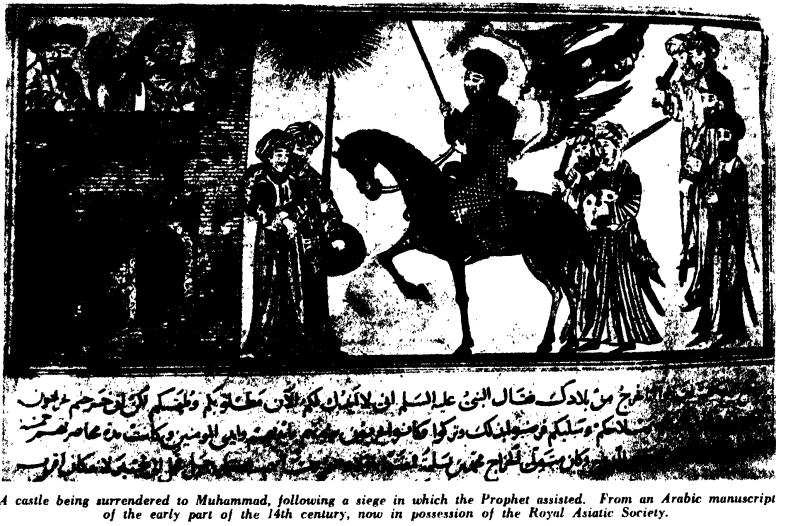
Books on History of Egypt
The ancient history of the Egyptians, Carthaginians, Assyrians, Babylonians, Medes and Persians, Grecians and Macedonians --- by Charles Rollin, 1661-1741Books on History of Mayans, Aztecs, Red Indians
Books on Secrete Societies
SECRET SOCIETIES OF THE MIDDLE AGES by Thomas Keightley. THE ASSASSINS. CHAPTER I. State of the World in the Seventh Century —Western Empire —Eastern Empire —Persia—Arabia — Mohammed —His probable Motives —Character of his Religion —The KoranCHAPTER II. Origin of the Khalifat —The first Khalifs —Extent of the Arabian Empire —Schism among the Mohammedans —Soonees and Sheahs —Sects of the latter —The Keissanee —The Zeidites —The Ghoollat —The Imamee —Sects of the Imamee —Their political Character —The Carmathites —Origin of the Fatimite Khalifs —Secret Society at Cairo —Doctrines taught in it —Its Decline
CHAPTER III. Ali of Rei —His son Hassan Sabah —Hassan sent to study at Nishaboor —Meets there Omar Khiam and Nizam-al-Mvolk —Agreement made by them —Hassan introduced by Nizam to Sultan Malek Shah —Obliged to leave the Court —Anecdote of him —His own account of his Conversion —Goes to Egypt —Returns to Persia —Makes himself Master of Alamoot. CHAPTER IV. Description of Alamoot —Fruitless attempts to recover it —Extension of the Ismailite Power —The Ismailites in Syria —Attempt on the Life of Aboo-Hard Issa —Treaty made with Sultan Sanjar —Death of Hassan —His Character
CHAPTER V. Organization of the Society —Names given to the Ismailites —Origin of the name Assassin —Marco Polo's description of the Paradise of the Old Man of the Mountain —Description of it given by Arabian writers -Instances of the obedience of the Fedavee CHAPTER VI. Keih Buzoorg Oomeid —A flairs of the Society in Persia —They acquire the Castle of Banias in Syria —Attempt to betray Damascus to the Crusaders —Murders committed during the reign of Keth Buzoorg CHAPTER VII. Keaih Mohammed —Murder of the Khalif —Castles gained in Syria —Ismailite Confession of Faith —Mohammed’s Son Hassan gives himself out for the promised Imam —His followers punished —Succession of Hassan —He abolishes the Law —Pretends to be descended from the Prophet —Is murdered CHAPTER VIII. Mohammed II. —Anecdote of the Imam Fakhr-ed-deen —Noor-ed-deen —Conquest of Egypt —Attempt on the Life of Saladin CHAPTER IX. Sinan the Dai-al Kebir of Syria —Offers to become a Christian —His Ambassador murdered by the Templars -Cardinal de Vitry’s Account of the Assassins;—Murder of the Marquis of Montferrat—Defence of King ; Richard.
CHAPTER X. Death of Jellal-ed-deen —Character of Aia-ed-deen, his successor —The Sheikh Jemal-ed-deen —The Astronomer Nasir-ed-deen —The Vizir Sheref-al-Moolk —Death of Ala-ed-deen —Succession of Rukn-ed-deen, the last Sheikh-al-Jebal CHAPTER XI. The Mongols —Hoolagoo sent against the Ismailites —Rukn-ed-deen submits —Capture of Alamoot —Destruction of the Library —Fate of Rukn-ed-deen —Massacre of the Ismailites —St. Louis and the Assassins —Mission for the Conversion of the People of Kuhistao —Conclusion
THE TEMPLARS. CHAPTER I. Introduction —The Crusades —Wrong Ideas respecting their Origin —True Causes of them —Pilgrimage —Pilgrimage of Frotmond —Of the Count of Anjou —Striking Difference between the Christianity of the East and that of the West —Causes of their different Characters —Feudalism —The Extent and Force of this Principle. CHAPTER II. First Hospital at Jerusalem —Church of Santa Maria de Latina —Hospital of St. John —The Hospitallers —Origin of the Templars —Their original Poverty —They acquire Consideration —St. Bernard —His Character of the Templars —The Order approved of and confirmed by the Council of Troyes —Proofs of the Esteem in which they were held CHAPTER III. Return of the Templars to the East —Exoneration and Refutation of the Charge of a Connection with the Ismailites —Actions of the Templars —Crusade of Louis VII. —Siege of Ascalon —Sale of Nassir-ed-deen —Corruption of the Hospitallers —The Bull, Ommne Datum Optimum —Refusal of the Templars to march against Egypt —Murder of the Ismailite Envoy
CHAPTER IV. Heroism of the Templars and Hospitallers —Battle of Hittin —Crusade of Richard of England and Philip of France —Corruption of the Order —Pope Innocent III. writes a Letter of Censure —Frederic I1. —Great Slaughter of the Templars —Henry III. of England and the Templars —Power of the Templars in Moravia —Slaughter of them by the Hospitallers —Falluf Acre CHAPTER V. Classes of the Templars —The Knights— Their Qualifications —Mode of Reception —Dress and Arms of the Knight —Mode of Burial —The Chaplains —Mode of Reception —Dress —Duties and Privileges —The Serving-Brethren —Mode of Reception —Their Duties —The Affiliated —Causes and Advantages of Affiliation —The Donates and Oblates CHAPTER VI. Provinces of the Order —Eastern Provinces —Jerusalem —Houses of this Province —Tripolis —Antioch —Cyprus —Western Provinces —Portugal —Castile and Leon —Aragon —France and Auvergne —Normandy —Aquitaine —Provence —England —Germany — Upper and Central Italy —Apulia and Sicily CHAPTER VII. Officers of the Order—The Master —Mode of Election —His Rights and Privileges —Restraints on him —The Seneschal —The Marshal —The Treasurer —The Draper —The Turcopilar —Great-Priors —Commanders —Visitors —Sub-Marshal —Standard-bearer
CHAPTER VIII. Chapters—Mode of holding them—Templars’ Mode of Living—Amusements—Conduct in War CHAPTER IX. Molay elected Master—Last attempt of the Christians in Syria—Conduct of the Three Military Orders —Philip the Fair and Pope Boniface VIII. —Seizure of the Pope —Election of Clement V. —The Papal See removed to France —Causes of Philip's enmity to the Templars —Arrival of Molay in France —His interviews with the Pope —Charges made against the Templars —Seizure of the Knights —Proceedings in England —Nature of the Charges against the Order CHAPTER X. Examination of the captive Knights —Different kinds of Torture —Causes of Confession —What Confessions were made —Templars brought before the Pope —Their Declarations —Papal Commission —Molay brought before it—Ponsard de Gisi—Defenders of the Order —Act of Accusation —Heads of Defence —Witnesses against the Order —Fifty-four Templars committed to the Flames at Paris —Remarkable words of Aymeric de Villars-le-Duc —Templars burnt in other places —Further Examinations —The Head worshipped by the Templars —John de Pollincourt —Peter de la Palu CHAPTER XI. Examinations in England —Germany —Spain —Italy —Naples and Provence —Sicily —Cyprus —Meeting of the ouncil of Vienne —Suppression of the Order —Fate of its Members—Death of Molay
THE SECRET TRIBUNALS OF WESTPHALIA. CHAPTER I. Introduction —The Original Westphalia —Conquest of the Saxons by Charlemagne —His Regulations —Dukes of Saxony —State of Germany —Henry the Lion —His Qutlawry —Consequences ot it —Origin of German Towns —Origin of the Fehmgerichte, or Secret Tribunals —Theories of their Origin —Origin of their Name —Synonymous Terms CHAPTER II. The Tribunal-Lord —The Count —The Schéppen —The Messengers —The Public Court —The Secret Tribunal —Extent of its Jurisdiction —Places of holding the Courts —Time of holding them —Proceedings in them —Process where the Criminal was caught in the fact —Inquisitorial Process CHAPTER III. Accusatorial Process —Persons liable to it —Mode of Citation —Mode of Procedure —Right of Appeal CHAPTER IV. The General Chapter —Rights of the Emperor —Of his Lieutenant —Of the Stuhlherrn, or Tribunal-Lords CHAPTER V. Fehm-courts at Celle —At Brnnswick —Tribunal of the Knowing in the Tyrol—The Castle of Baden —African Purrahs CHAPTER VI. The Emperor Lewis the Bavarian —Charles 1V. —Wenceslaus —Rupertian Reformation —Encroachments of the Fehm-courts —Case of Nickel Weller and the Town of Gérlitz —Of the City of Dantzig —Of Hans David and the Teutonic Knights —Other instances of the presumption of the Free-counts —Citation of the Emperor Frederic 11I1. —Case of the Count of Teckenburg CHAPTER VII. Cause of the degeneracy of the Fehm-courts —Attempts at reformation —Causes of their high reputation —Case of the Duke of Wirtemberg —Of Kerstian Kerkerink —Causes of the Decline of the Fehm-jurisdiction
Books on Battles, Wars and Military Operations
Books on Dogmas, Eschatology, Social Disorders
THE BRAND OF DOMINIC OR, INQUISITION AT ROME "SUPREME AND UNIVERSAL" BY REV. WILLIAM H. RULE, PUBLISHED BY CARLTON & PHILLIPS, 1853
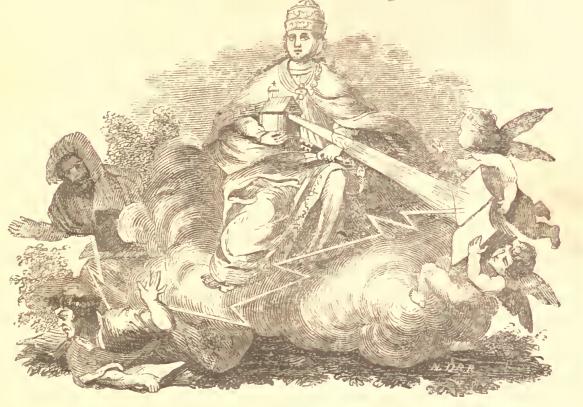
Table of Contents
01. Beginnings of the Inquisition 9, 02. The Inquisition of Toulouse 23, 03. Laws And Customs 43, 04. Laws And Customs (Continued) 56, 05. Laws And Customs (Concluded) 66, 06. France 78, 07. Spain The Modern Inquisition Established 83, 08. Spain Triumphs Of The Inquisitors 95, 09. Spain Granada Expulsion Of The Jews 105, 10. Spain Moors And Moriscoes 116, 11. Spain Deza And Ximenez De Cisneros, Inquisitors 129, 12. Spain The Inquisition Under Charles I. And Philip II 142, 13. Spain Preparations For An Auto De Fe 154, 14. Spain Autos De Fe 164, 15. Spain More Autos De Fe 179, 16. Spain The Case Of Carranza, Archbishop Of Toledo 194, 17. Spain Progress And Decline Of The Inquisition 211, 18. Spain Inquisition Abolished Tribunals Of The Faith 228, 19. Portugal 243, 20. Ndia 260, 21. India (Concluded) 281, 22. South America 288, 23. Italy The Old Inquisition 303, 24. Italy The Old Inquisition (Concluded) 325, 25. Italy Inquisition Of The Cardinals 338, 26. Inquisition Of The Cardinals (Concluded) 355, 27. Italy The Inquisition As It Is 367
Keywords: Inquisition, heresy, heretics, capital punishment
This book covers detailed account of inquisitions and role of church. There are references to heretics being sentenced capital punishment. The purpose of inquisition was not to just address the heretics but ensure people comply to Catholic faith and attend Sunday mass in addition to other traditions.
Excerpts and Review: "The king of England has kissed the Pope's foot; and, not presuming to occupy a chair in his presence, has sat down, with his barons, on the floor, in the abbey of Bourg-Dieu. Thus abject are Englishmen in the twelfth century."
Pg-11: "Wherefore we command the bishops, and all the priests of the Lord, dwelling in those parts, to keep watch, and under peril of anathema to prohibit that, where followers of that heresy are known, any one in the country shall dare to afford them refuge, or to lend them help. Neither shall there be any dealings with such persons in buying or selling; that, all solace of humanity being utterly lost, they may be compelled to forsake the error of their life. And whoever shall attempt to contravene this order, shall be smitten with anathema as a partaker of their iniquity. But they, if they be taken, shall be thrown into prison by Catholic princes, and be deprived of all their goods."
Pg-11: "The next General Council was holden at Rome, (A. D. 1179,) in the church of the Lateran, the mother church, as it is called." Pg-14: The Church employs excommunication and other censures: the emperor, the lords, and the magistrates, are to inflict temporal penalties. And after the Church has spent her spiritual weapons, she leaves the subjects of her displeasure to be smitten by the secular arm. This is the theory of the Inquisition. Pg-15: we may therefore say, that in the period of twenty-one years, from the Council of Tours to that of Verona, the general plan was formed. Hitherto the bishops had been acknowledged as guardians of the faith, and intrusted with the duty of making inquisition. It was not enough that each episcopal court should take cognizance of heresy, and that every magistrate should be at the command of his diocesan to burn the culprits he condemned.
Pg-21: "An exact list of all the inhabitants was to be kept in every parish; and all males above fourteen years, and females above twelve, should swear to the bishop, or his delegate, that they utterly renounced heresy, held the Catholic faith, and would persecute and denounce heretics. Negligent bailiffs were to be chastised, and houses wherein the guilty had found shelter were to be pulled down." Pg-24: L. SENTENCIARUM, "Book of Sentences" that is to say, of sentences passed on culprits in the Inquisition of Toulouse. Pg-33: "Even the partial defection of a priest could not escape the vigilance of the inquisitors."
Pg-54: "Heresy is a sin of the soul, and therefore confession may be the only evidence possible.", "But the prisoner must not communicate with his advocate except in the presence of the inquisitor." Pg-55: "If he appeal to the Pope, observe that all the laws agree that a heretic has no right to appeal."
Torture for Heretics: Pg-56: "When you subject a prisoner to torture, in order to compel him to confess, observe the rules following: Torture is inflicted on one who confesses the principal fact, but varies as to circumstances. Also on one who is reputed to be a heretic, but against whom there is only one witness of the fact. In this case common rumour is one indication of guilt, and the direct evidence is another, making altogether but semi-plenar proof. The torture may bring out full proof. Also, when there is no witness, but vehement suspicion. Also, when there is no common report of heresy, but only one witness who has heard or seen something in him contrary to the faith. Any two indications of heresy will justify the use of torture." Read this chapter for a detailed explaination of torture enforeced to get the confession.
The other Tudors: Henry VIII's Mistresses and Bastards by Jones, Pip.
Everybody thinks they know the tale of King Henry VIII's wives: divorced, beheaded died; divorced, beheaded, survived. But behind this familiar story, lies a far more complex truth. This book brings together for the first time the 'other women' of King Henry VIII. When he first came to the throne, Henry VIII's mistresses were dalliances, the playthings of a powerful and handsome man. However, when Anne Boleyn disrupted that pattern, ousting Katherine of Aragon to become Henry's wife, a new status quo was established. Suddenly noble families fought to entangle the king with their sisters and daughters; if wives were to be beheaded or divorced so easily, the mistress of the king was in an enviable position. While Henry VIII has frequently been portrayed as a womanizer, author Philippa Jones reveals a new side to his character. Although he was never faithful, Jones sees him as a serial monogamist: he spent his life in search of a perfect woman, a search that continued even as he lay dying when he was considering divorcing Catherine Parr thus leaving him free to marry Katherine d'Eresby. Yet he loved each of his wives and mistresses, he was a romantic who loved being in love, but none of these loves ever fully satisfied him; all were ultimately replaced. "The Other Tudors" examines the extraordinary untold tales of the women who Henry loved but never married, the mistresses who became queens and of his many children, both acknowledged and unacknowledged. Philippa Jones takes us deep into the web of secrets and deception at the Tudor Court and explores another, often unmentioned, side to the King's character.
The hidden lives of Tudor women: a social history by Norton, Elizabeth
The first age -- Of babies and bellies: Elizabeth of York and the first Elizabeth Tudor -- Of nurses and nurseries: Cecily Burbage, Elizabeth of York and the infant Elizabeth Tudor -- Of toys and terminations: Elizabeth Tudor's brief life -- The second age -- Of young ladies and learning: the Countess of Surrey's girls, Jane Dormer, Lady Bryan and Margaret Beaufort -- Of servants and masters: Elizabeth Barton, maidservant -- The third age -- Of love and marriage: Cecily Burbage and Elizabeth Boleyn -- Of apprentices and aspirations: Katherine Fenkyll, wife and business partner -- The fourth age -- Of city trade and London life: Katherine Fenkyll, independent businesswoman -- Of visions and revelations: Elizabeth Barton, the Holy Maid of Kent -- Of mistresses and mystics: Catherine of Aragon, the Boleyns and Elizabeth Barton -- Of politics and prophecies: Elizabeth Barton and Anne Boleyn -- Of inquisitions and treasons: Elizabeth Barton and Anne Boleyn -- The fifth age -- Of pilgrimages and punishments -- Margaret Cheyne, Lady Bulmer -- Of bibles and burnings: Joan Bocher, Princess Mary and Jane Grey -- Of Protestants and pyres: Margaret Clitherow and the new Queen Elizabeth -- The sixth age -- Of settlements and proposals: Queen Elizabeth and Rose Hickman -- The seventh age -- Of wigs and witchcraft: Queen Elizabeth in her sixties, and the witches of England -- Of frailties and finalities: Jane Dormer, "Gloriana" and the poor women of England -- Epilogue: Stuart women
Battles of the World
THE FIFTEEN DECISIVE BATTLES OF THE WORLD: FROM MARATON TO WATERLOO BY E. S. CREASY
CHAPTER-I: The Battle of Marathon, Explanatory Remarks on some Battle of of the Circumstances of the Marathon, Synopsis of Events between the Battle of Marathon, B.C. 490, and the Defeat of the Athenians at Syracuse, B.C. 413CHAPTER II: Defeat of the Athenians at Syracuse, B.C. 413. Synopsis of Events between the Defeat of the Athenians Syracuse and the Battle of Arbela CHAPTER III: The Battle of Aebela, B.C. 57, Synopsis of Events between the Battle of Arbela and the Battle of the Metaurus
CHAPTER IV: Battle of the Metaurus B.C. 207, Synopsis of Events between the Battle of the Metaurus, B.C. 207, and Arminius's Victory over the Roman Legions under Varus A.D. 9 CHAPTER V: Victory of Abminius over the Roman Legions under Varus, A.D. 9, Arminius, Synopsis of Events between Arminius's Victory over Varus and the Battle of Chalons
CHAPTER VI: The Battle or Chalons, A.D. 451, Synopsis of Events between the Battle of Chalons, A.D. 451 and the Battle of Tours, 732. CHAPTER VII. The Battle of Tours, A.D. 732, Synopsis of Events between the Battle of Tours, A.D. 732, and the Battle of Hastings, A.D. 1429 CHAPTER VIII. The Battle of Hastings, 1066, Synopsis of Events between the Battle of Hastings, A.D. 1066, and Joan of Arc's Victory at Orleans, A.D. 1429. CHAPTER IX. Joan of Arc's Victory over the English at Orleans, A.D. 1429, Synopsis of Events between Joan of Arc's Victory of Orleans, A.D. 1429, and the Defeat of the Spanish Armada, A.D. 1588 CHAPTER X. Te Defeat of the Spanish Armada, A.D. 1588, Synopsis of Events between the Defeat of the Spanish Armada, A.D. 1588, and the Battle of Blenheim, A.D. 1704
CHAPTER XI: The Battle of Blenheim, A.D. 1704, Synopsis of Events between the Battle of Blenheim, A.D. 1704, and the Battle of Pultowa, 1709 A.D. CHAPTER XII: The Battle of Pultowa, A.D. 1709, Synopsis of Events between the Battle of Pultowa, A.D. 1709, at Saratoga, A.D. 1777 and the Defeat of Burgoyne at Saratoga, A.D. 1777.
CHAPTER XIII. Victory of the Americans over Burgoyne at Saratoga, A.D. 1777, Synopsis of Events between the Defeat of Burgoyne A.D. 1777, and the Battle of Valmy A.D. 1792. CHAPTER XIV. The Battle of Valmy A.D. 1792, Synopsis of Events between the Battle of Valmy A.D. 1792 and the Battle of Waterloo, A.D. 1815 CHAPTER XV. The Battle of Waterloo, A.D. 1815.Review: Pg-176: 1215 - The barons, the freeholders, the citizens, and the yeomen of England rise against the tyranny of John and his foreign favorites. They compel him to sign Magna Charta. This is the commencement of our nationality: for our history from this time forth is the history of a nationality, then complete and still in being. All English history before this period is a mere history of elements, of their collisions, and of the processes of their fusion.
The army under the Duke Wellington lost nearly 15,000 men in and wounded on this terrible day of battle. The loss of the Prussian army was nearly 7,000 more. At such a fearful price was the deliverance of Europe purchased.
AFRICA
The golden trade of the Moors: Arid nurse of lions -- Carbuncles and gold -- Romans and Garamantes -- The Tuareg -- The Arabs -- The Almoravids -- The gold of Ghana -- Mansa Musa -- Ibn Buttuta -- The Songhai -- The discovery of Guinea -- Leo Africanus -- Mulai Ahmed El-Mansur - -Taghaza -- The desert army -- The invasion of the Sudan -- The fall of Songhai -- El-Dzehebi -- Wangara -- The Niger -- Usuman Dan Fodio -- The last of the caravans
Black African empires: Africa, the birthplace of man -- Continent of contrasts -- The kingdom of Kush -- The land of gold (Ghana, the Soninke people) -- The legend of Wagadou-Bida (the downfall of Ghana) -- The murder of eleven brothers (Mali, the Mandinke people) -- Mansa Musa, the black Moses (the empire of Mali) -- An army cross the Sahara Desert (the Songhai empire) -- An aristocratic army (the empire of Bornu) -- The forest states (the Nol and Yoruba peoples and the empire of Benin) -- The land of Zanj -- The great Zimbabwe
The Blood Telegram: Nixon, Kissinger, and a Forgotten Genocide by Gary Jonathan Bass

1. The Tilt, 2. Cyclone Pakistan, 3. Mrs. Gandhi, 4. “Mute and Horrified Witnesses”, 5. The Blood Telegram, 6. The Inferno Next Door, 7. “Don’t Squeeze Yahya”, 8. Exodus, 9. India Alone, 10. The China Channel, 11. The East Is Red, 12. The Mukti Bahini, 13. “The Hell with the Damn Congress”, 14. Soviet Friends, 15. Kennedy, 16. “We Really Slobbered over the Old Witch”, 17. The Guns of November, 18. The Fourteen-Day War, 19. “I Consider This Our Rhineland”
Excerpts:
“Pakistan is a country I would like to do everything for,” he enthused when he got back to Washington. He found the Pakistanis to be staunchly anticommunist and pro-American. “The people have less complexes than the Indians,” he said. “The Pakistanis are completely frank, even when it hurts.”Books on Genocide in East Pakistan especially Genocide of Hindus
- Murder of History - by K.K. Aziz
- Pakistan: Between Mosque and Military - by Hussain Haqqani
- Witness to Surrender - by Siddiq Salik
- From Jinnah to Zia - by Muhammad Munir
- Diaries of Justice - by Muhammad Ibrahim
- Sheikh Mujib's 6 point Formula - by Syed Humayun
- Conflict Unending - by Sumit Ganguly
- A Tale of Millions - by Major M. Rafiqul Islam
- The Great Tragedy - by Zulfiqar Ali Bhutto
- Pakistan: Eye of the Storm - by Owen Benett Jones
- 1971: A People's History - by Anam Zakaria
- The Pakistan People's Party - by Philip E. Jones
- Hamood ur Rehman Commission Report and the Supplementary Report
Books on Partition of India and Pakistan
- A. Guillaume, trans., The Life of Muhammad: A Translation of Ibn Ishaq’s Sirat Rasul Allah (Karachi: Oxford University Press, 1967)
- A.G. Noorani, The Destruction of Hyderabad (New Delhi: Tulika Books, 2014)
- A.H. Nayyar and Ahmad Salim, The Subtle Subversion: The State of Curricula and Textbooks in Pakistan (Islamabad: Sustainable Development Policy Institute, 2004)
- Abdul Gafoor Noorani, The Trial of Bhagat Singh: Politics of Justice (Karachi: Oxford University Press, 2011)
- Abdullah Malik, ed., Selected Speeches and Statements: Mian Iftikhar-ud-Din (Lahore: Nigarishat, 1971)
- Abdullah Yusuf Ali, The Holy Quran (Lahore: Sh. Muhammad Ashraf, 1982)
- Abdur Rahman I. Doi, Shariah: The Islamic Law (London: Ta-Ha Publishers, 1984)
- Abu Salman Shahjahanpuri, ed., ‘Maulana Ubaiydullah Sindhi ka Inqalabi Mansuba Ya Pehla Dasturi Khaqa’ (The First Revolutionary
- Abul Ala Maududi, Jihad in Islam (Beirut: The Holy Koran Publishing House, 2006)
- Abul Fata Mahomed Ishak and Others, Plaintiffs and Russomoy Dhur Chowdhry and Others, Defendants (1894), Law Rep. 22 Ind. Ap. 76 (P.C.)
- Abul Kalam Azad, India Wins Freedom (Lahore: Vanguard Books Pvt. Ltd, 1989)
- Adam C. English, ‘Christian Reconstruction after Y2K: Gary North, the New Millennium, and Religious Freedom, in New Religious Movement and Religious Liberty in America , ed. Derek H. Davis and Barry Hankins (Waco, Texas: Baylor University Press, 2003)
- Adhikari, Gangadhar. Pakistan and National Unity. Bombay: People’s Publishing House, 1944.
- Afifa Zarrin, ‘Jinnah’s Vision of Pakistan as a Modern Islamic State’, Ma’arif Research Journal (July–December 2013)
- Afzal, M. Rafique, ed. Speeches and Statements of the Quaid-i-Azam Mohammad Ali Jinnah, 1911–34 and 1947–48 . Lahore: Research Society of Pakistan, University of the Punjab, 1966.
- Afzal, M. Rafique. A History of the All-India Muslim League, 1906 –1947. Karachi: Oxford University Press, 2013.
- Agha Humayun Amin, The Pakistan Army till 1965 (Arlington, VA: Strategicus and Tacticus, 1999)
- Agreement between India and Pakistan on Minorities: Jawaharlal Nehru and Liaquat Ali Khan, Middle East Journal , Vol. IV, No. 3 (July 1950)
- Ahmad, Feroz. The Making of Modern Turkey . London/New York: Routledge, 1993
- Ahmad, Jamiluddin, ed. Speeches and Writings of Mr. Jinnah , Vol. II. Lahore: Sh. Muhammad Ashraf, 1975
- Ahmad, Syed Nur. From Martial Law to Martial Law: Politics in the Punjab, 1919 –1958 . Translated from the Urdu by Mahmud Ali. Edited by Craig Baxter. Boulders: Westview Press, 1985
- Ahmed, Akbar S. Jinnah, Pakistan and Islamic Identity: The Search for Saladin. London: Routledge, 2005
- Ahmed, Israr. Allama Iqbal, Quaid-e-Azam aur Nazariya-e-Pakistan. Lahore: Tanzim-e-Islami, 2007
- Ahmed, Viqar and Rashid Amjad. The Management of Pakistan’s Economy, 1947–82. Karachi: Oxford University Press, 1984
- Ajeet Jawed, Jinnah: Secular and Nationalist (New Delhi: Faizbooks, 2005)
- Ajeet Jawed, Secular and Nationalist Jinnah (Karachi: Oxford University Press, 2009)
- Ajoy Kumar Ghosh, ‘Bhagat Singh and his Comrades’, in Ajoy Kumar Ghosh: Articles and Speeches (Moscow: Publishing House for Oriental Literature, 1962)
- Akbar S. Ahmed, Jinnah, Pakistan and Islamic Identity: The Search for Saladin (London: Routledge, 2005)
- Akhtar Hussain Sandhu, Punjab: An Anatomy of Muslim–Sikh Politics (Lahore: Dogar Publishers, 2014)
- Alavi, Hamza and John Harriss. Sociology of Developing Societies: South Asia. London: Macmillan, 1989
- Albert Hourani, A History of the Arab Peoples (New York: Warner Books, 1991)
- Alex von Tunzelmann, Indian Summer: The Secrete History of the End of an Empire (London: Pocket Books, 2007)
- Ali Raza, ‘The Illusory Promise of Freedom: Mian Iftikhar-ud-Din and the Movement for Pakistan’, in Muslims against the Muslim League: Critiques of the Idea of Pakistan , ed. Ali Usman Qasmi and Megan Eaton Robb (New Delhi: Cambridge University Press, 2017).
- Ali Usman Qasmi, ‘Differentiating between Pakistan and Napak-istan: Maulana Abul Ala Maududi’s Critique of the Muslim League and
- Ali Usman Qasmi, The Ahmadis and the Politics of Religious Exclusion in Pakistan (London: Anthem Press, 2015)
- Ali, Abdullah Yusuf. The Holy Quran. Lahore: Sh. Muhammad Ashraf, 1982
- Ali, Chaudhri Muhammad. The Emergence of Pakistan. Lahore: Research Society of Pakistan, 1973
- Ali, Imran. The Punjab under Imperialism, 1885 –1947. Karachi: Oxford University, 1989
- Ali, Syed Ameer. The Spirit of Islam. New Delhi: Kitab Bhavan, 1997
- All-Parties Conference (India): Nehru Committee and Motilal Nehru, The Nehru Report: An Anti-Separatist Manifesto (New Delhi: Michiko and Panjthan, 1975)
- Allama Muhammad Iqbal, The Reconstruction of Religious Thought in Islam (Lahore: Sh. Muhammad Ashraf, 1960)
- Allen McGrath, The Destruction of Pakistan’s Democracy (Karachi: Oxford University Press, 1998)
- Allen, Charles. God’s Terrorists: The Wahhabi Cult and the Hidden Roots of Modern Jihad. London: Little Brown, 2006
- Amin, Agha Humayun. The Pakistan Army till 1965. Arlington, VA: Strategicus and Tacticus, 1999
- Amir Rana, A to Z of Jehadi Organizations in Pakistan, trans. Saba Ansari (Lahore: Mashal Books, 2004)
- Amitabha Mukherjee, ‘Genesis of the Indian National Congress’, in A Centenary History of the Indian National Congress , Volume I: 1885–1919, ed. B.N. Pande (New Delhi: All-India Congress Committee [I] and Vikas Publishing, 1985)
- Anand, Som. Lahore: Portrait of a Lost City. Lahore: Vanguard Books Ltd, 1998
- Anderson, Benedict. Imagined Communities. London: Verso, 1983
- Andrew Mango, Atatürk: The Biography of the Founder of Modern Turkey (New York: The Overlook Press, Peter Mayer Publishers, Inc., 2002)
- Andrew Roberts, Eminent Churchillians (London: Phoenix, 1995)
- Anis Nagi, Aik Adhuri Sarguzasht (A Story Without an End) (Lahore: Jamailaat, 1998).
- Antony Black, The History of Islamic Political Thought: From the Prophet to the Present (Edinburgh: Edinburgh University Press, 2001)
- Anwar Ahmad Qadri, Islamic Jurisprudence in the Modern World (Lahore: Sh. Muhammad Ashraf, 1981)
- Anwar Iqbal, ‘UK PM Attlee Believed Bengal May Opt to Be a Separate Country’, Dawn, 18 December 2018
- Arbab, Safoora. ‘Nonviolence, Pukhtunwali and Decolonization: Abdul Ghaffar Khan and the Kuda’i Khidmatgars’. In Muslims against the Muslim League: Critiques of the Idea of Pakistan. Edited by Ali Usman Qasmi and Megan Eaton Robb. New Delhi: Cambridge University Press, 2017
- Arnaldez, Roger. Averroes: A Rationalist in Islam. Indiana: University of Notre Dame Press, 2000
- Asim Kumar Chaudhuri, Socialist Movement in India: The Congress Socialist Party, 1934 –1947 (Calcutta: Progressive Publishers, 1980)
- Athena S. Leoussi and Anthony D. Smith, Encyclopaedia of Nationalism (New Jersey: Transaction Publishers, 2001)
- Austin, Granville. The Indian Constitution: Cornerstone of a Nation. New Delhi: Oxford University Press, 1999
- Avtar Singh Bhasin, ed., India–Pakistan Relations, 1947–2007: A Documentary Study , Vols. I–X (New Delhi: Geetika Publishers, 2012).
- Awan, Samina. Political Islam in Colonial Punjab Majlis-e-Ahrar, 1929 –1949. Karachi: Oxford University Press, 2010
- Ayesha Jalal, Self and Sovereignty: Individual and Community in South Asian Islam since 1850 (Lahore: Sang-e-Meel Publications, 2007)
- Ayesha Jalal, The Sole Spokesman: Jinnah, the Muslim League and the Demand for Pakistan (Lahore: Sang-e-Meel Publications, 1992)
- Azad, Maulana Abul Kalam. India Wins Freedom, Lahore: Vanguard Books, 1989
- Aziz, K.K, Muslims under Congress Rule, 1937–1939: A Documentary Record. Lahore: Sang-e-Meel Publications, 2007
- B.R. Ambedkar, ‘Pakistan or the Partition of of India’, in Dr. Babasaheb Ambedkar Writings and Speeches , Vol. 8, ed. Vasant Moon (New Delhi: Dr Ambedkar Foundation, 1990)
- B.R. Nanda, Road to Pakistan: The Life and Times of Mohammad Ali Jinnah (New Delhi: Routledge, 2014)
- Bakhsh, Ilahi. With the Quaid-i-Azam during His Last Days. Karachi: Oxford University Press, 2011
- Baldev Raj Nayar, Minority Politics in the Punjab (Princeton: Princeton University Press, 1966).
- Bangash, Yaqoob Khan. A Princely Affair: The Accession and Integration of the Princely States of India, 1947 –1955 . Karachi: Oxford University Press, 2015
- Bapu, Prabhu. Hindu Mahasabha in Colonial North India, 1915 –1930 : Constructing Nation and History. London: Routledge, 2013
- Barbara D. Metcalf, ‘Maulana Husain Ahmad Madani and the Jamiat Ulama-i-Hind: Against Pakistan, against the Muslim League’, in Muslims against the Muslim League: Critiques of the Idea of Pakistan, ed. Ali Usman Qasmi and Megan Eaton Robb (New Delhi: Cambridge University Press, 2017)
- Becker, Marie Louise. The All-India Muslim League, 1946–1947. Karachi: Oxford University Press, 2013
- Begum Shaista Suhrawardy Ikramullah, Huseyn Shaheed Suhrawardy (Karachi: Oxford University Press, 2006)
- Bell, Christopher M. Churchill and the Dardanelles. New York: Oxford University Press, 2017
- Beverley Nichols, Verdict on India (London: Jonathan Cape, 1944)
- Bhasin, Avtar Singh, ed. India–Pakistan Relations, 1947 –2007: A Documentary Study, Vol. I. New Delhi: Geetika Publishers, 2012.
- Bhupen Qanungo, ‘The Quit India Movement’, in A Centenary History of the Indian National Congress , Vol. III, ed. B.N. Pande (Bombay and Delhi: All-India Congress Committee [I] and Vikas Publishing, 1985)
- Bidwai, Praful, Harbans Mukhia and Achin Vanaik, ed. Religion, Religiosity and Communalism. New Delhi: Manohar, 1996
- Binder, Leonard. Religion and Politics in Pakistan. Los Angeles: University of California, 1963
- Biswas, Sukumar. Communal Riots in Bangladesh and West Bengal, 1947–1964. Kolkata: Parul, 2012
- Black, Antony. The History of Islamic Political Thought: From the Prophet to the Present. Edinburgh: Edinburgh University Press, 2001
- Bolitho, Hector. Jinnah: Creator of Pakistan. Karachi: Oxford University Press, 2006
- Bourke-White, Margaret. Halfway to Freedom . New York: Simon & Schuster, 1949
- Brass, Paul. ‘The Partition of India and Retributive Genocide in the Punjab, 1946–47: Means, Methods and Purposes’. Journal of Genocide Research , Vol. 5, No. 1 (2003).Burke, Edmund. Reflections on the Revolution in France . Oxford: Oxford University Press, 2009.
- Brian Cloughley, A History of the Pakistan Army: Wars and Insurrections (Karachi: Oxford University Press, 2000).
- Burke, S.M. Jinnah: Speeches and Statements, 1947 –1948 . Karachi: Oxford University Press, 2000.
- Burke, S.M., Jinnah: Speeches and Statements, 1947–1948 . Karachi: Oxford University Press, 2000.
- Butalia, Urvashi. The Other Side of Silence. New Delhi: Penguin Books, 1998.
- Callard, Keith. Pakistan: A Political Study. London: Allen & Unwin, 1957.
- Carlyle, Thomas. Carlyle on Heroes, Hero-Worship, and the Heroic in History. Memphis: General Books, 2012.
- Carr, Edward Hallett. What Is History? New York: Penguin Random House, 1990.
- Census of India, 1941 , Vol. VI, Punjab Tables (New Delhi: Manager of Publications, Government of India Press, 1941)
- Chagla, M.C. Roses in December: An Autobiography. Bombay: Bharatiya Vidya Bhavan, 2016.
- Chandra, Bipan. Communalism in Modern India. New Delhi: Vikas Publishing, 1989.
- Charles Allen, God’s Terrorists: The Wahhabi Cult and the Hidden Roots of Modern Jihad (London: Little, Brown and Company, 2006).
- Chatterji, Joya. ‘The Radcliffe Award for Bengal’. In Region and Partition: Bengal, Punjab and the Partition of the Subcontinent. Edited by Ian Talbot and Gurharpal Singh. Karachi: Oxford University Press, 1999.
- Chattopadhyay, Suchetana. An Early Communist: Muzaffar Ahmad in Calcutta, 1913 –1929. New Delhi: Tulika Books, 2012.
- Chaube, Shibani Kinkar. ‘Reflections on Secularism and Communalism in Constituent Assembly Debates’. In Communalism in Postcolonial India: Changing Contours. Edited by Mujibur Rehman. New Delhi: Routledge, 2016.
- Chaudhri Muhammad Ali, The Emergence of Pakistan (Lahore: Research Society of Pakistan, 1973)
- Chaudhry Khaliquzzaman, Pathway to Pakistan (Lahore: Brothers Publishers, 2008)
- Chaudhry, Zahid. Pakistan Kaisey Banaa ? (How Was Pakistan Created?), Vols. I and II. Edited by Hassan Jafar Zaidi. Lahore: Idara Mutalaya-e-Tarikh, 2012.
- Chaudhuri, Asim Kumar. Socialist Movement in India: The Congress Socialist Party, 1934 –1947. Calcutta: Progressive Publishers, 1980.
- Chawla, Muhammad Iqbal. Wavell and the Dying Days of the Raj: Britain’s Penultimate Viceroy in India . Karachi: Oxford University Press, 2011.
- Chishti, Faiz Ali. Betrayals of Another Kind: Islam, Democracy and the Army in Pakistan. Lahore: Jang Publishers, 1996.
- Chopra, Pran. ‘The Cycle of Blunders’. In Secular Crown on Fire: The Kashmir Problem. Edited by Asghar Ali Engineer. New Delhi: Ajanta Books, 1991.
- Choudhary, S. What Is the Kashmir Problem ?. Luton: Jammu Kashmir Liberation Front, 1991.
- Christine E. Dobbin, Basic Documents in the Development of Modern India and Pakistan, 1835 –1947 (London: Van Nostrand Reinhold Company, 1970).
- Christophe Jaffrelot, The Hindu Nationalist Movement in India (New Delhi: Penguin Books India,1996).
- Christopher M. Bell, Churchill and the Dardanelles (New York: Oxford University Press, 2017).
- Churchill, Winston Spencer. The River War , Vol. II. London: Longmans, Green and Co., 1899.
- Cloughley, Brian. A History of the Pakistan Army: Wars and Insurrection .Karachi: Oxford University Press, 2000.
- Collett, Nigel. The Butcher of Amritsar: General Reginal Dyer. London: Hambledon Continuum, 2005.
- Collins, Larry and Dominique Lapierre. Freedom at Midnight . New York: Avon Books, 1997.
- Complete Works of Rahmat Ali. Islamabad: National Commission on Historical and Cultural Research, 1978
- Copland, Ian. ‘The Master and the Maharajas: The Sikh Princes and the East Punjab Massacres of 1947’. Modern Asian Studies , Vol. 36, No. 3 (2002).
- Cragg, Kenneth. Islamic Surveys: Counsels in Contemporary Islam. Edinburgh: University of Edinburgh, 1965.
- Curtis, Mark. Secrete Affairs: Britain’s Collusion with Radical Islam. London: Serpent’s Tail, 2010.
- D.N. Panigrahi, India’s Partition: The Story of Imperialism in Retreat (London: Routledge, 2004)
- Daftari, Farhad. The Ismā‘īlīs: Their History and Doctrines. Cambridge: Cambridge University Press, 1990.
- Dalrymple, William. The Return of a King: The Battle for Afghanistan. London: Bloomsbury, 2013.
- Dar, Farooq Ahmad. Jinnah’s Pakistan: Formation and Challenges of a State. Karachi: Oxford University Press, 2014.
- Darling, S.M. The Punjab Peasant in Prosperity and Debt. New Delhi: Manohar, 1978.
- Das, Durga. India from Curzon to Nehru and Afterwards. New Delhi: Rupa Publications, 1981.
- Das, M.N. ‘India Wins Independence’. In A Centenary History of the Indian National Congress, Vol. III: 1935–1947 . Edited by B.N. Pande. New Delhi: All-India Congress Committee (I) and Vikas Publishing, 1985.
- Das, Suranjan. Communal Riots in Bengal, 1905 –1947. New York: Oxford University Press, 1994.
- David Gilmartin, Empire and Islam: Punjab and the Making of Pakistan (New Delhi: Oxford University Press, 1989)
- Delhi: All-India Congress Committee (I) and Vikas Publishing, 1985. Qasmi, Ali Usman and Megan Eaton Robb, ed. Muslims against the Muslim
- Dennis Kux, The United States and Pakistan, 1947–2000: Disenchanted Allies (New York: Oxford University Press, 2001).
- Devji, Faisal. The Terrorist in Search of Humanity: Militant Islam and Global Politics. London: Hurst & Company, 2008.
- Dhulipala, Venkat. Creating a New Medina: State Power, Islam, and the Quest for Pakistan in Late Colonial North India . New Delhi: Cambridge University Press, 2015.
- Dobbins, Christine E. Basic Documents in the Development of Modern India and Pakistan, 1835 –1947 . London: Van Nostrand Reinhold Company, 1970.
- Doi, Abdur Rahman I. The Islamic Law. London: Ta Ha Publishers, 1984.
- Durga Das, India from Curzon to Nehru and After (New Delhi: Rupa Publications, 2012)
- Edmund Burke, Reflections on the Revolution in France (Oxford: Oxford University Press, 2009)
- Edward Hallett Carr, What Is History? (New York: Penguin Random House, 1990)
- Egyptian Muslim Brotherhood ’. Sociological Quarterly , Vol. 42, No. 4 (2001)
- English, Adam C. ‘Christian Reconstruction after Y2K: Gary North, the New Millennium, and Religious Freedom’. In New Religious Movement and Religious Liberty in America . Edited by Derek H. Davis and Barry Hankins.
- Erland Jansson, ‘India, Pakistan or Pakhtunistan: The Nationalist Movements in the North-West Frontier Province, 1937–47’, Acta Universitatis Upsaliensis, Studia Historica Upsaliensia 119 (1981)
- F. Ahmad, The Making of Modern Turkey (London/New York: Routledge, 1993)
- Faisal Devji, The Terrorist in Search of Humanity: Militant Islam and Global Politics (London: Hurst & Company, 2008)
- Faiz Ali Chishti, Betrayals of Another Kind: Islam, Democracy and the Army in Pakistan (Lahore: Jang Publishers, 1996)
- Falahi, Masood Alam. Hindustan Mein Zaat-Paat aur Musalman (Muslims in India and the Caste System). Mumbai: Ideal Foundation, 2009
- Farhad Daftary, The Ismā‘īlīs: Their History and Doctrines (Cambridge: Cambridge University Press, 1990)
- Farhan Hanif Siddiqi, The Politics of Ethnicity in Pakistan: The Baloch, Sindhi and Mohajir Ethnic Movements (London: Routledge, 2012)
- Farooq Ahmad Dar, Jinnah’s Pakistan: Formation and Challenges of a State (Karachi: Oxford University Press, 2014)
- Farquhar, J.N. Modern Religious Movements in India. New Delhi: Munshiram Manoharlal, 1967
- Faruki, Kemal A. The Evolution of Islamic Constitutional Theory and Practice. Karachi: National Publishing House Limited, 1971
- Fatima Jinnah, My Brother, ed. Sharif Al-Mujahid (Karachi: Quaid-e-Azam Academy, 1987)
- Fazal, Tanveer. Nation-State and Minority Rights in India : Comparative Perspectives on Muslim and Sikh Identities . London: Routledge, 2015
- Firoz Khan Noon, From Memory (Lahore: n.p., 1969)
- Flavius Joseph, Against Apion, trans. William Whiston (Mississippi: Project Gutenburg, 2008)
- French, Patrick. Liberty or Death: India’s Journey to Independence and Division. London: Penguin Books, 1997
- G. Allana, ed., Pakistan Movement: Historic Documents (Lahore: Islamic Book Service, 1977)
- G.D. Khosla, Stern Reckoning: A Survey of the Events Leading Up to and Following the Partition of India (New Delhi: Oxford University Press, 1991)
- G.M. Syed, The Case of Sindh (Karachi: Naeen Sindh Academy, 1994)
- Gandhi, M.K. ‘Congress Ministries’. In Harijan , Vol. 5 (7 July 1937)
- Gangadhar Adhikari, Pakistan and National Unity (Bombay: People’s Publishing House, 1944)
- Gankovsky, Y.V. and L.R. Gordon-Polonskaya. A History of Pakistan (1947–1958) Lahore: People’s Publishing House, 1972
- Gauba, K.L. Apney Aur Paraaye (Friends and Foes) . Lahore: Fiction House, 2010.
- Georgi Plekhanov, The Role of the Individual in History (London: Lawrence & Wishart, 1940)
- Ghosh, Ajoy Kumar. ‘Bhagat Singh and His Comrades’. In Ajoy Kumar Ghosh: Articles and Speeches . Moscow: Publishing House for Oriental Literature, 1962
- Ghosh, Sankar. Jawaharlal Nehru: A Biography . New Delhi: Allied Publishers Limited, 1993
- Gillmartin, David. Empire and Islam: Punjab and the Making of Pakistan. New Delhi: Oxford University Press, 1989
- Glendevon, John. The Viceroy at Bay. London: Collins, 1971.Hajari, Nisid. Midnight’s Furies: The Deadly Legacy of India’s Partition. Gloucestershire: Amberley Publications, 2017
- Government of India Act, 1935 (London: His Majesty’s Stationery Office, 1935)
- Gowher Rizvi, Linlithgow and India: A Study of British Policy and the Political Impasse in India, 1936 –43 (London: Royal Historical Society, 1978)
- Granville Austin, The Indian Constitution: Cornerstone of a Nation (New Delhi: Oxford University Press, 1999)
- Gyanendra Pandey, The Construction of Communalism in Colonial North India (New Delhi: Oxford University Press, 1998)
- H. Alavi and J. Harriss, Sociology of Developing Societies: South Asia (London: Macmillan, 1989).
- H.N. Mitra, ed., The Government of India Act 1919: Rules Thereunder & Govt. Reports, 1920 (Calcutta: N.M. Mitter, Annual Register Office, 1921).
- Hamid, Shahid. Disastrous Twilight: A Personal Record of the Partition of India. London: Leo Cooper in association with Secker & Warburg, 1986.
- Hamida Khuhro, Mohammed Ayub Khuhro: A Life of Courage in Politics (Lahore: Ferozsons, 1998).
- Hamidullah, Muhammad. The Muslim Conduct of State. Lahore: Shaikh Muhammad Ashraf, 1953.
- Hamza Alavi, ‘Social Forces and Ideology in the Making of Pakistan’, Economic and Political Weekly , Vol. 37, Issue No. 51 (December 2002)
- Hamza Alavi, ‘The State in Post-Colonial Societies: Pakistan and Bangladesh’, New Left Review , Vol. 74, No. 1, (July–August 1971)
- Harbans Mukhia, The Mughals of India (New Delhi: Blackwell Publishing, 2005).
- Harun-ur-Rashid, The Foreshadowing of Bangladesh: Bengal Muslim League and Muslim Politics, 1906 –1947 (Dhaka: The University Press Ltd, 2003)
- Hasan, Khalid, ed. K.H. Khurshid: Memories of Jinnah. Karachi: Oxford University Press, 1990.
- Hashmi, Taj. Pakistan as a Peasant Utopia: The Communalization of Class Politics in East Bengal, 1920 –1947 . Boulder: Westview Press, 1992.
- Hayat, Sikandar. The Charismatic Leader: Quaid-i-Azam Mohammad Ali Jinnah and the Creator of Pakistan . Karachi: Oxford University Press, 2014.
- Hayat, Sirdar Shaukat. The Nation that Lost Its Soul . Lahore: Jang Publishers, 1995.
- Hazrat Maulana Syed Hussain Ahmed Madani, Composite Nationalism and Islam, trans. Muhammad Anwer Hussain and Hassan Imam (New Delhi: Manohar, 2005).
- Hector Bolitho, Jinnah: Creator of Pakistan (Karachi: Oxford University Press, 2006)
- Helen M. Nugent, ‘The Communal Award: The Process of Decision-making’, South Asia: Journal of South Asian Studies 2, nos 1–2 (1979).
- Hill, K. et al., ‘The Demographic Impact of Partition: Bengal in 1947’. Presented at the International Union for the Scientific Study of Population, 18–23 July 2005
- Hitti, Philip K. History of the Arabs . London: Macmillan, 1970.
- Hoodbhoy, Pervez. Islam and Science: Religious Orthodoxy and the Battle for Rationality. London: Zed Books, 1991.
- Hourani, Albert. A History of the Arab Peoples. New York: Warner Books, 1991.
- Husain, Syed Munir. Surviving the Wreck: A Civil Servant’s Personal History of Pakistan. Lahore: Ilqa Publications, 2016.
- Hutchinson, John. ‘Cultural Nationalism and Moral Regeneration’. In Nationalism. Edited by John Hutchinson and Anthony Smith. Oxford/New York: Oxford University Press, 1994.
- Ian Copland, ‘The Master and the Maharajas: The Sikh Princes and the East Punjab Massacres of 1947’, Modern Asian Studies , Vol. 36, No. 3 (2002).
- Ikram, Sheikh Muhammad. Aab-i-Kausar. Lahore: Institute of Islamic Culture, 1965.
- Ikramullah, Begum Shaista Suhrawardy. Huseyn Shaheed Suhrawardy. Karachi:Oxford University Press, 2006.
- Imran Ali, The Punjab under Imperialism, 1885–1947 (Karachi: Oxford University Press, 1989)
- Iqbal Singh, Between Two Fires: Understanding Jawaharlal Nehru’s Foreign Policy (New Delhi: Stosius Inc/Advent Books Division, 1992)
- Iqbal, Allama Muhammad. The Reconstruction of Religious Thought in Islam. Lahore: Sh. Muhammad Ashraf, 1960.
- Ishitiaq Ahmed, State, Nation and Ethnicity in Contemporary South Asia (London and New York: Pinter Publishers, 1998), p. 142.
- Ishtiaq Ahmed, ‘Religious Nationalism and Minorities in Pakistan’, in The Politics of Religion in South and Southeast Asia, ed. Ishtiaq Ahmed (London: Routledge, 2011).
- Ishtiaq Ahmed, ‘Secular versus Hindu Nation-building: Dalit, Adivasi, Muslim and Christian Experiences in India’, in The Politics of Religion in South and Southeast Asia , ed. Ishtiaq Ahmed (London: Routledge, 2011).
- Ishtiaq Ahmed, ‘South Asia’, in Islam outside the Arab World , ed. David Westerlund and Ingvar Svanberg (Richmond: Curzon, 1999)
- Ishtiaq Ahmed, ‘The Pakistan Islamic State Project: A Secular Critique’, in State and Secularism: Perspectives from Asia , ed. Michael Siam Heng and Ten Chin Liew (Singapore: World Scientific Publishers, 2010)
- Ishtiaq Ahmed, ‘Women under Islamic Law in Pakistan’, in The Politics of Religion in South and Southeast Asia, ed. Ishtiaq Ahmed (London: Routledge, 2011).
- Ishtiaq Ahmed, Ian Talbot and Gurharpal Singh, ed., ‘The 1947 Partition of Punjab: Arguments Put Forth before the Punjab Boundary Commission by the Parties Involved’, in Region and Partition: Bengal, Punjab and thePartition of the Subcontinent (Karachi: Oxford University Press, 1999)
- Ishtiaq Ahmed, Pakistan: The Garrison State—Origins, Evolution, Consequences, 1947 –2011 (Karachi: Oxford University Press, 2013)
- Ishtiaq Ahmed, State, Nation and Ethnicity in Contemporary South Asia (London and New York: Pinter Publishers, 1998).
- Ishtiaq Ahmed, The Concept of an Islamic State: An Analysis of the Ideological Controversy in Pakistan (London: Frances Pinter, 1987)
- Ishtiaq Ahmed, The Politics of Religion in South and South East Asia (London: Routledge, 2011).
- Ishtiaq Ahmed, The Punjab Bloodied, Partitioned and Cleansed: Unravelling the 1947 Tragedy through Secrete British Reports and First-Person Accounts (Karachi: Oxford University Press, 2017)
- Ishtiaq Husain Qureshi, ‘Hindu–Muslim Social Relations, 1935–47’, in India Partitioned: The Other Face of Freedom , Vol. II, ed. Mushirul Hasan (New Delhi: Rupa Publications, 1995), p. 192.
- Ishtiaq Husain Qureshi, The Struggle for Pakistan (Karachi: University of Karachi, 1969)
- Islam, Shamsul. Golwalkar’s We or Our Nationhood Defined: A Critique. New Delhi: Pharos Media and Publishing, 2006.
- Islam, Shamsul. RSS: Marketing Fascism as Hindu Nationalism . New Delhi: Media House, 2018.
- Islam, Shamsul. Savarkar: Myths and Facts. New Delhi: Media House, 2004.
- Israj Khan and Toheeda Begum, ‘Quaid-e-Azam Muhammad Ali Jinnah and Pir Amin-ul-Hasanat of Manki Sharif’, Abasyn Journal of Social Sciences 4 , Vol. 4, No. 2 (2011)
- IV. Bombay and New Delhi: All-India Congress Committee (I) and Vikas Publishing, 1985, 1990.
- J. Coatman, Years of Destiny: India, 1926–1932 (London: Jonathan Cape, 1932)
- J.C. Jha, ‘The Struggle for Swaraj (1919–1922)’, in A Centenary History of the Indian National Congress , Volume II: 1919–1935, ed. B.N. Pande (New Delhi: All-India Congress Committee [I] and Vikas Publishing, 1985)
- Jafar, Mohammand, I.A. Rehman and Ghani Jafar. Jinnah as a Parliamentarian. Lahore: Azfar Associates, 1977.
- Jafari, Syed Husain Mohammad. The Origins and Development of Shi’a Islam. Karachi: Oxford University Press, 2000.
- Jaffrelot, Christophe. The Hindu Nationalist Movement in India. New Delhi: Penguin Books, 1996.
- Jahan Ara Shahnawaz, Father and Daughter: A Political Autobiography (Karachi: Oxford University Press, 2002)
- Jai Narain Sharma, ed., Encyclopaedia of Eminent Thinkers: The Political Thought of Maulana Abul Kalam Azad , Vol. 29 (New Delhi: Concept Publishing Company, 2010).
- James, Lawrence. Raj: The Making and Unmaking of British India. London: Little, Brown and Company, 1997.
- Jamiluddin Ahmad, ed., Speeches and Statements of Mr. Jinnah , Vol. II (Lahore: Sh. Muhammad Ashraf, 1975).
- Jansson, Erland. India, Pakistan or Pakhtunistan. Uppsala: Acta Universitatis Upsaliensis, 1981.
- Jaswant Singh, Jinnah: India, Partition, Independence (New Delhi: Rupa Publications, 2009)
- Jawaharlal Nehru, ‘Presidential Address to the Indian National Congress at Faizpur’, Labour Monthly , Vol. 19, No. 2 (London: 1937)
- Jawaharlal Nehru, ‘Presidential Address to the Indian National Congress’, Labour Monthly , Vol. 18, No. 5 (London: 1936)
- Jawaharlal Nehru, An Autobiography (London: The Bodley Head, 1955)
- Jawaharlal Nehru, The Discovery of India (New Delhi: Penguin Books, 2004); and Jawaharlal Nehru, An Autobiography (London: The Bodley Head, 1955).
- Jawaharlal Nehru, Toward Freedom: The Autobiography of Jawaharlal Nehru (New York: John Day Company, 1941), p. 134.
- Jawed, Ajeet. Jinnah: Secular and Nationalist. Karachi: Oxford University Press, 2009.
- Jha, J.C. ‘The Struggle for Swaraj (1919–1922)’. In A Centenary History of the Indian National Congress, Volume II: 1919–1935 . Edited by B.N. Pande. New Delhi: All-India Congress Committee (I) and Vikas Publishing, 1985.
- Jinnah, Fatima. My Brother. Edited by Sharif Al-Mujahid. Karachi: Quaid-e-Azam Academy, 1987.
- John Glendevon, The Viceroy at Bay (London: Collins, 1971)
- John H. McLane, Indian Nationalism and the Early Congress (Princeton: Princeton University Press, 1977)
- John Hutchinson, ‘Cultural Nationalism and Moral Regeneration’, in Nationalism, ed. John Hutchinson and Anthony Smith (Oxford/New York: Oxford University Press, 1994),
- John Locke, A Letter Concerning Toleration, 1689, trans. William Popple, 1689 (Ontario, Canada: Faculty of Social Sciences, McMaster University)
- Jones, Justin. ‘“The Pakistan that is Going to Be Sunnistan”: India’s Shi’a
- Jones, K.W. Arya Dharm: Hindu Consciousness in 19th-Century Punjab. New Delhi: Manohar, 1989.
- Joseph Stalin, Marxism and the National and Colonial Question (Moscow: Co-operative Publishing Society of Foreign Workers in the U.S.S.R., 1935)
- Josephus, Flavius. Against Apion . Translated by William Whiston. Mississippi: Project Guttenburg, 2008
- Joshi, Shashi and Bhagwan Josh. Culture, Community and Power , Vol. III of Struggle for Hegemony in India. New Delhi: Sage Publications, 2011
- Joshi, Shashi and Bhagwan Josh. Struggle for Hegemony in India (3-volume set), New Delhi: Sage Publications, 2011
- Joya Chatterji, Ian Talbot and Gurharpal Singh, ed., ‘The Radcliffe Award for Bengal’, in Region and Partition: Bengal, Punjab and the Partition of the Subcontinent (Karachi: Oxford University Press, 1999)
- Justin Jones ‘The Pakistan that Is Going to Be Sunnistan: India’s Shi’a Responses to the Pakistan Movement’, in Muslims against the Muslim League: Critiques of the Idea of Pakistan , ed. Ali Usman Qasmi and Megan Eaton Robb (New Delhi: Cambridge University Press, 2017)
- Justin Jones, Shi’a Islam in Colonial India: Religion, Community and Sectarianism (Cambridge: Cambridge University Press, 2011)
- K. Hill, W. Seltzer, et al., The Demographic Impact of Partition: Bengal in 1947 (Johns Hopkins, Fordham University, Harvard and Massachusetts Institute of Technology, 2008)
- K.H. Khurshid, Memories of Jinnah, ed. Khalid Hasan (Karachi: Oxford University Press, 1990)
- K.K. Aziz, ed., Complete Works of Rahmat Ali (Islamabad: National Commission on Historical and Cultural Research, 1978)
- K.K. Aziz, History of Partition of India , Vol. I (New Delhi: Atlantic Publishers and Distributors, 1995)
- K.K. Aziz, Muslims under Congress Rule, 1937 –1939: A Documentary Record (Lahore: Sang-e-Meel Publications, 1979)
- K.K. Aziz, Party Politics in Pakistan, 1947 –1958 (Islamabad: National Commission on Historical and Cultural Research, 1976).
- K.K. Aziz, The Murder of History (Lahore: Vanguard, 1993)
- K.M. Chaudhary and N. Irshad, ‘The Role of Ulema and Mashaikh in the Pakistan Movement’, Pakistan Journal of Life and Science Sciences 3 (1–2) (2005)
- K.V. Ramakrishna Rao, ‘The Historic Meeting of Ambedkar, Jinnah and Periyar’, paper published in the proceedings of the South Indian History Congress held at Madras Kamaraj University, 18–20 January 2001.
- K.W. Jones, Arya Dharm: Hindu Consciousness in 19th-Century Punjab (New Delhi: Manohar, 1989).
- Kakakhel, Sayed Wiqar Ali Shah. ‘The Making of Pakistan and the NWFP: Quaid-i-Azam—Pir Manki Sharif Correspondence, November 1945–
- Kama Maclean, A Revolutionary History of Interwar India: Violence, Image, Voice and Text (London: Hurst & Company, 2015).
- Karim, Saleena. Secular Jinnah and Pakistan: What the Nation Doesn’t Know. Karachi: Paramount Books, 2010
- Karl Marx, ‘The British Rule in India’, New York Daily Tribune , 10 June 1853,
- Kashmiri, Shorish. ‘Humiliated and Harassed They Left’. In India Partitioned: The Other Face of Freedom. Edited by Mushirul Hasan. New Delhi: Lotus, 1995
- Kasuri, Khurshid Mahmud. Neither a Hawk Nor a Dove: An Insider’s Account of Pakistan’s Foreign Relations Including Details of the Kashmir Framework. Karachi: Oxford University Press, 2015
- Keith Callard, Pakistan: A Political Study (London: Allen and Unwin, 1957)
- Kemal A. Faruki, The Evolution of Islamic Constitutional Theory and Practice (Karachi: National Publishing House Limited, 1971)
- Kenneth Cragg, Islamic Surveys: Counsels in Contemporary Islam (Edinburgh: University of Edinburgh, 1965)
- Khairi, Saad R. Jinnah Reinterpreted: The Journey from Indian Nationalism to Muslim Statehood . Karachi: Oxford University Press, 1995
- Khalid bin Sayeed, Pakistan: The Formative Phase, 1857 –1948 (Karachi: Oxford University Press, 1998)
- Khalid Hasan, Saadat Hasan Manto: A Wet Afternoon: Stories, Sketches, Reminiscences (Islamabad: Alhamra, 2001)
- Khaliquzzaman, Choudhry. Pathway to Pakistan . Lahore: Brothers Publishers, 2008
- Khan, Israj and Toheeda Begum. ‘Quaid-e-Azam Muhammad Ali Jinnah and Pir Amin-ul-Hasanat of Manki Sharif’. Abasyn Journal of Social Sciences , Vol. 4, No. 2 (2011)
- Khan, Mohammad Ayub. Friends Not Masters. Islamabad: Mr. Books, 2006
- Khan, Sir Syed Ahmad. The Causes of the Indian Revolt (Asbab-e-Bagawat-e-Hind). Translated by Frances W. Pritchett. Benaras: Medical Hall Press, 1873. Columbia University
- Khan, Wali. Facts Are Facts: The Untold Story of India’s Partition. New Delhi: Vikas Publishing, 1987
- Khan, Yasmin. The Great Partition: The Making of India and Pakistan. New Delhi: Penguin Books, 2007
- Khosla, G.D. Stern Reckoning: A Survey of the Events Leading up to and Following the Partition of India. New Delhi: Oxford University Press, 1991
- Khuhro, Hamida. Mohammed Ayub Khuhro: A Life of Courage in Politics. Lahore: Ferozsons, 1998
- Khurram Husain, ‘Exclusive CPEC Master Plan Revealed’, Dawn (Karachi), 15 May 2017, updated 21 June 2017.
- Khurram Mahmood, Iqbal and the Politics of Punjab (1926–1938): A Comparative Study (Islamabad: National Book Foundation, 2010)
- Khurshid Ahmad Khan Yusufi, Speeches, Statements and Messages of the Quaid-e-Azam , Vol. I - IV (Lahore: Bazm-i-Iqbal, 1996)
- Khurshid Mahmud Kasuri, Neither a Hawk nor a Dove: An Insider’s Account of Pakistan’s Foreign Relations Including Details of the Kashmir Framework (Karachi: Oxford University Press, 2015).
- Kirpal Singh, ed., Select Documents on Partition of Punjab—1947: India and Pakistan: Punjab, Haryana, and Himachal—India and Punjab—Pakistan (New Delhi: National Book Shop, 1991)
- Kirpal Singh, The Partition of the Punjab (Patiala: Publication Bureau Punjabi University, 1989)
- Kishori Mohan Patra, ‘The First Congress Ministries: Problems and Prospects’, in A Centenary History of the Indian National Congress , Vol. III, ed. B.N. Pande (New Delhi: All-India Congress Committee [I] and Vikas Publishing, 1985).
- Krishan, Yuvraj. Partition and Pakistan—Jinnah: The Founder; British: The Architects . New Delhi: Mosaic Books, 2012
- Kuhn, Thomas. The Structure of Scientific Revolutions. Illinois: University of Chicago Press, 1970
- Kumar, Ravinder. ‘Gandhi, Ambedkar and the Poona Pact, 1932’. South Asia: Journal of South Asian Studies , Vol. 8, No. 1–2 (1985)
- Kux, Dennis. The United States and Pakistan, 1947–2000: Disenchanted Allies. New York: Oxford University Press, 2001
- Kymlicka, Will. Multicultural Citizenship . New York: Oxford University Press, 1996
- Larry Collins and Dominique Lapierre, Freedom at Midnight (New York: Avon Books, 1997)
- Latif Ahmad Sherwani, Speeches, Writings and Statements of Iqbal (Lahore: Iqbal Academy Pakistan, 1995).
- Lawrence James, Raj: The Making and Unmaking of British India (London: Little, Brown and Company, 1997)
- Lenin, V.I. Lenin and the Jewish Question . New York: International Publishers, 1934.
- Leonard Binder, Religion and Politics in Pakistan (Los Angeles: University of California, 1963).
- Leoussi, Athena S. and Anthony D. Smith. Encyclopaedia of Nationalism. New Jersey: Transaction Publishers , 2001.
- Lionel Carter, ed., Mountbatten’s Report on the Last Viceroyalty: 23 March–15 August 1947 (New Delhi: Manohar, 2003)
- Lionel Carter, ed., Punjab Politics, 1 January 1944–3 March 1947: Last Years of the Ministries—Governors’ Fortnightly Reports and Other Key Documents (New Delhi: Manohar, 2006).
- Lionel Carter, ed., Punjab Politics, 1 June 1947–14 August 1947: Tragedy (New Delhi: Manohar, 2007)
- Lionel Carter, ed., Punjab Politics, 1940–1943: Strains of War—Governors’ Fortnightly Reports and Other Key Documents (New Delhi: Manohar, 2005)
- Locke, John. A Letter Concerning Toleration. Translated by William Popple, 1689. Ontario, Canada: Faculty of Social Sciences, McMaster University,
- M. Naeem Qureshi, Pan-Islam in British Indian Politics: A Study of the Khilafat Movement, 1918–1924 (Leiden: Brill, 1999).
- M. Rafique Afzal, A History of the All-India Muslim League, 1906 –1947 (Karachi: Oxford University Press, 2013), p. 3.
- M. Rafique Afzal, ed., Speeches and Statements of the Quaid-i-Azam
- M.C. Chagla, Roses in December: An Autobiography (Bombay: Bharatiya Vidya Bhavan, 2016)
- M.K. Gandhi, ‘Letter to the Viceroy regarding the sentence of death to Bhagat Singh’ (Photostat Copy W.C. 9343, Courtesy: India Office Library)
- Machiavelli, Niccolò. The Prince and Other Political Writings. London: Everyman’s Library, 1982.
- Maclean, Kama. A Revolutionary History of Interwar India: Violence, Image, Voice and Text. London: Hurst & Company, 2015.
- Madani, Hazrat Maulana Syed Hussain Ahmed. Muttahida Qaumiyyat aur Islam (Composite Nationalism and Islam). Translated by Muhammad Anwer Hussain and Hassan Imam. New Delhi: Manohar, 2005.
- Mahmood, Khurram. Iqbal and the Politics of Punjab, 1926–1938: A Comparative Study . Islamabad: National Book Foundation, 2010.
- Mahmood, Safdar. ‘Jinnah’s Vision of Pakistan’. Pakistan Journal of Culture and History, Vol. 23, No. 1 (2002).
- Malik Mohammad Jafar, I.A. Rehman and Ghani Jafar, ed., Jinnah as a Parliamentarian (Lahore: Azfar Associates, 1977)
- Malik, Abdullah, ed. Selected Speeches and Statements: Mian Iftikhar-ud-Din. Lahore: Nigarishat, 1971.
- Mango, Andrew. Atatürk: The Biography of the Founder of Modern Turkey. New York: The Overlook Press, Peter Mayer Publishers, 2002.
- Manmath Nath Das, Bishambhar Nath Pande, ed., ‘India Wins Independence’, in A Centenary History of the Indian National Congress, Vol. III (New Delhi: All-India Congress Committee [I] and Vikas Publishing, 1985)
- Mansergh, Nicholas and E.W.R. Lumby, ed. The Transfer of Power, 1942–47, The Cripps Mission, January–April 1942, Vol. I . London: Her Majesty’s Stationery Office, 1970.
- Mansergh, Nicholas and Penderel Moon, ed. The Transfer of Power, 1942–47 , The Mountbatten Viceroyalty: Announcement and Reception of the 3 June Plan , 31 May–7 July 1947, Volume London: Her Majesty’s Stationery Office, 1982.
- Mansergh, Nicholas and Penderel Moon, ed. The Transfer of Power, 1942–47 , The Mountbatten Viceroyalty: Formulation of a Plan , 23 March–30 May 1947 , Vol. X . London: Her Majesty’s Stationery Office, 1981.
- Mansergh, Nicholas and Penderel Moon, ed. The Transfer of Power, 1942–47, The Cabinet Mission, 23 March–29 June 1946 , Vol. VII . London: Her Majesty’s Stationery Office, 1977.
- Mansergh, Nicholas and Penderel Moon, ed. The Transfer of Power, 1942–47, The Fixing of a Time Limit, 4 November 1946–22 March 1947, Vol. IX . London: Her Majesty’s Stationery Office, 1980.
- Mansergh, Nicholas and Penderel Moon, ed. The Transfer of Power, 1942–47, The Mountbatten Viceroyalty : Princes, Partition and Independence, 8 July–15 August 1947, Vol. XII. London: Her Majesty’s Stationery Office, 1983.
- Mansergh, Nicholas and Penderel Moon, ed. The Transfer of Power, 1942–47, The Post-War Phase: New Moves by the Labour Government, 1 August 1945–22 April 1946, Vol. VI . London: Her Majesty’s Stationery Office, 1976.
- Mansergh, Nicholas and Penderel Moon, ed. The Transfer of Power, The Interim Government, 3 July–1 November 1946, Vol. VIII . London: Her Majesty’s Stationery Office, 1979.
- Mansergh, Nicholas and Penderel Moon, ed. The Transfer of Power, The Simla Conference: Background and Proceedings, 1 September 1944–28 July 1945, Vol. V . London: Her Majesty’s Stationery Office, 1974.
- Margaret Bourke-White, Halfway to Freedom (New York: Simon & Schuster, 1949), p. 92.
- Mark Curtis, Secrete Affairs: Britain’s Collusion with Radical Islam (London: Serpent’s Tail, 2010)
- Marmon, Shaun E., ed. Slavery in the Islamic Middle East . Princeton: Princeton University Press, 1999.
- Marx–Engels Correspondence, 1890: Engels to J. Bloch, In Königsberg’, in Historical Materialism: Marx–Engels Correspondence , 1890 (Moscow: Progress Publishers, 1895)
- Marx, Karl. ‘The British Rule in India’. New York Daily Tribune , 10 June 1853.
- Mary Louise Becker, The All-India Muslim League, 1906 –1947 (Karachi: Oxford University Press, 2013)
- Mason, Philip. The Men Who Ruled India. New Delhi: Rupa Publications, 1985.
- Masood Alam Falahi, Hindustan Mein Zaat-Paat aur Musalman (Muslims in India and the Caste System) (Mumbai: Indian Foundation, 2009).
- Matlubul Hasan Saiyid, Mohammad Ali Jinnah: A Political Study (Karachi: Elite Publishers Ltd, 1970).
- Maududi, Syed Abul Ala. Jihad in Islam. Beirut: The Holy Koran Publishing House, 2006.
- Maududi, Syed Abul Ala. The Islamic Law and Constitution. Lahore: Islamic Publications Ltd, 1980.
- Maududi, Syed Abul Ala. Towards Understanding Islam. Dhaka: Islamic Publications Ltd, 1965.
- Maulana Abul Kalam Azad, India Wins Freedom (Lahore: Vanguard Books, 1989).
- Maulana Mohammad Johar, ‘Maulana Mohammed Ali’s speech at the Fourth Plenary Session of the Round Table Conference in London, 19th Nov., 1930’, Columbia University,
- McGrath, Allen. The Destruction of Pakistan’s Democracy . Karachi: Oxford University Press, 1998.
- McLane, John H. Indian National Congress and the Early Congress. Princeton: Princeton University Press, 1977.
- Megan Eaton Robb. New Delhi: Cambridge University Press, 2017. Shi’a Islam in Colonial India: Religion, Community and Sectarianism . Cambridge: Cambridge University Press, 2011.
- Metcalf, Barbara D. ‘Maulana Husain Ahmad Madani and the Jami’at ‘Ulama-i-Hind: Against Pakistan, against the Muslim League’. In Muslims against the Muslim League: Critiques of the Idea of Pakistan. Edited by Ali Usman
- Michael Siam Heng and Ten Chin Liew, ed., State and Secularism: Perspectives from Asia (Singapore: World Scientific Publishers, 2010)
- Mittal, S.K. and Irfan Habib. ‘The Congress and the Revolutionaries in the 1920s’. Social Scientist , Vol. 10, No. 6 (June 1982).
- Mohammad Ali Jinnah (1911–34 and 1947–48) (Lahore: Research Society of Pakistan, University of the Punjab), 1966.
- Mohammad Mujeeb, The Indian Muslims (London: George Allen and Unwin, 1967).
- Mohammad, Maulana. ‘Maulana Mohammed Ali’s Speech at the Fourth Plenary Session of the Round Table Conference in London, 19th Nov., 1930’. Columbia University,
- Moon, Penderel, ed. Wavell: Divide and Quit: An Eyewitness Account of the Partition of India. New Delhi: Oxford University Press, 1998.
- Moon, Penderel, ed. Wavell: The Viceroy’s Journal . London: Oxford University Press, 1973.
- Moshe Yegar, ‘A Conversation with Sir Zafrullah Khan, Foreign Minister of Pakistan’, Jerusalem Center for Public Affairs, 25 October 2007,
- Muhammad Ali Jinnah’, in Muslims against the Muslim League: Critiques of the Idea of Pakistan , ed. Ali Usman Qasmi and Megan Eaton Robb (New Delhi: Cambridge University Press, 2017).
- Muhammad Iqbal Chawla, Wavell and the Dying Days of the Raj: Britain’s Penultimate Viceroy in India (Karachi: Oxford University Press, 2011)
- Muhammad Munir, From Jinnah to Zia (Lahore: Vanguard, 1980)
- Mujeeb, Mohammad. The Indian Muslims. London: George Allen and Unwin Ltd, 1967.
- Mukherjee, R. The Rise and Fall of the East India Company . New York/London: Monthly Review Press, 1974.
- Mukhia, Harbans. The Mughals of India. New Delhi: Blackwell Publishing, 2005.
- Munir, Muhammad. From Jinnah to Zia . Lahore: Vanguard Books, 1980.
- Munson, Ziad. ‘Islamic Mobilization: Social Movement Theory and the
- Mushirul Hasan, Faith and Freedom: Gandhi in History (New Delhi: Niyogi Books, 2013)
- Mushirul Hasan, Legacy of a Divided Nation (London: Hurst & Company, 1997)
- Mushtaq Naqvi, Partition: The Real Story (New Delhi: Renaissance, 1995), p. 46.
- Nagi, Anis. Aik Adhuri Sarguzasth (A Story Without an End). Lahore: Jamailaat, 1998.
- Nair, Neeti. Changing Homelands: Hindu Politics and the Partition of India. Cambridge, Massachusetts: Harvard University Press, 2011.
- Nanak Chand Rattu, Last Few Years of Dr. Ambedkar (New Delhi: Amrit Publishing House, 1997).
- Nanda, B.R. Road to Pakistan: The Life and Times of Mohammad Ali Jinnah New Delhi: Routledge, 2014.
- Nandita Bhavnani, The Making of Exile: Sindhi Hindus and the Partition (New Delhi/Mumbai: Tranquebar, 2014)
- Naqvi, Mushtaq. Partition: The Real Story . New Delhi: Renaissance, 1995.
- Narendra Singh Sarila, The Shadow of the Great Game: The Untold Story of India’s Partition (New Delhi: HarperCollins Publishers, 2005).
- Nasr, Seyyed Hossein. The Heart of Islam: Enduring Values for Humanity . San
- Nasr, Wali. The Shia Revival: How Conflicts within Islam Will Shape the Future .New York: W.W. Norton & Company, 2006.
- Nawaz, Shuja. Crossed Swords: Pakistan, Its Army, and the Wars Within .
- Nayyar, A.H., and Ahmad Salim. The Subtle Subversion: The State of Curricula
- Nayyar, Baldev Raj. Minority Politics in the Punjab. Princeton: Princeton University Press, 1966.
- Neeti Nair, Changing Homelands: Hindu Politics and the Partition of India (Cambridge, Massachusetts: Harvard University Press, 2011)
- Neville, Pran. Carefree Days: Many Roles, Many Lives. Noida: HarperCollins Publishers, 2016.
- Niccolò Machiavelli, The Prince and Other Political Writings (London: Everyman’s Library, 1982).
- Nicholas Mansergh and E.W.R. Lumby, ed., The Transfer of Power, January –April 1942, The Cripps Mission , Vol. I (London: Her Majesty’s Stationery Office, 1970)
- Nicholas Mansergh and Penderel Moon, ed., The Post-War Phase: New Moves by the Labour Government, 1 August 1945–22 March 1946 , Vol. VI (London: Her Majesty’s Stationery Office, 1976)
- Nicholas Mansergh and Penderel Moon, ed., The Transfer of Power, 1 August 1945–22 March 1946, Vol. VI (London: Her Majesty’s Stationery Office, 1976)
- Nicholas Mansergh and Penderel Moon, ed., The Transfer of Power, 1 September 1944−28 July 1945 , Vol. V (London: Her Majesty’s Stationery Office, 1974)
- Nicholas Mansergh and Penderel Moon, ed., The Transfer of Power, 1 September 1944−28 July 1945, The Simla Conference Background and Proceedings, Vol. V (London: Her Majesty’s Stationery Office, 1974)
- Nicholas Mansergh and Penderel Moon, ed., The Transfer of Power, 1942 –47, Volume VII: The Cabinet Mission, 23 March–29 June 1946 (London: Her Majesty’s Stationery Office, 1977)
- Nicholas Mansergh and Penderel Moon, ed., The Transfer of Power, 1942 –47, Volume XII: The Mountbatten Viceroyalty: Princes, Partition, and Independence, 8 July –15 August 1947 (London: Her Majesty’s Stationery Office, 1983)
- Nicholas Mansergh and Penderel Moon, ed., The Transfer of Power, The Cabinet Mission Plan, 23 March–29 June 1946 , Vol. VII (London: Her Majesty’s Stationery Office, 1977)
- Nicholas Mansergh and Penderel Moon, ed., The Transfer of Power, Vol. IX (London: Her Majesty’s Stationery Office, 1980)
- Nicholas Mansergh and Penderel Moon, ed., The Transfer of Power, Vol. VIII (London: Her Majesty’s Stationery Office, 1979)
- Nicholas Mansergh and Penderel Moon, ed., The Transfer of Power, Vol. X (London: Her Majesty’s Stationery Office, 1981)
- Nicholas Mansergh and Penderel Moon, ed., The Transfer of Power, Vol. XI (London: Her Majesty’s Stationery Office, 1982)
- Nichols, Beverley. Verdict on India. London: Jonathan Cape, 1944.
- Nigel Collett, The Butcher of Amritsar: General Reginald Dyer (London: Hambledon Continuum, 2005).
- Nisid Hajari, Midnight’s Furies: The Deadly Legacy of India’s Partition (Gloucestershire: Amberley Publications, 2017)
- Noman, Omar. The Political Economy of Pakistan. London and New York: KPI, 1988.
- Noon, Firoz Khan. From Memory , n.p., 1969.
- Noor Muhammad Qureshi, Tu Sahib-e-Manzil Hai Ya Bhatka Musafir (Lahore: Al-Noor, 2013)
- Noorani, A.G. Jinnah and Tilak: Comrades in the Freedom Struggle. Karachi: Oxford University Press, 2010.
- Noorani, A.G. Jinnah and Tilak: The Destruction of Hyderabad. New Delhi: Tulika Books, 2014.
- Noorani, A.G. Jinnah and Tilak: The Trial of Bhagat Singh: Politics of Justice . Karachi: Oxford University Press, 2011.
- Notes on the Sikh Plan Lahore: Government Printing Press, 1948. Report of the Court of Inquiry Constituted under the Punjab Act II of 1954 to Enquire into the Punjab Disturbances of 1953. Lahore: Government Printing Press, 1954.
- November 1946. Pakistan Journal of History and Culture , Vol. VII, No. 2 (July–December 1986)
- Nugent, Helen M. ‘The Communal Award: The Process of Decision-Making’.
- Omar Noman, The Political Economy of Pakistan (London and New York: KPI, 1988).
- P.K. Shukla, ‘Imperialist War to People’s War: Communist Strategy, 1939–42’, Proceedings of the Indian History Congress , Vol. 58 (1997)
- Pande, B.N., ed. A Centenary History of the Indian National Congress , Vols. I–
- Pandey, Gyanendra. The Construction of Communalism in Colonial North India. New Delhi: Oxford University Press, 1998.
- Panigrahi, D.N. India’s Partition: The Story of Imperialism in Retreat. London: Routledge, 2004.
- Panter-Brick, Simone. Gandhi and Nationalism: The Path to Indian Independence . London: I.B. Tauris, 2015.
- Partitioned: The Other Face of Freedom , Vol. II. Edited by Mushirul Hasan. New Delhi: Rupa Publications, 1995.
- Party Politics in Pakistan, 1947 –1958. Islamabad: National Commission on Historical and Cultural Research, 1976
- Patra, Kishori Mohan. ‘The First Congress Ministries: Problems and Prospects’. In A Centenary History of the Indian National Congress, Vol. III: 1935–1947.
- Patrick French, Liberty or Death: India’s Journey to Independence and Division (New York and London: Penguin Books, 1997).
- Paul Brass, ‘The Partition of India and Retributive Genocide in the Punjab, 1946–47: Means, Methods and Purposes’, Journal of Genocide Research , Vol. 5, No. 1 (2003).
- Penderel Moon, Divide and Quit: An Eyewitness Account of the Partition of India (New Delhi: Oxford University Press, 1998).
- Penderel Moon, ed., Wavell: The Viceroy’s Journal (London: Oxford University Press, 1973)
- Pervez Hoodbhoy, Islam and Science: Religious Orthodoxy and the Battle for Rationality (London: Zed Books), 1992
- Pervez Perwazi, ed. Sir Zafrulla’s Contribution to the Freedom Movement (1926 to December 25, 1947) (Lahore: Nia Zamana Publications, 2011)
- Perwazi, Pervez, ed. Sir Zafrulla’s Contribution to the Freedom Movement (1926to December 25, 1947). Lahore: Nia Zamana Publications, 2011.
- Philip K. Hitti, History of the Arabs (London: Macmillan, 1970)
- Philip Mason, The Men Who Ruled India (New Delhi: Rupa Publications, 1985)
- Pirzada, Syed Sharifuddin, ed. The Collected Works of Quaid-e-Azam Mohammad Ali Jinnah, Vol. 1, 1906–1921 . Karachi: East and West
- Plato, The Republic (London: Penguin Books, 1987)
- Plekhanov, Georgi. The Role of the Individual in History . London: Lawrence & Wishart, 1940.
- Popplewell, R.J. Intelligence and Imperial Defence: British Intelligence and the Defence of India, 1904 –1924 . London: Frank Cass, 1995.
- Prabhu Bapu, Hindu Mahasabha in Colonial North India, 1915 –1930
- Praful Bidwai, Harbans Mukhia and Achin Vanaik, ed., Religion, Religiosity and Communalism (New Delhi: Manohar, 1996).
- Pran Chopra, ‘The Cycle of Blunders’, in Secular Crown on Fire: The Kashmir Problem , ed. Asghar Ali Engineer (New Delhi: Ajanta Books, 1991).
- Pran Nevile, Carefree Days: Many Roles, Many Lives (Noida: HarperCollins Publishers, 2016)
- Prasad, Rajendra. India Divided . New Delhi: Penguin Books, 2010.
- Project of Maulana Ubaiydullah Sindhi or the First Outline of a Constitution for a Free India), in Maulana Ubaiydullah Sindhi: Hayat-wa-Khidmaat (Imam of the Revolution Maulana Ubaiydullah Sindhi: His Life and Contributions) (Lahore: Sindh Sagar Academy, 2016)
- Publishing Company, 1984.
- Qadri, Anwar Ahmad. Islamic Jurisprudence in the Modern World . Lahore: Sh. Muhammad Ashraf, 1981.
- Qanungo, Bhupen. The Quit India Movement . In A Centenary History of the Indian National Congress, Vol. III: 1935–1947 . Edited by B.N. Pande. New
- Qasmi and Megan Eaton Robb. New Delhi: Cambridge University Press,Mitchell, Norval. Sir George Cunningham . Edinburgh/London: William Blackwood, 1968.
- Qasmi, Ali Usman. ‘Differentiating between Pakistan and Napak-istan: Maulana Abul Ala Maududi’s Critique of the Muslim League and Muhammad Ali Jinnah’. In Muslims against the Muslim League: Critiques of the Idea of Pakistan . Edited by Ali Usman Qasmi and Megan Eaton Robb. New Delhi: Cambridge University Press, 2017.
- Qasmi, Ali Usman. The Ahmadis and the Politics of Religious Exclusion in Pakistan. London: Anthem Press, 2015.
- Quaid-i-Azam Mohammad Ali Jinnah, Speeches as Governor-General of Pakistan, 1947–48 . Islamabad: Directorate of Research, Reference & Publications, Ministry of Information and Broadcasting, Government of Pakistan, 1976.
- Qureshi, Ishtiaq Husain. ‘Hindu–Muslim Social Relations, 1935–47’. In India
- Qureshi, Ishtiaq Husain. The Struggle for Pakistan . Karachi: University of Karachi, 1969.
- Qureshi, Naeem A. Pan-Islam in British Indian Politics: A Study of the Khilafat Movement, 1918–1924 . Leiden: Brill, 1999.
- Qureshi, Noor Muhammad. Tu Sahib-e-Manzil Hai Ya Bhatka Hua Musafir (Are You a Man of Destiny or a Traveller Gone Astray). Lahore: Al-Noor, 2013.
- R. Mukherjee, The Rise and Fall of the East India Company (New York and London: Monthly Review Press, 1974)
- R.J. Popplewell, Intelligence and Imperial Defence: British Intelligence and the Defence of India, 1904 –1924 (London: Frank Cass, 1995)
- Rafiq Zakaria, The Man Who Divided India (New Delhi: Popular Prakashan, 2011).
- Raghabendra Chattopadhyay, ‘Liaquat Ali Khan’s Budget of 1947–48: The Tryst with Destiny’, Social Scientist , Vol. 16, No. 6/7 (June–July 1988)
- Rahman, Tariq. From Hindi to Urdu . Karachi: Oxford University Press, 2011.
- Rajendra Prasad, India Divided (New Delhi: Penguin Books, 2010).
- Rajmohan Gandhi, Mohandas: A True Story of a Man, His People and an Empire (New Delhi: Penguin Books India, 2006),
- Rajmohan Gandhi, Punjab: A History from Aurangzeb to Mountbatten (New Delhi: Aleph Book Company, 2013)
- Ramachandra Guha, India after Gandhi: The History of the World’s Largest Democracy (New Delhi: Picador, 2012)
- Rangarajan, L.N., trans. The Arthashastra . New Delhi: Penguin Books, 1992.
- Rao, K.V. Ramakrishna. ‘The Historic Meeting of Ambedkar, Jinnah and
- Rao, Safdar Ali. Resistance of Intelligentsia: Progressive Writers’ Movement and Radical Politics, 1936–1971 . Unpublished MPhil thesis. Lahore: Departmentof History, University of the Punjab, 2017.
- Rashid Taseer, Tahrik Hurriyyat Kashmir, Vol. II (Srinagar: Muhafiz Publications, 1968)
- Rashid, Harun-ur. The Foreshadowing of Bangladesh: Bengal Muslim League and Muslim Politics, 1906 –1947 . Dhaka: The University Press Ltd, 2003.
- Rattu, Nanak Chand. Last Few Years of Dr. Ambedkar . New Delhi: Amrit Publishing House, 1997.
- Ravinder Kumar, ‘Gandhi, Ambedkar and the Poona Pact, 1932’, South Asia: Journal of South Asian Studies 8, nos 1–2 (Indian National Congress. Centenary Edition, 1985)
- Raychaudhuri, H.C. and B.N. Mukherjee. Political History of Ancient India: From the Accession of Parikshit to the Extinction of the Gupta Dynasty . New York: Oxford University Press, 1996.
- Raza, Ali. ‘The Illusionary Promise of Freedom: Mian Iftikhar-ud-Din and the Movement for Pakistan’. In Muslims against the Muslim League: Critiques of the Idea of Pakistan . Edited by Ali Usman Qasmi and Megan Eaton Robb. New Delhi: Cambridge University Press, 2017.
- Reddy, Sheela. Mr and Mrs Jinnah: The Marriage that Shook India . Gurugram: Penguin Random House, 2017.
- Reid, Walter. Keeping the Jewel in the Crown: The British Betrayal of India . Gurugram: Penguin Random House, 2016.
- Rittenberg, Stephen. Ethnicity, Nationalism and the Pakhtuns: The Independence Movement in India’s North-West Frontier Province . Durham, N.C.: Carolina Academic Press, 1988.
- Rizvi, Gowher. Linlithgow and India: A Study of British Policy and the Political Impasse in India, 1936 –43 . London: Royal Historical Society, 1978.
- Robert C. Tucker, ed., The Marx–Engels Reader (London: W.W. Norton & Company, 1978).
- Roberts, Andrew. Eminent Churchillians . London: Phoenix, 1995.
- Roger Arnaldez, Averroes: A Rationalist in Islam (Indiana: University of Notre Dame Press, 2000)
- Roy, Tathagata. ‘Appendix 1: Jogendra Nath Mandal’s Resignation Letter to Liaquat Ali Khan’. In My People, Uprooted: A Saga of the Hindus of Eastern Bengal. Bengali Voice (blog)
- Rubina Saigol, ‘History, Social Sciences and Civics and the Creation of Enemies’, in Social Sciences in Pakistan in the 1990s , ed. Akbar S. Zaidi (Islamabad: Council of the Social Sciences, 2003)
- S. Choudhary, What Is the Kashmir Problem? (Luton: Jammu Kashmir Liberation Front, 1991).
- S.K. Mittal and Irfan Habib, ‘The Congress and the Revolutionaries in the 1920s’, Social Scientist 10, No. 6 (1982)
- S.M. Burke, ‘Introduction’, in Jinnah: Speeches and Statements, 1947 –1948 (Karachi: Oxford University Press, 2000)
- S.R. Bakshi, ed., ‘Resolution Adopted by Council of Action of the All-parties Shia Conference’, held at Poona, 25 December 1945, in The Making of India and Pakistan: Ideology of the Hindu Mahasabha and other Political Parties, Vol. III (New Delhi: Deep & Deep Publications, 1997)
- Saad R. Khairi, Jinnah Reinterpreted: The Journey from Indian Nationalism to Muslim Statehood (Karachi: Oxford University Press, 1995)
- Saeed, Sadia. Politics of Exclusion: Muslim Nationalism, State Formation and Legal Representations of the Ahmadiyya Community in Pakistan. Unpublished doctoral dissertation presented at the Department of Sociology, Michigan University, 2010.
- Safdar Ali Rao, ‘Resistance of Intelligentsia: Progressive Writers’ Movement and Radical Politics, 1936–1971’ (MPhil thesis, Department of History, University of the Punjab, 2017)
- Safdar Mahmood, ‘Jinnah’s Vision of Pakistan’, Pakistan Journal of Culture and History XXIII/I (2002)
- Safdar Mahmood, ‘Jinnah’s Vision of Pakistan’, Pakistan Journal of Culture and History, Vol. XXIII/I (2002)
- Safoora Arbab, ‘Nonviolence, Pukhtunwali and Decolonisation: Abdul Gaffar Khan and the Kuda’i Khidmatgars’, in Muslims against the Muslim League: Critiques of the Idea of Pakistan, ed. Ali Usman Qasmi and Megan Eaton Robb (New Delhi: Cambridge University Press, 2017).
- Saigol, Rubina. ‘History, Social Sciences and Civics and the Creation of Enemies’. Social Sciences in Pakistan in the 1990. Edietd by Akbar S. Zaidi. Islamabad: Council of the Social Sciences, 2003.
- Saiyid, Matlubul Hasan. Mohammad Ali Jinnah: A Political Study . Karachi: Elite Publishers Ltd, 1970.
- Saleena Karim, Secular Jinnah and Pakistan: What the Nation Doesn’t Know (Karachi: Paramount Books, 2010)
- Samina Awan, Political Islam in Colonial Punjab: Majlis-e-Ahrar, 1929–1949 (Karachi: Oxford University Press, 2010)
- Sandhu, Akhtar Hussain. Punjab: An Anatomy of Muslim–Sikh Politics . Lahore: Dogar Publishers, 2014
- Sankar Ghose, Jawaharlal Nehru: A Biography (New Delhi: Allied Publishers Limited, 1993)
- Sardar, Ziauddin. Mecca: The Sacred City . London: Bloomsbury, 2014.Sarila, Narendra Singh. The Shadow of the Great Game: The Untold Story of India’s Partition. New Delhi: HarperCollins Publishers, 2005.
- Sarma, D.S. ‘The Nature and History of Hinduism’. In The Religion of Hindus. Edited by K.W. Morgan. New York: Ronald Press, 1953.
- Sayed Wiqar Ali Shah Kakakhel, ‘The Making of Pakistan and the NWFP: Quaid-i-Azam—Pir Manki Sharif Correspondence, November 1945–November 1946’, Pakistan Journal of History and Culture , Vol. VII, No. 2 (1986)
- Sayeed, Khalid bin. Pakistan: The Formative Phase, 1857 –1948. Karachi: Oxford University Press, 1998.
- Schofield, Victoria. Wavell: Soldier and Statesman. Karachi: Oxford University Press, 2017
- Seervai, H.M. Partition of India: Legend and Reality. Bombay: Emmanem Publications, 1989
- Seyyed Hossein Nasr, The Heart of Islam: Enduring Values for Humanity(San Francisco: HarperOne, 2004)
- Shahbaz Ahmad Cheema, ‘Shia and Sunni Laws of Inheritance: A Comparative Analysis’, Pakistan Journal of Islamic Research, Vol. 10
- Shahid Hamid, Disastrous Twilight: A Personal Record of the Partition of India (London: Leo Cooper in association with Secker & Warburg, 1986).
- Shahjahanpuri, Abu Salman, ed. ‘Maulana Ubaiydullah Sindhi ka Inqalabi Mansuba Ya Pehla Dasturi Khaqa’ (The First Revolutionary Project of Maulana Ubaiydullah Sindhi or the First Outline of a Constitution for a Free India). In Maulana Ubaiydullah Sindhi: Hayat-wa-Khidmaat (Imam of the Revolution Maulana Ubaiydullah Sindhi: His Life and Contributions). Lahore: Sindh Sagar Academy, 2016
- Shahnawaz, Jahan Ara. Father and Daughter: A Political Biography. Karachi: Oxford University Press, 2002.
- Shamsul Islam, Muslims against Partition (New Delhi: Pharos Media and Publishing, 2015)
- Shamsul Islam, RSS: Marketing Fascism as Hindu Nationalism (New Delhi: Media House, 2018).
- Shamsul Islam, Savarkar: Myths and Facts (New Delhi: Media House, 2004).
- Shashi Joshi and Bhagwan Josh, Struggle for Hegemony in India, Vol. III (New Delhi: Sage Publications, 2011)
- Shashi Tharoor, Inglorious Empire: What the British Did to India (London: Penguin Books, 2017)
- Shaun E. Marmon, ed., Slavery in the Islamic Middle East (Princeton: Princeton University, 1999)
- Sheela Reddy, Mr and Mrs Jinnah: The Marriage that Shook India (Gurugram: Penguin Random House, 2017)
- Sheikh Muhammad Ikram, Aab-i-Kausar (Lahore: Institute of Islamic Culture, 1965)
- Sherwani, Latif Ahmad. Speeches, Writings and Statements of Iqbal. Lahore: Iqbal Academy Pakistan, 1995.
- Shibani Kinkar Chaube, ‘Reflections on Secularism and Communalism in Constituent Assembly Debates’, in Communalism in Postcolonial India: Changing Contours , ed. Mujibur Rehman (New Delhi: Routledge, 2016)
- Shorish Kashmiri, ‘Humiliated and Harassed They Left’, in India Partitioned: The Other Face of Freedom, ed. Mushirul Hasan (New Delhi: Lotus, 1995).
- Shuja Alhaq, A Forgotten Vision: A Study of Human Spirituality in the Light of the Islamic Tradition (Chippenham, Wiltshire: Minerva Books, 1996)
- Shuja Nawaz, Crossed Swords: Pakistan, Its Army, and the Wars Within (Karachi: Oxford University Press, 2009), p. 21.
- Siam Heng, Michael and Ten Chin Liew, ed. State and Secularism: Perspectives from Asia . Singapore and London: World Scientific Publishers, 2010.
- Sikandar Hayat, The Charismatic Leader: Quaid-i-Azam Mohammad Ali Jinnah and the Creation of Pakistan (Karachi: Oxford University Press, 2014).
- Simone Panter-Brick, Gandhi and Nationalism: The Path to Indian Independence (London: I.B. Tauris, 2015).
- Singh, Iqbal. Between Two Fires: Understanding Jawaharlal Nehru’s Foreign Policy . New Delhi: Stosius Inc/Advent Books Division, 1992
- Singh, Jaswant. Jinnah: India, Partition, Independence . New Delhi: Rupa Publications, 2009
- Singh, Kirpal, ed. Select Documents on Partition of Punjab—1947: India and Pakistan: Punjab, Haryana, and Himachal—India and Punjab—Pakistan. New Delhi: National Book Shop, 1991
- Sir Francis Tuker, While Memory Serves (London: Cassell and Company Ltd, 1950)
- Sir Malcolm Lyall Darling, The Punjab Peasant in Prosperity and Debt (New Delhi: Manohar, 1978)
- Sir Syed Ahmad Khan, The Causes of the Indian Revolt (Asbab-e-Bagawat-e-Hind), trans. Frances W. Pritchett (Benaras: Medical Hall Press, 1873)
- Sirdar Shaukat Hayat, The Nation that Lost Its Soul (Lahore: Jang Publishers, 1995)
- Som Anand, Lahore: Portrait of a Lost City (Lahore: Vanguard Books Ltd, 1998)
- South Asia: Journal of South Asian Studies , Vol. 2, Nos. 1–2 (1979).
- Speeches, Statements and Messages of the Quaid-e-Azam , Vol. III, 1941–1945. Lahore: Bazm-i-Iqbal, 1996.
- Stalin, Joseph. Marxism and the National and Colonial Question . Moscow: Co-operative Publishing Society of Foreign Workers in the U.S.S.R., 1935.Syed, G.M. The Case of Sindh . Karachi: Naeen Sindh Academy, 1994
- Stanley Wolpert, Jinnah of Pakistan (Karachi: Oxford University Press, 1993)
- Statute of Westminster 1931 (London: His Majesty’s Stationery Office, 1931)
- Stephen Rittenberg, Ethnicity, Nationalism and the Pakhtuns: The Independence Movement in India’s North-West Frontier Province (Durham, N.C.: Carolina Academic Press, 1988).
- Suchetana Chattopadhyay, An Early Communist: Muzaffar Ahmad in Calcutta, 1913 –1929 (New Delhi: Tulika Books, 2012)
- Sukumar Biswas, Communal Riots in Bangladesh and West Bengal (1947–1964) (Kolkata: Parul, 2012).
- Superintendent of the Government Printing Punjab, 1986)
- Suranjan Das, Communal Riots in Bengal (1905–1947) (New York: Oxford University Press, 1994).
- Syed Abul Ala Maududi, The Islamic Law and Constitution (Lahore: Islamic Publications Ltd, 1980)
- Syed Husain Mohammad Jafari, The Origins and Development of Shi’a Islam (Karachi: Oxford University Press, 2000)
- Syed Munir Husain, Surviving the Wreck: A Civil Servant’s Personal History of Pakistan (Lahore: Ilqa Publications, 2016)
- Syed Nur Ahmad, From Martial Law to Martial Law: Politics in the Punjab, 1919 –1958 , ed. Craig Baxter, trans. Mahmud Ali (Boulder: Westview Press, 1985)
- Syed Sharifuddin Pirzada, ed., The Collected Works of Quaid-e-Azam Mohammad Ali Jinnah , Vol. 1, 1906–1921 (Karachi: East and West Publishing Company, 1984), p. 4.
- Taj Hashmi, Pakistan as a Peasant Utopia: The Communalization of Class Politics in East Bengal, 1920 –1947 (Boulder: Westview Press, 1992)
- Talbot, Ian. Khizr Tiwana: The Punjab Unionist Party and the Partition of India. Richmond: Curzon, 1999
- Talha, Noreen. Economic Factors in the Making of Pakistan (1921 –1947). Karachi: Oxford University Press, 2000
- Tam, H. Communitarianism: A New Agenda for Politics and Citizenship. London: Routledge, 1998
- Tan Tai Yong and Gyanesh Kudaisya, The Aftermath of Partition inSouth Asia (London: Routledge, 2000)
- Tan Tai Yong, The Garrison State: The Military, Government and Society in Colonial Punjab, 1849–1947 (New Delhi: Sage Publications, 2005)
- Tan, Tai Yong, and Gyanesh Kudaisya. In the Aftermath of Partition in South Asia . London: Routledge, 2000
- Tan, Tai Yong. The Garrison State: The Military, Government and Society in Colonial Punjab, 1849 –1947 . New Delhi: Sage Publications, 2005
- Tanweer Fazal, Nation-State and Minority Rights in India : Comparative Perspectives on Muslim and Sikh Identities (London: Routledge, 2015)
- Tariq Rahman, From Hindi to Urdu (Karachi: Oxford University Press, 2011).
- Taseer, Rashid. Tahrik Hurriyyat Kashmir, Vol. II. Srinagar: Muhafiz Publications, 1968
- Thapar, Romila. Ancient Indian Social History: Some Interpretations. New Delhi: Orient Longman, 1979
- The Ahmadiyya Sect, Notes: Origins, Development and History of the Movement up to the Year 1938 (secrete police report). Lahore: Superintendent, Printing and Stationery Department, Punjab, 1986.
- The Constituent Assembly of Pakistan Debates (Official Report of the Fifth Session of the Constituent Assembly of Pakistan Debates, Vol. V, 1949. Karachi: Government Printing Press, 1949.
- The Fontana Dictionary of Modern Thought (London: Fontana/Collins, 1977)
- The Mussalman Wakf Validating Act, 1913, Legislative and Parliamentary Affairs Division, Ministry of Law, Dhaka,
- The National Assembly of Pakistan’s Proceedings of the Special Committee of the Whole House Held in Camera to Consider the Qadiani Issue, Official Report (Islamabad: National Book Foundation, 1974)
- The National Assembly of Pakistan’s Proceedings of the Special Committee of the Whole House Held in Camera to Consider the Qadiani Issue, Official Report. Islamabad: National Book Foundation, 1974,
- The Partition of the Punjab . Patiala: Publication Bureau, Punjabi University, 1989
- The Report of the Court of Inquiry Constituted under Punjab Act II of 1954 to Enquire into the Punjab Disturbances of 1953 (also known as ‘the Munir Report’) (Lahore: Government Printing Press 1954).
- Thomas Babington Macaulay, ‘Government of India’, speech made in the British House of Commons on 10 July 1833
- Thomas Kuhn, The Structure of Scientific Revolutions (Illinois: University of Chicago Press, 1970).
- Tucker, Robert C. The Marx–Engels Reader. New York: W.W. Norton & Company, 1978
- Tuker, Sir Francis. While Memory Serves. London: Cassell and Company Ltd, 1950
- Tunzelmann, Alex von. Indian Summer: The Secrete History of the End of Empire. London: Simon & Schuster, 2008
- Unravelling the 1947 Tragedy through Secrete British Reports and First-Person Accounts (Karachi: Oxford University Press, 2017), M.K. Gandhi, ‘The Jews’, in Harijan , 26 November 1938
- Urvashi Butalia, The Other Side of Silence (New Delhi: Penguin Books, 1998).
- V.I. Lenin, Lenin on the Jewish Question (New York: International Publishers, 1934).
- Venkat Dhulipala, Creating a New Medina: State Power, Islam, and the Quest for Pakistan in Late Colonial North India (New Delhi: Cambridge University Press, 2015)
- Victoria Schofield, Wavell: Soldier and Statesman (Karachi: Oxford University Press, 2017)
- Viqar Ahmed and Rashid Amjad, The Management of Pakistan’s Economy, 1947 –82 (Karachi: Oxford University Press, 1984).
- Wali Khan, Facts Are Facts: The Untold Story of India’s Partition (New Delhi: Vikas Publishing, 1987)
- Wali Nasr, The Shia Revival: How Conflicts within Islam Will Shape the Future (New York: W.W. Norton & Company, 2006)
- Walter Reid, Keeping the Jewel in the Crown: The British Betrayal of India (Gurugram: Penguin Random House, 2016)
- Wendy Doniger and Brian K. Smith, trans., The Laws of Manu (New Delhi: Penguin Books, 1972).
- Wilfred Cantwell Smith, Modern Islam in India (Lahore: Sh. Muhammad Ashraf, 1963)
- Will Kymlicka, Multicultural Citizenship (New York: Oxford University Press, 1996)
- Winston Spencer Churchill, The River Side War , Vol. II (London: Longmans, Green and Co., 1899).
- Wolpert, Stanley. Jinnah of Pakistan Karachi: Oxford University Press, 1993
- Y.V. Gankovsky and L.R. Gordon-Polonskaya, A History of Pakistan (1947–1958) (Lahore: People’s Publishing House, 1972).
- Yasmin Khan, The Great Partition: The Making of India and Pakistan (New Delhi: Penguin Books, 2007), p. 68.
- Yusufi, Khurshid Ahmad Khan. Speeches, Statements and Messages of the Quaid-e-Azam, Vol. I, 1934–1937. Lahore: Bazm-i-Iqbal, 1996.
- Yuvraj Krishan, Partition and Pakistan—Jinnah: The Founder; British: The Architects (New Delhi: Mosaic Books, 2012)
- Yuvraj Krishan, Partition and Pakistan—Jinnah: The Founder; British: The Architects (New Delhi: Mosaic Books, 2012).
- Zahid Chaudhry, Pakistan Kaisey Banaa? (How Was Pakistan Created?), Vols I and II, ed. Hassan Jafar Zaidi (Lahore: Idara Mutalaya-e-Tarikh, 2012).
- Zakaria, Rafiq. The Man Who Divided India. New Delhi: Popular Prakashan, 2011
- Ziad Munson, ‘Islamic Mobilization: Social Movement Theory and the Egyptian Muslim Brotherhood’, The Sociological Quarterly 42 (2001)
- Ziauddin Sardar, Mecca: The Sacred City (London: Bloomsbury, 2014)
Books on Sexuality
Handbook of medieval sexuality edited by Bullough, Vern L and Brundage, James A: Publication date 1996Confession and the study of sex in the middle ages / Pierre J. Payer -- Sex and canon law / James A. Brundage -- Western medicine and natural philosophy / Joan Cadden -- Gendered sexuality / Joyce E. Salisbury -- Chaste marriage in the middle ages: "it were to hire a greet merite" / Margaret McGlynn and Richard J. Moll -- Hiding behind the universal man: male sexuality in the middle ages / Jacqueline Murray --Homosexuality / Warren Johansson and William A. Percy -- Twice marginal and twice invisible: lesbians in the middle ages / Jacqueline Murray --Cross dressing and gender role change in the middle ages / Vern L. Bullough -- Prostitution in medieval Europe / Ruth Mazo Karras --Contraception and early abortion in the middle ages / John M. Riddle
Castration and eunuchism in the middle ages / Mathew S. Kuefler -- A note on research into Jewish sexuality in the medieval period / Norman Roth -- A research note on sexuality and Muslim civilization / Norman Roth -- Eastern Orthodox christianity / Eve Levin -- Sexuality in medieval French literature: "separés, on est ensemble" / Laurie A. Finke -- Old Norse sexuality: men, women, and beasts / Jenny Jochens -- Sex roles and the role of sex in medieval English literature / David Lampe
The dark angel : aspects of Victorian sexuality by Harrison, Fraser: Publication date 1977
Rules of desire : sex in Britain : World War I to the present by Haste, Cate, 1945- Publication date 1992
Books on Roman History
A history of Rome down to the reign of Constantine by Cary, M. (Max), 1881-1958 Part A. Pre-Roman Italy -- The geographical environment of Roman history -- The early inhabitants of Italy -- Greeks and Etruscans in early Italy -- Part B. The Roman conquest of Italy -- Latium and Rome -- The sources for early Roman history -- Rome in the period of the kings -- The early wars of the Republic -- The conflict of the orders. The first stage -- The Latin, Samnite and Pyrrhic Wars -- The conflict of the orders. The second stage -- The Roman state in the third century B.C. -- Part C. The conquest of the Mediterranean -- The First Punic War and the conquest of North Italy -- The Second Punic War -- The conquest of the western Mediterranean -- The Macedonian Wars -- The Roman Wars in Asia in the second century -- The government of the Roman provinces -- Domestic politics in the second century -- Roman society in the second century --
Part D. The fall of the Republic -- Tiberius and Caius Gracchus -- Marius and the new Roman army -- The Italian Wars, 91-83 B.C. -- The temporary monarchy of Cornelius Sulla -- The wars of Lucullus, Pompey and Crassus -- The fall of the restoration government -- Caesar's conquest of Gaul and the breakdown of the first triumvirate -- The rise of Caesar to supreme power -- The second triumvirate -- Roman society in the first century -- Part E. The consolidation of the Roman Empire -- The settlement of Augustus. Rome and Italy -- The Roman Empire under Augustus -- The Julio-Claudian emperors. Internal affairs -- The Roman Empire under the Julio-Claudian dynasty -- Roman society under the early Roman emperors -- The "year of the four emperors" -- The Flavian emperors -- The "give good emperors". General administration -- The "five good emperors". External affairs -- Roman society from A.D. 70 to 180 -- Commodus and the Severi -- Part F. The decline of the Roman Empire -- The crisis of the Empire in the third century -- The Roman world c. A.D. 330. Political conditions -- The Roman world c. A.D. 330. Life and thought -- The Roman Empire. Retrospect and prospect -- The Roman emperors from Augustus to Constantine -- Genealogy of the Julio-Claudian dynasty
Crucifixion in the ancient world and the folly of the message of the Cross by Hengel, Martin: Introduction : Mors turpissima crucis -- The 'folly' of the crucified Son of God -- Prometheus and Dionysus : the "crucified' and the 'crucifying' God -- Docetism as a way of removing the 'folly' of the cross -- Crucifixion as a 'barbaric' form of execution of the utmost cruelty -- Crucifixion as the supreme Roman penalty -- Crucifixion and Roman citizens -- Crucifixion as a penalty for rebellious foreigners, violent criminals and robbers -- The 'slaves' punishment -- The crucified national martyr and metaphorical and philosophical terminology -- Crucifixion in the Greek-speaking world -- Crucifixion among the Jews -- Summary
The content on CFDyna.com is being constantly refined and improvised with on-the-job experience, testing, and training. Examples might be simplified to improve insight into the physics and basic understanding. Linked pages, articles, references, and examples are constantly reviewed to reduce errors, but we cannot warrant full correctness of all content.
Template by OS Templates